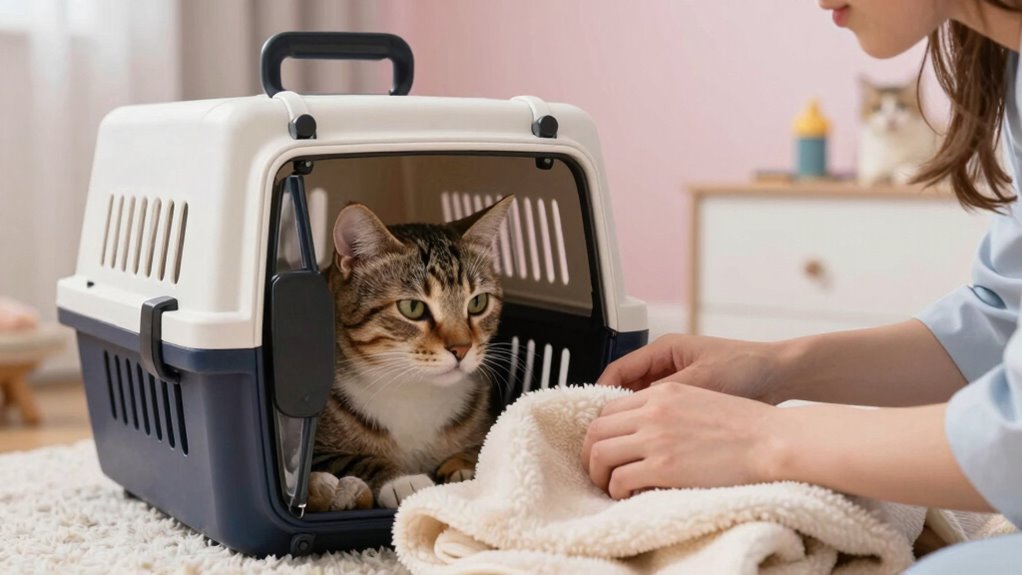

To make vet visits less stressful for your cat, start by preparing a sturdy, comfortable carrier lined with familiar bedding, and encourage your cat to explore it beforehand. Keep the carrier covered and secure during travel to reduce visual stimuli. During the visit, stay calm, speak softly, and offer treats or toys to distract and comfort your cat. Using calming pheromones and gentle handling can also help ease anxiety. Keep exploring these tips to help your feline feel more at ease during vet trips.

Get pet supplies delivered free with Prime
- Fast, free delivery on millions of items
- Prime Video, Amazon Music and more included
- Member-only deals all year
Key Takeaways
- Prepare the carrier with familiar bedding, treats, and toys, and keep it covered to reduce visual stimuli during travel.
- Recognize and respond to stress signals with gentle handling, treats, and calming pheromones to ease anxiety.
- Maintain a calm demeanor, speak softly, and offer reassurance to create a soothing environment during vet visits.
- Use positive reinforcement, such as treats and play, after appointments to build trust and positive associations.
- Practice regular calming techniques and desensitization to make future vet visits less stressful over time.

Visiting the vet can be a stressful experience for many cats, but there are steps you can take to make the process calmer and less intimidating. One of the most important things is guaranteeing travel safety. You want your cat to feel secure from the moment you leave home until you return. Start by choosing a sturdy, well-ventilated carrier that your cat can comfortably stand, turn around, and lie down in. Line it with familiar bedding or a towel that smells like home, which can provide a sense of familiarity and comfort. Before the appointment, get your cat used to the carrier by leaving it open in your house, placing treats or toys inside, and encouraging your cat to explore it at their own pace. This helps reduce the anxiety of confinement during travel. When it’s time to go, keep the carrier covered with a light cloth to block out visual stimuli that might increase your cat’s stress. Keep the carrier secure in your vehicle, avoiding sudden stops or sharp turns, and try to keep the ride smooth. Putting on calming music or playing white noise can also help soothe your feline passenger. Additionally, understanding cat behavior can help you better interpret your cat’s reactions and adjust your approach accordingly. Recognizing stress signals in cats can help you respond promptly and effectively to their needs. Knowing common stress responses can guide you in providing the right comfort measures during the visit. Learning about cat body language can further help you identify signs of distress early on, allowing for quicker intervention.
Once at the vet, your goal is to keep your cat as relaxed as possible. Use comforting techniques like speaking softly and gently petting your cat if they tolerate it. Offering a treat or favorite toy can also distract them from their surroundings. Some cats respond well to pheromone sprays or diffusers designed to promote relaxation, so consider using one in the carrier or exam room if your vet recommends it. When interacting with the veterinarian, be clear and calm, and advocate for your cat’s needs by asking questions or requesting gentle handling. If your cat gets overwhelmed, take a break or step out of the room for a moment to give them a breather. Creating a stress-free environment in the exam room can further help ease your cat’s anxiety. Keeping a calm demeanor yourself can influence your cat’s overall comfort during the visit. After the appointment, reward your cat with a favorite snack or playtime to reinforce positive associations with vet visits. Remember, each visit is an opportunity to build trust, so keep your tone reassuring and patient. Consistently practicing these steps can help desensitize your cat to future vet visits and make them less stressful over time.
cat travel carrier with familiar bedding
As an affiliate, we earn on qualifying purchases.
As an affiliate, we earn on qualifying purchases.
Frequently Asked Questions
How Can I Prepare My Cat Mentally for the Vet Visit?
To prepare your cat mentally for a vet visit, start with regular grooming to keep them comfortable and familiar with handling. Practice short car trips using car travel tips, like covering the carrier and soothing your cat with calm voices. Gradually increase exposure to these routines so they associate them with positive experiences. This helps reduce anxiety, making vet visits less stressful and more manageable for both of you.
What Are Signs My Cat Is Overly Stressed During a Vet Appointment?
During a vet visit, you might notice your cat’s behavioral cues shift—ears flatten, tail flicks, or pupils dilate. These stress indicators reveal your cat’s discomfort. Stay vigilant for vocalizations, trembling, or attempts to hide, signaling overwhelming stress. Recognizing these signs early can help you calm your cat faster and make future visits less stressful. Staying attentive to these subtle cues ensures you respond promptly, easing your cat’s anxiety.
Are There Specific Toys or Treats to Comfort Cats at the Vet?
Yes, you can use specific toys and treats to comfort your cat at the vet. Interactive toys help distract and engage your feline, reducing anxiety. Soothing treats with calming ingredients like L-theanine or valerian can also ease stress. Bring along a favorite toy or a treat your cat loves, and offer it during the visit to create a sense of familiarity and comfort. This approach helps your cat feel safer and more relaxed.
How Often Should I Schedule Preventive Vet Visits for My Cat?
You should schedule preventive vet visits for your cat at least once a year, or more often if recommended for senior or at-risk cats. Prioritize travel safety by using secure carriers and comforting items. Also, discuss diet adjustments with your vet to support your cat’s health during visits. Regular checkups help catch issues early, ensuring your cat stays healthy and stress-free during future vet trips.
Can Calming Pheromones or Sprays Help Reduce My Cat’s Anxiety?
Yes, calming pheromone sprays can help reduce your cat’s anxiety. These sprays release synthetic cat pheromones that mimic natural signals, promoting relaxation during stressful situations like vet visits. Using a cat calming pheromone spray before travel or in the carrier can make your feline friend feel more secure. Incorporating these sprays into your routine can ease your cat’s stress and make vet visits a calmer experience for both of you.
Conclusion
By easing your cat’s vet visits, you’re planting seeds of trust that bloom into a garden of calm and confidence. With patience and gentle steps, you turn a stormy sea into a peaceful lake—transforming fear into familiarity. Remember, each relaxed visit is a brick laid in the foundation of a lifelong bond. When stress diminishes, your cat’s health flourishes like a tree reaching confidently toward the sun. Together, you create a harmonious path through the journey of care.
Halloween Picks
halloween
As an affiliate, we earn on qualifying purchases.