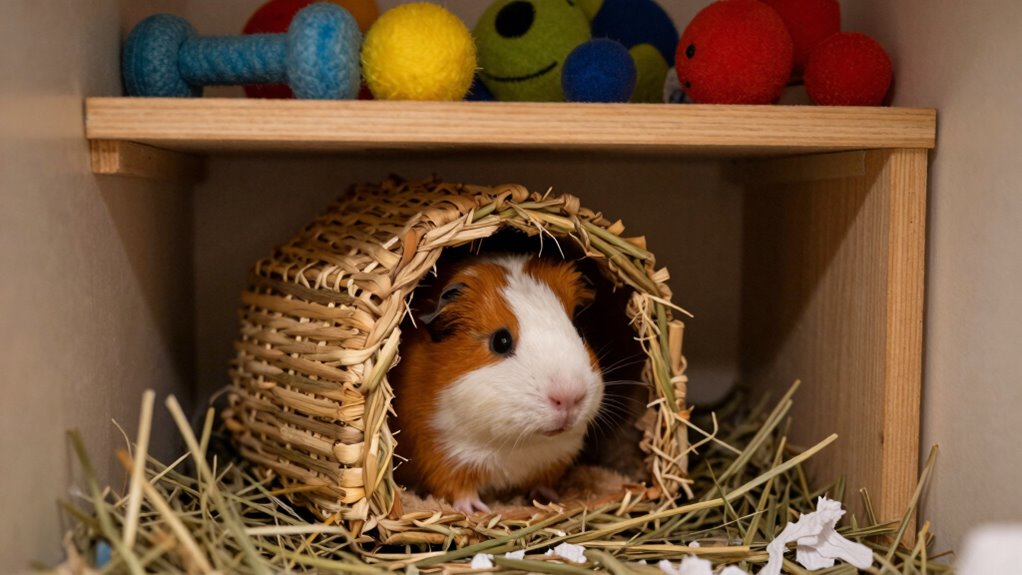

Small pets need more hiding places than you think because they’re prey animals that instinctively seek cover when threatened. Providing hiding spots helps them feel safe, reducing stress and encouraging natural behaviors like exploring and retreating. When you include cozy hideouts, you boost their mental and physical well-being. If you want to create a happier, healthier environment, there’s more to discover about the importance of hiding spots and how to use them effectively.

Get pet supplies delivered free with Prime
- Fast, free delivery on millions of items
- Prime Video, Amazon Music and more included
- Member-only deals all year
Key Takeaways
- Small pets are prey animals that instinctively seek cover for safety and stress relief.
- Adequate hiding spots promote natural behaviors like retreating, exploring, and burrowing.
- Providing multiple hiding options reduces anxiety and prevents health issues caused by stress.
- Hiding places help balance open space with secure areas, encouraging active and relaxed behaviors.
- Proper placement and variety of hiding spots enhance overall well-being and habitat enrichment.
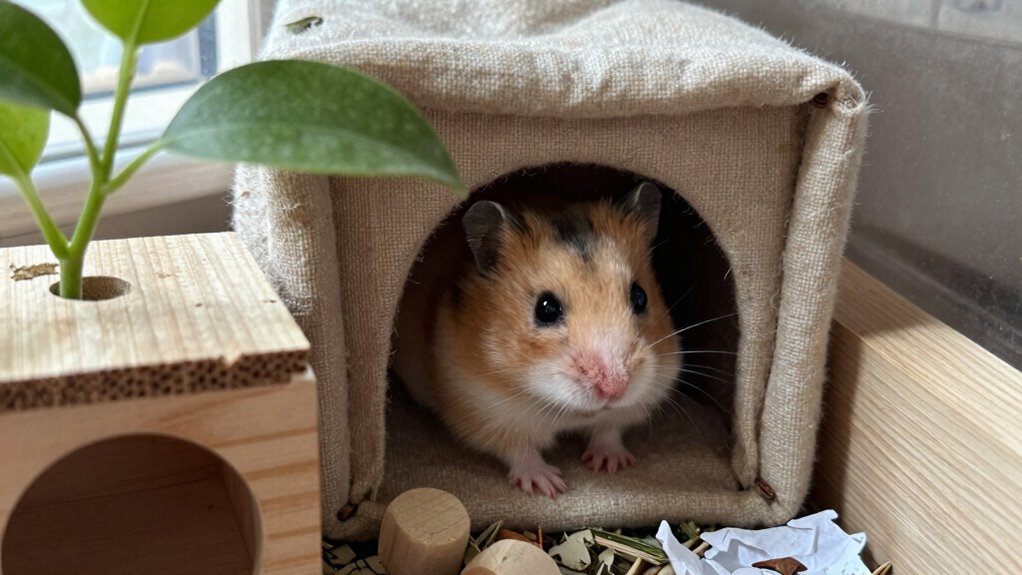
Many small pets, like hamsters, gerbils, and mice, thrive when they have plenty of hiding places in their enclosures. These little creatures are naturally prey animals, which means they’ve evolved to seek cover when they feel threatened. Providing ample hiding spots isn’t just about comfort; it’s it’s essential for their mental and physical well-being. When you incorporate hiding places into their habitat, you’re enhancing pet enrichment, giving them opportunities to engage in natural behaviors like burrowing, exploring, and retreating for rest. Proper space optimization ensures you maximize the enclosure without making it feel cluttered or cramped. It’s about creating a habitat that balances open areas with cozy nooks, giving your pet a sense of security. Incorporating space optimization techniques helps prevent overcrowding and ensures your pet’s environment remains safe and stimulating. Hiding spots serve more than just comfort—they reduce stress. If your small pet feels exposed or vulnerable, it may become anxious, which can lead to health issues or destructive behaviors. By providing enough hiding places, you help your pet feel safe, encouraging them to be more active and less likely to hide all day. These hiding spots can be simple, like small tunnels, cardboard boxes, or specially designed pet houses. Think about how your pet would naturally seek shelter in the wild. Mimicking that environment with varied hiding options promotes pet enrichment and encourages a more dynamic and healthy lifestyle. Including natural behaviors in their habitat design can significantly improve their overall well-being and happiness.
Adding enclosure design strategies that incorporate natural elements can also help simulate their wild environment, further reducing stress. Space optimization is key when adding hiding spots. You want to include enough to meet your pet’s needs without overcrowding the enclosure. Carefully plan the layout to ensure there’s still room for exercise and exploration. For example, placing hiding spots near food and water encourages natural foraging behaviors while giving your pet a safe place to retreat after activity. Using vertical space, like multi-level cages or climbing structures, can also increase hiding options without taking up additional floor space. This way, you give your pet more opportunities to hide, feel secure, and stay engaged, all while keeping the enclosure organized and functional.
As an affiliate, we earn on qualifying purchases.
Frequently Asked Questions
How Do Hiding Places Affect a Small Pet’s Stress Levels?
Hiding places reduce your small pet’s stress levels by providing safe spots where they can retreat and feel secure. When you include enrichment activities and promote social interactions, your pet gains confidence and comfort. Hiding spots support their natural instincts, helping them relax and avoid feeling overwhelmed. By offering these safe spaces, you create a more balanced environment, making your pet happier and less anxious overall.
What Materials Are Safest for Creating Hiding Spots?
Think of creating hiding spots as building a cozy nest for your pet. Use safe, non-toxic materials like untreated wood, ceramic, or cardboard for DIY projects. Avoid sharp edges and toxic paints. Safety tips include checking for splinters and ensuring materials are clean and free of chemicals. These choices protect your pet’s health and comfort, making their hideouts both safe and inviting.
How Often Should Hiding Places Be Cleaned?
You should clean your pet’s hiding places weekly to maintain good hygiene and prevent buildup of dirt or bacteria. Incorporate cleaning schedules that include removing waste, disinfecting with pet-safe solutions, and replacing any soiled bedding or materials. Regular hygiene maintenance keeps your small pet healthy and comfortable, while also reducing odors and potential health risks. Consistent cleaning guarantees their environment stays safe, clean, and inviting for your little friend.
Can Too Many Hiding Spots Cause Territorial Disputes?
Surprisingly, too many hiding spots can spark territorial behavior among your small pets, leading to conflicts instead of comfort. Instead of fostering peace, an abundance of hiding places might make them more possessive, hampering social bonding. Ironically, what’s meant to provide security can turn into a battleground. Keep a balanced number of hides to encourage natural interactions, ensuring your pets feel safe without encouraging territorial disputes.
Are There Specific Hiding Places for Different Small Pet Species?
Yes, different small pet species benefit from specific hiding places tailored to their needs. For example, hamsters love tunnels, while birds prefer enclosed, secure nests. Providing these species-specific hiding spots encourages natural behaviors, enriching their environment. Plus, they promote social interaction with their surroundings and reduce stress. You should observe your pets to see what they prefer, then add suitable hiding options to keep their environment engaging and comfortable.
Conclusion
So, next time you’re tempted to give your tiny friend a giant, empty cage, remember: they don’t need more space—they need more hiding spots. Because nothing screams “happy pet” like a secret hideaway where they can plot their tiny revolution or just escape your questionable decorating choices. After all, a little privacy for your small pet isn’t just a luxury—it’s their right. Who knew tiny creatures could be so demanding, right?
Halloween Picks
halloween
As an affiliate, we earn on qualifying purchases.