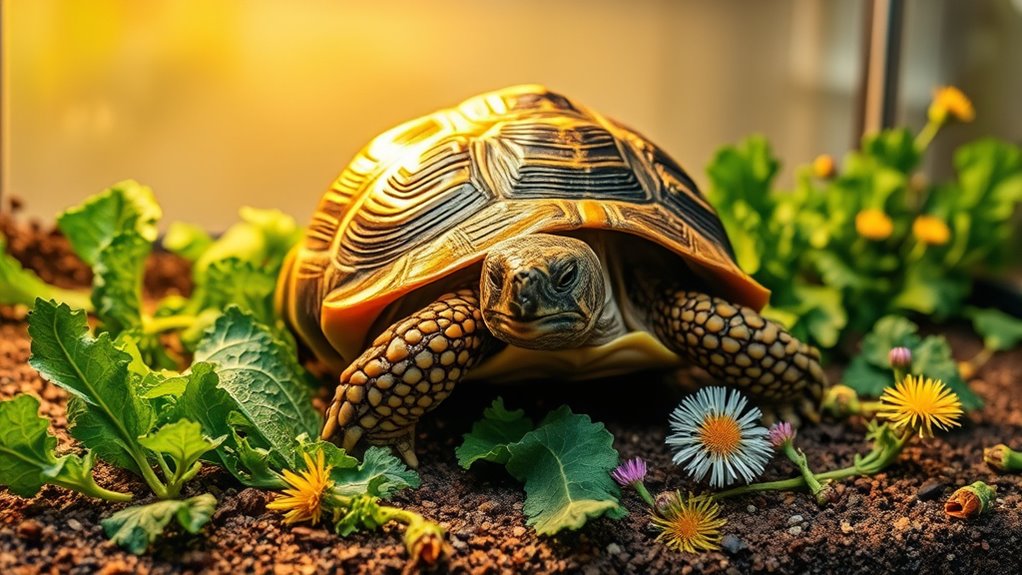

To care for your tortoise, focus on a balanced diet rich in fiber, calcium, and essential vitamins. Provide UVB lighting to help synthesize vitamin D3, vital for calcium absorption and preventing metabolic bone disease. Create a stimulating habitat with hiding spots and varied textures to encourage natural behaviors. Regularly monitor temperature and humidity levels, observing your tortoise’s behavior for any signs of distress. You’ll discover even more tips for ideal care as you continue exploring.
Key Takeaways
- Provide a balanced diet of leafy greens, supplemented with occasional fruits and vegetables, avoiding high-sugar foods to ensure optimal nutrition.
- Incorporate UVB lighting in the habitat to facilitate vitamin D3 synthesis, essential for calcium absorption and preventing metabolic bone disease.
- Create a diverse habitat with hiding spots and natural textures to encourage exploration and mimic a tortoise’s natural environment.
- Regularly monitor temperature and humidity levels to maintain ideal conditions for your tortoise’s health and well-being.
- Observe tortoise behavior for signs of health or distress, as changes may indicate dietary or environmental issues needing attention.
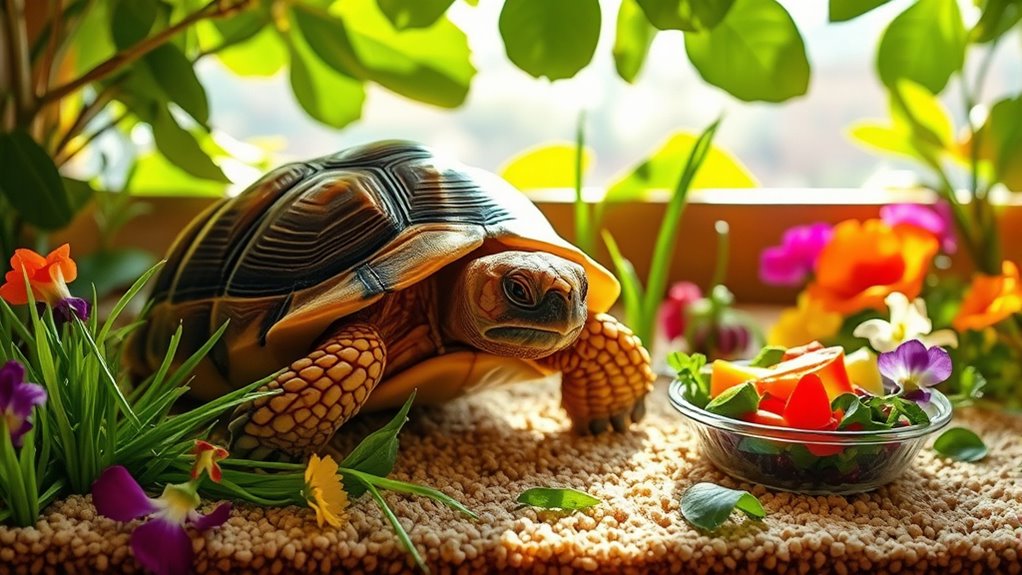
Caring for a tortoise can be a rewarding experience, especially when you understand their unique needs. One of the most crucial aspects of tortoise care is ensuring they receive proper juvenile tortoise nutrition. Young tortoises have specific dietary requirements that differ from their adult counterparts. You should focus on providing a balanced diet rich in fiber, calcium, and essential vitamins. Leafy greens like collard greens or dandelion greens are excellent staples. Additionally, you can supplement their diet with occasional fruits and vegetables, but be cautious not to overdo it, as too much sugar can lead to health issues.
Proper juvenile tortoise nutrition is vital for growth, focusing on a balanced diet of fiber-rich leafy greens and limited fruits.
Incorporating a variety of foods not only keeps your tortoise engaged but also guarantees they get a wide range of nutrients. It’s important to avoid feeding them processed foods or anything high in fat. Always research any new food before introducing it to your tortoise’s diet. You’ll find that your tortoise thrives on a diverse menu, which helps promote healthy growth and development.
Another important aspect of tortoise care is creating an enriching habitat. Juvenile tortoises are curious creatures, and they benefit immensely from habitat enrichment techniques. Consider providing hiding spots using rocks, logs, or commercially available tortoise shelters. These elements not only mimic their natural environment but also give them safe spaces to retreat and explore. You can also introduce various textures and surfaces, such as sand or soil, to encourage natural digging behaviors.
Don’t forget about the importance of UVB lighting in their habitat. Tortoises rely on UVB rays to synthesize vitamin D3, which is essential for calcium absorption. Without adequate UVB exposure, your tortoise could develop serious health issues like metabolic bone disease. Ensure their habitat has a UVB light source and that it’s positioned correctly, allowing your tortoise to bask under it for a portion of the day. Understanding the role of UVB lighting is essential for ensuring proper health in tortoises.
Regularly monitor the temperature and humidity levels in their enclosure. Knowing how to maintain ideal conditions will keep your tortoise healthy and happy. Finally, always keep an eye on their behavior. If you notice any changes, it might indicate that something’s off in their environment or diet.
Frequently Asked Questions
How Often Should I Handle My Tortoise?
You should handle your tortoise a few times a week for short periods to encourage tortoise socialization. Just be mindful of handling safety; always support their body properly to avoid stress or injury. Watch for signs of discomfort, and don’t force interaction if they seem withdrawn. By keeping sessions brief and positive, you’ll help your tortoise feel more comfortable with you, promoting a healthy bond between you both.
Can Tortoises Live Outdoors Year-Round?
Like a sturdy tree weathering the seasons, tortoises can live outdoors year-round, but you’ll need to provide proper outdoor shelter and make seasonal adjustments. In warmer climates, they thrive, basking in the sun. However, during colder months, guarantee their shelter protects them from the chill and moisture. Monitor temperatures closely, and be ready to bring them indoors if it gets too cold. With proper care, they’ll enjoy the great outdoors safely.
What Common Health Issues Do Tortoises Face?
Tortoises often face common health issues like shell diseases and respiratory infections. You might notice signs of shell rot, such as discoloration or softness, which can stem from poor humidity or substrate. Respiratory infections can manifest as nasal discharge or wheezing, often due to cold temperatures or inadequate shelter. Keeping an eye on these symptoms and ensuring proper care can help maintain your tortoise’s health and well-being.
How Do I Recognize if My Tortoise Is Stressed?
You might notice your tortoise acting differently, like hiding more often or refusing food, while it usually explores. Pay attention to behavior signs like rapid breathing or pacing. Environmental cues, such as sudden changes in temperature or noise, can also stress it out. If you see these signs, take a moment to assess its surroundings and try to create a calm, stable environment. Your tortoise’s well-being depends on your careful observation and response.
Can Tortoises Eat Fruit Regularly?
Yes, tortoises can eat fruit, but you should offer it in moderation. While fruits add dietary variety to their meals, too much can lead to health issues like obesity or digestive problems. Choose safe options like strawberries or melons and make sure they’re only a small part of your tortoise’s overall diet. Focus on leafy greens and vegetables as primary foods to guarantee your pet stays healthy and happy.
Conclusion
In caring for your tortoise, you’re not just providing a home; you’re building a bond. You’re nurturing a life, fostering health, and creating a safe space. By ensuring proper UVB exposure, offering a balanced diet, and maintaining a suitable habitat, you’re giving your tortoise the best chance to thrive. Embrace the joy of watching them explore, grow, and flourish. In every moment spent together, you’re not only a caretaker but an essential part of their journey.