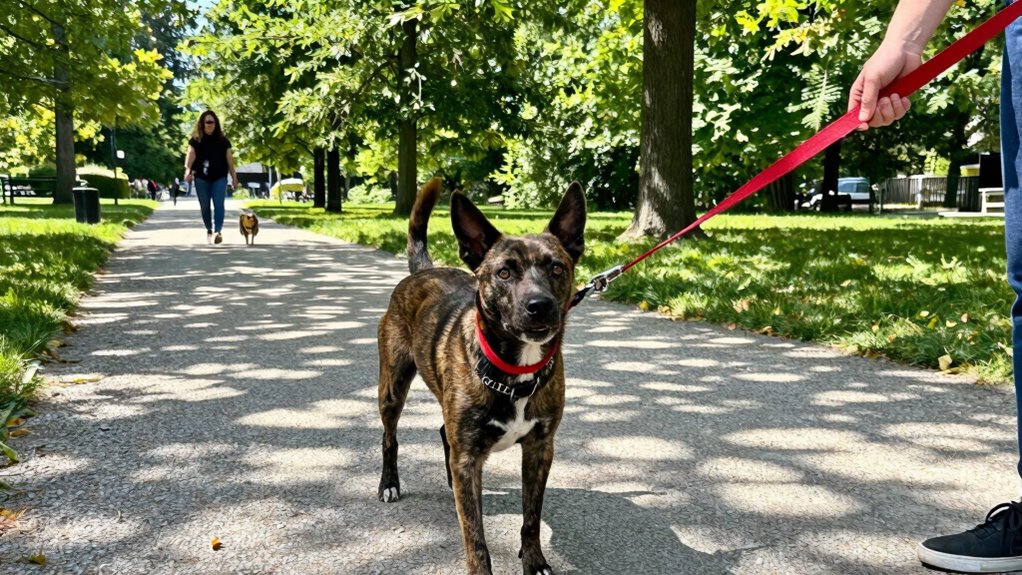

Your dog pulls more on some walks because environmental factors like busy streets, new areas, or exciting scents trigger their curiosity and excitement, making it harder for you to stay in control. Familiar routes and calm surroundings tend to keep your dog more relaxed and obedient. By understanding what influences your dog’s behavior outside, you can better manage their pulling. Keep exploring how to create calmer walks and improve your training techniques for better overall control.

Get pet supplies delivered free with Prime
- Fast, free delivery on millions of items
- Prime Video, Amazon Music and more included
- Member-only deals all year
Key Takeaways
- Dogs are more likely to pull in busy or unfamiliar environments due to increased excitement and environmental stimuli.
- Calm, familiar routes promote relaxed walking and reduce pulling behavior.
- The presence of distracting scents, sounds, or sights triggers more pulling during walks.
- Handler energy and confidence influence the dog’s behavior, affecting pulling tendencies.
- Proper leash techniques and positive reinforcement help manage pulling, especially in stimulating environments.
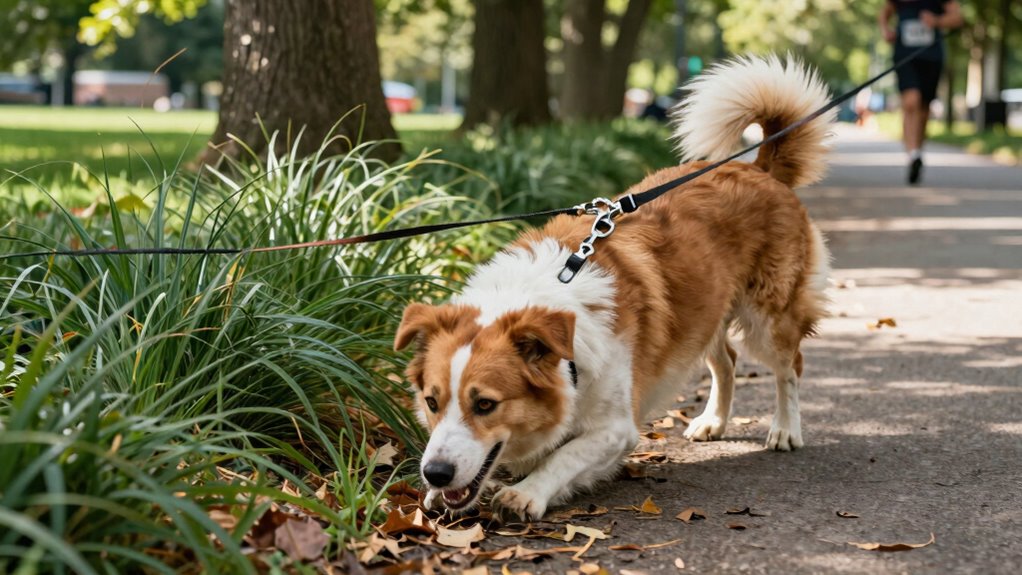
Have you ever noticed that your dog pulls more on some walks than others? It can be frustrating, especially when you’re trying to enjoy a peaceful stroll. The reason behind this often lies in the way your dog perceives the walk and the environment around them. Dogs are highly sensitive to their surroundings and can pick up on scents, sounds, and sights that trigger their excitement or curiosity. When they’re more on edge or eager to explore, they tend to pull more, eager to follow every interesting smell or sight. On calmer days, they might walk more obediently, making the walk more pleasant for both of you.
Your approach to dog training plays a crucial role here. Consistent training helps your dog understand what’s expected during walks. One of the most effective ways to manage pulling is by refining your leash techniques. Proper leash handling involves keeping tension in the leash, so your dog learns to stay close without pulling ahead. Using short, controlled leash lengths can help maintain better control and give you the ability to correct pulling early on. When your dog pulls, gently stop and wait until they return to your side before moving forward again. This teaches them that pulling doesn’t get them where they want to go and that walking calmly beside you is more rewarding.
Consistent leash handling and gentle corrections teach your dog to walk calmly beside you.
Different environments can also influence your dog’s pulling behavior. If your dog is more excited or distracted in busy areas, they might pull harder to get closer to scents or sounds that pique their interest. On the other hand, a familiar, quiet route might make them more relaxed and obedient. To combat this, gradually expose your dog to new environments, pairing these outings with positive reinforcement. Reward your dog for walking calmly on a loose leash, regardless of the surroundings, so they associate good behavior with pleasant experiences. Additionally, understanding how environmental triggers affect your dog’s behavior can help you better manage their pulling tendencies. Being aware of environmental cues can help you anticipate and address your dog’s reactions more effectively. Recognizing the importance of environmental factors can also motivate you to adjust your training and outings accordingly. Staying attentive to environmental influences ensures that you can adapt your training to different situations and reduce pulling in various settings. Developing a keen awareness of environmental stimuli can increase your ability to respond appropriately and maintain control during walks.
Another aspect to consider is your own energy and consistency. Dogs pick up on your cues, so if you’re anxious or inconsistent in your leash techniques, your dog might mirror that uncertainty by pulling more. Stay calm and confident during walks, use clear commands, and reinforce good behavior with treats or praise. Over time, these strategies will help your dog understand that staying close and walking politely is more enjoyable than pulling ahead.
In essence, understanding why your dog pulls more on some walks involves recognizing environmental triggers, refining your leash techniques, and maintaining consistent training. By being attentive to your dog’s behavior and surroundings, and applying effective training methods, you’ll notice a marked improvement in how your dog walks with you—making every walk more enjoyable and less stressful.
As an affiliate, we earn on qualifying purchases.
Frequently Asked Questions
Can Diet Affect My Dog’s Pulling Behavior During Walks?
Yes, your dog’s diet can influence their pulling behavior during walks. A well-balanced diet can boost energy and focus, making training methods like positive reinforcement more effective. When your dog feels satisfied and healthy, they’re less likely to become hyper or distracted. Also, using the right leash types can help control pulling better. Combining proper nutrition, effective training methods, and suitable leash types can improve your walks considerably.
How Does the Weather Influence My Dog’s Pulling Tendencies?
Weather influences your dog’s pulling tendencies through weather patterns and seasonal changes. During hot weather, your dog might pull less to avoid overheating, while in cooler seasons, they could pull more out of excitement or energy. Rain, snow, or wind can also make walks less comfortable, leading to more pulling as your dog tries to get back home or find shelter. Pay attention to these weather cues to adjust your walks accordingly.
Does the Age of My Dog Impact How Much They Pull?
Yes, your dog’s age influences how much they pull. Younger dogs tend to pull more due to curiosity and energy, while older dogs might be calmer or less interested in pulling. To manage this, you can use effective training techniques like positive reinforcement and choose appropriate leash types, such as a no-pull harness. Consistent training helps your dog learn proper leash manners regardless of their age.
Are There Specific Breeds More Prone to Pulling on Walks?
You bet some breeds are more prone to pulling on walks. Breeds like Beagles, Huskies, and Labrador Retrievers have strong breed tendencies for high energy and curiosity, which can lead to increased pulling. Their pulling motivations often stem from excitement, scent tracking, or a desire to explore. Knowing your dog’s breed can help you anticipate their behavior and tailor training strategies to make walks more enjoyable for both of you.
How Can I Tell if My Dog Is Pulling Due to Anxiety?
You can tell your dog is pulling due to anxiety by observing behavior cues like trembling, excessive panting, or avoiding eye contact during walks. They might become tense or try to back away. To address this, focus on leash training to build confidence and reduce stress. Consistent, calm training helps your dog feel more secure, making pulling less likely as they learn to stay relaxed and enjoy walks.
Conclusion
Remember, every walk is a new chapter, and consistency is key. Just as they say, “Practice makes perfect,” your dog learns better walking manners with patience and persistence. When you notice pulling more on certain walks, it’s a chance to reinforce training and understand your dog’s needs. By staying calm and steady, you turn each stroll into a positive experience—because in the end, a well-trained dog makes every walk more enjoyable for both of you.
Evergreen bestsellers Picks
bestsellers
As an affiliate, we earn on qualifying purchases.