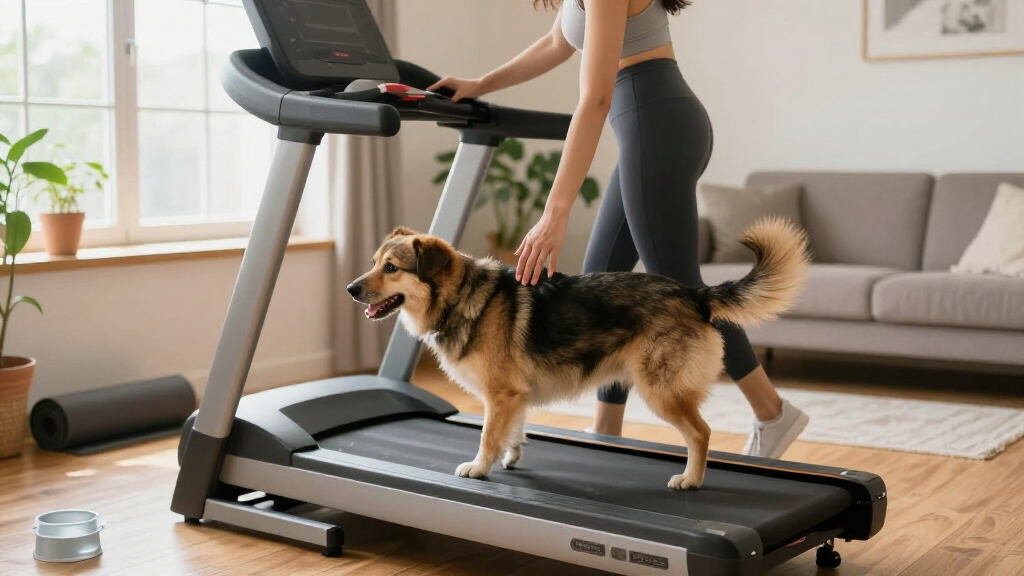

Dog treadmills split into two camps — motorized electric models that set the pace for you, and non-electric slat mills powered by your dog’s own stride — and the right choice depends heavily on your dog’s size, energy, and training history. For most households, the Lifepro PawRunner stands out as the best overall pick thanks to its quiet motor, enclosed design, and approachable price for small and medium dogs. If you have a big, high-drive dog, the PawPaw’s Slat Mill (up to 330 lbs) earns the premium spot with its self-paced running surface and reliable brake, while the Non-Electric Treadmill with Brakes and Odometer delivers the best value in the slat mill category. The main tradeoffs you’ll face are noise versus durability, motorized convenience versus self-paced safety, and footprint versus usable running width. Keep reading for the full breakdown of all 14 models.
Complete the kit


Key Takeaways
- Motorized models like the Lifepro PawRunner and Petbobi dominate for small and medium dogs, while slat mills such as the PawPaw’s and HotFeed clearly win for dogs over 80 lbs because self-paced belts eliminate the risk of a motor overdriving a tired dog.
- The most consistent weakness across the lineup was narrow usable track width — several models marketed to large dogs offer under 18 inches of running surface, which forces a big dog into an unnatural stride.
- Built-in brakes and odometers separated the better slat mills (PawArmor, PawPaw’s, HotFeed) from cheaper no-name curved and flat mills that rely on friction alone.
- Shock absorption and track construction varied more than any other spec: the pin-hinged track with 3-layer absorption and PawArmor’s silicone slats were the only models that meaningfully addressed joint impact.
- Quiet operation claims rarely held up on motorized units — if you live in an apartment, the enclosed-belt Lifepro and Petbobi designs performed noticeably better than open-slat electric hybrids.
| Lifepro PawRunner Dog Treadmill for Small & Medium Dogs |  | Best Motorized Pick | Maximum Speed: 12 mph | Minimum Speed: 0.5 mph | Motor: 0.5 hp, 1000 watts | VIEW ON AMAZON | See Our Full Breakdown |
| Non-Electric Dog Treadmill with Brakes and Odometer for Medium & Large Dogs |  | Best for Activity Tracking | Dog Size: Medium & Large | Power Type: Non-electric (dog-powered) | Incline: Adjustable | VIEW ON AMAZON | See Our Full Breakdown |
| Medium & Large Dog Treadmill with Safety Brake, Speedometer & Adjustable Slope |  | Best Budget Manual Mill | Dog Size: Medium & Large | Type: Manual, non-motorized | Max Incline: 10 degrees | VIEW ON AMAZON | See Our Full Breakdown |
| HotFeed Dog Slat Mill Treadmill for Medium Dogs with Brake & Plastic Track |  | Best for Athletic Breeds | Type: Non-motorized slat mill | Frame: Carbon steel | Belt Material: Fiberglass (splinter-free) | VIEW ON AMAZON | See Our Full Breakdown |
| PawArmor Curved Dog Treadmill with Silicone Slats and Disc Brakes |  | Best Premium Slat Mill | Type: Curved manual slatmill (non-motorized) | Braking System: Disc brakes | Display: Built-in speedometer | VIEW ON AMAZON | See Our Full Breakdown |
| Dog Treadmill for Large Medium Dogs, LCD Display, Speed 0.8-12 Km/H |  | Best High-Capacity Motorized Pick | Speed Range: 0.8–12 km/h | Weight Capacity: 220 lbs | Display: LCD showing time, distance, calories | VIEW ON AMAZON | See Our Full Breakdown |
| Dog Treadmill with Pin-Hinged Track & 3-Layer Shock Absorption |  | Best Premium Slatmill | Running Surface: 18-inch extra-wide PE slatmill | Weight Capacity: 500 lbs | Power Source: Non-electric, self-paced | VIEW ON AMAZON | See Our Full Breakdown |
| Non-Motorized Dog Treadmill for Large Dogs, 18″ Usable Width, Brake & Timer |  | Best for Controlled Walking Workouts | Usable Deck: 18″ W x 59.4″ L | Overall Dimensions: 67″ D x 24″ W x 57″ H | Max Weight Capacity: 300 lbs | VIEW ON AMAZON | See Our Full Breakdown |
| Dog Treadmill for Medium Small Dogs – 4-in-1 Pet Running Machine |  | Best Compact Multi-User Pick | Motor: 2.5 HP | Running Belt: 35.43″ x 15.75″ | Speed Range: 0.6–5.0 mph | VIEW ON AMAZON | See Our Full Breakdown |
| Dog Treadmill, Dog Pacer Treadmill for Large/Medium Dogs, Up to 80kg |  | Best for Gentle Pace Training | Speed Range: 0.8–6 km/h, 15 adjustable levels | Weight Capacity: Up to 80 kg (176 lbs) | Display: Speed, time, distance, calories | VIEW ON AMAZON | See Our Full Breakdown |
| PawPaw’s Dog Treadmill (Slatmill) for Medium & Large Dogs up to 330 lbs, with Brake |  | Best for Powerful Large Breeds | Maximum Weight Capacity: 330 lbs | Power Source: Manual (non-electric) | Frame Material: Carbon steel | VIEW ON AMAZON | See Our Full Breakdown |
| CIIHI Dog Treadmill for Medium and Small Dogs |  | Best 2-in-1 Human/Dog Option | Motor: 1.5 HP | Speed Range: 0.5–4.0 mph | Weight Capacity: 265 lbs | VIEW ON AMAZON | See Our Full Breakdown |
| Dog Treadmill for Medium Dogs up to 220 lbs |  | Best Fast-Walk Trainer for Medium Dogs | Running Belt Size: 37.5″ x 15″ | Maximum Speed: 7.5 mph | Motor: 1.5 HP | VIEW ON AMAZON | See Our Full Breakdown |
| Petbobi Dog Treadmill for Small & Medium Dogs Quiet Motor Indoor Exercise |  | Best for Apartment Small Breeds | Motor: 1.5 HP | Maximum Speed: 4 mph | Minimum Speed: 0.5 mph | VIEW ON AMAZON | See Our Full Breakdown |
| dog treadmills for | Weight Capacity |
|---|---|
| Lifepro PawRunner Dog Treadmil | 130 lbs |
| Non-Electric Dog Treadmill wit | — |
| Medium & Large Dog Treadmill w | — |
| HotFeed Dog Slat Mill Treadmil | 250–300 lbs (conflicting listings) |
| PawArmor Curved Dog Treadmill | — |
| Dog Treadmill for Large Medium | 220 lbs |
| Dog Treadmill with Pin-Hinged | 500 lbs |
| Non-Motorized Dog Treadmill fo | — |
| Dog Treadmill for Medium Small | — |
| Dog Treadmill | Up to 80 kg (176 lbs) |
| PawPaw’s Dog Treadmill | — |
| CIIHI Dog Treadmill for Medium | 265 lbs |
| Dog Treadmill for Medium Dogs | 220 lbs (up to 260 lbs) |
| Petbobi Dog Treadmill for Smal | 265 lbs (dogs ≤80 lbs recommended) |
More Details on Our Top Picks
Lifepro PawRunner Dog Treadmill for Small & Medium Dogs
This is the only motorized option in this batch, and that changes the buying math completely. Unlike the self-powered HotFeed Slat Mill or the PawArmor Curved, the PawRunner pushes the belt for your dog — which means you control speed remotely rather than relying on your dog’s motivation. That remote, paired with a 0.5 mph minimum speed, makes training a hesitant small or medium dog far easier than on any manual mill here. The tradeoff is honest, though: a 0.5 hp motor and 47-pound frame mean this is built for smaller bodies, not the large breeds the slat mills handle. The manual incline also requires stopping and adjusting by hand, a step down from the PawArmor’s damper-based tuning.
Pros:- Motorized belt with remote speed control makes training far easier than manual mills
- 0.5 mph starting speed suits nervous or senior dogs
- Safety key and emergency stop provide real protection
- Folds down to 28 inches for easier storage than slat mills
Cons:- Manual incline requires physically adjusting the machine
- Underpowered 0.5 hp motor limits it to smaller dogs
- Corded power restricts placement options
Best for: Owners of small or medium dogs who want precise, remote-controlled pacing for training or rehab-style exercise
Not ideal for: Owners of large or giant breeds — the 130-lb capacity and 22.8-inch deck simply aren’t built for them
- Maximum Speed:12 mph
- Minimum Speed:0.5 mph
- Motor:0.5 hp, 1000 watts
- Maximum Incline:10% (manual)
- Weight Capacity:130 lbs
- Dimensions:48″D x 22.8″W x 42″H
- Programs:12
- Frame:Alloy steel
Our verdict“If you want to control your dog’s workout instead of trusting them to self-pace, this is the motorized choice in a lineup dominated by manual slat mills.”
Non-Electric Dog Treadmill with Brakes and Odometer for Medium & Large Dogs
What separates this manual mill from the nearly identical Medium & Large Dog Treadmill with Safety Brake is the built-in odometer — a small feature that matters if you’re tracking a weight-loss program or conditioning a sporting dog over time. The self-powered design works the same way as the other slat-style options here: your dog sets the pace, and noise-reducing rollers keep things apartment-tolerable. Compared with the motorized Lifepro PawRunner, you give up programmable workouts entirely — there’s no motor, no presets, no remote. The incline is adjustable, but the real limitation is space and patience: this is a bulky piece of equipment, and dogs used to being pulled along by a motorized belt will need a training period.
Pros:- Odometer tracks distance for measurable fitness progress
- Self-powered design lets dogs control their own pace safely
- Quiet operation from noise-reducing rollers
- Paw-friendly, easy-clean pedal surface
Cons:- No motorized assistance or programmable workouts
- Bulky footprint demands dedicated indoor space
- Dogs unfamiliar with self-driven belts need a training period
Best for: Owners tracking a dog’s fitness progress — weight management or conditioning — who want distance data without an app
Not ideal for: Owners who want structured, programmable workouts — there’s no motor or preset training modes
- Dog Size:Medium & Large
- Power Type:Non-electric (dog-powered)
- Incline:Adjustable
- Brake System:Yes
- Odometer:Yes
- Pedal Material:Eco-friendly, wear-resistant, easy-clean
Our verdict“The pick for data-driven owners who want to see their dog’s mileage add up, as long as they’re comfortable with a fully manual machine.”
Medium & Large Dog Treadmill with Safety Brake, Speedometer & Adjustable Slope
This model covers the same fundamentals as the Non-Electric Treadmill with Odometer — self-powered belt, safety brake, quiet rollers — but swaps the odometer for a speedometer and adds an adjustable-height frame, which helps you match the machine to your dog’s body rather than the other way around. It’s a sensible choice for a first manual treadmill: the 10-degree max incline gives you room to increase difficulty as your dog’s fitness improves, and the non-slip pedals are forgiving on paws. The catch, shared with every non-motorized option here, is that nothing moves unless your dog does. Compared with the PawArmor Curved, there’s no resistance damper, so intensity tuning is limited to incline alone.
Pros:- Adjustable frame height fits a range of dog builds
- Safety brake provides reliable stopping control
- Up to 10 degrees of incline for progressive conditioning
- Quiet, smooth-rolling construction
Cons:- No motorized assistance — dogs must self-motivate
- Requires patient training for treadmill-new dogs
- Incline-only intensity adjustment, no resistance tuning
Best for: First-time manual treadmill buyers with high-energy or overweight medium-to-large dogs on a budget
Not ideal for: Dogs that lack the drive to keep a belt moving on their own — no motor means no backup
- Dog Size:Medium & Large
- Type:Manual, non-motorized
- Max Incline:10 degrees
- Safety Features:Built-in safety brake
- Display:Speedometer
- Adjustability:Adjustable height frame
Our verdict“A straightforward, no-frills entry into manual dog treadmills that gets the safety basics right without premium features.”
HotFeed Dog Slat Mill Treadmill for Medium Dogs with Brake & Plastic Track
The HotFeed is the most gym-like machine in this batch, aimed squarely at working and sporting breeds — Pit Bulls, Malinois, Australian Shepherds. Unlike the budget Medium & Large Dog Treadmill with Safety Brake, it offers a 3-level adjustable braking system and a splinter-free fiberglass belt that outlasts and out-protects wooden slat alternatives. The carbon steel frame with acrylic safety panels reads as genuinely durable, and the forward-tilt incline lets you dial up effort for high-drive dogs. Two honest caveats: the listed weight capacity conflicts between 250 and 300 lbs depending on where you look, so measure conservatively, and at 66 inches long this eats more floor than anything motorized like the Lifepro PawRunner, which also folds.
Pros:- 3-level adjustable braking for precise control over high-drive dogs
- Fiberglass belt is splinter-free and lower maintenance than wood slats
- Carbon steel frame with clear acrylic safety panels
- Adjustable forward-tilt frame adds training difficulty
Cons:- Conflicting listed weight capacity (250 vs 300 lbs) creates sizing uncertainty
- Large 66-inch footprint with no folding option
- Requires careful pre-purchase measurement for proper dog fit
Best for: Owners of driven, athletic medium breeds who need serious daily conditioning regardless of weather
Not ideal for: Apartment dwellers or casual walkers — the 66-inch footprint and athletic design are overkill for light exercise
- Type:Non-motorized slat mill
- Frame:Carbon steel
- Belt Material:Fiberglass (splinter-free)
- Braking System:3-level adjustable
- Dimensions:66″ x 20″ x 56″
- Weight Capacity:250–300 lbs (conflicting listings)
- Incline:Adjustable forward-tilt frame
Our verdict“The closest thing to a professional conditioning tool in this lineup — buy it for a serious working dog, not a weekend stroll companion.”
PawArmor Curved Dog Treadmill with Silicone Slats and Disc Brakes
The PawArmor sits at the top of this manual tier for one reason: tunability. The curved deck combines an adjustable resistance damper, a 4.6-degree incline range, and a fully adjustable overhead gantry — more ways to shape a workout than the incline-only Medium & Large Dog Treadmill with Safety Brake or even the brake-focused HotFeed Slat Mill. The silicone-wrapped slats are the standout comfort feature, giving grip without the abrasion risk some harder belts pose, and the disc brake system offers finer stopping control than standard lever brakes. You pay for it in complexity: assembly takes real time, and the footprint plus overhead gantry mean this becomes a permanent fixture in whatever room it lands in.
Pros:- Disc brakes give safer, finer stopping control than standard lever brakes
- Silicone-wrapped textured slats protect paws while maintaining grip
- Adjustable resistance damper plus incline enables varied training intensity
- Four-way adjustable overhead gantry fits different dog sizes and gaits
Cons:- Assembly is time-consuming despite included guidelines
- Large footprint with overhead frame requires dedicated space
- Self-propelled design still depends on the dog’s willingness to run
Best for: Serious trainers and sport-dog owners who want fine control over resistance, incline, and harness positioning
Not ideal for: Casual pet owners — the price of premium features is assembly time and a permanent, large footprint
- Type:Curved manual slatmill (non-motorized)
- Braking System:Disc brakes
- Display:Built-in speedometer
- Belt Surface:Textured slats wrapped in silicone
- Max Incline:4.6 degrees (5.2 inches)
- Resistance:Adjustable resistance damper
- Frame:Heavy-duty steel with aluminum alloy hubs
- Suitable For:Medium and large breeds
Our verdict“The most adjustable manual treadmill in this lineup — worth it only if you’ll actually use the resistance and gantry tuning.”
Dog Treadmill for Large Medium Dogs, LCD Display, Speed 0.8-12 Km/H
Most motorized dog treadmills cap out at speeds barely above a brisk walk, but this model stretches to 12 km/h, which makes it one of the few electric options here that can actually work a fit large dog at a trot or light canter. The 220 lb capacity combined with side guardrails and a leash crossbar puts it closer in safety philosophy to the Dog Pacer Treadmill (B0H8GR2GWB), though that unit tops out at just 6 km/h — making this the stronger pick for athletic breeds that need real cardio. The pull-string safety key is a welcome detail at these speeds. The tradeoff: a powered belt this fast demands careful conditioning, and nervous dogs may find the motorized pace intimidating compared with a self-paced slatmill like the HotFeed Slat Mill. Assembly is manageable but not tool-free.
Pros:- Top speed of 12 km/h enables genuine trotting workouts, not just walking
- 220 lb weight capacity handles large and heavy breeds
- Safety key and guardrails provide layered protection at speed
- LCD display tracks time, distance, and calories for structured training
Cons:- Motorized belt requires careful introduction for skittish dogs
- Bulky footprint compared with foldable or compact alternatives
Best for: Owners of large, energetic breeds ( Labs, Shepherds, Huskies ) who need sustained high-speed cardio regardless of weather
Not ideal for: Households with anxious or senior dogs — the motorized belt and higher top speed can overwhelm pets new to treadmill work
- Speed Range:0.8–12 km/h
- Weight Capacity:220 lbs
- Display:LCD showing time, distance, calories
- Safety Features:Guardrails, leash crossbar, pull-out safety key
- Portability:Built-in wheels for movement and storage
- Power Source:Electric motor
- Use:Indoor and outdoor training
Our verdict“This is the motorized choice for big, athletic dogs whose energy needs exceed what slower electric units can deliver.”
Dog Treadmill with Pin-Hinged Track & 3-Layer Shock Absorption
For buyers who view a treadmill as long-term training equipment rather than a gadget, this slatmill justifies a premium position. The 500 lb frame rating towers over everything else in this roundup — the PawPaw’s Slatmill (330 lbs) and Non-Motorized Treadmill B0H6JQW2TT (300 lbs) are the nearest rivals — meaning even giant breeds or multi-dog households get headroom. The pin-hinged slat design addresses the most common slatmill failure point: belts detaching from the track. Layer on 3-layer shock absorption and a locking disc brake, and you get quieter, lower-impact sessions than the standard rigid-deck mills. Being motorless, it works anywhere without an outlet, though that also means unmotivated dogs simply won’t run — a real limitation compared with motorized units like the LCD Display model above. Assembly is required and not trivial.
Pros:- 500 lb frame capacity is the highest in this lineup, suited to giant breeds
- Pin-hinged slat track prevents belt detachment, a common slatmill failure
- 3-layer shock absorption keeps sessions quiet and low-impact
- Locking disc brake secures the track for safe harnessing and removal
Cons:- Premium build comes at a premium price point
- Assembly required and more involved than folding motorized units
- Self-paced design relies entirely on the dog’s motivation
Best for: Serious trainers and owners of giant breeds ( Mastiffs, Great Danes ) who want a buy-once, non-electric mill with maximum durability
Not ideal for: Budget-conscious buyers or those with low-drive dogs that need the encouragement a motorized belt provides
- Running Surface:18-inch extra-wide PE slatmill
- Weight Capacity:500 lbs
- Power Source:Non-electric, self-paced
- Braking System:Disc handbrake with locking buckle
- Monitor:Digital speed and distance tracking with mechanical timer
- Fit Range:Shoulder heights 13.78″–31.5″
- Frame:Heavy-duty, waterproof, slip-resistant
- Mobility:U-shaped handle and transport wheels
Our verdict“The strongest, most durable slatmill here — buy it if you want equipment that outlasts your dog, skip it if you need motivation built in.”
Non-Motorized Dog Treadmill for Large Dogs, 18″ Usable Width, Brake & Timer
Where the 500 lb slatmill is built for serious running dogs, this unit occupies a more focused niche: controlled walking and trotting for large dogs, with owner-assisted pacing throughout. The 59.4-inch usable length gives big dogs a full natural stride at walk speeds, and the fitted harness guide plus low-position manual brake means the handler stays in command of every session — useful for rehabilitation-style exercise or senior dogs that need gentle, supervised movement. The 5-level incline adds intensity variety that most flat-deck slatmills lack. Compared with the Dog Treadmill B0GTMGH1K3, it gives up raw capacity and shock absorption but gains incline training. The limitations are honest ones: no sprinting capability, and the LED timer tracks only session time — no speed, distance, or calories like the LCD motorized models offer.
Pros:- 5-level incline adjustment enables progressive intensity training uncommon in slatmills
- Extra-long 59.4-inch deck accommodates full stride length in large dogs
- Harness guide and manual low-position brake give handlers constant control
- Quiet, self-propelled operation with no motor noise or power dependency
Cons:- Limited to walking and trotting — no sprint capability
- Timer tracks session time only, without speed, distance, or calorie data
- Requires continuous adult supervision during every session
Best for: Owners doing structured walking programs, senior-dog conditioning, or rehab-paced exercise with large breeds
Not ideal for: Owners of high-drive sporting dogs who want sprint work or detailed workout metrics — this is strictly a walk/trot machine
- Usable Deck:18″ W x 59.4″ L
- Overall Dimensions:67″ D x 24″ W x 57″ H
- Max Weight Capacity:300 lbs
- Incline Levels:5 (3.35° / 7° manual angles)
- Power Source:Self-propelled, non-electric
- Display:LED session timer
- Materials:ABS slats, alloy steel frame, polyethylene
- Item Weight:104 lbs
Our verdict“A disciplined, handler-controlled walker for big dogs — ideal for measured conditioning, wrong for speed-focused training.”
Dog Treadmill for Medium Small Dogs – 4-in-1 Pet Running Machine
This is the only entry in the batch designed for two species: the 2.5 HP motor and 265 lb rating mean the owner can use it as a genuine mini treadmill while the family dog gets a dedicated walking machine. No other product here does that — the Petbobi Small & Medium Dog Treadmill is pet-only, and the slatmills are strictly canine. The remote control is the standout convenience: you adjust speed without approaching the machine, which matters enormously for dogs still learning treadmill confidence. The 0.6 mph starting speed is among the gentlest available, better for small-dog introductions than the 0.8 km/h floors of the larger motorized units. The honest tradeoff is the 35.4-inch belt: despite the 265 lb capacity figure, the running surface genuinely suits small and medium dogs only, and the incline requires manual repositioning.
Pros:- 4-in-1 design doubles as a human mini treadmill with massage function
- Remote control allows speed changes without disturbing the dog
- 0.6 mph low start speed eases anxious small dogs into treadmill training
- Rolls under sofas and beds for genuinely space-saving storage
Cons:- Belt length and width genuinely limit it to small and medium dogs
- Manual incline requires stopping and physically repositioning the deck
Best for: Apartment dwellers and small-space households who want one compact machine that serves both their small-to-medium dog and occasional human use
Not ideal for: Owners of larger dogs — the 15.75-inch belt width is too narrow for a comfortable stride despite the high weight rating
- Motor:2.5 HP
- Running Belt:35.43″ x 15.75″
- Speed Range:0.6–5.0 mph
- Max Weight Capacity:265 lbs
- Incline:2-level manual adjustment
- Controls:Remote control with LCD display
- Safety Features:Safety key emergency stop, leash attachment crossbar
- Storage:Rolling wheels; stores under furniture
Our verdict“The smart pick where space and budget only allow one machine — just don’t expect it to fit a large breed.”
Dog Treadmill, Dog Pacer Treadmill for Large/Medium Dogs, Up to 80kg
Not every dog needs a 12 km/h top speed — and for puppies, seniors, and overweight dogs, a capped speed range of 0.8–6 km/h is a feature, not a limitation. This unit’s real strengths are its 15 finely graded speed levels, which allow tiny increments for gradual conditioning, and a full safety kit of fence, lock, handrails, and instant-stop key that mirrors the larger LCD Display treadmill (B0H393LRLQ) at gentler speeds. The weather-resistant Oxford cloth and iron construction means covered outdoor use is realistic. Compared with the 4-in-1 mini treadmill, it offers a roomier deck for medium dogs but gives up the remote control and human-use versatility. Where it falls short: confident, athletic dogs will outgrow the speed ceiling quickly, making it a starter machine rather than a lifetime one, and the fabric panels are less durable than steel-framed slatmills.
Pros:- 15 speed levels enable very gradual, precise conditioning programs
- Speed ceiling of 6 km/h prevents accidental overexertion in vulnerable dogs
- Full safety kit including fence, lock, handrails, and instant-stop key
- Weather-resistant build supports covered outdoor as well as indoor use
Cons:- Top speed too low for athletic dogs beyond beginner fitness
- Oxford cloth construction is less rugged than steel-framed slatmills
Best for: Owners of puppies, seniors, or overweight dogs needing slow, precisely graded walking workouts with maximum safety scaffolding
Not ideal for: Fit, high-energy dogs — the 6 km/h ceiling will be too slow for meaningful cardio within weeks
- Speed Range:0.8–6 km/h, 15 adjustable levels
- Weight Capacity:Up to 80 kg (176 lbs)
- Display:Speed, time, distance, calories
- Safety Features:Safety fence, lock, handrails, leash crossbar, instant-stop key
- Materials:Oxford cloth, ABS, iron pipes
- Belt:Anti-slip running belt
- Portability:Built-in wheels for relocation and compact storage
- Use:Indoor and covered outdoor
Our verdict“A deliberately gentle machine — the right choice for rehab-paced and life-stage training, and the wrong one for a dog in peak condition.”
PawPaw’s Dog Treadmill (Slatmill) for Medium & Large Dogs up to 330 lbs, with Brake
Among the motorless slatmills in this lineup, the PawPaw’s model stands apart by pairing a 330 lb weight capacity with premium materials — a carbon steel frame, solid wood belt, and aluminum rollers — where competitors like the HotFeed Slat Mill use plastic tracks. That build quality matters most for big, muscular breeds (think Mastiffs or Saint Bernards) that generate serious force during sprint sessions. Because it is dog-powered, your pet sets the pace and can stop at will, which is a genuine safety advantage over electric options like the Lifepro PawRunner. The tradeoff is real: at 110 lbs it is not portable, it demands constant supervision, and some dogs simply need patient training before they’ll commit to powering it themselves. Unlike the Non-Motorized Treadmill with Brake & Timer, there’s no odometer for tracking workouts.
Pros:- Highest weight capacity in the lineup at 330 lbs, suitable for giant breeds
- Motorless design lets dogs stop anytime, removing the risk of a motor forcing the pace
- Premium build: carbon steel frame, solid wood belt, aluminum rollers built for intensive sprints
- Works indoors or outdoors in any weather, with adjustable height and 20-minute assembly
Cons:- At 110 lbs it is one of the heaviest options here and effectively stationary once placed
- Requires constant supervision and dog motivation, since nothing moves unless the dog walks
Best for: Owners of very large or powerful breeds (up to 330 lbs) who want a weatherproof, dog-powered sprint machine and have a dedicated indoor or covered outdoor space
Not ideal for: Apartment dwellers or anyone who needs to move the treadmill between rooms — at 110 lbs with a 69-inch footprint, relocation is a two-person job
- Maximum Weight Capacity:330 lbs
- Power Source:Manual (non-electric)
- Frame Material:Carbon steel
- Belt Material:Solid wood
- Rollers:Aluminum
- Dimensions:69″ D x 22″ W x 59″ H
- Item Weight:110 lbs
- Assembly Time:20 minutes
Our verdict“If you have a large, athletic dog and permanent floor space, this is the most durable dog-powered platform in the roundup.”
CIIHI Dog Treadmill for Medium and Small Dogs
The CIIHI plays a different game than most picks here: it is a legitimate two-in-one that converts from a pet treadmill into a compact walking pad for people, which no other entry in this roundup genuinely offers. Compared with the Petbobi 2-in-1, the CIIHI’s advantage is a slightly more flexible control setup — a 360° rotatable display plus a remote with mute — and the same under-sofa storage trick once the side panels and armrests come off. The compromise is speed: topping out at 4.0 mph, it is slower than the 7.5 mph Dog Treadmill for Medium Dogs, so high-energy dogs that need a real run will find the ceiling quickly. The 36-inch belt comfortably fits small and medium dogs, but anything larger than a Border Collie will feel cramped.
Pros:- Genuine 2-in-1 design that doubles as a small human treadmill
- Very quiet operation suited to apartments and shared living spaces
- Safety-focused: enclosed side panels plus an emergency-stop safety key
- Folds down with removable panels to slide under a sofa or bed
Cons:- Speed caps at 4.0 mph, well below the 7.5 mph ceiling of competing models
- Belt size limits comfortable use to small and smaller-medium dogs
Best for: Small-apartment owners who want one compact machine to exercise both a small-to-medium dog and themselves
Not ideal for: Owners of energetic medium-large breeds — the 4.0 mph top speed and 14-inch belt width are too limited for a real running workout
- Motor:1.5 HP
- Speed Range:0.5–4.0 mph
- Weight Capacity:265 lbs
- Running Belt Size:36.22″ x 14.17″
- Display:360° rotatable display
- Control:Display buttons and remote control with mute
- Safety Features:Side panels, safety key with immediate stop
- Storage:Removable side panels and armrests for under-furniture storage
Our verdict“A smart buy for space-strapped households that want one device serving both dog and owner at a walking pace.”
Dog Treadmill for Medium Dogs up to 220 lbs
This model earns its spot with the widest speed range of the electric picks here for its class — up to 7.5 mph on a quiet 1.5 HP motor — nearly double the 4.0 mph ceiling of the CIIHI or Petbobi. For a medium dog that needs more than a stroll but you’re not ready for a motorless slatmill like the PawPaw’s, this splits the difference nicely. The 37.5″ x 15″ non-slip belt gives pets a secure, roomy surface, and the LED display with preset training programs adds structure the simpler electric options skip. The honest downside is size: unlike the under-sofa-folding Petbobi, this is a 48-inch-deep unit that stays where you put it. And while 7.5 mph is plenty for most medium breeds, true sprinters will still outgrow it.
Pros:- Extra-wide 37.5″ x 15″ non-slip belt gives dogs secure footing at speed
- 7.5 mph top speed nearly doubles the pace of other compact electric models here
- LED display with preset programs and remote control adds training structure
- Rolling wheels and straightforward assembly make setup manageable
Cons:- Large fixed footprint with no under-furniture folding option
- 7.5 mph ceiling still limits genuinely fast, high-drive dogs
Best for: Owners of medium dogs who want structured, faster workouts with preset programs and don’t need to store the machine away
Not ideal for: Small homes or apartments with no spare corner — the fixed 48-inch footprint doesn’t fold under furniture like slimmer rivals
- Running Belt Size:37.5″ x 15″
- Maximum Speed:7.5 mph
- Motor:1.5 HP
- Weight Capacity:220 lbs (up to 260 lbs)
- Dimensions:48″ D x 22″ W x 41″ H
- Material:ABS + Rubber + Steel
- Color:Black
Our verdict“The best electric pick here for medium dogs that need real speed and programmed workouts, provided you have the floor space.”
Petbobi Dog Treadmill for Small & Medium Dogs Quiet Motor Indoor Exercise
The Petbobi is the most noise-conscious electric pick in this roundup, with a motor rated under 55 dB and a remote mute mode that silences beeps — a thoughtful detail for sound-sensitive dogs that the CIIHI matches but the larger Dog Treadmill for Medium Dogs doesn’t emphasize. Its detachable frame and 42 lb weight make it the easiest machine here to slide under a bed, and the included leash ring, magnetic safety key, and enclosed panels form a solid protection package. Be realistic about sizing, though: despite the 265 lb frame rating, the maker recommends dogs under 80 lbs, and full-speed running really suits dogs up to about 25 lbs — French Bulldogs, Pugs, Yorkies. The 4 mph top speed also means it is a walking-and-trotting tool, not a sprint machine.
Pros:- Sub-55 dB quiet motor with mute mode, ideal for noise-sensitive dogs and apartments
- Detachable frame and built-in wheels allow flat under-bed or under-sofa storage
- Layered safety: enclosed side panels, magnetic emergency-stop key, and leash ring
- 12 preset programs and 360° rotatable display tracking speed, time, distance, and calories
Cons:- Top speed of 4 mph limits use to walking and light trotting
- Practical dog size limit of ~25 lbs for full-speed running despite the high frame capacity
Best for: Apartment and condo owners with small breeds (Yorkies, Pugs, French Bulldogs) who need quiet, space-saving daily exercise
Not ideal for: Owners of medium or high-energy dogs over roughly 25–80 lbs — the belt and 4 mph ceiling will cap their workouts quickly
- Motor:1.5 HP
- Maximum Speed:4 mph
- Minimum Speed:0.5 mph
- Running Belt Size:36.2″ x 14.2″
- Noise Level:<55 dB
- Weight Capacity:265 lbs (dogs ≤80 lbs recommended)
- Number of Programs:12
- Item Weight:42 lbs
- Dimensions:47.64″ D x 23.43″ W x 7.28″ H
Our verdict“The quietest, most stowable electric option here — buy it for a small breed in a small home, not for a dog that needs to run.”

How We Picked
I evaluated each treadmill against four buyer-relevant criteria. Fit and size capacity came first: a treadmill only works if the running surface is long and wide enough for your dog’s full stride, so I flagged any model whose usable width seemed undersized for its stated weight limit. Safety features came second — brakes, side rails, emergency stop, and speed range were compared directly, because a motorized treadmill without a low minimum speed is a real hazard for smaller or nervous dogs.
Build quality and track design separated the slat mills from each other, since slat material (plastic versus silicone), bearing smoothness, and brake reliability determine both durability and joint impact. Finally, I weighed value and practicality: noise levels, indoor versus outdoor suitability, storage footprint, and whether features like odometers and adjustable slope justify the price step-up. The ranking favors models whose limitations are honest and tolerable for their target buyer, not models that try to be everything to every dog.
Factors to Consider When Choosing 15 Best Dog Treadmills For
Before you commit to a specific model, it helps to understand the structural differences in this category — because most buying mistakes here come from matching the wrong treadmill type to the wrong dog, not from picking a bad product.Motorized vs. Slat Mill: The Decision That Shapes Everything Else
The single biggest fork in the road is powered versus self-paced. Motorized treadmills keep a consistent speed, work well for structured training and weight-loss programs, and suit dogs that need encouragement to keep moving — but the motor sets the pace, so a slow start function and a low minimum speed (under 1 km/h) matter more than top speed. Slat mills are turned by your dog, which means your dog can never be dragged: they sprint, trot, or stop on their own terms. That makes them the safer and more natural choice for athletic dogs, but they demand more from your dog behaviorally — a dog that won’t move forward gets nothing out of them. A common mistake is buying a slat mill for a low-energy or senior dog that really needed a slow, controlled motorized walk.
Running Surface Dimensions Matter More Than Weight Limits
Manufacturers love advertising weight capacity, but usable track width and length are the specs that actually determine whether your dog can run naturally. A large dog needs roughly 18 inches or more of width and a running bed long enough for a full gallop stride — something several ‘large dog’ models in this roundup quietly fail at. A dog running on a too-narrow belt adapts with a shortened, awkward stride that can create joint stress over time. Measure your dog’s shoulder width and add margin before comparing specs. Also check whether the stated dimensions refer to the total frame or the actual running surface, because listings often blur the two.
Track Material and Joint Impact
Track construction varies widely and directly affects your dog’s long-term joint health. Plastic slats are the budget standard — durable and cheap, but hard underfoot. Silicone-coated slats, like those on the PawArmor, offer better grip and cushioning at a higher price. Motorized belts range from thin single-layer decks to multi-layer shock-absorbing systems like the pin-hinged track model’s 3-layer design. If your dog is heavy, senior, or recovering from injury, cushioning should move up your priority list ahead of features like odometers or app connectivity. For young, sound, athletic dogs, track hardness matters far less than you’d expect.
Brakes, Safety Stops, and Supervision Realities
Every treadmill in this category requires supervision — no exceptions — but the quality of the brake or emergency stop determines how bad a mistake can get. Good slat mills include hand or disc brakes that halt the belt instantly; cheap ones rely on friction or a flimsy strap. On motorized units, look for a magnetic safety key or emergency stop within arm’s reach, plus side rails that prevent sideways bail-offs. The tradeoff to understand: a brake you have to reach for is slower than a belt your dog controls. This is a genuine reason many experienced handlers prefer slat mills for sprint work, even though they cost more.
Noise, Footprint, and Where It Will Actually Live
Think honestly about where the treadmill will sit. Enclosed motorized units are quieter and slide into corners, but most still need clearance for the belt and a power outlet nearby. Slat mills are large, heavy, and effectively permanent once assembled — if you can’t dedicate floor space or move it into a garage, a slat mill will become an expensive clothes rack. Noise claims are also unreliable across the board: ‘quiet motor’ often means quiet at walking speed only. If you’re in an apartment or share walls, favor enclosed-belt motorized designs and check whether the slat mill you’re considering has sealed bearings, which are the main source of rattling on budget mills.
When to Pay More — and When Not To
Price in this category buys three things: weight capacity done properly, track and bearing quality, and brakes that work. Pay up when you have a large or powerful breed, because underbuilt mills flex, wobble, and wear out fast under an 80-plus-pound dog. Pay up also for genuine cushioning if your dog has joint concerns. Skip the premium tier when you have a small, healthy dog doing 20-minute indoor walks — a basic motorized unit covers that completely, and money saved is better spent on a harness and training time. The most common overspend I saw buyers make was buying 330-lb-capacity slat mills for 25-pound dogs who would have been happier on an enclosed treadmill.
Frequently Asked Questions
Is a slat mill or a motorized treadmill better for a dog that’s never used one before?
For a first-time dog, a motorized treadmill with a very low minimum speed is usually the gentler introduction, because the slow, steady belt movement helps the dog understand what’s being asked without pressure to perform. Start at the lowest setting, use treats, and keep sessions under a few minutes. Slat mills are harder for beginners precisely because nothing moves until the dog commits to walking forward, which can confuse or frustrate an untrained dog. That said, if your dog is already high-drive and naturally pulls into forward motion, a slat mill can actually click faster. Either way, plan on several short training sessions before expecting real exercise.
Can a treadmill actually replace outdoor walks for my dog?
No — and any seller implying otherwise is overselling. A treadmill provides physical exercise only; dogs still need walks for scent work, socialization, mental enrichment, and bathroom breaks. Where treadmills genuinely earn their place is as a supplement: bad weather days, mobility-limited owners, high-energy breeds that need extra output beyond walks, or structured conditioning for overweight dogs. Think of it as a tool for adding controlled cardio, not a substitute for the outdoors. Dogs that get all their exercise on a machine typically develop boredom-based behavior problems regardless of how tired they are.
How much running surface width does my dog really need?
As a working rule, measure your dog at the widest point of the shoulders standing normally, then add at least 4 to 6 inches of margin. A dog needs room to drift slightly side to side at a trot — a perfectly centered stride isn’t realistic over a long session. For most medium dogs (30–50 lbs), 16–18 inches of usable width is the comfortable floor; for large breeds, 18 inches or more is non-negotiable. Be skeptical of listings that quote overall frame width rather than belt width. This is the most common reason dogs refuse treadmills they should theoretically fit on.
Are curved dog treadmills like the PawArmor worth the extra cost?
Curved slat mills serve a specific purpose: the curve creates a slight uphill effort that increases workout intensity at a self-selected pace, which is excellent for conditioning athletic dogs. The tradeoffs are real, though — curved decks take up more floor space, cost meaningfully more than flat slat mills, and some dogs find the curved surface awkward at first. If your goal is casual indoor exercise for a pet dog, a flat slat mill or motorized treadmill delivers 90% of the benefit at a lower price. Curved mills make the most sense for sport, working, or show dogs in structured conditioning programs.
What safety features should I refuse to compromise on?
Three things are worth treating as dealbreakers. On motorized units: a low minimum speed (0.8 km/h or less) and a working emergency stop or safety key, because a belt that starts too fast is how injuries happen. On slat mills: a reliable hand or disc brake, since an unbraked slat mill with a dog on it is difficult to control in a panic. Beyond that, side rails or an enclosed frame help prevent sideways bail-offs, especially for nervous dogs. And regardless of features, never leave a dog unattended on any treadmill — every model in this roundup is built with that assumption.
Conclusion
Matching the model to your dog is what this whole comparison comes down to. For the best overall pick, the Lifepro PawRunner covers the largest group of buyers — small and medium dogs, indoor homes, quiet operation — with the fewest compromises. The best value award goes to the Non-Electric Treadmill with Brakes and Odometer, which delivers core slat mill function without the premium pricing. For premium buyers with large or athletic dogs, the PawPaw’s Slat Mill with its 330-lb capacity and dependable brake is the standout, with the PawArmor Curved Mill as the upgrade path for serious conditioning work. Beginners and small-dog owners are best served by the Petbobi Quiet Motor model or the CIIHI, both of which keep things simple and low-risk. If your priority is joint protection, the pin-hinged track with 3-layer shock absorption is the specific pick, and owners of dogs over 80 lbs who don’t want a slat mill should look at the Dog Pacer-style electric model rated to 80kg. Whatever you choose, budget time for training alongside the purchase — the right treadmill only works if your dog learns to use it.