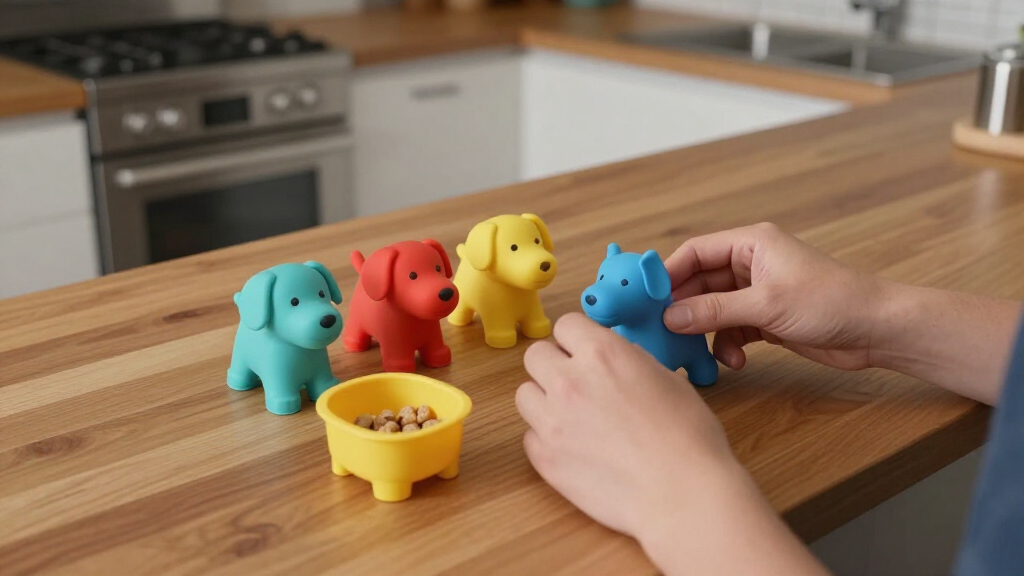
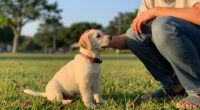
Interactive dog puzzle toys turn treats, meals, or hidden squeakers into problem-solving activities that can occupy a dog more purposefully than a standard chew toy. My best overall pick is the Outward Hound Nina Ottosson Dog Brick because its Level 2 format offers a useful balance of accessibility, variety, and room for dogs to improve. The Forfon 9 Pack offers broader activity value, while the KADTC Dog Chess Puzzle is the stronger match for experienced problem-solvers needing a harder challenge. The main tradeoffs are difficulty versus frustration, food capacity versus cleaning effort, and intricate play versus durability. Continue reading for my full breakdown of which design best fits each dog and household.

Get pet supplies delivered free with Prime
- Fast, free delivery on millions of items
- Prime Video, Amazon Music and more included
- Member-only deals all year
Complete the kit


Key Takeaways
- The Outward Hound Dog Brick takes the top position because its Level 2 challenge sits between simple treat release and the more demanding KADTC three-level format.
- The Forfon 9 Pack offers the strongest activity-per-purchase value, but its pieces are aimed more squarely at small and medium dogs than large, forceful players.
- The two DR CATCH entries and the Potaroma two-level puzzle make more approachable starting points than Barkwhiz or KADTC, which suit dogs already familiar with multi-step tasks.
- The Hide-A-Squirrel is the clearest non-food alternative in the lineup, trading precise difficulty control for prey-style searching and squeaky plush play.
- Adjustable and moving dispensers such as the BSISUERM ball encourage more physical activity, while board puzzles provide better control over challenge level and treat placement.


| interactive dog puzzle toy | Material | Height |
|---|---|---|
| Potaroma Dog Puzzle Toy 2 Leve | Food-grade polypropylene | 4.2 inches |
| FOXMM Interactive Dog Treat Pu | Food-grade polypropylene plastic | 1.2 inches |
| Barkwhiz Dog Puzzle Toy 3 Leve | Food-safe, long-lasting material | — |
| DR CATCH Dog Puzzle Food Feede | — | 1.14 inches |
| Interactive Treat Dispensing D | Food-grade polypropylene | — |
| BoYoYo Interactive Dog Toys Tr | — | — |
| Outward Hound Hide-A-Squirrel | Plush | 7.1 inches |
| Outward Hound Nina Ottosson Do | — | — |
| BSISUERM Adjustable Treat Disp | ABS plastic | 3.44 inches |
| PETSTA Dog Puzzle Toys Treat D | Durable, non-toxic material | 1.3 inches |
| DR CATCH Dog Puzzle | — | 1.14 inches |
| Outward Hound Nina Ottosson Do | — | — |
| Forfon 9 Pack Dog Enrichment T | — | — |
| Dog Puzzle Toys Interactive Tr | Toxic-free durable plastic | 1.1 inches |
| KADTC Dog Chess Puzzle Toy | Food-grade ABS | — |
More Details on Our Top Picks
Potaroma Dog Puzzle Toy 2 Levels
I rank the Potaroma Dog Puzzle Toy first because its two-stage dispenser balances mental work with slower eating for dogs across a broad range of sizes. The 4.2-inch upright design creates a different challenge from the flat sliding compartments of the FOXMM puzzle, requiring repeated interaction rather than simple panel movement. It is also more approachable than the three-level Barkwhiz, making it a stronger starting point for households that want some difficulty without a steep learning curve. A non-slip base helps keep the activity focused, while food-grade polypropylene supports regular treat or kibble use. The tradeoff is less convenient deep cleaning because the parts are not removable. Determined chewers also need close supervision, and hesitant dogs may require guided introductions before they understand the dispensing action.
Pros:- Two dispensing levels provide more engagement than a basic single-action feeder
- Slow-release format can extend meals and discourage rapid eating
- Food-grade polypropylene suits routine contact with treats and kibble
- Non-slip base limits tipping and wasted food
Cons:- Non-removable parts can make crevices harder to clean thoroughly
- The structure is not intended to withstand aggressive chewing
- Inexperienced dogs may need help learning the two-stage action
Best for: Owners of small through large dogs who want one puzzle to combine moderate problem-solving with slower kibble or treat delivery
Not ideal for: Buyers who prioritize fully removable components for detailed cleaning or need a toy that can withstand unsupervised chewing
- Puzzle Levels:2
- Height:4.2 inches
- Material:Food-grade polypropylene
- Feeding Function:Slow feeder and treat dispenser
- Base:Non-slip
- Breed Suitability:All breeds
- Cleaning:Easy-clean, non-removable parts
Our verdict“This is my pick for buyers seeking the best balance of approachable difficulty, feeding control, and broad breed suitability.”
FOXMM Interactive Dog Treat Puzzle Toy
The FOXMM Interactive Puzzle earns its place through unusually broad pet compatibility: puppies, adult dogs, and cats can all work its sliding food compartments. I would choose it over the Potaroma for a mixed-pet household because the flat 10-inch activity board is accessible from several angles, while the built-in squeaker offers an extra prompt for animals that ignore food-only puzzles. Its 1.2-inch profile also stores more easily than taller dispensers. That accessibility limits its challenge, though; experienced problem-solvers may master the sliding pattern faster than the three-level Barkwhiz. The food-grade washable plastic supports repeat feeding sessions, but it is not a chew toy or an unsupervised boredom solution. Powerful jaws can damage the moving pieces, and the squeaker may be unwelcome in quiet homes.
Pros:- Suitable for puppies, adult dogs, and cats
- Sliding compartments encourage food searching and slower eating
- Built-in squeaker can attract pets that lose interest quickly
- Low-profile board is easier to store than upright dispensers
Cons:- Sliding mechanism may offer too little difficulty for experienced puzzle users
- Moving plastic pieces can be damaged by forceful chewers
- Squeaker may be distracting in noise-sensitive households
Best for: Households with cats and dogs that need a shared, low-profile food puzzle with sound-based encouragement
Not ideal for: Owners of aggressive chewers or advanced puzzle dogs that quickly master straightforward sliding compartments
- Length:10 inches
- Width:10 inches
- Height:1.2 inches
- Material:Food-grade polypropylene plastic
- Puzzle Action:Sliding food compartments
- Sound Feature:Built-in squeaker
- Suitable Pets:Puppies, dogs, and cats
- Feeding Function:Slow feeding and treat seeking
Our verdict“This model makes the most sense when several kinds or sizes of pets need an accessible puzzle they can use under supervision.”
Barkwhiz Dog Puzzle Toy 3 Levels
I place the Barkwhiz Three-Level Puzzle above simpler boards for dogs that already understand basic treat games. Its combination of a flip game and linear sliding track demands more than the single sliding action offered by the DR CATCH model, while 14 food holes can spread rewards across a longer session. Six silicone pads help prevent the board from skidding as a dog works through those layered actions. This added complexity is the main reason to buy it, but it is also the main limitation: puppies and first-time puzzle users may become frustrated instead of engaged. Compared with the two-level Potaroma, it asks for more varied problem-solving but may require more owner guidance. The food-safe, easy-clean construction supports repeated use, although supervision remains necessary because determined chewing can damage puzzle components.
Pros:- Three levels provide a stronger challenge than basic sliding feeders
- Flip and linear-track actions add problem-solving variety
- Fourteen food holes can distribute rewards across a longer activity
- Six silicone pads stabilize the board during active play
Cons:- Difficulty may discourage puppies and inexperienced puzzle users
- Owners may need to demonstrate separate actions before independent play
- It cannot safely serve as an unsupervised chew-resistant toy
Best for: Dogs that have mastered entry-level sliders and need multiple puzzle actions to stay occupied during treat sessions
Not ideal for: Very young, hesitant, or puzzle-naive dogs that may become frustrated by three levels of difficulty
- Difficulty Levels:3
- Food Holes:14
- Puzzle Actions:Flip game and linear track sliding game
- Material:Food-safe, long-lasting material
- Anti-Slip Pads:6 silicone pads
- Feeding Function:Slow feeding and treat play
- Breed Suitability:All breeds
- Cleaning:Easy-clean construction
Our verdict“I recommend this for practiced puzzle dogs that need layered actions rather than another easy sliding board.”
DR CATCH Dog Puzzle Food Feeder Toy
The pink DR CATCH Food Feeder Puzzle is the most targeted choice here, built around cats, puppies, and small dogs rather than every breed size. I favor it for petite pets because the 9.44-inch square, 1.14-inch-high board keeps the sliding pieces within easy reach and provides a stable feeding surface without the taller action of the Potaroma. Hidden food encourages searching while dividing a meal into smaller rewards, which can reduce gulping and add activity to indoor routines. Compared with the FOXMM board, it lacks a listed squeaker and offers a more narrowly defined size range, but that simpler format may suit noise-sensitive homes. Its limits are clear: larger dogs can overpower the board, persistent chewers may damage its parts, and supervised sessions are required.
Pros:- Low-profile layout keeps sliding pieces accessible to small pets
- Food compartments combine mental activity with slower eating
- Compact square footprint suits smaller feeding areas
- Works for both cats and young or small dogs
Cons:- Restricted size range makes it a poor match for larger dogs
- Puzzle parts are not built for persistent or forceful chewing
- Simple sliding play may be mastered quickly by advanced solvers
Best for: Owners of cats, puppies, or small dogs who want an accessible sliding puzzle that can also slow down meals
Not ideal for: Medium or large dogs that may find the board cramped or apply too much force to its lightweight puzzle parts
- Length:9.44 inches
- Width:9.44 inches
- Height:1.14 inches
- Color:Pink
- Suitable Pets:Cats, puppies, and small dogs
- Puzzle Action:Sliding treat compartments
- Feeding Function:Food puzzle and slow feeder
Our verdict“This is my small-pet pick for buyers who value easy access and meal pacing more than high puzzle difficulty.”
Interactive Treat Dispensing Dog Puzzle Toy
This Interactive Treat Dispensing Puzzle stands out for dishwasher-safe cleaning, a practical advantage when wet treats or oily kibble leave residue in food compartments. I would choose it over the Potaroma when low-effort cleanup matters more than a clearly defined two-level challenge. Its non-slip base helps dogs and cats focus on foraging instead of chasing the board, while the squeaker can renew attention during slower sessions. Food-grade, BPA-free polypropylene also makes it suitable for regular food contact. Yet the listing does not provide dimensions or a stated difficulty level, so matching it confidently to a particular dog is harder than with the measured FOXMM or three-level Barkwhiz. The missing size information is a real purchasing drawback, and aggressive chewers still require another kind of enrichment toy.
Pros:- Dishwasher-safe design reduces cleanup after messy food sessions
- Non-slip base keeps the puzzle steadier during foraging
- BPA-free, food-grade polypropylene is suited to treat contact
- Squeaker adds a second form of engagement beyond food scent
Cons:- No listed dimensions make fit and portability difficult to judge
- No stated difficulty level for matching the toy to a dog’s experience
- Aggressive chewers can damage it and require close supervision
Best for: Busy multi-pet households that want a washable treat puzzle for supervised use with dogs of varied sizes or cats
Not ideal for: Buyers who need exact measurements for a crate or feeding station, or owners seeking a chew-resistant unattended toy
- Material:Food-grade polypropylene
- Chemical Standard:BPA-free
- Color:Grey
- Dimensions:Not specified
- Suitable Pets:Small, medium, and large dogs; cats
- Base:Non-slip
- Sound Feature:Squeaker
- Cleaning:Dishwasher safe
Our verdict“I would pick this for buyers who prioritize quick cleanup and broad pet compatibility while accepting uncertain sizing and difficulty.”
BoYoYo Interactive Dog Toys Treat Dispensing Puzzle
I rank the BoYoYo Interactive Dog Toy as the best adjustable slow feeder because its food switches let buyers control how readily kibble comes out. That makes it more adaptable than the fixed 3/4-cup layout of the Outward Hound Dog Brick, particularly for dogs that need meals stretched into longer sessions. Its rolling treat challenge also adds movement, while the Brick focuses on stationary lids and sliders. Disassembly and dishwasher-safe parts reduce the cleanup burden after regular feeding. The tradeoff is that rolling can be noisy on hard floors, and the ABS, nylon, and rubber construction is meant for puzzle play rather than sustained chewing. I place it above simpler dispensing balls for adjustable pacing and easier maintenance, but active chewers still need close supervision.
Pros:- Adjustable food switches support different kibble sizes and challenge levels
- Rolling action combines mental work with physical movement
- Disassemblable, dishwasher-safe design simplifies thorough cleaning
- Durable pet-friendly materials suit repeated supervised play
Cons:- Not designed to withstand aggressive chewing
- Rolling action may be disruptive on tile or wood flooring
- Supervision is needed to prevent damage during play
Best for: Owners of medium or large dogs who want to adjust kibble flow and turn fast meals into longer rolling puzzle sessions
Not ideal for: Households with aggressive chewers or noise-sensitive occupants, since it is not chew-proof and may rattle across hard floors
- Primary material:ABS
- Additional materials:Nylon and rubber
- Color:Yellow
- Recommended dog sizes:Medium and large
- Cat compatibility:Yes
- Food-flow control:Adjustable food switches
- Cleaning:Dishwasher safe
- Construction:Disassemblable
Our verdict“I recommend this for medium and large dogs that need adjustable meal pacing and enjoy chasing a moving food dispenser.”
Outward Hound Hide-A-Squirrel Dog Toy with 6 Squeaky Squirrels, X-Large
I give the Outward Hound Hide-A-Squirrel the plush-puzzle role because it rewards sniffing, pulling, and prey-seeking rather than dispensing food. Six squeaky squirrels create repeated retrieval opportunities, making this a better match than the PETSTA puzzle for dogs motivated by toys instead of kibble. The soft trunk can also serve as a cuddly object between games, something hard-plastic alternatives cannot offer. Its gentler style of interaction comes with a major compromise: determined chewers can tear the trunk or squirrels, so this is not the durable choice in the group. Replacement squirrels are available, but buying them raises long-term cost. I rank it as the strongest non-food enrichment option here, especially for larger dogs that enjoy searching and carrying, while destructive dogs should get a sturdier supervised puzzle.
Pros:- Six removable squirrels support repeated hide-and-seek play
- Engages hunting and retrieval instincts without relying on treats
- Soft plush construction works for gentle play and cuddling
- Replacement squirrels can extend the usable life of the trunk
Cons:- Plush construction cannot withstand aggressive chewing
- Loose squirrels may require frequent collection and can be misplaced
- Replacement animals add cost after damage or loss
Best for: Large, food-indifferent dogs that enjoy sniffing, extracting, carrying, and squeaking soft toys
Not ideal for: Power chewers and dogs that shred plush quickly, because both the trunk and removable squirrels can be damaged
- Size class:X-Large
- Length:12.6 inches
- Width:7.1 inches
- Height:7.1 inches
- Included squirrels:6
- Squirrel feature:Squeakers
- Material:Plush
- Replacement squirrels:Sold separately
Our verdict“I recommend this for larger gentle players that prefer plush prey games over food-driven puzzles.”
Outward Hound Nina Ottosson Dog Brick Interactive Treat Puzzle Toy
I select the Outward Hound Nina Ottosson Dog Brick for dogs ready to move beyond basic treat rolling. Its Level 2 layout presents several actions and lets owners vary the setup, so the dog must investigate more than one hiding mechanism. Compared with the BSISUERM dispensing ball, the Brick emphasizes deliberate problem-solving rather than chasing and random food release. It can also hold up to 3/4 cup, allowing a small meal to become a slower, more engaging activity. That capacity will not replace a full bowl for many large dogs, and seasoned puzzle solvers may clear it quickly after learning the pattern. Loose or movable sections also make supervision sensible. I rank it as the most balanced step-up puzzle, but buyers seeking vigorous physical play or a very advanced challenge should choose another format.
Pros:- Level 2 design offers a clear step up from basic dispensers
- Multiple play actions encourage varied problem-solving
- Adjustable setup lets owners modify the challenge
- Slow-feeder function turns up to 3/4 cup of food into an activity
Cons:- Experienced puzzle dogs may learn the layout quickly
- Three-quarter-cup capacity may be too small for large meals
- Requires supervision to discourage chewing of puzzle components
Best for: Dogs graduating from beginner puzzles that benefit from a stationary, multi-action challenge during small meals
Not ideal for: Expert puzzle solvers or large dogs needing full-meal capacity, since the Level 2 challenge and 3/4-cup limit may feel restrictive
- Difficulty:Level 2 Intermediate
- Food capacity:3/4 cup
- Play format:Multiple ways to play
- Difficulty adjustment:Adjustable
- Feeding function:Slow feeding
- Food type:Treats or kibble
- Recommended ages:Dogs of all ages
Our verdict“I recommend the Dog Brick for dogs that have mastered simple puzzles and are ready for a structured intermediate challenge.”
BSISUERM Adjustable Treat Dispensing Ball Food Dispenser
I assign the BSISUERM Treat Dispensing Ball to dogs that need movement alongside mental work. Its adjustable dispensing spheres make food release less immediate, prompting a dog to push and roll the 6.1-inch toy rather than simply open a compartment. Compared with the stationary Outward Hound Dog Brick, this model creates more floor-based activity and accommodates small, medium, and large dogs. The adjustment also gives buyers some control over play duration. Food compatibility is its weak point: exceptionally tiny pieces may fall out too freely, while oversized treats may not dispense reliably. The ABS shell is durable for supervised interaction but is not meant to serve as a chew toy. I rank it ahead of fixed-output balls for customizable rolling enrichment, though buyers wanting predictable portions or quiet play may prefer a tray-style puzzle.
Pros:- Adjustable dispensing supports different food sizes and play durations
- Rolling format encourages movement while the dog works for food
- ABS construction is durable for supervised enrichment
- Dimensions and design accommodate small, medium, and large dogs
Cons:- Very small or oversized treats may not dispense consistently
- Not built for chewing or unsupervised gnawing
- Needs open floor space and may create noise while rolling
Best for: Food-motivated dogs of varied sizes that enjoy batting and rolling toys across an open indoor floor
Not ideal for: Heavy chewers, noise-sensitive homes, or buyers using unusually small or large treats that may dispense inconsistently
- Length:6.1 inches
- Width:3.44 inches
- Height:3.44 inches
- Material:ABS plastic
- Color:Green
- Recommended dog sizes:Small, medium, and large
- Dispensing control:Adjustable treat-dispensing spheres
- Play style:Rolling food dispenser
Our verdict“I recommend this ball for active, food-driven dogs whose owners want adjustable dispensing with more movement than a puzzle tray provides.”
PETSTA Dog Puzzle Toys Treat Dispensing Enrichment Toy
I rank the PETSTA Dog Puzzle Toy as the most versatile stationary option in this group. Its three play modes combine spinning and sliding, seeking and hiding, and treat dispensing, giving buyers more ways to refresh a familiar activity. That variety makes it broader than the Outward Hound Dog Brick, while its anti-slip pads provide a steadier working surface than the rolling BSISUERM dispenser. The 10-inch square layout also works for puppies, adult dogs, and cats in multi-pet homes. Dishwasher-safe construction makes food residue easier to manage after repeated use. The compromise is that variety does not equal high difficulty; advanced dogs may learn the mechanisms quickly. At only 1.3 inches high, it favors floor play but still needs storage space. I choose it for flexible everyday enrichment, not aggressive chewing or expert-level problem-solving.
Pros:- Three play modes provide more variety than a single-mechanism puzzle
- Anti-slip pads help keep the board steady during food searches
- Dishwasher-safe construction supports convenient cleanup
- Suitable for puppies, adult dogs, and cats
Cons:- Advanced puzzle solvers may master the modes quickly
- Not recommended for aggressive chewers
- Ten-inch square board needs more storage space than a compact ball
Best for: Multi-pet households and owners who want several stationary puzzle activities in one washable 10-inch platform
Not ideal for: Aggressive chewers or highly experienced puzzle dogs, since the board is not chew-oriented and may offer limited long-term difficulty
- Length:10 inches
- Width:10 inches
- Height:1.3 inches
- Play modes:3
- Mode types:Spin & Slide, Seek & Hide, treat dispenser
- Material:Durable, non-toxic material
- Cleaning:Dishwasher safe
- Base:Anti-slip pads
- Suitable pets:Puppies, dogs, and cats
Our verdict“I recommend PETSTA for multi-pet homes seeking a washable, stable puzzle with several approachable play modes.”
DR CATCH Dog Puzzle – Food Toys for IQ Training & Mental Enrichment
I rank the DR CATCH Dog Puzzle as the best starting point for puppies, small dogs, and cats learning to move pieces for food. Its simple sliding mechanism teaches the basic nose-and-paw motions used in harder puzzles while spreading treats across several hiding spots, which can slow rushed meals. Compared with the Outward Hound Dog Tornado, this model presents fewer steps and should cause less frustration for a hesitant beginner. That accessibility also limits its staying power: experienced problem-solvers may clear it quickly and need a more layered challenge. The shallow 9.44-inch board suits smaller mouths and living spaces, but it is not built to withstand determined chewing. I would treat it as a supervised training activity, especially with puppies inclined to bite the sliders instead of moving them.
Pros:- Straightforward sliding action helps novice pets learn puzzle mechanics
- Treat hiding provides mental stimulation and rewards problem-solving
- Food distribution can slow fast eating
- Compact dimensions suit small pets and limited floor space
Cons:- Likely too easy for dogs with substantial puzzle experience
- Not designed to resist persistent chewing
- Requires supervision when used by destructive pets
Best for: Owners introducing puppies, toy breeds, small dogs, or cats to food-based puzzle play
Not ideal for: Advanced problem-solvers and aggressive chewers that may solve it quickly or damage the sliding components
- Length:9.44 inches
- Width:9.44 inches
- Height:1.14 inches
- Puzzle mechanism:Sliding parts
- Feeding function:Slow feeding and treat hiding
- Suitable pets:Cats, puppies, and small dogs
Our verdict“I recommend this as an approachable first puzzle for small pets, provided it is removed once searching turns into chewing.”
Outward Hound Nina Ottosson Dog Tornado – Level 2 Interactive Treat Puzzle Toy
The Outward Hound Nina Ottosson Dog Tornado earns its place through a clear intermediate challenge: dogs must rotate three spinning layers to expose hidden food. That repeated movement gives practiced beginners more work than the DR CATCH sliding board without demanding the multi-stage strategy of the KADTC Dog Chess. Its half-cup capacity also makes it useful for turning part of a meal into a slower, mentally active routine. I place it below adjustable three-level models for long-term progression, since clever dogs may learn its rotation pattern and finish rapidly. The spinning format can be physically engaging, but it also invites grabbing or chewing if frustration sets in. This is a Level 2 puzzle, not a chew toy, and the modest capacity is better for treats or small meals than a full serving for a large dog.
Pros:- Three rotating layers create a more active challenge than a basic slider
- Level 2 design bridges beginner and advanced puzzle formats
- Half-cup capacity can slow treats or a small meal
- Difficulty can be adjusted through different setup techniques
Cons:- Experienced dogs may memorize the spinning pattern
- Half-cup capacity is restrictive for larger meals
- Spinning sections can attract chewing and require supervision
Best for: Dogs that have mastered basic sliders and are ready for a repeatable intermediate spinning challenge
Not ideal for: Advanced puzzle solvers or large dogs needing more than half a cup of food in one session
- Difficulty level:Level 2 (Intermediate)
- Spinning layers:3
- Food capacity:1/2 cup
- Food type:Kibble or treats
- Puzzle action:Rotating layers
- Primary uses:Treat dispensing, slow feeding, and mental stimulation
Our verdict“I would choose the Dog Tornado for a dog ready to graduate from simple sliders but not yet prepared for a complex chess-style puzzle.”
Forfon 9 Pack Dog Enrichment Toy Set with Puzzle Toy & Lick Mats for Small & Medium Dogs
I give the Forfon Dog Enrichment Toy Set the variety role because it combines a puzzle, lick mats, treat balls, and handling accessories rather than relying on one problem-solving format. Compared with the Dog Tornado, it offers more ways to rotate activities: licking can settle a dog, balls add movement, and the puzzle supplies a focused food search. That range makes it useful for owners still discovering which enrichment style holds their dog’s attention. The tradeoff is that this is a broad starter bundle, not the strongest choice for a progressively harder puzzle curriculum; only one included item is identified as a puzzle toy. Its small-to-medium-dog focus also reduces its appeal for large, powerful pets. Several pieces still call for supervision, and buyers wanting one sophisticated challenge will get more depth from the KADTC Dog Chess.
Pros:- Multiple activity formats help prevent repetition
- Two lick mats support calming, slower food delivery
- Three treat balls add movement to food-based enrichment
- Included cleaning and storage accessories simplify set management
Cons:- Only one item in the bundle is identified as a dedicated puzzle
- Not sized for large dogs
- Individual pieces may require supervision during active play
Best for: Owners of small or medium dogs who want to alternate licking, rolling, and puzzle-feeding activities
Not ideal for: Large power chewers or buyers seeking one advanced puzzle with clearly defined difficulty stages
- Set format:9-pack enrichment set
- Lick mats:2
- Puzzle toys:1
- Treat balls:3
- Included tools:1 silicone spatula and 1 brush
- Included bags:2
- Suitable dog sizes:Small and medium
- Use locations:Indoor and outdoor
Our verdict“I favor this set for variety-seeking small- and medium-dog households, not for buyers focused on a single advanced brain game.”
Dog Puzzle Toys Interactive Treat Dispenser for Smart Dogs and Cats
This Interactive Treat Dispenser takes the progression spot because its difficulty levels 1 through 3 let owners raise the challenge without immediately replacing the board. That gives it more developmental range than the single-level DR CATCH puzzle and a broader learning path than the Level 2 Dog Tornado. Built-in, non-removable play pieces reduce the nuisance and risk of loose components, while the 10-inch footprint remains manageable for puppies, small dogs, and cats. I would still match the initial setup to the pet: starting too high could create frustration rather than productive searching. The fixed pieces also introduce a cleaning compromise, since food residue may be harder to reach than on a dishwasher-safe model such as the KADTC Dog Chess. At 0.9 pounds, it is relatively light, so forceful pets may shift it during play.
Pros:- Three difficulty levels support gradual skill development
- Built-in pieces reduce loose-part handling
- Works as both a treat dispenser and slow feeder
- Compact square board suits small pets
Cons:- Higher settings may frustrate inexperienced pets
- Non-removable components can make detailed cleaning harder
- Lightweight construction may shift under forceful pawing
Best for: Owners of small dogs, puppies, or cats who want one puzzle that can become harder as problem-solving skills improve
Not ideal for: Very young beginners needing only a simple task or owners wanting fully accessible, dishwasher-friendly components
- Length:10 inches
- Width:10 inches
- Height:1.1 inches
- Weight:0.9 pounds
- Material:Toxic-free durable plastic
- Difficulty range:Levels 1-3
- Play pieces:Built-in and non-removable
- Suitable pets:Small dogs, puppies, and cats
Our verdict“I recommend this model for small pets that need a puzzle with room to progress, as long as fixed-piece cleaning is acceptable.”
KADTC Dog Chess Puzzle Toy, 3-Levels, Mental Stimulation for Smart Dogs, Large Size
I place the KADTC Dog Chess Puzzle Toy first for owners who need a larger board with genuine progression. Its three adjustable levels cover beginner through advanced play, giving it more longevity than the fixed Level 2 Dog Tornado and more puzzle depth than the Forfon bundle. Non-slip pads help keep the board planted while a dog works, and dishwasher-safe construction removes much of the cleanup friction created by treat-filled compartments. The food-grade ABS is free from BPA, PVC, and phthalates, which strengthens its case for repeated feeding sessions. Size is also its dividing line: this large-format design may overwhelm very small dogs or consume too much floor and storage space. It still cannot serve as an unattended chew item, so determined biters need supervision despite the durable material.
Pros:- Three adjustable levels accommodate developing and advanced solvers
- Large format is better matched to bigger dogs than compact boards
- Non-slip pads reduce movement during active searching
- Dishwasher-safe construction makes food-contact cleanup easier
Cons:- Large footprint may be awkward for small dogs and tight storage areas
- Still vulnerable to damage from determined chewing
- Supervision is needed when dogs bite rather than manipulate the puzzle
Best for: Medium or large dogs that need a stable, washable puzzle with difficulty settings that can advance over time
Not ideal for: Toy breeds, cramped homes, and destructive chewers that need an unsupervised chew-safe toy
- Size:Large
- Difficulty settings:3 adjustable levels
- Skill range:Beginner to advanced
- Material:Food-grade ABS
- Chemical exclusions:BPA-free, PVC-free, and phthalate-free
- Non-slip pads:Yes
- Dishwasher safe:Yes
- Primary uses:Mental stimulation and slow feeding
Our verdict“I would pick the KADTC for a medium or large dog whose owner wants adjustable challenge, strong stability, and easier cleanup in one board.”
How We Picked
I ranked these toys by how well they support active problem-solving, not simply by how many compartments or accessories appear in the product name. My main criteria were challenge progression, clarity of cause and effect, treat-placement flexibility, dog-size suitability, and the likelihood that an owner could adjust the activity before frustration set in. I also weighed build format and supervision needs, since a detailed puzzle loses value when loose parts, plush pieces, or exposed edges are a poor match for a dog’s play style. Products with a clear role and broad everyday usefulness ranked above designs offering a narrower form of engagement.
The top positions favor puzzles that balance repeatable challenge with manageable setup. Beginner options earned credit for accessible interactions, while harder models moved higher only when their added complexity created meaningful progression rather than extra fiddliness. I treated cleaning effort, meal capacity, storage, noise, and accessory count as ownership costs because they affect how often a toy will actually enter the rotation. Value reflects useful variety and replay potential, not merely the lowest advertised price.
Factors to Consider When Choosing Interactive Dog Puzzle Toys
The right puzzle should match how a dog solves problems, how strongly it handles objects, and how much setup an owner will repeat during a normal week. I would choose the interaction style first, then narrow the field by difficulty, size, cleaning demands, and food capacity. A toy that appears advanced on paper may offer less enrichment than a simpler design that stays challenging without causing frustration.
Match Difficulty to Puzzle Experience
Difficulty labels are useful starting points, but they do not measure every dog’s persistence or learning speed. I would begin a puzzle newcomer with one obvious action, such as sliding a cover or moving an exposed piece to reveal food. Dogs that already understand those actions can move toward rotating layers, sequential steps, or mixed mechanisms. Starting too hard can lead to barking, chewing, flipping the board, or walking away, none of which creates productive mental work. A good progression lets the owner leave compartments partly open during early sessions and add resistance later. I would favor adaptable difficulty over the highest level available because successful repetition builds better puzzle habits.
Choose Between Board, Rolling, and Plush Play
Board puzzles concentrate the activity in one place and give owners precise control over where rewards appear. Rolling dispensers add movement and suit dogs that enjoy chasing, pawing, or eating across a larger floor area. Plush hide-and-seek toys replace food retrieval with searching, pulling, and squeaking, which can suit dogs that are less motivated by treats. The tradeoff is that plush puzzles usually offer less measurable progression than boards with several mechanisms. I would choose a rolling design only where noise and wandering kibble will not disrupt the household. For mixed preferences, rotating interaction styles creates more variety than buying several similar boards.
Fit Openings and Pieces to the Dog
A puzzle can be physically large yet still have handles, covers, or food openings that are awkward for a broad muzzle or large paws. Small dogs may struggle with stiff parts, while forceful dogs can send lightweight boards sliding before they learn the intended action. I would look for reachable compartments and stable footing rather than relying on an all-breeds label. Removable pieces should also be too large for the dog to swallow and easy for the owner to count after play. Cats and small dogs may share some treat puzzles, but their pawing styles and food portions can call for different setups. Good sizing gives the dog room to manipulate the puzzle without turning every session into brute-force play.
Separate Puzzle Strength From Chew Durability
Interactive puzzles are usually problem-solving tools, not substitutes for dedicated chew toys. A dog that bites harder when food becomes difficult may damage sliders, lids, fabric, or rotating parts even when the main body feels sturdy. I would supervise early sessions and watch whether the dog uses nose-and-paw problem-solving or shifts quickly to gnawing. More complex models can contain extra seams and movable components, creating more places for a determined chewer to grip. Plush puzzles demand even closer attention when a dog tears fabric or removes squeakers. For destructive players, short guided sessions with a simpler, stable design are often more useful than paying for maximum complexity.
Plan for Cleaning and Treat Management
Food residue collects around sliding tracks, recessed wells, textured surfaces, and narrow dispenser openings. Wet fillings extend playtime but can make an intricate mechanism much harder to wash than a basic lick mat or open compartment. I would reserve sticky foods for simple, accessible surfaces and use dry treats or kibble in enclosed mechanisms. The toy’s food volume also affects daily calories, especially when several enrichment activities happen in one day. Using part of the normal meal can preserve the activity without creating an unnoticed stream of extras. A puzzle that is quick to refill and dry will usually deliver more long-term value than one that sits unused after a messy session.
Pay for Replay Value, Not Extra Parts Alone
A higher price makes sense when it buys adjustable difficulty, several genuinely different actions, or a format suited to frequent meal use. Accessory bundles can offer strong value, but only when the dog will use the lick mats, feeders, and smaller activities rather than ignoring half the set. I would compare cost per useful activity instead of counting pieces on the box. Storage matters too, since bulky boards and multi-item kits can become inconvenient in small homes. Dogs often regain interest after a toy leaves the rotation for a week, so three distinct puzzles may outperform one elaborate model used every day. The best investment creates repeatable novelty without excessive setup.
Frequently Asked Questions
Should I Start With a Level 1, Level 2, or Level 3 Dog Puzzle?
I would start most puzzle newcomers below the hardest level their owner thinks they can handle. A Level 1 or accessible Level 2 toy teaches that deliberate actions reveal rewards, while harder puzzles may encourage flipping or chewing before that connection forms. Dogs that quickly solve exposed sliders can move to layered actions, rotating sections, or covered compartments. Difficulty should rise when the dog works calmly and finishes without repeated help, not simply because of age or breed. A model with several setup options can bridge levels without requiring an immediate replacement.
Are Interactive Dog Puzzle Toys Safe to Leave Out Unsupervised?
I would not assume a puzzle is safe for unsupervised use, especially during the first several sessions. Sliding caps, plush animals, squeakers, and rotating pieces can become chewing or swallowing hazards when a dog stops following the intended play pattern. Supervision also reveals whether the difficulty is causing frustration or whether the toy moves too easily across the floor. Once an owner understands the dog’s behavior, some sturdy dispensers may suit longer sessions, but manufacturer guidance still applies. Damaged parts, deep bite marks, and missing components are signs to end access immediately.
Which Puzzle Type Works Best for a Dog That Is Not Food-Motivated?
A plush hide-and-seek design such as the Outward Hound Hide-A-Squirrel is the clearest fit in this lineup because searching and squeaking provide the reward. Owners can also build interest in a board puzzle by using a favorite toy scent or enthusiastic social praise, though many compartments are designed specifically around food. Rolling dispensers are usually less compelling when the dog has little interest in the contents. I would prioritize the dog’s preferred behavior—sniffing, pulling, chasing, or squeaking—over a claimed intelligence level. For non-food-driven dogs, play style matters more than compartment count.
Can a Dog Puzzle Replace a Slow-Feeder Bowl?
Some treat-dispensing puzzles can serve part or all of a dry meal, but their capacity and cleaning design vary. A puzzle slows eating by requiring repeated actions, which adds mental work alongside pacing. It may be less practical for wet food, large portions, or households that need a fast cleanup after every meal. I would check that the dog can retrieve the full serving without leaving food trapped in inaccessible tracks. For regular feeding, a model built around meal-sized portions and washable surfaces is a better choice than a small treat-only board.
What Should I Choose for a Large Dog or Strong Chewer?
I would prioritize a stable base, appropriately sized moving pieces, and short supervised sessions. The KADTC large-format chess puzzle is the more purpose-matched option here for a larger experienced solver, while lightweight boards may slide or invite grabbing. Size alone does not make a puzzle chew-proof, and added mechanisms can create more vulnerable edges. Strong chewers often do better when the owner keeps early tasks easy enough to reward nudging and pawing instead of biting. If the dog persistently gnaws the toy, I would switch to guided puzzle time plus a separate chew.
Conclusion
For most buyers, I would choose the Outward Hound Nina Ottosson Dog Brick as the best overall option because its Level 2 design offers a balanced step beyond basic treat retrieval. The Forfon 9 Pack is my best-value recommendation for small or medium dogs whose owners want several enrichment formats in one purchase, while the KADTC Dog Chess Puzzle is the best premium-style choice for larger, experienced solvers. Beginners are better served by the approachable DR CATCH puzzle or Potaroma’s two-level format before moving to Barkwhiz or KADTC. For specific needs, I would select the Hide-A-Squirrel for non-food play, the BSISUERM adjustable ball for active dispensing, and the Dog Tornado for repeatable rotating play. The right final choice depends less on the largest feature list and more on whether its difficulty, movement, and maintenance fit the dog’s everyday routine.
Fall Picks
fall essentials
As an affiliate, we earn on qualifying purchases.