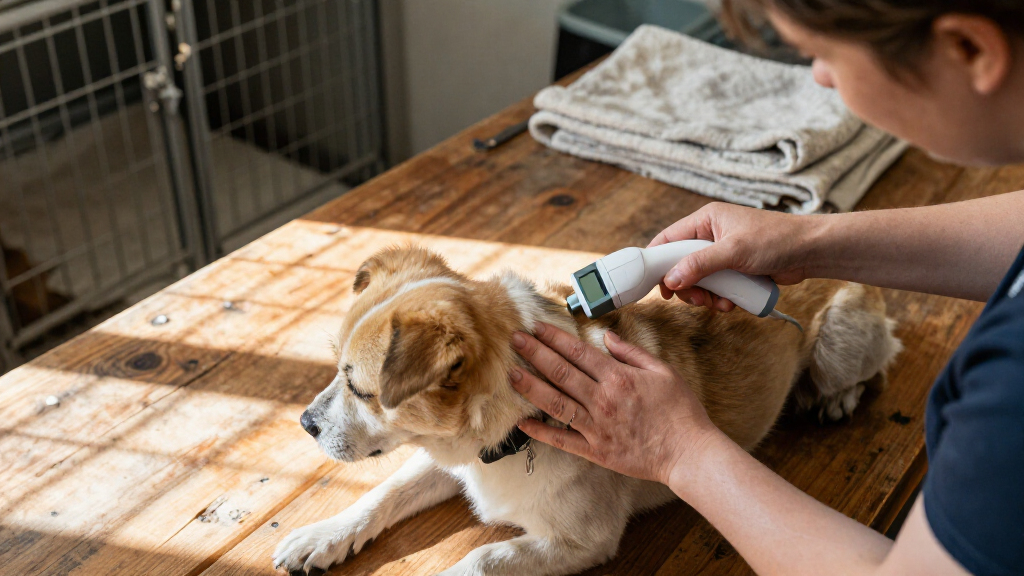
The best pet microchip scanner overall in this roundup is the Symcode Pet Microchip Scanner with TFT Display, Bluetooth and USB, thanks to its combination of a readable screen and several ways to transfer data. For a simpler handheld option, the Tera Portable Pet Microchip Reader stands out with its OLED display, while the Hero Universal Bluetooth Microchip Scanner is the pick for buyers who need stated ISO and non-ISO chip support. The main tradeoffs are chip compatibility, record handling, and portability: extra connectivity or storage helps in busy settings, but can be unnecessary for occasional checks. Read on for the full comparison, how the picks were ranked, and what to verify before choosing a scanner.

Get pet supplies delivered free with Prime
- Fast, free delivery on millions of items
- Prime Video, Amazon Music and more included
- Member-only deals all year
Complete the kit


Key Takeaways
- The Symcode Bluetooth-and-USB model is the strongest all-rounder on paper: its TFT display and multiple data-transfer options serve more workflows than a basic handheld reader.
- Compatibility claims matter more than screen size: the Hero explicitly lists ISO and non-ISO support, while the Smoostart PT160 names FDX-B and EMID formats; match stated formats to the chips you expect to encounter.
- Large record storage is a specialist advantage, not a universal need: the Symcode MJ-Q45’s 9000+ record storage is aimed at high-volume tracking, whereas occasional users may prefer a simpler reader.
- Wireless features are useful only when they fit the workflow: Bluetooth and 2.4 GHz connections on models such as the Alacrity and NETUM can aid data handling, but add setup and compatibility questions.
- The lineup includes several straightforward handheld alternatives: Tera, AHANIN, Watris Veiyi, and ISENVO models focus on compact reading and displays, so buyers should compare their documented chip support and charging needs rather than assume they perform alike.
| Symcode Pet Microchip Scanner with TFT Display, Bluetooth and USB |  | Best for Wireless Record Management | Supported protocols: FDX-B (ISO 11784/11785), EMID, ID64 | Frequencies: 134.2 kHz and 125 kHz | Display: 1.44-inch high-brightness TFT | VIEW LATEST PRICE | See Our Full Breakdown |
| Tera Portable Pet Microchip Reader with OLED Display |  | Best for Simple, One-Button Scanning | Supported standards: ISO 11784/11785 FDX-B and EMID | Chip format: 15-digit | Storage: Up to 64 tag records | VIEW LATEST PRICE | See Our Full Breakdown |
| AHANIN Portable Pet Microchip Scanner (134.2KHz FDX-B) with OLED Display |  | Best for USB-C Charging and Field Use | Frequency: 134.2 kHz | Supported protocols: ISO 11784/11785, FDX-B | Unsupported protocols: FDX-A, AVID, 9-digit IDs | VIEW LATEST PRICE | See Our Full Breakdown |
| Watris Veiyi Dog Microchip Reader with OLED Display |  | Best for Bright-Display, Multi-Animal Scanning | Supported microchips: 15-digit FDX-B (ISO 11784/11785) and EMID | Unsupported chips: Avid chips and 9-digit IDs | Storage: Up to 128 records | VIEW LATEST PRICE | See Our Full Breakdown |
| Halo Pet Microchip Reader Scanner, Pink |  | Best for Legacy Chip Compatibility | Model: MICRO-ID 014PTS | Compatibility: 15-digit ISO and 10-digit FDX-A microchips; detects 9-digit Avid Friendchips | Connection: USB | VIEW LATEST PRICE | See Our Full Breakdown |
| Symcode Animal Microchip Scanner with 1.44-Inch TFT Screen |  | Best for Flexible Data Transfer | Display: 1.44-inch TFT | Supported protocols: FDX-B, ISO 11784/11785, EMID | Unsupported protocols: FDX-A and Avid | VIEW LATEST PRICE | See Our Full Breakdown |
| ISENVO Rechargeable 15-Digit Pet Microchip Scanner |  | Best for Simple Everyday Scanning | Model: 190A | Supported formats: EMID, ISO 11784/11785 FDX-B, 15-digit | Unsupported chips: Avid and 9-digit IDs | VIEW LATEST PRICE | See Our Full Breakdown |
| Symcode MJ-Q45 UHF Pet Microchip Scanner with 1.77″ TFT Screen and 9000+ Record Storage |  | Best for High-Volume and Livestock Scanning | Model: MJ-Q45 | Display: 1.77-inch high-brightness TFT | Supported standards: EMID, FDX-B (ISO 11784/11785), EPC global UHF Class 1 Gen 2 / ISO 18000-6C | VIEW LATEST PRICE | See Our Full Breakdown |
| Alacrity Pet Microchip Scanner with Bluetooth, 2.4 GHz Wireless, and USB |  | Best for Mixed Computer Setups | Model: MJ-Q40 | Supported formats: ISO 11784/11785 FDX-B, EMID | Unsupported chips: AVID | VIEW LATEST PRICE | See Our Full Breakdown |
| ISENVO Pet Microchip Scanner (Model 190S) |  | Best for Lightweight USB-Based Scanning | Model: 190S | Supported standards: ISO 11784, ISO 11785, FDX-B | Chip format: 15-digit | VIEW LATEST PRICE | See Our Full Breakdown |
| Halo Microchip Scanner, Black, 135 mm Diameter × 33 mm |  | Best for Windows-Based FDX-A and FDX-B Scanning | Microchip compatibility: FDX-B (15-digit) and FDX-A (10-digit) | Standards: ISO 11784 and ISO 11785 | Connection: USB | VIEW LATEST PRICE | See Our Full Breakdown |
| Smoostart PT160 Microchip Scanner for FDX-B/EMID Microchips |  | Best for Simple Batch Recordkeeping | Model: PT160 | Compatible microchip formats: FDX-B/EMID | Unsupported formats: AVID and other unsupported microchip formats | VIEW LATEST PRICE | See Our Full Breakdown |
| NETUM 3-in-1 Wireless Pet Microchip Reader with TFT Screen |  | Best for High-Volume Wireless Records | Model: DJ-130 | Supported microchip types: ISO 11784/ISO 11785, FDX-B, and EMID | Unsupported microchip type: AVID | VIEW LATEST PRICE | See Our Full Breakdown |
| Hero Universal Bluetooth Microchip Scanner for ISO and Non-ISO Chips |  | Best for Broad Chip Compatibility | Microchip compatibility: ISO and 9-, 10-, and 15-digit chips | Connectivity: Bluetooth, up to 25 feet | Display: Blue backlit LCD | VIEW LATEST PRICE | See Our Full Breakdown |
| Treamvp Rechargeable Pet Microchip Scanner, 125/134.2 kHz RFID Reader |  | Best Compact Reader for Small Scan Lists | Frequency: 125 kHz / 134.2 kHz | Supported microchips: EMID and FDX-B (ISO 11784/11785) | Reading time: Under 100 ms | VIEW LATEST PRICE | See Our Full Breakdown |
| pet microchip scanner | Display | Storage | Weight |
|---|---|---|---|
| Symcode Pet Microchip Scanner | 1.44-inch high-brightness TFT | Up to 240 records; listing also mentions 128 | 73.8 g |
| Tera Portable Pet Microchip Re | OLED | Up to 64 tag records | 3.1 oz (90 g) in description; 3.5 oz in product information |
| AHANIN Portable Pet Microchip | OLED | Up to 128 tag records | — |
| Watris Veiyi Dog Microchip Rea | High-brightness OLED | Up to 128 records | — |
| Halo Pet Microchip Reader Scan | — | — | — |
| Symcode Animal Microchip Scann | 1.44-inch TFT | Up to 240 records | — |
| ISENVO Rechargeable 15-Digit P | Backlit | Up to 128 animal chips | 80 g |
| Symcode MJ-Q45 UHF Pet Microch | 1.77-inch high-brightness TFT | 9,000-plus records; up to 16,000 in single mode | — |
| Alacrity Pet Microchip Scanner | 1.44-inch TFT | Up to 240 records | — |
| ISENVO Pet Microchip Scanner | Backlit LCD | Up to 128 records | 6.4 ounces |
| Halo Microchip Scanner | — | — | 0.25 kg |
| Smoostart PT160 Microchip Scan | — | — | 119 g |
| NETUM 3-in-1 Wireless Pet Micr | 1.44-inch TFT | — | — |
| Hero Universal Bluetooth Micro | Blue backlit LCD | — | 13.7 ounces |
| Treamvp Rechargeable Pet Micro | 0.91-inch OLED | — | 2.08 ounces |
More Details on Our Top Picks
Symcode Pet Microchip Scanner with TFT Display, Bluetooth and USB
The Symcode suits shelters and clinics that need to keep scan records and move them beyond the reader. Its 240-record capacity (the listing also mentions 128) and Bluetooth, 2.4G wireless, and USB options offer more ways to transfer information than the USB-only Tera Portable Pet Microchip Reader, which stores up to 64 records. A 1.44-inch display and handheld form make it practical for checking animals away from a desk, while support for FDX-B, EMID, and ID64 covers several common chip types. The tradeoff is compatibility: it does not read Avid, 9-digit, or FDX-A chips, so it is not a universal scanner. Its battery life is listed at up to six hours, making it better suited to planned rounds than all-day use without charging.
Pros:- Stores scan records for later history management
- Supports Bluetooth, 2.4G wireless, and USB transfer
- Reads FDX-B, EMID, and ID64 tags
- Portable handheld design with a display and multiple language support
Cons:- Does not read Avid chips, 9-digit IDs, or FDX-A tags
- Listed storage capacity is inconsistent: 240 records in the specs, with 128 also mentioned
- Battery life is listed as up to six hours
Best for: Shelters, rescues, and clinics that scan multiple animals and want wireless or USB options for managing records.
Not ideal for: Practices that regularly encounter Avid, 9-digit, or FDX-A chips, or need a scanner with confirmed compatibility across those formats.
- Supported protocols:FDX-B (ISO 11784/11785), EMID, ID64
- Frequencies:134.2 kHz and 125 kHz
- Display:1.44-inch high-brightness TFT
- Storage:Up to 240 records; listing also mentions 128
- Connections:Bluetooth, 2.4G wireless, USB
- Battery life:Up to 6 hours
- Dimensions:1.3 × 3.39 × 7.87 inches
- Weight:73.8 g
Our verdict“Choose the Symcode if flexible data transfer matters more than broad chip compatibility.”
Tera Portable Pet Microchip Reader with OLED Display
The Tera is a straightforward choice for users who want to scan, read the result, and export a modest record set without managing wireless connections. Its one-button operation, bright OLED screen, and automatic shutdown after 60 seconds keep routine checks simple. Compared with the Symcode Pet Microchip Scanner, it has fewer transfer options and less storage: the Tera holds up to 64 records and exports through USB, rather than offering wireless transfer and a larger, though inconsistently listed, capacity. The rechargeable battery and included D-ring suit mobile work, and the display is described as readable indoors and in sunlight. Its limits are clear: it reads 15-digit FDX-B and EMID, not FDX-A or AVID, and chip position may need adjustment when a scan does not register.
Pros:- One-button scanning keeps routine checks simple
- Stores up to 64 records with USB export
- OLED display is described as readable indoors and in sunlight
- Rechargeable battery, automatic shutdown, and included D-ring
Cons:- Does not support FDX-A or AVID microchips
- USB is the only listed data connection
- Limited to 64 stored records
Best for: Pet owners, foster carers, and small practices that want a simple rechargeable reader for occasional scans and basic USB record export.
Not ideal for: High-volume shelters or clinics needing extensive record storage, wireless transfer, or support for FDX-A and AVID chips.
- Supported standards:ISO 11784/11785 FDX-B and EMID
- Chip format:15-digit
- Storage:Up to 64 tag records
- Display:OLED
- Connection:USB
- Battery:Built-in rechargeable
- Dimensions:5.3 × 2.3 × 0.3 inches
- Weight:3.1 oz (90 g) in description; 3.5 oz in product information
- Warranty:1 year
Our verdict“Pick the Tera for simple FDX-B scanning and basic USB export, not for broad compatibility or large record sets.”
AHANIN Portable Pet Microchip Scanner (134.2KHz FDX-B) with OLED Display
For animal rescuers or livestock handlers who carry a scanner between locations, the AHANIN pairs a lightweight 80 g body with Type-C charging and storage for up to 128 tags. That gives it twice the listed record capacity of the Tera Portable Pet Microchip Reader, while its USB export remains simpler than the Symcode’s wireless and USB transfer choices. The one-button control and OLED display keep operation uncomplicated, and automatic power-off after 180 seconds helps limit battery drain between scans. Its stated protocol range is narrower, though: it reads standard 15-digit FDX-B chips at 134.2 kHz, not FDX-A, AVID, or 9-digit IDs. The plastic housing keeps weight down but may be a less reassuring fit for rough, heavy-duty handling.
Pros:- Stores up to 128 tag records for USB export
- Rechargeable battery uses Type-C charging
- Lightweight 80 g design for carrying between animals or locations
- One-button operation with an OLED display and automatic power-off
Cons:- Does not read FDX-A, AVID, or 9-digit IDs
- USB is the only listed data-transfer connection
- Plastic housing may be less suited to heavy-duty handling
Best for: Rescue volunteers and field staff who need a light reader, Type-C charging, and room to store 128 standard FDX-B scans.
Not ideal for: Veterinary teams that encounter Avid, FDX-A, or 9-digit chips, or workers who need a tougher housing for demanding daily use.
- Frequency:134.2 kHz
- Supported protocols:ISO 11784/11785, FDX-B
- Unsupported protocols:FDX-A, AVID, 9-digit IDs
- Display:OLED
- Storage:Up to 128 tag records
- Connectivity:USB
- Charging:Rechargeable battery, Type-C
- Auto power-off:180 seconds
- Dimensions and weight:152 × 87 × 39 mm; 80 g
Our verdict“The AHANIN is a practical field reader for standard FDX-B chips when light weight and Type-C charging matter more than broader compatibility.”
Watris Veiyi Dog Microchip Reader with OLED Display
The Watris Veiyi is suited to handlers who scan different species and want a reader with a high-brightness OLED and a simple USB workflow. It reads 15-digit FDX-B and EMID chips, stores up to 128 records, and can transfer them to a computer by USB. That storage matches the AHANIN Portable Pet Microchip Scanner, while the Watris adds a stated low-battery alarm that can help users notice a charge is due before continuing a round. Its listed animal range includes dogs, cats, pigs, cows, sheep, and horses. Compared with the Symcode Pet Microchip Scanner, however, it offers no listed Bluetooth or 2.4G transfer, and its compatibility excludes Avid chips and 9-digit IDs. The plastic body is practical, but the data does not specify a weight or battery runtime.
Pros:- Stores up to 128 tag records and transfers them by USB
- High-brightness OLED is designed for visibility in strong light
- Low-battery alarm gives a charge warning
- Listed for use with dogs, cats, pigs, cows, sheep, and horses
Cons:- Does not read Avid chips or 9-digit IDs
- USB is the only listed data-transfer method
- Battery runtime and device weight are not specified
Best for: Farm, rescue, and veterinary staff who scan several animal types and want a bright display, 128-record storage, and a low-battery alert.
Not ideal for: Clinics that need wireless record transfer or routinely scan Avid and 9-digit chips.
- Supported microchips:15-digit FDX-B (ISO 11784/11785) and EMID
- Unsupported chips:Avid chips and 9-digit IDs
- Storage:Up to 128 records
- Display:High-brightness OLED
- Data transfer:USB cable
- Charging:USB
- Battery alert:Low-battery alarm
- Material and size:Plastic; 13.5 × 6 cm (5.31 × 2.36 inches)
- Suitable animals:Dogs, cats, pigs, cows, sheep, and horses
Our verdict“Choose the Watris Veiyi for multi-animal scanning and a bright OLED, provided USB-only transfer and its chip limits fit your work.”
Halo Pet Microchip Reader Scanner, Pink
The Halo stands apart from the other readers here by covering chip formats they explicitly exclude: it reads 15-digit ISO and 10-digit FDX-A microchips and detects 9-digit Avid Friendchips. That makes it a stronger fit for veterinary or animal-care teams handling animals with older identifiers than the FDX-B-focused Watris Veiyi or Tera. Its large scanning area along the outer edge can make positioning less fussy, and the rechargeable battery is rated for up to 800 scans. The tradeoffs are about setup and connectivity: the Halo connects by USB to Windows systems, is not compatible with Mac, and does not read AKC microchips. It also lacks the listed record storage and wireless transfer of the Symcode, so it is better for compatibility-focused identification than digital record workflows.
Pros:- Reads 15-digit ISO and 10-digit FDX-A microchips
- Detects 9-digit Avid Friendchips
- Large scanning area along the outer edge aids positioning
- Rechargeable battery supports up to 800 scans
Cons:- Not compatible with Mac computers
- Does not read AKC microchips
- No scan-record storage or wireless transfer is listed; carrying case is sold separately
Best for: Veterinary and animal-care teams that encounter 10-digit FDX-A or 9-digit Avid Friendchips and use Windows-based systems.
Not ideal for: Mac users, teams needing wireless transfer or stored scan histories, and anyone who needs AKC chip support.
- Model:MICRO-ID 014PTS
- Compatibility:15-digit ISO and 10-digit FDX-A microchips; detects 9-digit Avid Friendchips
- Connection:USB
- Computer compatibility:Windows 98 or later; not compatible with Mac
- Battery life:Up to 800 scans
- Scanning area:Large area along the outer edge
- Light source:LED
- Dimensions:5.5 × 1.5 × 5.5 inches
- Weight and color:8 ounces; pink
Our verdict“Choose the Halo when legacy FDX-A or Avid Friendchip compatibility matters more than Mac support or wireless record management.”
Symcode Animal Microchip Scanner with 1.44-Inch TFT Screen
The Symcode stands out for buyers who need more ways to move scan data than a basic USB reader provides. It reads FDX-B, ISO 11784/11785, and EMID chips, then sends results by USB, 2.4 GHz wireless, or Bluetooth. Compared with the ISENVO 190A, it adds wireless options and room for nearly twice as many records, which suits clinics or rescue teams handling repeated scans. Its 240-record storage and 16-hour stated operating time also support longer sessions away from a computer. The tradeoff is compatibility: it does not read FDX-A or Avid chips, so buyers should check the tags they encounter. Its screen is useful for on-the-spot reading, but the compact 1.44-inch display is less suited to showing extensive information.
Pros:- USB, 2.4 GHz wireless, and Bluetooth provide flexible transfer options.
- Stores up to 240 records for scanning without an immediate computer connection.
- Supports FDX-B, ISO 11784/11785, and EMID formats.
- Rechargeable battery is rated for up to 16 hours of operation.
Cons:- Does not support FDX-A or Avid chips.
- The 1.44-inch screen limits how much scan information is visible at once.
Best for: Rescue groups and small clinics that scan standard FDX-B or EMID chips and want wireless transfer plus local record storage.
Not ideal for: Buyers who regularly encounter FDX-A or Avid chips, or need a reader verified for those protocols.
- Display:1.44-inch TFT
- Supported protocols:FDX-B, ISO 11784/11785, EMID
- Unsupported protocols:FDX-A and Avid
- Connections:USB, 2.4 GHz wireless, Bluetooth
- Storage:Up to 240 records
- Battery:800 mAh rechargeable
- Operating time:Up to 16 hours
- Data formats:Hexadecimal and decimal
Our verdict“Choose the Symcode if flexible wireless transfer and 240-record storage matter more than broad legacy-chip compatibility.”
ISENVO Rechargeable 15-Digit Pet Microchip Scanner
For a buyer who wants a straightforward reader rather than multiple wireless workflows, the ISENVO 190A keeps operation simple with one-button scanning and a backlit display. It reads 15-digit EMID and ISO 11784/11785 FDX-B chips, and its 128-record memory provides a practical buffer for shelter intake or routine clinic work. Compared with the Symcode Animal Microchip Scanner, it holds fewer records and relies on USB rather than Bluetooth or 2.4 GHz wireless, but that simpler setup may be easier for occasional users. Silent mode can help avoid adding noise during animal handling. Its compatibility limits are clear: it cannot read Avid chips or 9-digit IDs, and the 180-second idle shutoff may interrupt a pause between scans.
Pros:- One-button operation keeps routine scanning uncomplicated.
- Backlit display and silent mode suit quiet, low-light handling.
- Stores up to 128 records and transfers data by USB.
- Lightweight 80 g body and rechargeable battery support portable use.
Cons:- Does not read Avid chips or 9-digit IDs.
- USB is the only listed connection method.
- Automatically shuts off after 180 seconds without a scan.
Best for: Pet owners, foster carers, and small practices that need a simple reader for standard 15-digit chips and occasional record transfer.
Not ideal for: Shelters or clinics that scan legacy Avid or 9-digit chips, or need wireless transfer and larger onboard storage.
- Model:190A
- Supported formats:EMID, ISO 11784/11785 FDX-B, 15-digit
- Unsupported chips:Avid and 9-digit IDs
- Frequency:134.2 kHz / 125 kHz
- Storage:Up to 128 animal chips
- Connection:USB
- Display:Backlit
- Weight:80 g
Our verdict“Pick the ISENVO 190A for uncomplicated 15-digit chip checks, but choose a wireless model if you need more flexible data handling.”
Symcode MJ-Q45 UHF Pet Microchip Scanner with 1.77″ TFT Screen and 9000+ Record Storage
The MJ-Q45 is the lineup’s specialist for mixed animal work, not simply a more elaborate pet-only reader. Its support for FDX-B, EMID, and UHF ISO 18000-6C lets it handle both standard pet chips and compatible livestock ear tags. A 70 cm extendable rod gives handlers more distance from larger animals, while the 1.77-inch high-brightness screen is more practical outdoors than the smaller displays on the Symcode and Alacrity readers. Its stated capacity of 9,000-plus records is far beyond their 240-record limits. That scale comes with a narrower use case: standard glass tube tags have a stated reading range of only greater than 5 cm, and switching between storage and real-time modes takes manual input. Buyers scanning household pets occasionally may find the simpler ISENVO 190A easier to manage.
Pros:- Reads multiple standards, including FDX-B, EMID, and UHF ISO 18000-6C.
- Extendable 70 cm rod helps maintain distance when scanning larger animals.
- Stores thousands of records, with capacity stated as 9,000-plus and up to 16,000 in single mode.
- Large high-brightness TFT screen and USB, 2.4 GHz, and Bluetooth connectivity suit field workflows.
Cons:- Standard glass tube tag reading range is limited to greater than 5 cm.
- Storage and real-time workflows require manual mode switching.
- Its broad livestock-oriented feature set may be unnecessary for household pet scanning.
Best for: Livestock handlers, farms, and high-volume animal facilities that scan compatible pet chips and UHF ear tags across field settings.
Not ideal for: Pet owners who only need occasional standard chip checks, especially if they want a small, simple reader or longer glass-tag scan range.
- Model:MJ-Q45
- Display:1.77-inch high-brightness TFT
- Supported standards:EMID, FDX-B (ISO 11784/11785), EPC global UHF Class 1 Gen 2 / ISO 18000-6C
- Frequency support:134.2 kHz, 125 kHz, UHF 902–928 MHz
- Storage:9,000-plus records; up to 16,000 in single mode
- Connections:USB, 2.4 GHz wireless, Bluetooth
- Battery:1,000 mAh rechargeable lithium
- Extendable rod:70 cm
Our verdict“Choose the MJ-Q45 for high-volume mixed-species field work; for routine pet-only scanning, a simpler reader such as the ISENVO 190A is more direct.”
Alacrity Pet Microchip Scanner with Bluetooth, 2.4 GHz Wireless, and USB
The Alacrity MJ-Q40 fits buyers who want a scanner that can connect across different computer environments without relying on one transfer method. It supports USB, Bluetooth, and 2.4 GHz wireless, with listed compatibility for Windows, macOS, and Linux. Like the Symcode Animal Microchip Scanner, it stores up to 240 records and displays scans on a 1.44-inch TFT screen; it also offers hexadecimal or decimal output for different data workflows. That makes it a stronger fit than the ISENVO 190S for teams that want multiple connection choices rather than USB-only transfer. Its main limitation is chip compatibility: it does not read AVID microchips. Also, pet names and owner details must be uploaded beforehand, so the scanner itself does not identify an animal from the chip alone.
Pros:- USB, Bluetooth, and 2.4 GHz wireless support several data-transfer setups.
- Compatible with Windows, macOS, and Linux.
- Stores up to 240 records and offers instant-upload or storage modes.
- Displays scan data and supports hexadecimal or decimal output.
Cons:- Does not read AVID microchips.
- Pet and owner details must be uploaded to the scanner before they can appear.
- The 1.44-inch display is compact for reviewing information.
Best for: Small clinics and rescue teams using a mix of Windows, macOS, or Linux devices that want wireless or USB scan-data transfer.
Not ideal for: Users who need AVID chip support or expect the scanner to retrieve pet and owner details that have not already been uploaded.
- Model:MJ-Q40
- Supported formats:ISO 11784/11785 FDX-B, EMID
- Unsupported chips:AVID
- Display:1.44-inch TFT
- Connections:USB, 2.4 GHz wireless, Bluetooth
- Data output:Hexadecimal or decimal
- Storage:Up to 240 records
- Battery and operating time:800 mAh rechargeable; up to 16 hours
- System compatibility:Windows, macOS, Linux
Our verdict“Choose the Alacrity MJ-Q40 if cross-platform connectivity and flexible data output matter more than AVID compatibility or built-in pet profiles.”
ISENVO Pet Microchip Scanner (Model 190S)
The ISENVO 190S is a pared-back choice for buyers who want a portable reader for standard international pet chips and do not need wireless connections. It reads 15-digit FDX-B chips compliant with ISO 11784 and ISO 11785, shows results on a backlit LCD, and stores up to 128 records for later PC upload. Compared with the Alacrity MJ-Q40, it gives up Bluetooth and 2.4 GHz transfer as well as the larger 240-record capacity, but its simpler USB-based workflow may suit mobile carers who scan occasionally. The tradeoff is a narrow compatibility range: it cannot read Avid or 9-digit chips. The listing also gives package dimensions rather than the scanner’s own dimensions, so buyers wanting a precise fit for a pocket or kit should not treat those measurements as device size.
Pros:- Reads standard 15-digit ISO 11784/11785 FDX-B microchips.
- Backlit LCD aids reading in dim rooms or field conditions.
- Stores up to 128 records for later PC upload.
- Rechargeable lithium-ion battery and listed 6.4-ounce weight support portable use.
Cons:- Cannot read Avid chips or 9-digit IDs.
- USB is the only listed data connection.
- Package dimensions are provided, not the scanner’s own dimensions.
Best for: Mobile pet carers and small practices that need a rechargeable, backlit reader for standard 15-digit ISO chips and USB record upload.
Not ideal for: Shelters that encounter Avid or 9-digit chips, or teams needing wireless transfer, larger storage, or a confirmed compact device measurement.
- Model:190S
- Supported standards:ISO 11784, ISO 11785, FDX-B
- Chip format:15-digit
- Frequency:134.2 kHz / 125 kHz
- Display:Backlit LCD
- Storage:Up to 128 records
- Battery:Included lithium-ion battery; rechargeable via USB
- Weight:6.4 ounces
Our verdict“Pick the ISENVO 190S for portable, standard-chip scanning with USB record storage, but choose the Alacrity if wireless transfer is a priority.”
Halo Microchip Scanner, Black, 135 mm Diameter × 33 mm
The Halo earns its place for readers who need both FDX-A and FDX-B compatibility rather than a scanner limited to newer common formats. Its ISO 11784 and ISO 11785 compliance makes it a practical option for routine identification checks, while USB recharging avoids disposable batteries. Compared with the Smoostart PT160, which can save up to 1,000 records for later upload, the Halo’s standout is format coverage, not record keeping. It comes with Scanner Angel software, but getting that workflow running requires installing drivers from the included CD, and the software is Windows-only. I’d choose it for a Windows-based setup that needs support for older FDX-A chips; Mac users and buyers seeking a plug-and-play record-management system should look elsewhere.
Pros:- Reads both FDX-A 10-digit and FDX-B 15-digit pet microchips.
- Complies with ISO 11784 and ISO 11785.
- Rechargeable through USB.
- Includes Scanner Angel software for Windows.
Cons:- Not compatible with Mac.
- Driver and software installation requires the included CD.
- No stated onboard record-storage capacity.
Best for: Windows-based shelters, clinics, and animal-care teams that need to read both FDX-A and FDX-B chips.
Not ideal for: Mac users or teams that want extensive on-device record storage and a simple software-free setup.
- Microchip compatibility:FDX-B (15-digit) and FDX-A (10-digit)
- Standards:ISO 11784 and ISO 11785
- Connection:USB
- Rechargeable:Yes, via USB
- Weight:0.25 kg
- Dimensions:135 mm diameter × 33 mm
- System requirements:Windows 98 or later; not compatible with Mac
- Included:Scanner, USB cable, driver CD, and Scanner Angel software
Our verdict“Choose the Halo if your Windows workflow needs FDX-A as well as FDX-B support, but skip it if Mac compatibility or stored records matter more.”
Smoostart PT160 Microchip Scanner for FDX-B/EMID Microchips
The PT160 is a sensible pick for animal-care teams that scan many FDX-B or EMID chips and need to retain the results: its 1,000-record capacity lets staff collect numbers before uploading them to a computer over USB. At 119 g and 12 cm long, it is also easier to carry between rooms than the larger-bodied Hero Universal Bluetooth Scanner. Its upgraded recognition speed and range are intended to make routine scans quicker, while the built-in rechargeable battery keeps battery replacement off the task list. The tradeoff is narrow compatibility: it does not read AVID or other unsupported formats, and it lacks the Hero’s Bluetooth transfer and broad stated support for non-ISO chips. I’d favor the PT160 for repeatable batch logging, not for mixed-chip environments where unknown formats are likely.
Pros:- Stores up to 1,000 scan records for later transfer.
- Uploads stored data to a computer via USB.
- Supports FDX-B and EMID microchips.
- Compact 119 g handheld body with a built-in rechargeable battery.
Cons:- Does not recognize AVID or other unsupported chip formats.
- USB is the stated data-transfer method, with no Bluetooth option listed.
- Plastic construction may be less suited to rough handling than a more ruggedized reader.
Best for: Shelters, breeders, and veterinary teams that scan batches of known FDX-B/EMID animals and upload records by USB.
Not ideal for: Mobile teams working with unknown or mixed chip formats, especially when AVID compatibility or wireless transfer is needed.
- Model:PT160
- Compatible microchip formats:FDX-B/EMID
- Unsupported formats:AVID and other unsupported microchip formats
- Data storage capacity:1,000 records
- Data transfer:USB upload to computer
- Battery:Built-in rechargeable lithium battery
- Weight:119 g
- Dimensions:12 × 6 × 1.5 cm
Our verdict“Pick the PT160 for portable, USB-based batch logging of FDX-B/EMID chips, but choose a broader-format scanner for uncertain chip types.”
NETUM 3-in-1 Wireless Pet Microchip Reader with TFT Screen
For teams that need to scan and organize large numbers of animals, the NETUM’s 20,000-record storage is the defining advantage in this group. It can send data by USB, 2.4GHz wireless, or Bluetooth, and its 1.44-inch TFT screen plus hexadecimal or decimal output options make it more adaptable to different data workflows than the USB-focused Smoostart PT160. A stated 20-hour battery life also suits extended shifts without frequent charging. The compromise is that its broad connectivity does not mean universal chip support: AVID is unsupported, and the reader is not water resistant. I’d put it ahead of simpler scanners for clinics or shelters with established digital record systems, but not for field work in wet conditions or settings where AVID chips are common.
Pros:- Stores up to 20,000 records.
- Transfers data through USB, 2.4GHz wireless, or Bluetooth.
- Supports ISO 11784/11785, FDX-B, and EMID formats.
- Shows readings on a 1.44-inch TFT display and offers hexadecimal or decimal output.
Cons:- Does not support AVID microchips.
- Not water resistant.
- At 100 g, it is heavier than the 119 g Smoostart PT160 only marginally less portable in practice, while offering more storage and connections.
Best for: High-volume shelters and veterinary practices that need substantial scan storage and flexible wireless or USB data transfer.
Not ideal for: Field workers scanning in wet conditions or facilities that need AVID chip compatibility.
- Model:DJ-130
- Supported microchip types:ISO 11784/ISO 11785, FDX-B, and EMID
- Unsupported microchip type:AVID
- Data output:Hexadecimal or decimal
- Display:1.44-inch TFT
- Connectivity:USB, 2.4GHz wireless, and Bluetooth
- Storage capacity:Up to 20,000 records
- Battery life:20 hours
- Water resistance:Not water resistant
Our verdict“Choose the NETUM when large scan archives and multiple transfer options matter more than AVID support or water resistance.”
Hero Universal Bluetooth Microchip Scanner for ISO and Non-ISO Chips
The Hero is the clearest choice here when chip-format variety matters more than building a large digital archive. It reads ISO microchips as well as 9-, 10-, and 15-digit chips, a broader stated range than the Smoostart PT160, which is limited to FDX-B/EMID and explicitly excludes AVID. Bluetooth sends scanned numbers to a device within 25 feet, while the backlit LCD holds a number for 15 minutes—useful if staff need time to match a reading to paperwork. A protective case and rechargeable 9V battery are included. The tradeoff is that its Bluetooth range is limited, and the product data does not list the large onboard storage offered by the NETUM. I’d choose it for varied-chip checks and nearby device transfer, not long-distance wireless work or bulk archiving.
Pros:- Reads ISO and 9-, 10-, and 15-digit microchips.
- Bluetooth transfers scanned numbers to compatible devices within 25 feet.
- Backlit LCD holds the displayed number for 15 minutes.
- Includes a rechargeable 9V battery, charging unit, and protective case.
Cons:- Bluetooth range is limited to 25 feet.
- Uses a 9V battery, unlike models with a built-in lithium battery.
- No onboard record-storage capacity is specified.
Best for: Rescue groups, clinics, and animal-control staff who encounter a mix of ISO and non-ISO chip formats and transfer readings to nearby devices.
Not ideal for: High-volume teams that need extensive onboard storage or users who need Bluetooth connections beyond 25 feet.
- Microchip compatibility:ISO and 9-, 10-, and 15-digit chips
- Connectivity:Bluetooth, up to 25 feet
- Display:Blue backlit LCD
- Display hold:15 minutes
- Battery:Rechargeable 9V battery, included
- Power saving:Auto shut-off
- Length:7 inches
- Weight:13.7 ounces
- Included components:Scanner, rechargeable battery, charging unit, and protective case
Our verdict“Choose the Hero for a broad mix of chip formats and nearby Bluetooth transfer, but opt for the NETUM if large-scale record storage is the priority.”
Treamvp Rechargeable Pet Microchip Scanner, 125/134.2 kHz RFID Reader
The Treamvp favors straightforward portable scanning over the large archives and wireless options found on the NETUM DJ-130. It reads EMID and FDX-B chips at 125 kHz and 134.2 kHz, with a stated reading time under 100 ms; the OLED screen and buzzer give users visual and audible confirmation without relying on a connected phone or computer. Its 2.08-ounce weight and rechargeable battery suit occasional checks or travel between animals. Storage is the main limit: it holds just 128 tag records, far fewer than the NETUM’s 20,000, and its USB connection is the only listed transfer method. The plastic enclosure is another reason to avoid treating it as a rugged field tool. I’d pick it for light-duty scanning where portability and simple confirmation beat extensive data handling.
Pros:- Reads EMID and FDX-B chips compliant with ISO 11784/11785.
- Stated reading time is under 100 ms.
- OLED display and buzzer indicate scan data and status.
- Rechargeable battery and 2.08-ounce weight support portable use.
Cons:- Stores only 128 tag records, well below the NETUM DJ-130’s capacity.
- USB is the only listed data connection.
- Plastic enclosure offers no stated rugged or water-resistant protection.
Best for: Pet owners, small rescues, and mobile caregivers who need a lightweight reader for occasional EMID or FDX-B checks.
Not ideal for: Large shelters needing extensive scan archives, users who require wireless transfer, or teams working in rough environments.
- Frequency:125 kHz / 134.2 kHz
- Supported microchips:EMID and FDX-B (ISO 11784/11785)
- Reading time:Under 100 ms
- Record storage:128 tags
- Display:0.91-inch OLED
- Battery capacity:800 mAh
- Connectivity:USB
- Dimensions:6.89 × 3.46 × 1.38 inches
- Weight:2.08 ounces
Our verdict“Choose the Treamvp for lightweight, occasional FDX-B/EMID scans, but select the NETUM if your work depends on large archives or wireless transfer.”
How We Picked
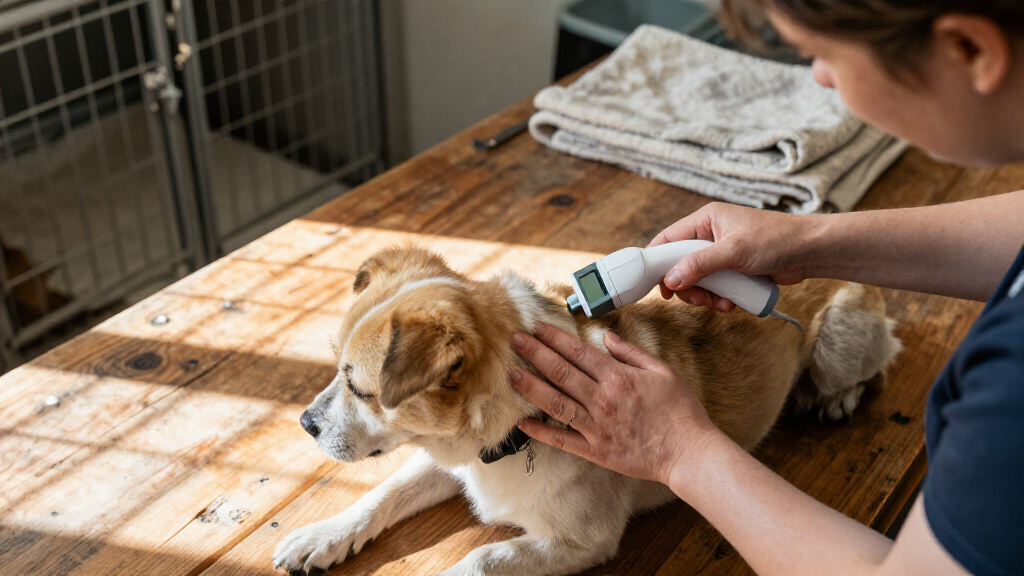
I ranked these scanners around the decisions that affect whether a reader can do its job: stated chip-frequency and protocol support, display legibility, and the usefulness of data handling. A scanner with Bluetooth, USB, or substantial record storage can suit a shelter or clinic, but those extras do not make it a better choice if the required chip format is unclear. I gave more weight to clearly described compatibility and practical controls than to a long feature list alone.
I also compared portability, power approach, and likely setup demands to separate simple personal-use readers from tools aimed at busier workflows. Models with named FDX-B, EMID, ISO, or non-ISO support are easier to match to a known chip environment; broad or missing compatibility details call for verification with the seller or chip provider. The ranking reflects the information supplied for these products, not independent scan testing, so buyers should confirm supported standards and data-transfer requirements before relying on any scanner.
Factors to Consider When Choosing Best Pet Microchip Scanners
Choosing a pet microchip scanner is less about picking the longest feature list and more about matching the reader to the chips, animals, and recordkeeping routine you actually have. These checks can prevent a common mistake: buying a scanner that looks capable but cannot read the chip format in your setting.
Match Chip Standards Before Comparing Extras
Start by finding out which chip standards are used by the pets or organizations you need to scan. Product descriptions may name FDX-B, EMID, ISO, non-ISO, or a frequency such as 134.2 kHz; those terms are more useful than a general claim that a reader is universal. If you cannot identify the chip standard, ask the veterinarian, shelter, chip registry, or chip manufacturer before buying. A frequency listing alone may not answer every protocol-compatibility question. Do not assume that two scanners with similar-looking displays read the same chips. For mixed or unknown populations, favor clearly documented support and confirm the claim with the supplier.
Choose Connectivity for a Real Recordkeeping Task
Bluetooth, USB, and wireless links can move chip numbers into a computer, phone, or records system, but each connection has to fit your devices and process. For a single pet, reading a number and writing it down may be enough; a clinic or rescue may benefit from reducing manual entry. Before paying attention to connectivity, check which operating systems or software the scanner works with and whether exported records use a format your team can open. Wireless pairing can add setup steps and may be less convenient when several people share a reader. A USB connection can be a better fit where a fixed workstation is used. Buy for the handoff you need, not simply because a feature is listed.
Decide How Much Storage Your Workflow Needs
Built-in memory is useful when scans happen away from a computer or when staff need to collect multiple records before transferring them. A capacity such as 9000+ records points toward higher-volume use, but it is less relevant if each scan is entered immediately into another system. Ask whether stored entries include timestamps or other useful details, how records are retrieved, and whether they can be cleared or exported without special software. A large number on its own does not tell you how easy data management will be. For occasional checks, prioritize a clear reading process over storage capacity. For field or shelter work, map the full path from scan to saved record before choosing.
Treat the Display as a Handling and Access Issue
A readable screen helps when an animal moves, lighting is poor, or the person holding the scanner cannot keep it close to their eyes. OLED and TFT describe display types, but the label alone does not tell you the text size, contrast, viewing angle, or visibility outdoors. Look for product details about screen dimensions and readouts, and check whether the chip number stays visible long enough to record. A larger screen may aid quick reading but can make a device less compact. If several staff members or volunteers will use the scanner, straightforward controls can matter more than a feature-rich interface. Think about where scans happen and who needs to read the result.
Check Power, Charging, and Readiness
Rechargeable designs can reduce disposable-battery upkeep, but they also require a charging routine and a way to check battery status. Ask what charging connection is supplied, how long a charge lasts if that information is available, and whether the scanner can be used while charging. For occasional household checks, charging before a planned visit may be easy; a rescue or clinic may need a regular charging station and backup reader. Do not treat the word rechargeable as proof of long runtime. A scanner that is out of power cannot help when an animal arrives unexpectedly. Choose a power setup your household or team can maintain without guesswork.
Balance Portability Against Staff and Animal Handling
Compact readers are easier to carry between rooms or keep in a go-bag, while larger screens and added controls may be more comfortable for repeated use at a desk or intake station. Consider whether one person must hold the animal and operate the scanner at once; grip shape, button placement, and scanner dimensions can affect that task. A lightweight body is not automatically easier to handle if the screen is hard to read or the controls are confusing. If multiple users share the device, favor clear operation and a storage plan so it can be found when needed. For field teams, portability and battery readiness may outrank extensive record features. For fixed work areas, usability over repeated scans may matter more than the smallest size.
Frequently Asked Questions
Will any pet microchip scanner read every chip?
No scanner should be assumed to read every chip just because it is marketed for pets. Compatibility depends on the chip’s frequency and protocol, and product descriptions vary in how specifically they state support. Compare the scanner’s listed standards with information from the chip provider or veterinary clinic. If you regularly encounter animals with unknown chip histories, ask the seller to confirm which formats the model can read. This check is more useful than choosing by screen or wireless features alone.
Is Bluetooth worth choosing over a scanner that only displays the chip number?
Bluetooth is most useful when scan results need to enter a phone, computer, or shared record system without manual typing. For a household checking one pet’s chip, reading the number from the screen may be enough. In a clinic or rescue, transferring data can reduce transcription errors, but only if the scanner works with the devices and software already in use. Confirm whether the connection supports your intended workflow and how pairing is handled. If those details are unclear, a simpler reader may be the more dependable fit.
Should I choose a scanner with large record storage?
Large storage helps when you collect many chip reads before returning to a computer or network. It may not add much value if each number is entered into a database immediately after scanning. Before choosing on capacity, find out how records are labeled, retrieved, exported, and deleted. A storage figure does not explain whether the data can be used conveniently. For teams, check that the record process fits existing intake procedures; for personal use, a clear display may be the higher priority.
Can a microchip scanner show me the pet owner’s contact details?
A scanner generally reads the chip’s identification number; that number is not the same as a contact record. To find an owner, the number usually needs to be checked with the appropriate registry, and the chip must be registered with current details. Registry access and lookup steps can vary by chip and location, so ask a veterinarian, shelter, or animal control service for help if a found pet’s number does not lead to a clear result. Do not assume Bluetooth or built-in storage provides owner information. Those features handle scanner data, not necessarily registry records.
What should I do if the scanner does not detect a chip on the first pass?
First, follow the reader’s instructions and scan slowly over the common implantation area, then widen the search across the animal’s body because chips can migrate. Check that the scanner has power and that its supported standards match the chip if known. A failed read does not prove the animal has no microchip; the chip may be incompatible, damaged, or difficult to detect during that attempt. Ask a veterinary clinic or shelter with another reader to scan the animal, especially when the chip format is unknown. Keep the animal safely restrained and avoid relying on a single unsuccessful pass.
Conclusion
Best overall: I would start with the Symcode Pet Microchip Scanner with TFT Display, Bluetooth and USB for buyers who want a screen plus more than one data-transfer option. Best value for straightforward use: the Tera Portable Pet Microchip Reader is a sensible shortlist pick for buyers prioritizing a portable reader and OLED display, while checking chip compatibility before purchase. Best premium or high-volume fit: the Symcode MJ-Q45 is the specialist choice when its large record storage matches a real tracking workflow, not just as a feature upgrade. Best for beginners: the simpler handheld Tera, AHANIN, or Watris Veiyi options may suit occasional users who want a direct readout without making data management the center of the purchase. Best for specific compatibility needs: choose the Hero for its stated ISO and non-ISO support or the Smoostart PT160 when FDX-B and EMID match the chips you need to read. My final rule is to verify chip support first, then choose the display, connectivity, and storage that fit how you will use the scanner.