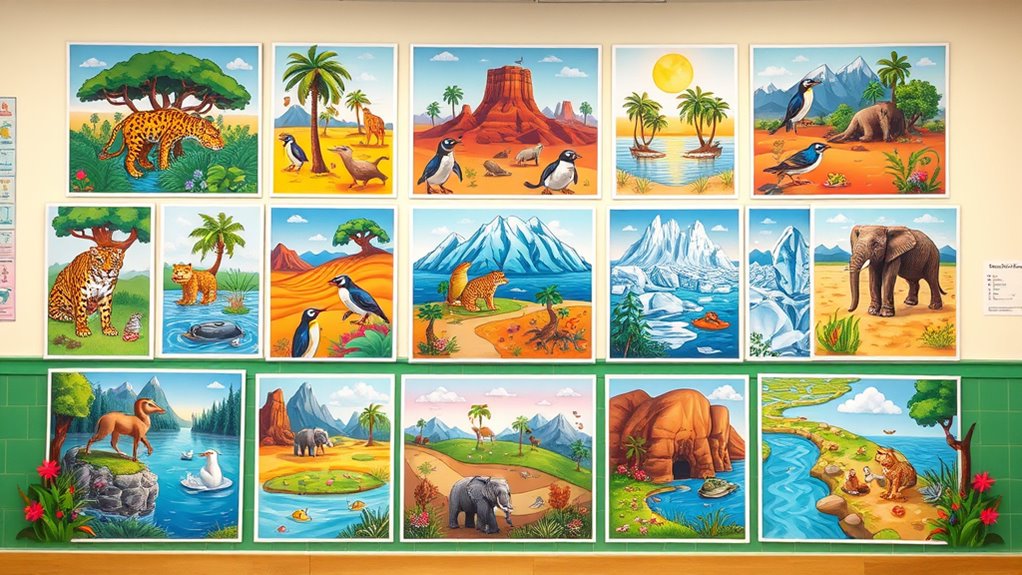

Selecting the right animal habitat educational posters requires balancing visual clarity with physical durability, as classrooms are high-traffic environments where paper degrades quickly. My analysis highlights the Daydream Education Habitats Science Classroom Posters as the best overall choice due to their large format and laminated finish, which resists moisture and wear. For teachers needing a broad overview of global ecosystems, the World Biomes and Ecosystems Bulletin Board Poster Set offers superior variety in a compact size, though it sacrifices some detail. The primary tradeoff in this category lies between specificity and scope: large, single-habitat charts provide deep detail but require more wall space and budget, while multi-poster sets cover more ground but offer less granularity. This guide breaks down which options serve specific grade levels and teaching styles, helping you avoid posters that are too dense for young learners or too simplistic for advanced biology classes.

Get pet supplies delivered free with Prime
- Fast, free delivery on millions of items
- Prime Video, Amazon Music and more included
- Member-only deals all year
Complete the kit


Key Takeaways
- Laminated finishes are the single biggest differentiator for longevity in classroom settings, outperforming gloss paper by a wide margin in high-humidity areas.
- Large-format posters (24×36 inches or larger) are better suited for whole-class instruction from a distance, while smaller sets (9×18 inches) work best for interactive bulletin boards or student journals.
- Posters focusing on single, specific biomes (like marshes or riparian zones) offer higher educational depth than generic ‘animal kingdom’ charts, which often lack ecological context.
- Sets that include both vertebrates and invertebrates are rare but provide a more complete biological picture than standard mammal-centric designs.
- US-made posters often feature higher-quality ink and paper stock, reducing color fading over time compared to mass-produced alternatives, though at a higher entry cost.


| animal habitat educational poster | Material | Dimensions | Weight | Orientation |
|---|---|---|---|---|
| 24×36 Mammals Educational Scie | Poster paper | 24 x 36 inches | — | — |
| Teacher Created Resources Go W | — | — | — | — |
| Bog Habitat Educational Nature | Paper | 36 x 24 inches | 15 ounces | Landscape |
| World Biomes and Ecosystems Bu | Glossy paper | — | 7.4 ounces | — |
| Marsh Habitat Nature Poster | Paper | 36 x 24 inches | 15 ounces | Landscape |
| Wetlands Habitat Educational P | Glossy Photo Paper | 30 in L x 20 in W | 15 oz | Landscape |
| Daydream Education Habitats Sc | Laminated | 33 x 23.5 in each | 1.2 lb | Landscape |
| Animal Habitats and Adaptation | Paper | 18 x 12 in | 1 oz | Portrait |
| Daydream Education Habitats Sc | Gloss Paper | 33 x 23.5 in | 11 oz | Landscape |
| Animal Kingdom Classification | Laminated 100# Paper | — | — | — |
| Where Animals Live | Heavy-duty satin-finish paper | 12 x 18 inches | — | Portrait |
| All About Animals Bulletin Boa | Laminated paper | 17.5 x 12 inches | — | — |
| Riparian Forest Educational Na | Glossy photo paper | 24 x 36 inches | 15 ounces | — |
More Details on Our Top Picks
24×36 Mammals Educational Science Chart Poster
This poster earns its place for buyers who want a large visual devoted to mammals rather than a broad survey of habitats. At 24 x 36 inches, it offers a substantial wall display and a format that is easy to frame, making it a straightforward fit for a classroom science area or a child’s study space. Unlike the Bog Habitat Educational Nature Poster, which centers on one wetland ecosystem and its plants, animals, and birds, this chart focuses narrowly on one animal group. That focus can help when a lesson is specifically about mammals, but the listing gives no detail about species, labels, or habitat coverage. I’d choose it for a simple mammal-themed display, not as a complete habitat reference. Its plain poster-paper construction also calls for more protection than a coated classroom set.
Pros:- Large 24 x 36-inch format is easy to see across a room
- Mammal-focused subject gives a display a clear teaching theme
- Poster format is easy to frame
- Can work as a simple educational gift
Cons:- Covers mammals only, with no broader habitat range specified
- Product details do not describe labels, species, or other teaching content
- Poster paper may need framing or careful handling for classroom use
Best for: Teachers or families building a focused display for a unit on mammals and who can supply their own frame.
Not ideal for: Buyers seeking labeled habitat examples, a broad animal survey, or a more durable coated poster.
- Dimensions:24 x 36 inches
- Material:Poster paper
- Subject:Mammals
- Display:Suitable for framing
- Format:Single poster
- Packaging:Shipped in a protective tube
Our verdict“Choose this for a large, mammal-centered wall display, but pick a habitat-specific chart when ecosystem coverage matters more.”
Teacher Created Resources Go Wild Animals Educational Poster Pack (TCR6824)
This pack suits buyers who want multiple ready-to-hang animal visuals instead of one oversized habitat chart. Its twelve 11 x 15¾-inch posters can be spread across a classroom, bulletin board, or home learning corner, while the coated surface and rounded corners are designed to handle more routine student contact than the uncoated paper of the 24×36 Mammals Educational Science Chart Poster. The tradeoff is that the supplied description emphasizes a range of animal themes but does not identify specific habitats or explain the educational content on each sheet. That makes the set more useful for lively general decoration and flexible displays than for teaching a structured lesson about ecosystems. Compared with the focused Marsh Habitat Nature Poster, it offers more pieces but less clearly defined habitat instruction.
Pros:- Twelve posters allow several small display areas to share one animal theme
- Coated surface is designed to resist wear from regular handling
- Rounded corners reduce sharp edges on posters students may handle
- Ready-to-hang format minimizes display preparation
Cons:- Specific habitats and poster-by-poster content are not described
- Each poster is smaller than the 24 x 36-inch single-chart options
- The general animal focus may not support a targeted ecosystem lesson
Best for: Elementary teachers and homeschool families who want several durable, colorful animal posters for a shared learning space.
Not ideal for: Buyers who need named habitat content, a single large reference chart, or detailed information about each poster’s subject.
- Number of posters:12
- Poster size:11 x 15¾ inches each
- Surface:Coated
- Corners:Rounded
- Themes:Animal-themed variety; individual topics not specified
- Intended display:Classrooms and home learning spaces
Our verdict“Pick this set for a colorful, reusable animal display with variety, not for a clearly specified habitat curriculum.”
Bog Habitat Educational Nature Poster – Wildlife Science Chart (24″ x 36″)
For a lesson centered on a particular ecosystem, this is the most targeted choice in this group: its large landscape layout brings bog plants, animals, and birds together on one chart. That makes it a closer habitat-teaching fit than the mammal-only 24×36 Mammals Educational Science Chart Poster, while its 24 x 36-inch size gives the subject room to read as a wall reference. The glossy photo-paper finish is intended to make the imagery vivid, but the poster remains paper and is unframed, so it needs a protected indoor spot or separate mounting. It is also more specialized than the World Biomes and Ecosystems Bulletin Board Poster Set: that set spans several environments, whereas this one gives a bog more focused attention. Choose it when depth on one habitat matters more than breadth.
Pros:- Combines bog plants, animals, and birds in one ecosystem-focused display
- Large 24 x 36-inch landscape format supports wall reference use
- Glossy photo paper is described as providing vibrant imagery
- Printed in the USA
Cons:- Unframed paper requires separate framing or mounting
- Paper can be vulnerable to moisture and physical damage
- Its bog-specific scope is narrower than a multi-biome poster set
Best for: Teachers, nature-center educators, and homeschoolers teaching bog ecosystems who have space for a large indoor chart.
Not ideal for: Buyers wanting several habitats in one purchase, a framed display, or a poster suited to damp or outdoor areas.
- Dimensions:36 x 24 inches
- Orientation:Landscape
- Material:Paper
- Finish:Glossy
- Subject:Bog plants, animals, and birds
- Weight:15 ounces
- Items included:1 poster
- Made in:USA
Our verdict“Choose this for a focused, large-format bog lesson, provided you can protect and mount the paper poster.”
World Biomes and Ecosystems Bulletin Board Poster Set, 9 Posters, 9 x 18 Inches
This set is the broadest teaching option here: nine coordinated posters cover biomes, sub-biomes, climates, habitats, plants, and animals, so a teacher can build a longer science or geography display instead of dedicating a wall to one ecosystem. Arranged in a line, the posters span 13.5 feet; displayed separately, they can serve different learning areas. That flexibility distinguishes it from the single-topic Bog Habitat Educational Nature Poster and Marsh Habitat Nature Poster, which give one wetland setting more space and focus. Each 9 x 18-inch sheet is comparatively narrow, so individual charts are less commanding as standalone references. Glossy paper supports vivid presentation, but it is still paper rather than a rigid or laminated classroom material.
Pros:- Nine posters cover a wider range of ecosystem and climate topics
- Can be arranged as a 13.5-foot line or displayed individually
- Glossy finish is suited to vivid classroom presentation
- Made in the USA
Cons:- Individual 9 x 18-inch posters are smaller than the 24 x 36-inch habitat charts
- Paper construction may not hold up to frequent handling
- Broad coverage may offer less visual depth on any single habitat
Best for: Teachers and homeschool organizers who want a multi-part wall display connecting habitats, climate, plants, and animals.
Not ideal for: Buyers seeking one large, detailed chart about a specific habitat or a display material suited to heavy handling.
- Number of posters:9
- Poster size:9 x 18 inches each
- Display length:13.5 feet when arranged in a line
- Material:Glossy paper
- Topics:Biomes, sub-biomes, climates, habitats, plants, and animals
- Weight:7.4 ounces
- Shape:Rectangular
- Made in:USA
Our verdict“Choose this set for a flexible, wide-ranging classroom display; choose a single habitat chart when one ecosystem is the lesson’s priority.”
Marsh Habitat Nature Poster, Wetland Wildlife Education Chart, 24 x 36 in
This chart is a strong match for lessons on North American freshwater marshes, pairing photographs with information about the flowers and animals found in that habitat. Its 36 x 24-inch landscape format gives the subject the same broad wall presence as the Bog Habitat Educational Nature Poster, but the marsh focus makes it the more relevant pick for freshwater wetland units. The two posters share a glossy, unframed paper format, so neither has a clear advantage for buyers who need built-in protection or mounting. Compared with the multi-topic World Biomes and Ecosystems Bulletin Board Poster Set, this chart trades ecosystem variety for a more specific regional subject. It is intended for indoor display, which suits classrooms and nature centers but rules it out for exposed outdoor use.
Pros:- Pairs marsh photographs with information about local flowers and animals
- Large landscape format works as a central indoor display
- Focused North American freshwater marsh subject supports targeted lessons
- Glossy finish is suited to a vivid wall presentation
Cons:- Unframed, so buyers need a separate mounting or framing solution
- Indoor-use design is unsuitable for exposed outdoor settings
- Single-habitat scope offers less range than the nine-poster biomes set
Best for: Educators and families teaching North American freshwater marsh wildlife who want one large indoor reference poster.
Not ideal for: Buyers seeking multiple ecosystems, a framed or laminated chart, or a poster for outdoor or damp display.
- Dimensions:36 x 24 inches
- Orientation:Landscape
- Material:Paper
- Finish:Glossy
- Frame:Unframed
- Mounting:Wall mount
- Recommended use:Indoor
- Weight:15 ounces
Our verdict“Pick this for a large, marsh-specific indoor lesson; choose the bog chart for bog wildlife or the nine-poster set for wider ecosystem coverage.”
Wetlands Habitat Educational Poster, 20 x 30 in
This poster stands out for its specialized focus on wetland ecosystems, detailing bogs, fens, marshes, and swamps with distinct wildlife illustrations. Unlike the Daydream Education Habitats Science Classroom Posters, which cover broad concepts like food chains, this chart targets a single biome with greater depth. The glossy photo paper finish enhances color vibrancy, making the water and vegetation details pop for students. However, the 20 x 30 inch size is smaller than many large classroom charts, potentially limiting visibility in the back of a large room. It is unframed, requiring additional accessories for a polished look. This option is ideal for units specifically covering wetlands, where generalist posters might lack the necessary ecological nuance.Best for: Educators teaching specific units on wetland ecology who need detailed visual references for bog and swamp distinctions.
Not ideal for: Teachers needing a broad overview of all biomes or those with limited wall space for mounting unframed 20×30 prints.
- Dimensions:30 in L x 20 in W
- Material:Glossy Photo Paper
- Orientation:Landscape
- Weight:15 oz
- Mounting:Wall Mount
- Frame:Unframed
- Usage:Indoor
- Focus:Wetlands (Bogs, Fens, Marshes, Swamps)
Our verdict“A targeted resource for wetland studies that offers more ecological depth than generalist habitat sets.”
Daydream Education Habitats Science Classroom Posters, Set of 3, Laminated
This set earns its place for exceptional durability, featuring a glossy laminated finish that resists tears and moisture better than the Animal Habitats and Adaptations Educational Poster. The 33 x 23.5 inch dimensions are substantial, ensuring readability from the back of a standard classroom. By covering animal classification, food chains, and habitats together, it offers a holistic science overview rather than isolating single topics. While the Animal Kingdom Classification Poster is also laminated, this set provides three distinct educational angles in one purchase. The tradeoff is the lack of framing; the large size makes sourcing affordable frames difficult. It is best suited for high-traffic areas where standard paper posters would wear out quickly.Best for: Science teachers in high-traffic classrooms who need durable, multi-topic visuals readable from a distance.
Not ideal for: Home educators with limited wall space, as three large posters require significant display area.
- Quantity:3 Posters
- Dimensions:33 x 23.5 in each
- Material:Laminated
- Topics:Classification, Food Chains, Habitats
- Weight:1.2 lb
- Finish:Glossy
- Frame:Unframed
- Orientation:Landscape
Our verdict“The most robust multi-topic option for busy classrooms that prioritize longevity and visibility.”
Animal Habitats and Adaptations Educational Poster, 12 × 18 in
This compact poster excels in accessibility for younger students, using simple, vivid illustrations of adaptations like camels storing water. Compared to the Daydream Education Habitats Science Classroom Posters, which cover complex systems, this chart focuses on direct animal-habitat connections that are easier for children to grasp. The satin finish reduces glare, making it easier to view under bright classroom lights than the highly reflective Wetlands Habitat Educational Poster. At 12 x 18 inches, it fits easily on small walls or bulletin boards without dominating the space. However, the smaller size means it lacks the detail density of larger charts. It is an excellent choice for introducing the concept of adaptation without overwhelming early learners.Best for: Elementary teachers and homeschoolers who need clear, simple visuals for introducing habitat concepts.
Not ideal for: Secondary educators needing detailed ecological data or complex food web diagrams.
- Dimensions:18 x 12 in
- Material:Paper
- Finish:Satin
- Orientation:Portrait
- Weight:1 oz
- Manufacture:USA (Solar-powered)
- Frame:Unframed
- Focus:Adaptations in Forest, Desert, Ocean
Our verdict“A user-friendly introduction to animal adaptations that balances clarity with manageable size.”
Daydream Education Habitats Science Classroom Posters, Set of 3, Gloss Paper
This set distinguishes itself through sheer scale and teacher-designed clarity, offering three large charts that dominate a wall for maximum visibility. While similar in size to the Laminated Daydream Set, this version uses gloss paper instead of lamination, offering a different tactile and visual experience that some educators prefer for its non-plastic feel. The 33 x 23.5 inch dimensions ensure that text remains legible for students seated far from the front. Compared to the Animal Kingdom Classification Poster, this set covers a broader range of scientific concepts, making it more versatile for general science units. The primary drawback is the lack of lamination, making it susceptible to tearing or water damage if not handled carefully.Best for: Classroom teachers who prioritize large, readable text and broad topic coverage over durability features.
Not ideal for: Environments with high humidity or rough handling, where non-laminated paper may degrade.
- Set Size:3 Posters
- Dimensions:33 x 23.5 in
- Material:Gloss Paper
- Weight:11 oz
- Orientation:Landscape
- Frame:Unframed
- Brand:Daydream Education
- Usage:Classroom Teaching
Our verdict“A high-visibility solution for general science classrooms that need broad topic coverage.”
Animal Kingdom Classification Poster – Vertebrates & Invertebrates Biology Chart
This chart is the specialist choice for biology classes, focusing exclusively on the vertebrate and invertebrate divide. Unlike the Daydream Education Habitats Science Classroom Posters, which blend ecology with biology, this poster isolates taxonomic classification with bold text and clear illustrations. The 3 mil lamination on thick 100# paper provides superior durability compared to the Gloss Paper versions in this lineup. At 17 x 22 inches, it is smaller than the Daydream sets, making it suitable for lab benches or smaller classrooms where space is at a premium. However, its narrow subject matter means it cannot replace a general habitats poster. It is best used as a focused reference tool during taxonomy units.Best for: Biology teachers and lab instructors who need a durable, focused reference for animal classification.
Not ideal for: General science educators who need broader coverage of ecosystems and food webs.
- Size:17 x 22 inches
- Material:Laminated 100# Paper
- Encapsulation:3 mil
- Origin:Made in USA
- Focus:Vertebrates & Invertebrates
- Mounting:Wall Mount
- Frame:Unframed
- Finish:Laminated
Our verdict“A precise, durable tool for teaching animal taxonomy that complements broader ecological posters.”
Where Animals Live – Educational Habitat Poster, 12 x 18 inches, US Made
This poster stands out for its multi-habitat coverage in a compact format, making it ideal for small classrooms or home study corners where space is limited. Unlike the larger Bog Habitat Educational Nature Poster, which focuses on a single ecosystem, this option provides four distinct panels covering forest, ocean, desert, and pond environments in a single view. The solar-powered production adds an ethical layer for schools with sustainability curricula, a feature missing from most competitors. However, the 12 x 18 inch size may feel too small for group instruction compared to the Riparian Forest Educational Nature Poster, which offers greater visibility from a distance. It is a practical choice for teachers needing a quick, durable reference tool without the bulk of larger charts.
Pros:- Covers four distinct habitats (forest, ocean, desert, pond) in one view
- Produced using solar power, supporting environmental education values
- Heavy-duty satin paper resists fading and curling over time
Cons:- Small size limits visibility for larger group instruction
- Unframed delivery requires extra budget for mounting hardware
Best for: Homeschoolers and teachers with limited wall space who prioritize eco-friendly manufacturing and multi-habitat overviews.
Not ideal for: Large classrooms where visibility from the back row is critical, as the small size may require additional lighting or proximity.
- Dimensions:12 x 18 inches
- Material:Heavy-duty satin-finish paper
- Production Origin:Made in the USA
- Eco Feature:Solar-powered production
- Orientation:Portrait
- Framed:No
Our verdict“This compact, eco-friendly poster is best for small spaces needing a quick, multi-habitat visual aid.”
All About Animals Bulletin Board Chart Set (Pack of 5)
This set differentiates itself through interactivity, offering double-sided charts where one side provides reference information and the other allows for write-on/wipe-off activities. This contrasts sharply with static options like the Where Animals Live poster, which serves only as a visual reference. The laminated finish ensures durability against daily handling, making it suitable for high-traffic classroom environments. While the 17.5 x 12 inch size is smaller than the expansive Riparian Forest Educational Nature Poster, the set format allows for rotating topics without cluttering walls. It is not ideal for those seeking a single, large focal point, but it excels at engaging students in active learning through hands-on exercises.
Pros:- Double-sided design supports both reading and writing activities
- Laminated material withstands frequent handling and cleaning
- Pack of five allows for diverse topic coverage over time
Cons:- Requires dry-erase markers, adding to accessory costs
- Small individual size limits visibility for whole-class display
Best for: Elementary teachers who need durable, reusable tools for student participation and topic rotation.
Not ideal for: Buyers looking for a single, large-scale decorative wall piece, as the charts are small and utilitarian.
- Quantity:5 Charts
- Dimensions:17.5 x 12 inches
- Material:Laminated paper
- Brand:NewPath Learning
- Model Number:94-1501
- Feature:Double-sided write-on/wipe-off
Our verdict“This interactive chart set is the top choice for educators prioritizing student engagement over static decoration.”
Riparian Forest Educational Nature Poster – Wildlife, Flowers, Birds, and Animals – Woodland Wetland Habitat (24″ x 36″)
For those needing a dominant visual centerpiece, this 24 x 36 inch poster delivers significant presence, far outstripping the Where Animals Live poster in scale. The glossy photo paper enhances color vibrancy, making wildlife details pop for students at a distance. Unlike the All About Animals Bulletin Board Chart Set, which focuses on broad categories, this poster offers a deep dive into a specific ecosystem, ideal for specialized units on wetlands or biodiversity. The tradeoff is its single-subject focus, which may not suit general surveys. Additionally, its large format requires substantial wall space and sturdy mounting, unlike the compact alternatives. It is best for nature centers or classrooms where immersive, detailed imagery is the primary teaching tool.
Pros:- Large format ensures high visibility from across the room
- Glossy finish provides vivid, attention-grabbing color saturation
- Detailed artwork supports in-depth ecological study
Cons:- Large size requires significant wall space and sturdy mounting
- Focuses on a single habitat, limiting general overview utility
Best for: Nature centers and classrooms with ample wall space needing a high-impact, detailed ecosystem display.
Not ideal for: Small classrooms or homes with limited wall real estate, as the 24 x 36 inch size is difficult to accommodate.
- Dimensions:24 x 36 inches
- Material:Glossy photo paper
- Finish:Glossy
- Paint Type:Watercolor
- Weight:15 ounces
- Framed:No
Our verdict“This large-format poster is the superior choice for creating an immersive, visually striking educational focal point.”

How We Picked
I evaluated these posters based on three primary criteria: pedagogical clarity, physical durability, and curriculum versatility. Pedagogical clarity involved assessing whether the illustrations accurately depicted the relationship between animals and their environments, rather than just placing animals on a background. I looked for labels, arrows, or diagrams that explain why an animal lives in a specific habitat. Physical durability was judged by material composition; laminated options were ranked higher because they withstand cleaning, humidity, and accidental tears, which are common in K-12 environments. Curriculum versatility measured how well the content aligns with common science standards, such as NGSS, across different grade bands.
Ranking was weighted toward products that offer long-term value. A poster that lasts five years is a better investment than one that fades in six months, even if the initial cost is higher. I also considered the balance between artistic appeal and scientific accuracy, ensuring that stylized illustrations do not compromise the educational integrity of the habitat depiction. Products that offered modular flexibility, such as sets that can be used individually or together, received a boost in ranking for their adaptability to different lesson plans.
| animal habitat educational poster | Orientation |
|---|---|
| 24×36 Mammals Educational Scie | — |
| Teacher Created Resources Go W | — |
| Bog Habitat Educational Nature | Landscape |
| World Biomes and Ecosystems Bu | — |
| Marsh Habitat Nature Poster | Landscape |
| Wetlands Habitat Educational P | Landscape |
| Daydream Education Habitats Sc | Landscape |
| Animal Habitats and Adaptation | Portrait |
| Daydream Education Habitats Sc | Landscape |
| Animal Kingdom Classification | — |
| Where Animals Live | Portrait |
| All About Animals Bulletin Boa | — |
| Riparian Forest Educational Na | — |
Factors to Consider When Choosing Animal Habitat Educational Posters
Choosing educational posters is not just about decoration; it is about selecting a teaching tool that supports visual learning and retention. The following factors will help you determine which poster aligns with your classroom constraints and instructional goals.Material Durability and Maintenance
In a active classroom, paper posters are vulnerable to moisture, dust, and accidental contact. Laminated posters are the superior choice for long-term use because they can be wiped clean with disinfectant sprays without damaging the ink or paper. Unlaminated gloss or matte paper options, while often cheaper, will curl, tear, or fade within a single school year if placed in high-traffic areas or near windows. If you have a limited budget, consider buying unlaminated posters and laminating them yourself, but be aware that this adds labor and potential bubble formation. For teachers who change displays frequently, lightweight paper might suffice, but for permanent installations, the durability of vinyl or laminated stock is non-negotiable.
Scale and Visibility for Different Room Layouts
The size of the poster must correspond to the distance from which students will view it. A 24×36 inch poster is ideal for the front of a classroom where students sit 10-15 feet away, allowing them to read labels and see details without straining. Smaller posters, such as 9×18 inch sets, are better suited for interactive bulletin boards, hallway displays, or close-up study stations where students can physically point to elements. A common mistake is buying large posters for small rooms, which can overwhelm the visual space and make text appear cluttered. Conversely, small posters in large lecture halls become illegible, rendering them useless for instruction. Measure your available wall space and consider the average viewing distance before purchasing.
Scientific Accuracy vs. Artistic Stylization
Educational posters vary widely in their approach to realism. Some feature photorealistic images, which are excellent for older students learning to identify species, while others use cartoonish or stylized illustrations, which are more engaging for younger children but may lack anatomical precision. Stylized posters often simplify complex food webs or habitat structures to make them digestible, which can sometimes lead to misconceptions if not supplemented with discussion. For higher grades, prioritize posters that show accurate spatial relationships between animals and terrain, such as burrows, canopies, or water levels. Avoid posters where animals are randomly placed without regard to their actual niche, as this reinforces incorrect ecological concepts.
Curriculum Alignment and Grade Appropriateness
Not all habitat posters are created equal for all grade levels. Early elementary posters often focus on simple associations, such as ‘fish live in water’ or ‘bears live in caves,’ using large images and minimal text. Middle school and high school posters should include scientific terminology like ‘biome,’ ‘adaptation,’ ‘food web,’ or ‘ecosystem,’ along with diagrams that explain energy flow or nutrient cycles. Buying a poster that is too advanced for your students can lead to disengagement, while one that is too simple will not challenge them. Check if the poster includes a teacher’s guide or additional resources, as these can help bridge the gap between the visual aid and your specific lesson plan.
Modularity and Set Composition
Decide whether you need a single, comprehensive chart or a modular set of smaller posters. Modular sets offer flexibility; you can introduce one habitat at a time, rotate them based on the current unit, or allow students to work in groups with different habitats. Single large charts are better for overview lessons where students need to see all habitats simultaneously to compare and contrast. However, single charts can be difficult to replace if damaged. Sets also allow for differentiation; you can provide more detailed posters to advanced learners while giving simpler versions to others. Consider your classroom management style: do you prefer a static, consistent environment, or a dynamic one that changes with the curriculum?
Frequently Asked Questions
Are laminated posters worth the extra cost compared to standard paper?
Yes, in most classroom scenarios, laminated posters are worth the investment due to their resistance to moisture, tears, and UV fading. Standard paper posters often curl or tear after a few months of exposure to air currents and handling, requiring frequent replacement. Laminated versions can be wiped down with cleaning supplies, which is important for hygiene in shared spaces. While the upfront cost is higher, the extended lifespan means you do not need to rebuy the same educational resource every year, saving money and preparation time in the long run.How do I choose between specific habitat posters and general ecosystem sets?
Choose specific habitat posters, such as those for marshes or rainforests, when you are teaching a unit focused on a single biome and need detailed information about species interactions in that environment. General ecosystem sets are better for introductory units where students need to understand the breadth of global habitats and how they differ. Specific posters allow for deeper inquiry and project-based learning, while general sets are effective for quick reference and comparative analysis. If your curriculum rotates through many biomes, a general set provides a broader foundation that you can supplement with specific posters as needed.Can these posters be used for outdoor education or field trips?
Most classroom posters are not designed for outdoor use unless they are specifically made from weather-resistant vinyl or heavily laminated with UV protection. Standard paper or lightly laminated posters will degrade quickly when exposed to sunlight, rain, or wind. For outdoor education, look for posters labeled as ‘weatherproof’ or ‘outdoor grade,’ or consider printing your own images on waterproof material. Alternatively, you can use the classroom posters as pre-trip preparation tools, helping students identify what to look for in the field, and then transition to field guides for the actual outdoor activity.What is the best size for a poster if my classroom has limited wall space?
If wall space is limited, opt for a set of smaller posters (such as 9×18 inches) that can be arranged vertically in columns or horizontally in a narrow band. This allows you to cover multiple topics without dominating the room. Alternatively, use a single medium-sized poster (12×18 inches) as a focal point and supplement it with digital displays or printed handouts. Avoid large 24×36 inch posters if they crowd the room or block other learning materials, as visual clutter can distract from learning. Vertical arrangements are often more space-efficient in narrow hallways or between windows.Do I need posters that include both animals and plants in the habitat?
Yes, including plants is critical for a complete understanding of habitat, as plants provide the structure, food, and oxygen that support animal life. Posters that only feature animals miss the foundational role of producers in an ecosystem. Look for charts that depict vegetation, soil layers, or water sources, as these elements explain why the animals live there. If a poster only shows animals, you may need to supplement it with additional resources that cover plant life cycles and photosynthesis to provide a holistic view of the ecosystem.Conclusion
For best overall value and durability, the Daydream Education Habitats Science Classroom Posters stand out due to their large, legible format and laminated finish, making them a reliable choice for multi-year use. If you are on a tight budget and need to cover multiple topics, the World Biomes and Ecosystems Bulletin Board Poster Set provides extensive coverage in a compact, affordable package, though it requires more careful handling. For beginners or early elementary teachers, the Teacher Created Resources Go Wild Animals Educational Poster Pack offers simple, engaging visuals that align well with introductory science standards without overwhelming young learners. Those seeking premium, niche content should look to the Riparian Forest Educational Nature Poster or Bog Habitat Poster, which offer specialized, detailed insights into less commonly taught ecosystems, perfect for advanced biology or environmental science classes. Ultimately, match the poster’s complexity and size to your specific teaching goals and room layout to maximize its educational impact.