

Chicken heat lamps vary from simple replacement bulbs to complete heaters with adjustable output and built-in controls. My best overall pick is the TFNN adjustable heater, which stands out for its power settings, timer, and overheat protection; the ATHCOHT carbon-fiber heater is a strong alternative for adjustable radiant heat, while the Homnebila guarded lamp keeps the setup straightforward. The main tradeoff is between a complete heater with controls and a lower-cost bulb that depends on a compatible fixture and careful setup. Wattage alone does not tell you how much warmth will reach your birds, so placement, coop size, and fire-safe installation matter too. Read on for the full comparison and guidance on matching a lamp to your flock and space.

Get pet supplies delivered free with Prime
- Fast, free delivery on millions of items
- Prime Video, Amazon Music and more included
- Member-only deals all year
Complete the kit



Key Takeaways
- Complete heaters lead on control: TFNN pairs adjustable wattage with a timer and overheat protection, giving it a broader feature set than the standalone bulbs.
- Carbon-fiber models offer a different heating format: ATHCOHT provides two power settings, while the 350W model is an indoor-and-outdoor option; neither should be chosen on wattage alone.
- Simple bulbs suit existing setups: DaToo’s 150W bulb is the lower-wattage standalone option, while several 250W choices focus on replacement-bulb convenience.
- Pack size matters only if the fixture fits: The 2-pack bulb options may help with spares, but a bulb’s wattage, base, and reflector shape must match the socket and application.
- Built-in controls and physical protection distinguish the top choices: TFNN offers timer and overheat features, while Homnebila lists a safety guard; many bulb-only picks require buyers to handle more of the setup decisions.


More Details on Our Top Picks
TFNN Chicken Coop Heater Lamp with UVA/UVB, 200W-500W Adjustable, Timer, and Overheat Protection
The TFNN is the most configurable option here: its three power levels let keepers adjust output from 200W to 500W, while a timer can shut it off after a set interval. That makes it a better fit for changing brooder needs than the DaToo 150W bulb, which uses a fixed wattage and needs a compatible socket. TFNN also adds UVA/UVB lighting, a combination aimed at animal habitats rather than simple spot heating. Its tradeoff is added complexity: the 24-bulb configuration may need more attention than a conventional infrared lamp, and the manufacturer advises against hanging it by its wires. UL certification and automatic overheat cutoff are useful safeguards, but they do not replace careful placement and monitoring around bedding.
Pros:- Three power settings from 200W to 500W allow adjustment for different heating needs.
- Timer offers 3-, 6-, 9-, and 12-hour shutoff options plus a normally open mode.
- Includes UVA and UVB light alongside heat.
- UL certification and automatic overheat cutoff add safety features.
Cons:- Manufacturer advises against hanging the unit by its wires, limiting mounting options.
- The 24-bulb configuration may require more maintenance than a single-bulb heater.
- More controls and light functions may be unnecessary for buyers who only need spot heat.
Best for: Poultry keepers who want selectable heat output, scheduled shutoff, and UVA/UVB lighting in one mounted unit.
Not ideal for: Buyers seeking a simple replacement bulb or a straightforward wire-hung lamp; this unit has more settings and specific mounting guidance.
- Brand:TFNN
- Power settings:200W, 350W, and 500W
- Maximum wattage:500W
- Bulb base:E26/E27
- Timer modes:3H, 6H, 9H, 12H, and normally open
- Safety features:UL certified; flame-retardant materials; automatic overheat cutoff at 197°F
- Light types:Full-light, UVA (365nm), and UVB (395nm)
- Included accessories:UV test card, hanging wire, and manual
Our verdict“Choose the TFNN if you want adjustable, timed heat and integrated UVA/UVB; skip it for a basic, low-complexity heat lamp.”
Homnebila 175W/250W Infrared Chicken Coop Heat Lamp with Safety Guard
The Homnebila pairs two infrared bulbs, at 175W and 250W, with a metal shade and stainless steel guard. That combination makes it a more complete hanging fixture than the DaToo 150W bulb, which requires a separate compatible socket and fixture. Its two wattages give keepers a choice of output, and the included adjustable chains help set the lamp above a targeted warm area. The tradeoff is reach: this is for spot heating, not warming an entire coop, so placement matters when animals need access to a cooler zone as well. It also requires hanging installation. The product is described for damp and dusty conditions, but that does not remove the need to keep the fixture secure and away from combustible bedding.
Pros:- Includes 175W and 250W infrared bulbs for two heat-output choices.
- Stainless steel guard helps keep animals from contacting the lamp.
- Two adjustable 3.28-foot chains allow height adjustment.
- Die-cast aluminum shade is intended for coop, barn, and similar settings.
Cons:- Designed for localized spot heating rather than warming a whole space.
- Requires secure hanging installation.
- The fixture takes more setup space than a replacement bulb such as the DaToo.
Best for: Keepers of chicks or small livestock who need a guarded, suspended infrared lamp with two wattage options.
Not ideal for: Anyone who needs broad-area heating, a plug-in bulb without hanging hardware, or a heater that does not require installation.
- Brand:Homnebila
- Wattages:175W and 250W
- Heating type:Infrared
- Shade material:Die-cast aluminum
- Guard material:Stainless steel
- Hanging chains:Two adjustable chains, 3.28 ft each
- Dimensions:7.9 × 2.6 × 5.5 in
- Included components:Two replacement lamps
Our verdict“Pick the Homnebila for a guarded hanging lamp with two included wattages, provided you only need a defined warm spot.”
DaToo Infrared Heat Lamp Bulb 150W for Chickens and Pets
The DaToo 150W is the straightforward choice for a keeper who already has a suitable E26 fixture and wants a lower-wattage infrared bulb. Compared with the Homnebila, it avoids a larger guarded hanging assembly, but it also lacks that lamp’s shade, safety guard, chains, and second wattage option. Its red light is described as soft and intended to avoid disturbing animals’ circadian rhythms; the main practical distinction is its fixed 150W output. That can suit a smaller brooder or habitat, but it gives less flexibility than the TFNN’s adjustable settings or the Homnebila’s 175W/250W choices. The stated 5,000-hour operating life is useful for planning replacements, though this is an indoor-only bulb and still depends on a correctly rated socket and careful placement.
Pros:- Fixed 150W output offers a lower-wattage alternative to 250W bulbs.
- Red infrared light is intended for heating animal habitats.
- E26 base fits compatible standard sockets.
- Listed operating life is 5,000 hours.
Cons:- Requires a compatible E26 socket and does not include a guarded lamp fixture.
- Indoor use only.
- Fixed wattage offers less adjustment than the TFNN or Homnebila.
Best for: Poultry or pet keepers with a compatible indoor E26 fixture who want a basic 150W infrared bulb.
Not ideal for: Buyers without an E26 socket, those needing outdoor use, or anyone who wants adjustable output and an included protective fixture.
- Wattage:150W
- Bulb shape:F10
- Base:E26
- Light color:Red
- Operating life:5,000 hours
- Voltage:100–120V
- Frequency:60Hz
- Usage:Indoor
Our verdict“Choose the DaToo for uncomplicated indoor spot heating in an existing E26 fixture; skip it if you need a complete lamp or variable output.”
VORIGY 600W Chicken Coop Heat Lamp with Adjustable Temperature and Hanging Height
The VORIGY 600W stands apart from the compact bulb options by using a 14-inch metal heating unit with a high 600W setting and a lower 100W setting. That range can suit keepers who want to change output without swapping bulbs; the DaToo 150W and PAR38 250W bulbs are fixed-output replacements instead. A protective mesh and galvanized-steel body give this model a more substantial fixture, and it arrives ready to use without assembly. The main caution is heat: the listed maximum surface temperature is 257°F, so mounting height and clearance from bedding or other combustible material deserve close attention. It also needs to be hung for placement adjustment. This is a higher-output choice, not the simplest or lowest-heat option for a small brooder.
Pros:- Two power settings, 100W and 600W, provide a wide output range.
- Protective metal mesh helps prevent direct animal contact.
- Galvanized-steel construction forms a complete fixture.
- Ready to use without assembly.
Cons:- Listed maximum surface temperature of 257°F calls for careful clearance and placement.
- Requires hanging to adjust position and height.
- The 600W setting may be excessive for small enclosures compared with the DaToo 150W.
Best for: Keepers who need a hanging fixture with a wide power range for a larger or variable heating area.
Not ideal for: Small brooders, buyers seeking a low-output replacement bulb, or anyone unable to provide secure hanging and ample clearance.
- Brand:VORIGY
- Power settings:100W and 600W
- Maximum surface temperature:257°F
- Dimensions:14 × 2 × 5.5 in
- Material:Galvanized steel
- Protective feature:Metal mesh
- Included components:Chicken coop heater lamp
- Model:VO-CJJRD-02
Our verdict“Consider the VORIGY when you need a high-output hanging heater with a low setting too, but avoid it for cramped or low-clearance spaces.”
250W Chicken Heat Lamp Bulbs, PAR38 Infrared Reflector Heat Bulb for Brooder Heater, Pet, Bathroom, Food (2 Pack)
This two-pack of 250W PAR38 bulbs suits keepers who want a spare on hand or need bulbs for two compatible fixtures. Unlike the complete Homnebila lamp, these are replacement bulbs only: there is no shade, guard, or hanging chain in the listed product details. Their fixed 250W output is higher than the DaToo 150W, making them a different fit for buyers who need more heat from each compatible socket, but there is no lower setting for dialing output back. The red incandescent infrared design is intended for indoor heating, and the stated 3,500-hour operating life provides a reference for replacement planning. These bulbs run very hot and consume 250W each, so socket ratings, fixture clearance, and safe placement matter.
Pros:- Two bulbs provide a replacement or a second heating point.
- 250W infrared output suits buyers needing more wattage than the DaToo 150W.
- PAR38 reflector shape directs light from a compatible fixture.
- Listed operating life is approximately 3,500 hours.
Cons:- Bulbs only; no guard, shade, or hanging hardware is listed.
- Fixed 250W output cannot be adjusted like the TFNN or VORIGY.
- Very hot incandescent bulbs require suitable fixtures and careful clearance; indoor use only.
Best for: Poultry keepers with compatible indoor E26 fixtures who want two 250W bulbs for replacements or multiple heating points.
Not ideal for: Buyers who need a complete guarded lamp, a lower fixed wattage, or outdoor-use bulbs.
- Pack quantity:2 bulbs
- Wattage:250W each
- Bulb shape:PAR38
- Bulb base:E26
- Light type:Incandescent infrared
- Light color:Red
- Voltage:120V
- Operating life:3,500 hours
- Usage:Indoor
Our verdict“Choose this pack if you already have properly rated indoor fixtures and want two fixed 250W bulbs, not a complete heat-lamp setup.”
250W Red Infrared Heat Lamp Bulb for Poultry, Reptiles, Pets, and Plants
This 250W PAR38 bulb is a straightforward choice for a brooder or coop setup that already has a compatible, heat-rated E26 fixture. Its instant-on infrared heat avoids the need for a built-in heater assembly, while the red light and multiple listed uses make it more flexible than a poultry-only option. Compared with the 250W Infrared Heat Lamp Bulb for Pets and Poultry, 1 Pack, this model gives clearer PAR38 and 120V specifications, but the other bulb lists an expected lifespan of up to 5,000 hours. Neither is a complete heater with a guard or hanging hardware, so the fixture and safe placement are the buyer’s responsibility. I’d choose this bulb for a compatible indoor setup, not for exposed outdoor use or a space where temperature control is needed.
Pros:- Standard E26 base fits compatible fixtures
- 250W infrared output with instant-on operation
- PAR38 shape and 120V rating are specified
- Listed for poultry, reptiles, small pets, plants, and food insulation
Cons:- No guard, hanging hardware, or temperature controls are listed
- Requires careful placement and a suitable heat-rated socket to limit overheating risk
- Indoor-only listing makes it unsuitable for exposed outdoor installation
Best for: Chicken keepers replacing a bulb in an existing, heat-rated E26 fixture and seeking an indoor 250W option that can also serve other animal or plant setups.
Not ideal for: Buyers who need a complete guarded heater, outdoor weather protection, a stated lifespan, or adjustable heat output.
- Light type:Infrared
- Wattage:250 watts
- Bulb shape:PAR38
- Bulb base:E26
- Voltage:120 volts
- Operation:Instant on
- Listed use:Animal husbandry, poultry, reptiles, plants, and food insulation
- Environment:Indoor
Our verdict“Choose this bulb when you already own a suitable E26 fixture and want a specified 250W indoor replacement rather than a complete heater.”
250W Infrared Heat Lamp Bulb for Pets and Poultry, 1 Pack
For buyers who want a single replacement bulb and value a published lifespan, this 250W E26 infrared bulb lists up to 5,000 hours. That figure gives it an information advantage over the 250W Red Infrared Heat Lamp Bulb for Poultry, Reptiles, Pets, and Plants, which specifies PAR38 shape and 120V operation but does not state bulb life. This model instead lists 110V and hardened glass, so check that those details fit your fixture before ordering. It remains a bulb, not a guarded lamp: there is no housing, chain, or adjustable power setting in the supplied details. Its broad use claims cover poultry and other animals, but the practical choice still depends on safe mounting distance and a socket suited to the heat load.
Pros:- Published lifespan of up to 5,000 hours
- E26 socket listed for compatible fixtures
- Hardened glass construction is specified
- Listed for poultry, pets, reptiles, plants, and food preservation
Cons:- 110V specification may not suit every intended fixture
- No guard, hanging hardware, or heat-level control is listed
- Frequent switching is discouraged to support bulb life
Best for: Poultry keepers replacing one bulb in a compatible 110V E26 fixture who want a listed lifespan and do not need a complete heater assembly.
Not ideal for: Buyers who need a protective guard, mounting chain, adjustable wattage, or a bulb specified for 120V fixtures.
- Wattage:250W
- Socket:E26
- Voltage:110V
- Lifespan:Up to 5,000 hours
- Material:Explosion-proof hardened glass
- Light:Soft red infrared
- Listed use:Pets, poultry, reptiles, plants, and food preservation
Our verdict“Pick this single bulb over the PAR38 alternative if its 110V specification matches your fixture and a stated lifespan matters more than detailed shape information.”
350W Carbon Fiber Chicken Coop Heat Lamp – Indoor & Outdoor Poultry Heater
This complete 350W carbon-fiber heater stands apart from the bulb-only picks by combining a hanging assembly with 175W and 350W settings. The lower setting gives keepers another heat-output option without changing bulbs, while the stated wide-angle dissipation is aimed at spreading warmth across an enclosure. Compared with the ATHCOHT Adjustable Carbon Fiber Chicken Coop Heat Lamp, it offers a different two-level range and a stated 15,000-hour lifespan, but the ATHCOHT provides more listed protection detail, including an IP67 rating and a mesh cover. This model lists a waterproof coating and overheat protection, yet its voltage and energy-use details are absent. I’d favor it for a sheltered indoor/outdoor setup where flexible output matters, while verifying electrical compatibility before use.
Pros:- Selectable 175W and 350W power modes
- Hanging installation includes a metal chain and hook
- Waterproof coating and overheat protection are described
- 15,000-hour lifespan is listed
Cons:- Voltage is not specified, so electrical compatibility needs checking
- Energy consumption details are not provided
- No remote or smart controls are listed
Best for: Keepers of poultry or pets who want a hanging carbon-fiber heater with two power settings for changing enclosure needs.
Not ideal for: Buyers who need a clearly stated voltage, quantified energy use, smart controls, or the specific IP67 rating listed for the ATHCOHT model.
- Power settings:175W and 350W
- Dimensions:8.6 x 8.6 x 6.3 inches
- Weight:1.7 pounds
- Materials:Carbon fiber, aluminum alloy, and stainless steel
- Lifespan:15,000 hours
- Cord length:5.6 feet
- Mounting:Hanging chain and hook
- Environment:Indoor and outdoor; waterproof coating listed
Our verdict“Choose this heater if two power levels and a hanging, weather-resistant design suit your setup, but confirm voltage before buying.”
ATHCOHT Adjustable Carbon Fiber Chicken Coop Heat Lamp, 200W/400W
The ATHCOHT is the more protection-focused choice among these complete carbon-fiber heaters: it lists an IP67 waterproof rating, a stainless-steel mesh cover, and an aluminum-composite housing. Its 200W/400W settings offer a lower starting point than the VORIGY 400W red lamps’ 100W/400W settings, while the VORIGY bundle supplies two lamps rather than one. ATHCOHT also specifies a 1–2 second heat-up and up to 5,000 cm² coverage, giving buyers useful performance details absent from several alternatives. The tradeoff is that 400W may be excessive for a small brooder, and this hanging unit needs a power outlet and suitable mounting. I’d put it ahead of bulb-only options for an outdoor animal enclosure, but not for a buyer seeking a compact plug-in bulb replacement.
Pros:- IP67 waterproof rating is specified for indoor and outdoor use
- 200W and 400W settings provide two output choices
- Stainless-steel mesh cover guards the bulb
- Carbon-fiber bulb heats in 1–2 seconds and is rated up to 12,000 hours
Cons:- 400W setting may provide more heat than a small brooder needs
- Requires hanging installation and access to a power outlet
- A single heater may be less useful for larger spaces than the VORIGY two-pack
Best for: Poultry keepers heating an indoor or outdoor enclosure who want stated water protection, a mesh cover, and two output settings.
Not ideal for: Owners of small brooders who may not need the 400W setting, or buyers unable to hang a heater near a power outlet.
- Power settings:200W and 400W
- Bulb type:Carbon fiber
- Bulb lifespan:Up to 12,000 hours
- Heat-up time:1–2 seconds
- Heat coverage:Up to 5,000 cm²
- Housing:Aluminum composite
- Protective cover:Stainless-steel mesh
- Use:Indoor and outdoor animal enclosures
Our verdict“Choose the ATHCOHT for a weather-exposed enclosure where water protection and a guarded, adjustable heater matter more than getting two units.”
VORIGY 400W Red Heat Lamps for Chickens, 2-Pack
This bundle’s main advantage is straightforward: two complete guarded lamps can serve separate brooders or provide more placement flexibility than a single heater. Each unit has 100W and 400W settings, a replaceable bulb, a metal guard, and an adjustable chain, making it more ready to hang than either 250W bulb-only option. Compared with the ATHCOHT carbon-fiber heater, VORIGY supplies two lamps and a lower 100W setting, but ATHCOHT lists an IP67 waterproof rating and a bulb lifespan of up to 12,000 hours. VORIGY is described as best for sheltered, enclosed spaces, so I would not select it for exposed outdoor conditions. Its 6-foot cords aid placement, though replacement bulbs are sold separately and the bundle’s high setting still calls for careful positioning.
Pros:- Two lamps can serve separate enclosures
- 100W and 400W settings provide adjustable output
- Metal guards help keep animals and bedding away from bulbs
- Adjustable chains, 6-foot cords, and replaceable bulbs are included or specified
Cons:- Designed to work best in sheltered, enclosed spaces
- Replacement bulbs are sold separately
- 400W output requires careful positioning to avoid overheating
Best for: Keepers managing two brooders or separate sheltered enclosures who want adjustable, guarded lamps and replaceable bulbs.
Not ideal for: Buyers heating an exposed outdoor coop, seeking a single compact unit, or wanting replacement bulbs included with the package.
- Quantity:2 lamps
- Power settings:100W and 400W
- Body material:Galvanized steel
- Cord length:6 feet
- Bulb life:Tested to 5,000+ hours under normal use
- Mounting:Adjustable metal chain
- Protection:Metal bulb guard
- Bulb:Red heating bulb; replaceable
Our verdict“Choose this two-pack for multiple sheltered brooders, but favor the ATHCOHT if a stated outdoor water rating matters more than having two lamps.”
250W Red Infrared Heat Lamp Bulbs for Chicken, Pets, Reptiles, 2-Pack
This two-bulb set suits chicken keepers who need straightforward infrared warmth without a heater housing or adjustment controls. Each 250W red bulb uses a standard E26 base, so it fits compatible fixtures, and having a spare can help when one bulb needs replacing. Compared with the DaToo 150W Infrared Heat Lamp Bulb, these bulbs offer higher wattage per bulb, which may better suit setups that need stronger heat output; the lower-wattage option may be easier to manage in a smaller space. Unlike the Homnebila heat lamp with safety guard, this is bulb-only, so you must supply a suitable fixture and manage placement yourself. The glass construction and 120V limit also call for careful handling and a compatible power supply. Keep enough clearance to reduce overheating risk, and avoid frequent switching, which can shorten bulb life.
Pros:- Two bulbs provide a replacement or spare without buying a separate single bulb
- 250W output offers more heating capacity per bulb than the DaToo 150W option
- Standard E26 base fits compatible fixtures
- Red infrared light and broad stated use suit poultry as well as pets and reptiles
Cons:- Bulb-only design does not include a fixture or safety guard
- Requires careful distance management to reduce overheating risk
- Frequent switching may shorten bulb lifespan, and the 120V rating limits electrical compatibility
Best for: Chicken keepers with a compatible E26 fixture who want two 250W bulbs for a brooder or poultry space and a spare on hand
Not ideal for: Keepers seeking an all-in-one lamp with a safety guard, built-in controls, or a lower-wattage option for a small enclosure
- Wattage:250W
- Color:Red
- Base:E26
- Voltage:120V
- Quantity:2 bulbs
- Material:Glass
- Stated applications:Poultry, pets, reptiles, and plants
Our verdict“Choose this set if you already have a compatible fixture and want two 250W bulbs, but pick a guarded heater if you need a more complete setup.”
How We Picked
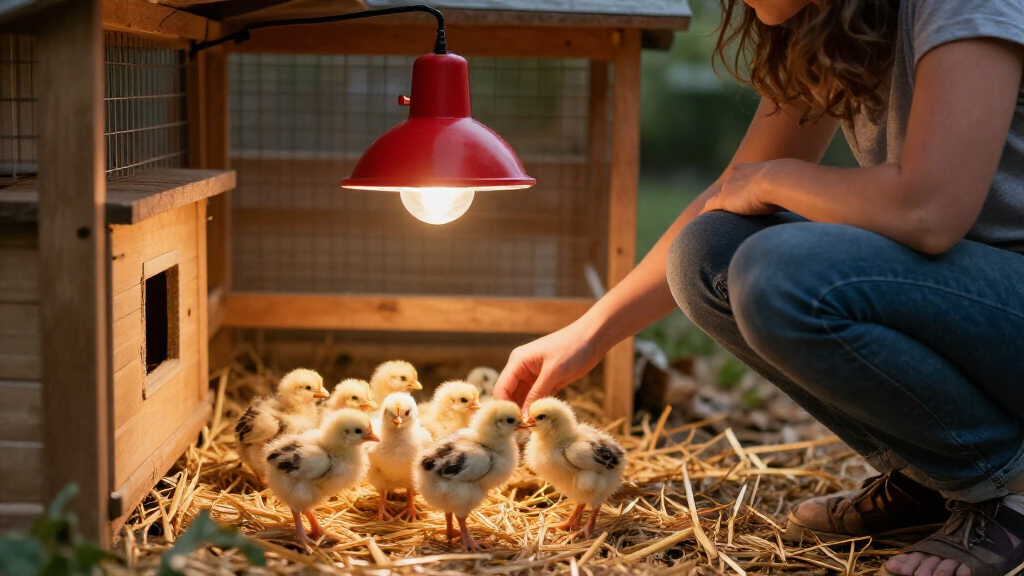
I compared the 11 chicken heat lamps by how much setup responsibility they place on the buyer, what control and protection features they list, and how clearly their format suits a coop or brooder. Complete heaters with adjustable output, timers, or stated overheat protection ranked ahead of basic bulbs because they offer more control as conditions change. I also looked at heating format, wattage range, guard or enclosure details, indoor/outdoor claims, and whether the listing is for a single unit or a multi-pack.
The ranking favors practical fit over the largest wattage or the most features on a label. Bulbs can be a sensible choice when a buyer already has a compatible fixture, but they rank lower when they require a separate fixture and more careful installation. Product information supplied for this roundup does not establish coverage area, precise temperatures, or compatibility with every socket, so I avoid treating those as guaranteed performance. Before buying, confirm the manufacturer’s instructions and the lamp’s fit for your actual setup.
Factors to Consider When Choosing Chicken Heat Lamps
Choosing a chicken heat lamp is less about finding the highest wattage and more about matching a heat source to the birds, enclosure, and installation. I use these factors to separate a convenient all-in-one heater from a bulb that makes sense only with the right fixture already in place.
Choose a heater format that matches your setup
A complete heater and a replacement bulb solve different problems. Complete units such as adjustable or carbon-fiber models may reduce the number of components you need to source, while a bulb-only product leaves the fixture, suspension, and positioning to you. Before selecting a bulb, check the socket type, maximum fixture wattage, and whether the reflector can safely accommodate its shape. A multi-pack is useful only when you have a compatible fixture and a reason to keep a spare. If you are starting from scratch, compare the full setup rather than the bulb by itself.
Match output to the birds and enclosure
Wattage is a power rating, not a promise of a particular temperature or heated area. Coop insulation, drafts, ceiling height, lamp distance, and the number and age of birds all affect the warmth they receive. Avoid choosing the largest number on the label as a shortcut; excess heat can be as unsuitable as too little. Follow the manufacturer’s placement guidance and check temperatures at bird level with a separate thermometer. Give birds room to move away from the heated zone so they can choose a comfortable location.
Treat fire safety as part of the purchase
A heat lamp creates a hot surface above bedding, dust, and other combustible material, so mounting is part of the heating decision. Look for a secure hanging method, a guard where appropriate, and clear instructions for safe distance from walls, litter, and birds. A safety guard can help reduce direct contact, but it does not replace stable mounting or routine checks. Keep cords protected from pecking and moisture, and avoid relying on a clamp alone if the manufacturer calls for a different installation. If a safe, stable mounting point is unavailable, choose another heating approach rather than improvising.
Decide whether controls justify a more involved unit
Adjustable wattage can help a heater serve changing conditions without swapping the heat source, while a timer can limit operation to a chosen schedule. These features add convenience, but they do not replace checking the actual conditions in the coop. A simpler bulb may be the better fit for someone who already owns a suitable fixture and wants fewer electronic controls. For a new setup, a complete unit with clearly stated protections may reduce guesswork. Compare what each control actually does, and do not assume that a feature label means the lamp can regulate temperature automatically.
Weigh bulb color and intended use carefully
Several options in this roundup are red infrared bulbs, while others are described as infrared or as multi-use products for poultry, pets, reptiles, plants, or bathrooms. A broad list of applications does not prove that one bulb is appropriate for every enclosure or animal. Check the product’s instructions for the intended use, fixture requirements, and operating conditions before adapting it to a coop. If choosing between a red bulb and another listed infrared option, focus on compatibility, output, and installation guidance rather than assuming color alone determines suitability. For flock care questions, follow poultry-specific guidance rather than relying on a general-purpose product label.
Plan for maintenance and replacement
Bulbs are consumable components, and a spare can reduce disruption if a bulb fails, but keeping a backup does not make an unsafe fixture acceptable. Check the manufacturer’s guidance for handling, cleaning, and replacement, and inspect the housing, socket, cord, and mounting hardware regularly. Dust and bedding can collect around a heat source, so keep the area clear and follow stated cleaning instructions. A complete heater may require less bulb shopping but can have different replacement parts or service needs. Choose a product whose upkeep you can manage through cold weather, not just one that looks simple at checkout.
Frequently Asked Questions
Should I buy a complete chicken heater or a standalone heat bulb?
Choose a complete heater if you want a single product with controls or protective features listed as part of the unit. A standalone bulb can make more sense when you already own a fixture that matches its base, wattage, and shape. With a bulb, you remain responsible for confirming that the fixture and mounting arrangement are suitable. Compare the cost and complexity of the entire setup, not just the bulb pack. If compatibility is unclear, contact the manufacturer before installing it.
Is a 600W chicken heat lamp better than a 250W model?
Not by default: a higher wattage means greater electrical power draw, but it does not tell you the temperature birds will experience or the area warmed. Coop insulation, drafts, lamp height, and placement all affect results. A unit with adjustable output may be more flexible than one fixed at a high setting, but the setup still needs monitoring. Use manufacturer guidance and a thermometer at bird level to judge conditions. Do not select a heater solely by comparing wattage figures.
Can I use a multi-purpose infrared bulb for chickens?
Only if the product instructions support that use and the bulb fits a suitable fixture. Labels that mention pets, reptiles, plants, or bathrooms do not establish that every application is appropriate for poultry. Check the stated wattage, base, reflector dimensions, and required clearances before buying. Also consider whether the bulb’s use instructions match your coop’s environment. When poultry use is not clearly covered, ask the manufacturer rather than guessing.
Does a safety guard make a heat lamp safe to hang over bedding?
A guard can reduce the chance of direct contact with the bulb, but it does not remove the fire risk from a hot lamp near bedding or dust. The lamp still needs secure installation, appropriate clearance, and the mounting method specified by its manufacturer. Keep combustible material away and protect the cord from damage. Inspect the setup regularly, especially after moving equipment or refreshing litter. A guard is one safety feature, not a substitute for a safe installation.
When is an adjustable heater worth choosing over a basic bulb?
An adjustable heater is useful when you want more than one output setting or prefer built-in controls instead of changing bulbs. A timer or overheat protection may add convenience, but check the product instructions to learn what each feature actually controls. A basic bulb may be a better fit if you have a compatible fixture and prefer a simpler replacement part. The added controls are less valuable if you cannot mount the heater safely or monitor conditions. Base the choice on your setup and operating routine, not on feature count alone.
Conclusion
For most buyers seeking a feature-rich complete unit, I would start with the TFNN adjustable heater: its selectable wattage, timer, and stated overheat protection give it the broadest control package in this lineup. For best value, I would look first at the DaToo 150W bulb if a compatible fixture is already in place; buyers who need a two-pack should compare the 250W bulb bundles against their fixture requirements. The ATHCOHT carbon-fiber heater is my best premium-style pick for shoppers who want adjustable radiant heat, while the Homnebila guarded lamp is the best beginner-friendly starting point among the straightforward complete options. For a specifically indoor-and-outdoor heater listing, consider the 350W carbon-fiber model, but verify installation guidance for your conditions. Whichever you choose, confirm compatibility and safe mounting before relying on it to warm a flock.


