Choosing filter wheels and filter sets for mono cameras comes down to a practical split: do you need an automated way to change filters, or a matched set to start imaging? My strongest all-around choice is the OGMA 7-Position Wheel with EZ Access, which fits a fuller LRGB and SHO lineup and lets you reach the filters without pulling apart the imaging train. For a smaller, lighter automated setup, the OGMA 5-Position Wheel uses USB power and adds only 20 mm of back focus. If you already have a compatible wheel, the Astromania 2-Inch LRGB Set supplies the four filters needed for color-channel imaging. The tradeoffs are clear: more wheel positions mean more capacity but also more weight, while the included filters in the 1.25-inch planetary kit serve a different purpose from typical deep-sky mono imaging.

Get pet supplies delivered free with Prime
- Fast, free delivery on millions of items
- Prime Video, Amazon Music and more included
- Member-only deals all year
Complete the kit



Key Takeaways
- OGMA 7-Position EZ Access is the most expandable pick here: it accepts 2-inch mounted or 50 mm unmounted filters and holds a full LRGB-plus-SHO lineup.
- OGMA 5-Position suits a lighter, compact automated setup, but five slots leave less room for a broad filter collection.
- Astromania 2-Inch LRGB Set is a filter set, not a wheel; it makes sense when you already have a compatible 2-inch filter wheel.
- Astromania 1.25-Inch Wheel and Color Filters is aimed at planetary observing and is not a like-for-like alternative to deep-sky LRGB or narrowband imaging gear.
- Before choosing, match filter size and mounting style to your camera’s imaging train, then check wheel clearance, back focus, software support, and available focus travel.
| OGMA 7-Position 2-Inch Filter Wheel with EZ Access |  | Best Overall for Expandable Automated Imaging | Filter positions: 7 | Filter compatibility: 2-inch mounted and 50 mm round unmounted | Thread size: 48 mm | VIEW ON AMAZON | See Our Full Breakdown |
| Ogma 5-Position 2-Inch Electronic Filter Wheel |  | Best Compact Automated Wheel | Filter positions: 5 | Filter size: 2 inches | Thread size: 36 mm | VIEW ON AMAZON | See Our Full Breakdown |
| Astromania 2-Inch LRGB Telescope Filter Set |  | Best Starter LRGB Set for an Existing Wheel | Filter size: 2 inches | Included filters: Luminance, red, green, and blue | Filter material: Optical glass | VIEW ON AMAZON | See Our Full Breakdown |
| Astromania 1.25 Inch 5-Position Filter Wheel with Four Color Telescope Filters |  | Best for 1.25-Inch Planetary Color Changes | Wheel positions: 5 | Filter size: 1.25 inches (31.75 mm) | Included filters: #15 Yellow, #25 Red, #58A Green, #80A Blue | VIEW ON AMAZON | See Our Full Breakdown |
| filter wheels and filter sets for mono camera | Weight | Filter size | Filter positions | Thread size |
|---|---|---|---|---|
| OGMA 7-Position 2-Inch Filter | 754 g | — | 7 | 48 mm |
| Ogma 5-Position 2-Inch Electro | 525 g | 2 inches | 5 | 36 mm |
| Astromania 2-Inch LRGB Telesco | — | 2 inches | — | — |
| Astromania 1.25 Inch 5-Positio | 14.8 ounces | 1.25 inches (31.75 mm) | — | — |
More Details on Our Top Picks
OGMA 7-Position 2-Inch Filter Wheel with EZ Access
For a mono-camera setup that may grow beyond basic LRGB, I put the OGMA 7-Position EZ Access first. Seven slots can accommodate a common LRGB and SHO collection together, avoiding the need to swap filters by hand or remove the wheel when changing what stays loaded. That advantage is especially useful during automated imaging runs, where filter changes can be scheduled as part of the capture plan.
Its most distinctive practical feature is the EZ access cap: filters can be inspected or replaced without disconnecting the camera or disturbing the rest of the imaging train. That makes it more serviceable than the five-position OGMA, though the seven-position model weighs 754 g versus 525 g and may be a less attractive fit where weight or space is tight. It accepts 2-inch mounted and 50 mm unmounted filters, giving it more mounting flexibility than a wheel described only for 2-inch filters. USB handles power and control, and ASCOM and INDI support cover common Windows and Linux imaging systems.
This is my best overall pick for an automated, expandable mono setup, but it is not a universal accessory: the supplied description targets cooled astronomy cameras, and I would verify fit with a specific camera and imaging train before buying. Like the other OGMA wheel, it is not water resistant. Choose the 5-position model instead if your filter collection is smaller and compactness matters more than access and capacity.
Pros:- Seven positions can hold a full LRGB and SHO filter lineup.
- EZ access cap allows filter service without disconnecting the camera.
- Accepts 2-inch mounted and 50 mm unmounted filters.
- USB power and control, with ASCOM and INDI drivers.
Cons:- At 754 g, it is heavier than the five-position OGMA wheel.
- Not water resistant and described for cooled astronomy cameras.
Best for: Mono-camera owners who want an automated LRGB and SHO workflow, regular filter access, and support for 2-inch mounted or 50 mm unmounted filters.
Not ideal for: Imagers with tight weight or back-focus constraints, a non-cooled camera that may not match the stated compatibility, or a setup requiring weather-resistant equipment.
- Filter positions:7
- Filter compatibility:2-inch mounted and 50 mm round unmounted
- Thread size:48 mm
- Power and control:USB connection
- Drivers:ASCOM and INDI
- Enclosure:Aluminum
- Weight:754 g
- Warranty:1 year
Our verdict“I would choose the seven-position OGMA when filter capacity and in-place service access matter more than keeping the imaging train as light as possible.”
Ogma 5-Position 2-Inch Electronic Filter Wheel
The five-position OGMA is the better match when you want automated filter changes in a smaller package rather than maximum capacity. It accepts up to five 2-inch filters and adds just 20 mm of back focus, with a listed weight of 525 g. Compared with the seven-position OGMA, it gives up two slots and the EZ service cap, but it is 229 g lighter and is a simpler fit for a leaner imaging train.
USB power avoids a separate power source, and support for NINA, SharpCap, INDI, and INDIGO gives this wheel a useful range of control options. That can make sequencing LRGB exposures less hands-on than using a manual wheel. The five positions can work well for a basic color set, or for a more selective set of filters, but they do not leave the same room for keeping LRGB and several narrowband filters loaded together. Buyers who expect their filter collection to expand may prefer the seven-position model, especially if changing filters in place is a regular task.
The product is specified for 2-inch filters, so I would confirm how that format fits the planned filter mounting and camera connection before committing. It is also not water resistant. This is a focused choice for compact automation, not the most flexible option in the lineup, and it should not be mistaken for a filter set: the filters themselves are not listed as included.
Pros:- Five-position electronic operation avoids manual filter changes.
- Adds 20 mm of back focus and weighs 525 g.
- USB-powered, with no separate power source required.
- Works with NINA, SharpCap, INDI, and INDIGO.
Cons:- Five slots provide less room than the seven-position OGMA for a larger filter set.
- Not water resistant and limited to the stated 2-inch filter format.
Best for: Imagers who want a lightweight electronic wheel for up to five 2-inch filters and value a small back-focus addition with broad software options.
Not ideal for: Buyers building a full LRGB-and-SHO collection in one wheel, needing the seven-position model’s filter access cap, or looking for included filters.
- Filter positions:5
- Filter size:2 inches
- Thread size:36 mm
- Back-focus addition:20 mm
- Power:USB-powered
- Supported software:NINA, SharpCap, INDI, INDIGO
- Enclosure material:Aluminum
- Weight:525 g
Our verdict“I would pick this wheel over the seven-position model when compactness and a straightforward five-filter workflow outweigh future expansion.”
Astromania 2-Inch LRGB Telescope Filter Set
This Astromania set supplies the four filters that define a basic luminance, red, green, and blue workflow. For a mono-camera owner who already has a compatible 2-inch wheel, that is a more direct route to color-channel imaging than buying another wheel. The product description identifies luminance plus red, green, and blue filters, while the OGMA wheels in this roundup provide the motorized positions that can hold and change filters. They solve different parts of the same setup rather than competing as complete packages.
The filters use optical glass, multi-coating, and aluminum alloy frames. The color filters have an IR-blocking coating, and the set is described as parfocal, which can reduce the need to refocus when switching between channels. UV and infrared blocking are also specified. Those details suit the set’s stated monochrome CCD astrophotography purpose, but I would check the mounting thread and optical compatibility against the specific wheel and camera train: a 2-inch label alone does not confirm every adapter or filter cell will fit.
Compared with buying an automated wheel, this is a narrower purchase: there is no wheel or filter automation listed. It also does not provide narrowband filters for an LRGB-plus-SHO program. Its strength is that it gives an existing setup a coherent four-filter starting point; its limitation is that it is a component, not a complete filter-management solution. The stated CCD focus also makes it a less certain choice for buyers seeking filters explicitly specified for other camera types.
Pros:- Includes luminance, red, green, and blue filters for LRGB imaging.
- Parfocal design can reduce refocusing between filter changes.
- Color filters have an IR-blocking coating; the set blocks UV and IR wavelengths.
- Aluminum alloy frames suit 2-inch astrophotography accessories.
Cons:- A filter wheel is not listed as included, so it does not automate changes by itself.
- The four-filter set does not supply narrowband filters and is described for mono CCD astrophotography.
Best for: Mono CCD astrophotographers who already own a compatible 2-inch filter wheel and want a basic LRGB set with parfocal design.
Not ideal for: Buyers without a wheel, imagers seeking narrowband filters in the same set, or anyone needing an automated filter-changing solution.
- Filter size:2 inches
- Included filters:Luminance, red, green, and blue
- Filter material:Optical glass
- Frame material:Aluminum alloy
- Coating:Multi-coated; color filters have IR-blocking coating
- Design:Parfocal
- Compatibility stated:Monochrome CCD cameras and filter wheels
- Warranty:Two years
Our verdict“I would add this set to a compatible wheel when basic LRGB filters are the missing piece, but not as a substitute for an automated wheel or a broader narrowband kit.”
Astromania 1.25 Inch 5-Position Filter Wheel with Four Color Telescope Filters
This Astromania package is the outlier in this group: it combines a five-position manual wheel with four colored filters, but its listed purpose is planetary viewing and 1.25-inch telescope connections, not a typical deep-sky mono-camera LRGB setup. Its included #15 yellow, #25 red, #58A green, and #80A blue filters are presented for enhancing views of Mars, Jupiter, Saturn, and the Moon. That makes it distinct from the 2-inch LRGB set, whose luminance, red, green, and blue filters are described for monochrome CCD astrophotography.
The metal enclosure protects the filters during storage, and a multi-coated design is specified. A five-position wheel allows quick manual selection among the four supplied filters, leaving one position available. However, the wheel attaches to telescopes with 1.25-inch eyepiece threads and requires an additional 20 mm of focus travel. Those connection and focus requirements may not fit a camera imaging train without suitable spacing and adapters, neither of which is stated as included. That uncertainty matters more for a mono-camera buyer than the convenience of having four filters bundled with the wheel.
I rank it fourth because the roundup is for filter wheels and sets for mono cameras, and this kit’s stated use is planetary observation. Compared with the OGMA electronic wheels, it does not offer the listed software-driven automation or USB control. It can still make sense for someone who specifically wants a 1.25-inch planetary filter wheel, but I would skip it for a deep-sky workflow built around 2-inch LRGB or narrowband filters.
Pros:- Includes four named planetary color filters and a five-position wheel.
- Metal enclosure helps protect filters from impact and dust during storage.
- Manual wheel allows quick selection among installed filters.
- Attaches to telescopes with 1.25-inch eyepiece threads.
Cons:- Planetary filter set and 1.25-inch format differ from the 2-inch deep-sky options.
- Requires an additional 20 mm of focus travel and is not water resistant.
Best for: Observers using a 1.25-inch telescope connection who want a manual wheel with four supplied color filters for planetary and lunar viewing.
Not ideal for: Deep-sky mono-camera imagers seeking 2-inch LRGB or narrowband filters, automated changes, or a camera-ready connection without checking adapters and focus travel.
- Wheel positions:5
- Filter size:1.25 inches (31.75 mm)
- Included filters:#15 Yellow, #25 Red, #58A Green, #80A Blue
- Material:Metal
- Coating:Multi-coating
- Connection:1.25-inch eyepiece threads
- Additional focus travel:20 mm
- Weight:14.8 ounces
Our verdict“I would choose this kit for its stated 1.25-inch planetary use, not as my main filter system for a mono-camera deep-sky rig.”
How We Picked
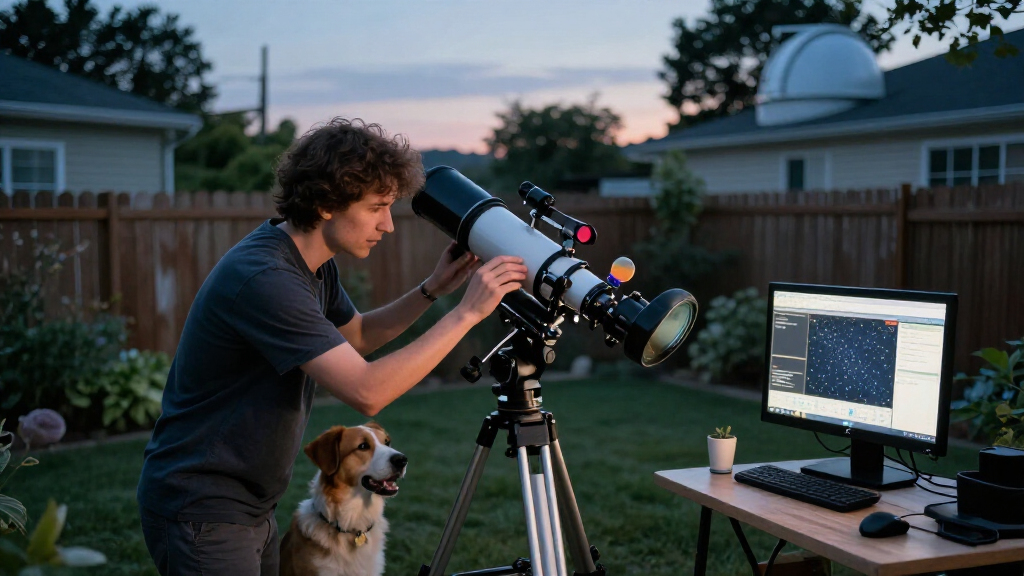
I ranked these four options by how directly they serve a mono-camera workflow, not by treating every filter accessory as interchangeable. A mono camera records brightness without color information, so deep-sky imaging commonly calls for separate L, R, G, and B exposures; narrowband imagers may add filters such as hydrogen-alpha, oxygen-III, and sulfur-II. A motorized wheel can automate those changes, while a filter set supplies the optical elements but may need a wheel purchased separately.
My main comparison points are filter capacity and format, compatibility with camera and imaging software, ease of changing or servicing filters, and the effect on the imaging train. The OGMA wheels rank above the standalone set for buyers seeking an integrated automated workflow; the seven-position model leads because it offers added slots and service access. The Astromania LRGB set ranks as a useful component for an existing setup, while the 1.25-inch planetary kit ranks last for mono deep-sky use because its included color filters and eyepiece-thread connection serve a different imaging and observing context. I also call out limitations supplied in the product details, including weather exposure, camera fit, filter format, and required focus travel. I do not assume that an adapter or a particular camera fit is included unless stated.
| filter wheels and filter sets for mono camera | Included filters | Coating |
|---|---|---|
| OGMA 7-Position 2-Inch Filter | — | — |
| Ogma 5-Position 2-Inch Electro | — | — |
| Astromania 2-Inch LRGB Telesco | Luminance, red, green, and blue | Multi-coated; color filters have IR-blocking coating |
| Astromania 1.25 Inch 5-Positio | #15 Yellow, #25 Red, #58A Green, #80A Blue | Multi-coating |
Factors to Consider When Choosing Filter Wheels And Filter Sets For Mono Cameras
I would choose a filter system by matching the optical format and imaging workflow first, then weighing convenience against capacity and physical fit.Choose a wheel, a filter set, or both
A filter wheel holds and selects filters; a filter set supplies the filters. The OGMA products are electronic wheels, and their descriptions do not list filters as included. The Astromania 2-inch LRGB product is a set of four filters, not a wheel. The 1.25-inch Astromania package includes both a wheel and color filters, but it is positioned for planetary viewing. For a mono-camera deep-sky rig, an LRGB filter set and a compatible wheel are often separate choices, so check what is actually in the box before assuming the workflow is complete.
Match filter diameter and mounting style
Filter size is a fit issue, not just a preference. The OGMA seven-position wheel lists 2-inch mounted and 50 mm unmounted filters; the five-position wheel is specified for 2-inch filters. The Astromania LRGB set is also 2-inch, while the planetary package uses 1.25-inch filters and a 1.25-inch eyepiece connection. Check the wheel’s accepted cell or unmounted format, camera adapters, and telescope-side threads. A similar diameter does not prove that a filter, wheel, and camera will connect without additional parts.
Plan capacity around your filter collection
Five wheel positions can handle a basic set or a carefully chosen selection, but the seven-position OGMA has more room for LRGB and SHO filters together. The added capacity can save physical filter changes during a session, though it comes with more listed weight: 754 g versus 525 g for the smaller OGMA. If your immediate plan is only LRGB, the smaller wheel may be enough. If narrowband work is likely, the extra positions make the larger model easier to grow into.
Check software, power, and control
Electronic control matters when capture software is meant to change filters automatically between exposures. The five-position wheel lists compatibility with NINA, SharpCap, INDI, and INDIGO; the seven-position model lists ASCOM and INDI drivers. Both use USB for power, with the seven-position model also using USB for control. Confirm driver support for your operating system and acquisition software before buying. The Astromania LRGB set has no motor or software control, while the 1.25-inch wheel is a manual option.
Protect back focus and focus travel
Accessories add physical distance to the imaging train, which can affect whether a telescope can reach focus and whether the camera spacing remains appropriate. The compact OGMA wheel lists a 20 mm back-focus addition; the 1.25-inch Astromania wheel lists 20 mm of additional focus travel. Do not treat those figures as interchangeable without checking what each specification means for your optical setup. The seven-position wheel’s supplied details do not state a back-focus figure, so confirm its optical path and available spacing with the seller or manufacturer if your setup is constrained.
Choose filters for the target and camera
For deep-sky color imaging with a mono camera, an LRGB set captures luminance and separate red, green, and blue channels. Narrowband imaging needs different filters, such as hydrogen-alpha, oxygen-III, or sulfur-II, which are not included in the Astromania LRGB set. The four colored filters in the 1.25-inch package are described for planetary viewing, not as a replacement for a deep-sky LRGB set. Confirm the filters’ intended use and camera compatibility rather than choosing by color names alone.
Frequently Asked Questions
Do I need a filter wheel for a mono camera?
No, but a wheel makes changing filters easier and can support automated capture sequences. Without one, you can change filters manually using compatible accessories, though that adds handling and interrupts a run. The OGMA models are electronic wheels; the Astromania 2-inch LRGB product supplies filters only. Choose based on how often you change filters and whether your imaging software will control the process.
Can the Astromania 2-inch LRGB set go in either OGMA wheel?
The set and both OGMA wheels are described around 2-inch filters, but the supplied details do not confirm the exact mounting or cell compatibility between these products. The seven-position wheel specifically lists 2-inch mounted and 50 mm unmounted formats, while the five-position wheel is specified for 2-inch filters. I would verify the filter cell style and thread fit before treating them as a confirmed combination.
Is a five-position wheel enough for LRGB and narrowband imaging?
It can be enough if you are comfortable choosing which filters stay loaded or changing filters between projects. A basic LRGB set uses four positions, leaving one slot for another filter. Keeping LRGB and a broader SHO set installed together calls for more positions, which is why the seven-position OGMA is the stronger fit for that workflow.
Are the 1.25-inch Astromania filters suitable for deep-sky mono imaging?
The product description presents those filters for planetary and lunar viewing and specifies a 1.25-inch eyepiece-thread connection. It does not describe them as a deep-sky LRGB set for mono-camera imaging. For that purpose, the Astromania 2-inch LRGB set is more directly aligned, though it still requires a compatible filter wheel if you want convenient changes during a session.
What should I check before fitting a filter wheel to my camera?
Check the wheel’s filter format and connection threads, camera and telescope adapters, total physical spacing, available back focus or focus travel, weight support, and software drivers. Also confirm whether filters are included: the OGMA wheel descriptions do not list them, while the 2-inch Astromania LRGB set does not list a wheel. These checks help avoid buying a part that fits by diameter but not by mounting style or optical spacing.
Conclusion
For a growing deep-sky mono setup, I recommend the OGMA 7-Position Wheel with EZ Access: its added capacity and service cap make it the most flexible automated choice here. Choose the OGMA 5-Position Wheel if you value lower weight, 20 mm of stated back-focus addition, and a compact electronic workflow more than expansion. If your wheel is already in place and you need basic color channels, the Astromania 2-Inch LRGB Set is the direct add-on. The Astromania 1.25-inch package is best kept to its stated planetary and lunar role. Before ordering any of them, verify the filter mounting format, camera connection, focus spacing, and control software against your exact imaging train.