Among National Geographic animal books for kids, I’d choose National Geographic Kids Animal Encyclopedia, 2nd Edition as the best overall for children who want a broad, fact-filled reference. Little Kids First Big Book of Animals is a more approachable starting point for younger readers, while Weird But True! Animals suits kids who learn best from quick, surprising facts. The main tradeoff is breadth versus reading level: reference books cover more, but beginner readers and themed titles can be easier to pick up and finish. Sets offer variety, though they may include topics a child already knows or books that are not a close fit. Read on for my full comparison and picks by age, interest, and reading goal.

Get pet supplies delivered free with Prime
- Fast, free delivery on millions of items
- Prime Video, Amazon Music and more included
- Member-only deals all year
Complete the kit


Key Takeaways
- The Animal Encyclopedia is the strongest all-purpose facts pick: its reference format serves curious readers who want to look up many kinds of animals, rather than follow one short story or topic.
- Younger children benefit from a gentler entry point: Little Kids First Big Book of Animals prioritizes an accessible introduction, while Giraffes is a narrower, level-based choice for children beginning to read independently.
- Fact collections and reader books serve different moods: Weird But True! Animals and 5,000 Awesome Facts About Animals favor browsing in short bursts; Level 1 and Level 2 Readers provide more focused reading practice.
- Multi-book sets trade curation for range: the Level 2 Collection names its subjects, making its contents easier to judge, while the general 10-Book Set requires buyers to check which titles are included.
- Special-interest titles can beat broader books for motivated readers: The Ultimate Book of Reptiles and Weirdest Animals on the Planet focus attention on distinctive subjects instead of trying to cover the whole animal kingdom.
| Giraffes (National Geographic Kids Readers, Level 1) |  | Best for Early Readers | Series: National Geographic Kids Readers | Reading level: Level 1 | Subject: Giraffes | VIEW ON AMAZON | See Our Full Breakdown |
| Weird But True! Animals: 300 Outrageous Facts About Wacky Wildlife |  | Best for Surprising Wildlife Facts | Fact count: 300 | Subject: Wildlife | Content type: Animal facts | VIEW ON AMAZON | See Our Full Breakdown |
| National Geographic Kids Animal Encyclopedia, 2nd Edition | 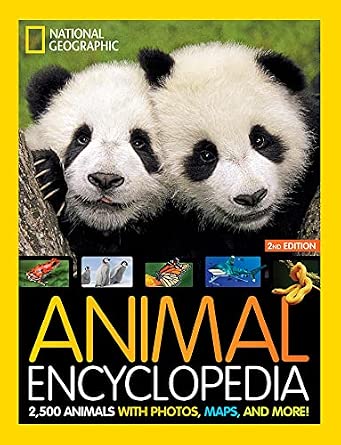 | Best Overall Reference for Animal Facts | Animals covered: 2,500 | Edition: 2nd | Content: Animal encyclopedia | VIEW ON AMAZON | See Our Full Breakdown |
| National Geographic Little Kids First Big Book of Animals |  | Best for Young Children | Series: National Geographic Little Kids | Book type: Animal reference book | Subject: Animals | VIEW ON AMAZON | See Our Full Breakdown |
| 5,000 Awesome Facts About Animals |  | Best for Maximum Fact Variety | Fact count: 5,000 | Subject: Animals | Content type: Animal facts | VIEW ON AMAZON | See Our Full Breakdown |
| Adorable Animals (National Geographic Kids Readers, Level 2) |  | Best for an Easygoing First Read | Series: National Geographic Kids Readers | Reading level: Level 2 | Topic: Adorable animals | VIEW ON AMAZON | See Our Full Breakdown |
| National Geographic Kids: 125 True Stories of Amazing Animals |  | Best for Animal Stories and Real-Life Facts | Series: National Geographic Kids | Story count: 125 true stories | Content themes: Animal friendship, animal heroes, and animal antics | VIEW ON AMAZON | See Our Full Breakdown |
| Animal Superpowers (National Geographic Kids Readers, Level 2) |  | Best for Curious Kids Who Ask How Animals Do It | Series: National Geographic Kids Readers | Reading level: Level 2 | Topic: Animal abilities and superpowers | VIEW ON AMAZON | See Our Full Breakdown |
| National Geographic Kids 10-Book Set |  | Best Value for Mixed Reading Levels | Series: National Geographic Kids | Format: Paperback | Number of books: 10 | VIEW ON AMAZON | See Our Full Breakdown |
| National Geographic Kids Readers Level 2 Collection – 10 Books Set (Tigers, Cheetahs, Manatees, Bats, Sharks, Prehistoric Mammals, Foxes, Bees, Animal Superpowers, Adorable Animals) |  | Best for a Consistent Level 2 Reading Shelf | Series: National Geographic Kids Readers | Number of books: 10 | Reading level: Level 2 | VIEW ON AMAZON | See Our Full Breakdown |
| The Ultimate Book of Reptiles: Your Guide to the Secret Lives of These Scaly, Slithery, and Spectacular Creatures |  | Best for Reptile Facts | Subject: Reptiles | Topics: Behaviors and habitats | Audience: Young readers | VIEW ON AMAZON | See Our Full Breakdown |
| Weirdest Animals on the Planet |  | Best for Curious Animal Fact Hunters | Subject: Animals described as weirdest in the title | Audience: Not specified | Format: Book | VIEW ON AMAZON | See Our Full Breakdown |
| national geographic animal books for kid | Series | Reading level | Subject |
|---|---|---|---|
| Giraffes | National Geographic Kids Readers | Level 1 | Giraffes |
| Weird But True! Animals: 300 O | Weird But True! | — | Wildlife |
| National Geographic Kids Anima | — | — | — |
| National Geographic Little Kid | National Geographic Little Kids | Not specified in provided details | Animals |
| 5,000 Awesome Facts About Anim | — | Not specified in provided details | Animals |
| Adorable Animals | National Geographic Kids Readers | Level 2 | — |
| National Geographic Kids: 125 | National Geographic Kids | — | Amazing animals |
| Animal Superpowers | National Geographic Kids Readers | Level 2 | — |
| National Geographic Kids 10-Bo | National Geographic Kids | — | — |
| National Geographic Kids Reade | National Geographic Kids Readers | Level 2 | — |
| The Ultimate Book of Reptiles: | — | — | Reptiles |
| Weirdest Animals on the Planet | — | Not specified | Animals described as weirdest in the title |
More Details on Our Top Picks
Giraffes (National Geographic Kids Readers, Level 1)
A focused first animal reader, this Level 1 title suits children who are ready to read short, topic-led nonfiction about one familiar animal. Its narrow giraffe focus can make facts easier to follow than the broad selection in National Geographic Kids Animal Encyclopedia, 2nd Edition, which is better for browsing across many species. Compared with the more fact-packed Weird But True! Animals, this book is the clearer fit for building confidence with a single subject rather than sampling surprising trivia. The tradeoff is its limited scope: children looking for a wide range of animals, maps, or a substantial reference source will need another book. The supplied details confirm the reading level and series, but do not specify length, illustrations, or particular facts, so I would choose it for its beginner-reader focus rather than unlisted extras.
Pros:- Level 1 designation gives families a clear early-reader fit
- One-animal subject keeps the topic focused
- Part of the National Geographic Kids Readers series
- A more focused starting point than an all-animal reference book
Cons:- Covers giraffes rather than a wide range of animals
- Provided product details do not specify the book’s length or particular facts
Best for: Families seeking a National Geographic Kids animal book for a child beginning to read independently at Level 1
Not ideal for: Children who want a broad animal encyclopedia or a collection of facts spanning many species
- Series:National Geographic Kids Readers
- Reading level:Level 1
- Subject:Giraffes
- Format type:Reader
- Intended audience:Kids
- Publisher brand:National Geographic Kids
Our verdict“Choose this for a beginning reader who wants a focused introduction to giraffes, not a broad animal reference.”
Weird But True! Animals: 300 Outrageous Facts About Wacky Wildlife
For kids who remember unusual details, the appeal here is the stated collection of 300 wildlife facts. That makes it a more clearly defined pick for quick fact-sharing than National Geographic Kids Animal Encyclopedia, 2nd Edition, which covers 2,500 animals with photos and maps and suits broader reference browsing. It also differs from Giraffes, whose Level 1 format centers on one animal; this title ranges across wildlife rather than following a single subject. The fact count gives buyers a concrete reason to choose it, but the supplied description does not identify the animals, organization, reading level, or presentation. Families seeking a structured reference source or information on a particular species may prefer the encyclopedia or a focused reader. I would pick this for curiosity-driven browsing, with the caveat that the available details support its fact quantity, not a particular age or depth.
Pros:- Contains a stated 300 wildlife facts
- Wildlife-wide subject offers more variety than a single-animal reader
- Fact-led format is suited to browsing and sharing discoveries
- Clear alternative to a broad encyclopedia for readers drawn to unusual facts
Cons:- Provided details do not identify which animals are covered
- No reading level or age guidance is provided
- The available description does not specify photos, maps, or how facts are arranged
Best for: Families looking for a wildlife book centered on a large stated collection of short, unusual facts
Not ideal for: Readers seeking a specified reading level, a particular animal focus, or a reference book with confirmed maps and photos
- Fact count:300
- Subject:Wildlife
- Content type:Animal facts
- Series:Weird But True!
- Audience:Kids
- Publisher brand:National Geographic Kids
Our verdict“Pick this for a child who wants a broad assortment of unusual wildlife facts rather than a structured animal reference.”
National Geographic Kids Animal Encyclopedia, 2nd Edition
The strongest reference choice in this group, this second edition covers 2,500 animals and includes photos, maps, and other reference content. That combination makes it better suited to looking up and comparing species than 5,000 Awesome Facts About Animals, which is described by its fact count rather than as an encyclopedia. It also offers far broader coverage than the giraffe-only Giraffes reader, though that Level 1 title is a more targeted choice for a beginning reader. The encyclopedia’s scope is its advantage for curious kids who want facts across animal groups, but it may be more reference-oriented than a child seeking quick, surprising snippets. The supplied details do not state reading level, length, or which animals are included, so buyers choosing for a particular age or species should check whether its format matches that need.
Pros:- Covers 2,500 animals
- Includes photos and maps alongside reference content
- Second edition offers a clearly identified edition
- More useful for broad species browsing than a single-animal reader
Cons:- Broad reference scope may be less direct than a focused animal reader
- Provided details do not specify a reading level or age range
- The description does not list the species or specific reference topics included
Best for: Families who want one kid-focused reference for browsing facts about a wide range of animals, with photos and maps
Not ideal for: Beginning readers who need a confirmed early reading level, or children who prefer short, playful fact collections
- Animals covered:2,500
- Edition:2nd
- Content:Animal encyclopedia
- Visual features:Photos and maps
- Additional content:Reference content
- Audience:Kids
- Publisher brand:National Geographic Kids
Our verdict“Choose this as the main animal-facts reference for a child who wants to browse across many species.”
National Geographic Little Kids First Big Book of Animals
A young-child-focused animal reference, this title is the clearest age-positioned option among the books here: its name specifically frames it for little kids. That makes it a more age-targeted alternative to the broad National Geographic Kids Animal Encyclopedia, 2nd Edition, whose supplied details confirm extensive coverage but do not state an age range or reading level. Unlike Giraffes, it is described as an animal reference rather than a reader about one species, which may suit children who want to explore animals more generally. The tradeoff is limited product information: the description does not confirm animal count, format, photos, or reading guidance. I would shortlist it for younger children based on its stated audience, but choose the encyclopedia when confirmed breadth and features matter more than the age signal in the title.
Pros:- Explicitly positioned for little kids
- Covers animals as a reference book rather than focusing on one named species
- National Geographic Kids branding
- Provides a younger-child alternative to the large animal encyclopedia
Cons:- Provided description gives no animal count
- No reading level or specific age range is supplied
- Details about photos, format, and reference features are unavailable
Best for: Caregivers seeking a National Geographic animal reference explicitly aimed at little kids
Not ideal for: Buyers who need confirmed animal counts, reading levels, or details about photos and other contents before choosing
- Series:National Geographic Little Kids
- Book type:Animal reference book
- Subject:Animals
- Stated audience:Little kids
- Publisher brand:National Geographic
- Reading level:Not specified in provided details
Our verdict“Choose this for a younger child when the stated little-kids audience matters more than confirmed reference features.”
5,000 Awesome Facts About Animals
Quantity is the clearest distinction: the title promises 5,000 animal facts, making this the largest stated fact collection among these five products. It is a better match than Giraffes for children who want facts across animals rather than one species, and its stated scope is much larger than the 300 facts in Weird But True! Animals. That count does not, on its own, tell buyers how the facts are organized or whether they suit a particular age, though. The Animal Encyclopedia, 2nd Edition is the stronger choice for confirmed reference features such as photos and maps; those details are not provided here. I would choose this for a fact-hungry child attracted to a large animal-fact collection, but not when reading level, visual content, or the depth of coverage needs to be known in advance.
Pros:- Title states a collection of 5,000 animal facts
- Broad animal subject offers more variety than a single-species book
- Stated fact count exceeds the 300 in Weird But True! Animals
- Fact-focused alternative to the encyclopedia’s confirmed reference approach
Cons:- Provided description gives no reading level or age guidance
- Photos, maps, and layout details are not specified
- The fact count does not identify animal coverage or depth
Best for: Kids who want a large collection of animal facts spanning beyond a single species
Not ideal for: Caregivers who need confirmed reading guidance, maps, photos, or details on how facts are organized
- Fact count:5,000
- Subject:Animals
- Content type:Animal facts
- Audience:Kids
- Publisher brand:National Geographic
- Reading level:Not specified in provided details
Our verdict“Choose this for a child drawn to a high-volume collection of animal facts, and choose the encyclopedia if confirmed reference features matter more.”
Adorable Animals (National Geographic Kids Readers, Level 2)
I’d choose Adorable Animals for a young reader who wants an animal-themed book at a defined early-reader level, rather than a broad reference book. Its Level 2 designation gives families a clearer reading-stage signal than the general-interest titles in this group, while the approachable animal theme may help sustain a child’s interest. The product data doesn’t specify which animals appear or how the book presents facts, so I wouldn’t pick it for a particular species or a fact-packed reference. Compared with Animal Superpowers, this title has a broader, cuteness-led theme rather than a focus on animal abilities; the choice comes down to a child’s interest. It is also a narrower commitment than either 10-book set, but offers less topic variety.
Pros:- Level 2 label helps families choose by reading stage
- Animal theme offers an accessible hook for young readers
- Single-title format is a focused alternative to a 10-book collection
Cons:- The available product details do not identify the featured animals
- No specific fact coverage or book format is provided
- One title offers less variety than either 10-book set
Best for: Beginning independent readers who enjoy cute animals and want one Level 2 book rather than a multi-book set
Not ideal for: Children seeking detailed facts about a specific species or families wanting a large variety of topics in one purchase
- Series:National Geographic Kids Readers
- Reading level:Level 2
- Topic:Adorable animals
- ASIN:1426372728
- Product type:Children’s reader
- Animal focus:Animals
Our verdict“Choose this for a Level 2 reader drawn to adorable animals, but pick a collection if topic variety matters more.”
National Geographic Kids: 125 True Stories of Amazing Animals
For a child who remembers animals through what they do, I’d put 125 True Stories of Amazing Animals ahead of the single-topic readers. Its strongest distinction is the promise of 125 true stories, including animal friendships, heroes, and amusing antics—an anecdotal way to encounter animal facts rather than a clearly leveled reading exercise. That makes it a better match for shared browsing or story-led interest than Adorable Animals, whose Level 2 label gives more guidance for independent reading. The tradeoff is that the available details don’t specify reading level, format, or which animals appear, so it’s harder to match to a particular reader or research need. Families wanting several defined topics and levels may prefer the National Geographic Kids 10-Book Set.
Pros:- Offers 125 true animal stories
- Includes stories of animal friendship and animal heroes
- Amusing animal antics give facts a narrative hook
Cons:- No reading level is supplied in the available product data
- Featured species and story organization are not specified
- Format and edition details are unavailable
Best for: Children who enjoy true animal anecdotes, especially stories about animal friendship, heroes, and funny behavior
Not ideal for: Families choosing by reading level or seeking a reference organized around specific animal species
- Series:National Geographic Kids
- Story count:125 true stories
- Content themes:Animal friendship, animal heroes, and animal antics
- Subject:Amazing animals
- ASIN:142630918X
- Product type:Animal story collection
Our verdict“Pick this for a child who learns through real animal stories, not for level-based reading practice or targeted species research.”
Animal Superpowers (National Geographic Kids Readers, Level 2)
Animal Superpowers gives a Level 2 reader a more focused question to follow: what remarkable abilities can animals use? I’d choose it over Adorable Animals when a child is more interested in what animals can do than in a general adorable-animal theme. That tighter concept can make animal facts easier to connect to a memorable subject, although the supplied details don’t name the abilities or species covered. Like Adorable Animals, it carries a Level 2 label, so neither title can be called the more advanced choice on the information available. Compared with the National Geographic Kids Readers Level 2 Collection, this is a single-topic pick rather than a shelf of varied subjects. It suits focused curiosity but can feel limiting to a child who wants many kinds of animal content.
Pros:- Clear animal-ability theme gives facts a focused frame
- Level 2 label helps guide early-reader selection
- Single book offers a more targeted choice than a broad collection
Cons:- The available details do not identify the animals or abilities featured
- Provides less topic breadth than the 10-book Level 2 collection
- No format or edition details are supplied
Best for: Level 2 readers fascinated by unusual animal abilities and families seeking one focused wildlife topic
Not ideal for: Children who want a broad mix of species, or parents who need details about the specific abilities covered before choosing
- Series:National Geographic Kids Readers
- Reading level:Level 2
- Topic:Animal abilities and superpowers
- ASIN:1426339771
- Product type:Children’s reader
- Animal focus:Animals with remarkable abilities
Our verdict“Choose this for a Level 2 reader whose questions center on animal abilities, and favor a set for broader coverage.”
National Geographic Kids 10-Book Set
I’d rank this set for families who want a ready-made spread of animal subjects and reading stages rather than a single favorite topic. The 10 paperback books cover dinosaurs, meerkats, frogs, polar bears, ponies, dolphins, sharks, snakes, sea creatures, and penguins, while the inclusion of Level 1 and Level 2 readers gives siblings or a developing reader more than one entry point. Compared with the single Level 2 books Adorable Animals and Animal Superpowers, this collection trades focus for breadth. The specific list is a strength, though it also means readers seeking one topic in depth may find the coverage spread thin. It is less reading-level consistent than the separate Level 2 10-book collection, but its Level 1 titles can suit newer readers.
Pros:- Includes 10 paperback books
- Topics range across land animals, dinosaurs, and sea life
- Level 1 and Level 2 readers accommodate different early reading stages
- Named topics make the collection’s animal coverage clear
Cons:- Mixed levels may not suit a child who needs every book at the same stage
- Many topics mean less focus on any one animal
- The supplied details do not identify individual book titles
Best for: Families with young animal fans who want several topics and books spanning Level 1 and Level 2
Not ideal for: Readers ready for Level 2 only, or children seeking an in-depth book about one named animal
- Series:National Geographic Kids
- Format:Paperback
- Number of books:10
- Reading levels:Level 1 and Level 2
- Topics:Dinosaurs, meerkats, frogs, polar bears, ponies, dolphins, sharks, snakes, sea creatures, and penguins
- ASIN:0545694477
Our verdict“Choose this set for broad animal variety and mixed early-reading levels; choose a single reader for focused coverage.”
National Geographic Kids Readers Level 2 Collection – 10 Books Set (Tigers, Cheetahs, Manatees, Bats, Sharks, Prehistoric Mammals, Foxes, Bees, Animal Superpowers, Adorable Animals)
This set is the clearest pick for a child already reading at Level 2 who wants more than one animal topic without shifting reading stages. It gathers 10 Level 2 books, with named subjects including tigers, cheetahs, manatees, bats, sharks, prehistoric mammals, foxes, bees, plus Animal Superpowers and Adorable Animals. That last detail links it directly to the two standalone readers in this roundup: choose the set for wider subject variety, or a single title if the child has a specific interest. Compared with the mixed-level National Geographic Kids 10-Book Set, this collection keeps to Level 2, which is useful for a reader at that stage but less flexible for siblings at different levels. The source doesn’t specify format or edition, so those details remain unclear.
Pros:- Includes 10 books at the same stated reading level
- Covers a range of named animals and related subjects
- Includes Animal Superpowers and Adorable Animals from this roundup
- Offers broader topic choice than either standalone Level 2 reader
Cons:- Does not include a stated Level 1 option
- Format and edition details are not provided
- A 10-book collection may be more than needed for a child interested in one topic
Best for: Children reading at Level 2 who want a varied shelf of wildlife and animal-themed readers
Not ideal for: Beginning readers needing Level 1 books, or families who need confirmed format and edition details
- Series:National Geographic Kids Readers
- Number of books:10
- Reading level:Level 2
- Topics:Tigers, cheetahs, manatees, bats, sharks, prehistoric mammals, foxes, bees, animal superpowers, and adorable animals
- ASIN:1637995792
- Collection type:Reader set
Our verdict“Choose this collection for a Level 2 reader who wants consistent reading-stage guidance across many animal topics.”
The Ultimate Book of Reptiles: Your Guide to the Secret Lives of These Scaly, Slithery, and Spectacular Creatures
I’d choose this for a child whose interest has narrowed to snakes, lizards, turtles, and other reptiles. Its focus on their behaviors and habitats offers a more targeted route into animal facts than the broad coverage of National Geographic Kids Animal Encyclopedia, 2nd Edition. The engaging explanations and illustrations may also help young readers connect facts to the creatures they are learning about. That specialization is the tradeoff: it gives less variety than a general animal reference or Weird But True! Animals: 300 Outrageous Facts About Wacky Wildlife, which spans many kinds of animals. The available product information does not specify age range, page count, or interactive features, so I’d avoid assuming it fits a particular reading level. It makes the most sense for a reptile-focused reader, not as a child’s only animal book.
Pros:- Focused facts and insights about reptiles
- Covers reptile behavior and habitats
- Illustrations support visual learning
- Described as engaging for young readers
Cons:- Narrower animal coverage than a general encyclopedia
- No interactive features are specified
- Available details do not identify reading level or page count
Best for: Young readers already curious about reptiles who want facts about their behavior and habitats in an illustrated book.
Not ideal for: Families seeking a broad animal reference, interactive activities, or a book matched to a specific reading level based on detailed product information.
- Subject:Reptiles
- Topics:Behaviors and habitats
- Audience:Young readers
- Content:Facts and insights
- Illustrations:Illustrated
- Format:Book
Our verdict“Choose this for a child keen on reptile facts, but pick the Animal Encyclopedia for wider animal coverage.”
Weirdest Animals on the Planet
The title points to a curiosity-led animal book, but the supplied product details do not describe its contents, format, illustrations, or intended age range. I’d treat it as a possible choice for a child drawn to unusual animals, not as a confirmed fact reference based on title alone. Compared with The Ultimate Book of Reptiles, which is described as covering reptile behaviors and habitats, this book has no verified subject coverage beyond its focus on weird animals. It may suit a reader looking for an unusual-animal theme, but I can’t confirm how much factual detail it provides or whether it offers a similar visual approach. Families who need dependable specifics should favor a better-described option such as Weird But True! Animals: 300 Outrageous Facts About Wacky Wildlife until they can check the book’s contents.
Pros:- Unusual-animal theme is signaled by the title
- May appeal to children curious about less familiar creatures
- Distinct focus from the reptile-specific book in this roundup
Cons:- No description is provided to verify the subjects or factual depth
- No age range, format, or illustration details are available
- Hard to compare its educational scope with better-described animal fact books
Best for: Parents and gift buyers considering an unusual-animal theme for a curious child who does not need confirmed reading-level or format details.
Not ideal for: Readers who need verified facts, a known age or reading level, or clear information about the book’s coverage before buying.
- Subject:Animals described as weirdest in the title
- Audience:Not specified
- Format:Book
- Reading level:Not specified
- Topics:Not specified
- Illustrations:Not specified
Our verdict“Consider it for a child interested in unusual animals, but choose a better-documented facts book when verified content matters.”

How We Picked
I ranked these books by how well they answer the needs behind the search: reliable animal facts, age-appropriate reading, appealing ways to explore wildlife, and a clear reason to choose one format over another. I gave the broad encyclopedia an advantage for family reference use, while considering beginner accessibility, short-form browsing, true stories, specialist subjects, and set contents for readers with more specific goals. A book’s role matters as much as its range: an early reader should not be judged by how many facts it packs in, and a fact collection should not be treated as reading practice.
The order reflects usefulness across a range of likely buyers, not a claim that every child needs the same book. I favored options with a distinct purpose and recognizable audience, then weighed tradeoffs such as narrow subject coverage, reading-level fit, and uncertainty about a bundle’s exact contents. Since the supplied product information does not establish details such as page counts, age recommendations, or the contents of the general 10-book set, I avoid relying on those claims. Buyers should check the edition and listing details before ordering.
| national geographic animal books for kid | Series | Reading level | Subject |
|---|---|---|---|
| Giraffes | National Geographic Kids Readers | Level 1 | Giraffes |
| Weird But True! Animals: 300 O | Weird But True! | — | Wildlife |
| National Geographic Kids Anima | — | — | — |
| National Geographic Little Kid | National Geographic Little Kids | Not specified in provided details | Animals |
| 5,000 Awesome Facts About Anim | — | Not specified in provided details | Animals |
| Adorable Animals | National Geographic Kids Readers | Level 2 | — |
| National Geographic Kids: 125 | National Geographic Kids | — | Amazing animals |
| Animal Superpowers | National Geographic Kids Readers | Level 2 | — |
| National Geographic Kids 10-Bo | National Geographic Kids | — | — |
| National Geographic Kids Reade | National Geographic Kids Readers | Level 2 | — |
| The Ultimate Book of Reptiles: | — | — | Reptiles |
| Weirdest Animals on the Planet | — | Not specified | Animals described as weirdest in the title |
Factors to Consider When Choosing National Geographic Animal Books For Kids
Choosing an animal book is easier when you start with how the child will use it. A book for independent reading, a shared picture-book session, and quick fact browsing can all be good choices, but they solve different problems. These factors can help you match format and scope to the child rather than choosing by title alone.
Match the book to the child’s reading stage
Look for the difference between a book meant to be read independently and one meant to be explored with an adult. A Level 1 or Level 2 Reader signals a reading-series format, while an encyclopedia or big book may work better as shared browsing or reference. Do not assume every child of the same age needs the same reading level; confidence, interest, and familiarity with nonfiction all affect the fit. If a child is practicing fluency, a tightly focused reader may be more useful than a dense volume of facts. If they mainly want someone to read aloud, visuals and easy-to-follow sections may matter more than independent reading progression.
Choose breadth or a focused subject
A broad reference book helps when a child jumps between animal interests or wants one place to find facts about many species. A focused title can hold attention better when the child is already fascinated by reptiles, unusual wildlife, or one particular animal. A common mistake is buying a specialist book because it sounds detailed, even when the child prefers variety. The reverse can also happen: a general encyclopedia may feel less inviting to a reader who wants an in-depth look at one subject. Let the child’s current curiosity guide the balance, and remember that a narrow topic is not a weakness if it gets read.
Decide whether facts, stories, or reading practice come first
Animal nonfiction can deliver information in very different ways. Quick fact books suit children who like hopping from one surprising detail to another, while true-story collections offer animal subjects through narrative. Readers in a leveled series can support independent practice, though their main appeal may be a specific topic rather than a full reference treatment. Decide which outcome matters most before buying: a child who asks “why?” may want a reference, while one who enjoys a beginning-to-end account may respond better to stories. A book can do more than one job, but expecting every format to do all of them can lead to a poor match.
Treat photo appeal and page design as part of usability
For children, a book’s visual presentation can determine whether they open it again. Large photographs and clear visual organization can help younger readers connect animals to their names and features, while older or more confident readers may welcome denser information. When shopping online, inspect sample pages or the edition description instead of relying only on a cover image. A highly visual book may be engaging but offer less room for extended reading, whereas a text-heavy reference can be harder for a reluctant reader to browse. Choose the balance that fits the child’s attention and reading habits.
Check the contents of a set before choosing it
Bundles can create variety and give a child several subjects to explore, but the label alone does not tell you whether the books suit your needs. A clearly named collection is easier to evaluate than a broadly described set whose included titles may vary by listing or edition. Check the exact titles, format, and edition, and compare them against books the child already owns. A set is a weaker choice if it includes several topics the child is unlikely to read. For a specific reading goal, one carefully matched title may be more useful than a larger bundle.
Frequently Asked Questions
Which National Geographic animal book is the best starting point for a child who is new to nonfiction?
I would start with National Geographic Little Kids First Big Book of Animals when the child is still building confidence with animal nonfiction, especially if an adult will read or browse alongside them. If the child is already reading simple books independently, Giraffes offers a more focused reader-series option. The best starting point depends on whether the goal is shared exploration or reading practice. A broad encyclopedia can be useful later, but may feel like more material than a beginner wants to tackle at once.
Is an animal encyclopedia a better choice than a book of animal facts?
Choose an encyclopedia when you want a broad reference that supports looking up different animals over time. Choose a fact collection when short, surprising entries are more likely to hold the child’s attention or prompt conversation. The two formats are not interchangeable: one is organized for reference, while the other often works well for casual browsing. If you are buying one book for a child with varied interests, breadth may matter most; if you want a quick, entertaining read, shorter facts may be the better fit.
Should I buy a National Geographic Kids book set or select individual titles?
A set makes sense when the child enjoys exploring different animals and you have checked the titles included. The Level 2 Collection lists its subjects, which gives buyers a clearer way to judge topic fit than a general set description. Individual books are a safer choice if the child has a narrow interest, already owns some titles, or needs a particular reading level. Before choosing a bundle, verify the edition and contents in the listing; a large selection is only useful if the child will read its books.
Are Level 1 and Level 2 animal readers interchangeable?
No. The level labels indicate that the books belong to different stages of a reader series, so they should not be treated as identical choices. A beginning independent reader may find a Level 1 title such as Giraffes a better match, while Level 2 options such as Adorable Animals or Animal Superpowers may suit a child ready for the next step. The exact challenge can vary by title, so check the book’s description and sample pages when available. Pick the level that supports comfortable reading, not the one that seems more advanced.
When is a specialist animal book a better gift than a general animal reference?
A specialist book is often the better gift when you know the child already returns to a particular interest, such as reptiles or unusual animals. That focused subject can make the book feel personally chosen and may encourage deeper reading than a broad reference. A general encyclopedia is safer when you do not know the child’s current favorite animals or want a book with wider reference use. If the interest is uncertain, a broad book plus a focused title is usually a more balanced choice than several specialist books on topics the child may not enjoy.
Conclusion
Best overall: I recommend National Geographic Kids Animal Encyclopedia, 2nd Edition for families seeking broad animal facts in a reference format. Best value for a younger beginner: National Geographic Little Kids First Big Book of Animals is the approachable starting point, while Giraffes is a focused choice for a child beginning independent reading. Best premium-style gift: choose the National Geographic Kids Level 2 Collection if the listed subjects match the child and you want several reader books together; confirm the set contents first. For quick browsing, pick Weird But True! Animals; for a specific interest, choose The Ultimate Book of Reptiles or Weirdest Animals on the Planet. My simplest rule is to match the book’s format to the child’s reading habits, then let their animal interests narrow the choice.
Fall Picks
fall essentials
As an affiliate, we earn on qualifying purchases.




![Pentulive (Puppy Live) [Video]](https://aplaceforanimals.com/wp-content/uploads/2026/10/pentulive-puppy-live-video-featured-260x140.jpg)