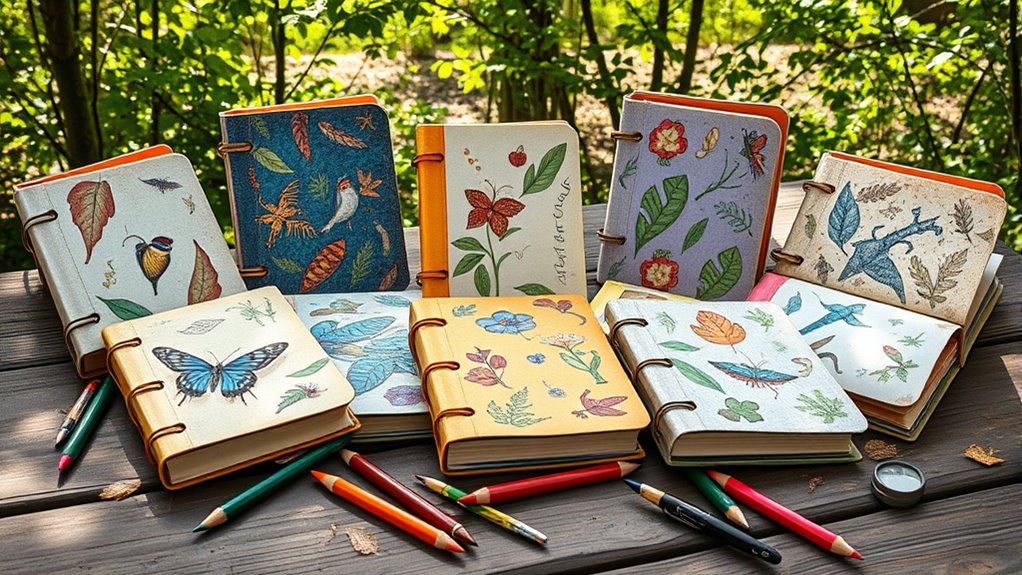
Nature journals for kids range from open-ended sketchbooks to guided activity books, so the best choice depends on whether your child likes drawing, writing, or following prompts. I’d put Lonely Planet Kids Explorer’s Nature Journal first for its six journaling sections and activity pages, while Outdoor Explorers: Take a Hike Field Journal and Activity Book with Stickers is a stronger fit for children who enjoy structured hike activities. Nature Walk Journal is a simpler option for families who want to keep the focus on observations rather than a full activity program. The main tradeoff is guidance versus creative freedom, with portability and writing demands also shaping which book will get used. Read on for how all eight options compare and which type of young nature observer each suits.

Get pet supplies delivered free with Prime
- Fast, free delivery on millions of items
- Prime Video, Amazon Music and more included
- Member-only deals all year
Complete the kit


Key Takeaways
- Lonely Planet Kids Explorer’s Nature Journal stands out for children who benefit from varied prompts, while its structured format may feel less open-ended than a basic field notebook.
- Outdoor Explorers combines hike activities and stickers, making it the most activity-led choice in this lineup rather than a quiet sketch-and-write journal.
- The lineup includes several similarly named nature journals, but their titles alone do not establish differences in paper, binding, page count, or age suitability; check those details before choosing.
- A simpler option such as Nature Walk Journal can suit families seeking a focused observation routine, while children who need lots of direction may prefer a journal with explicit prompts.
- The best match depends less on the word “nature” on the cover and more on whether a child will happily draw, write, complete activities, or use the book during a walk.
| Nature Journal for Kids |  | Best for Open-Ended Exploration | Product type: Nature journal for kids | Purpose: Record observations of nature | Intended activities: Writing and creative exploration | VIEW ON AMAZON | See Our Full Breakdown |
| Outdoor Explorers: Take a Hike Field Journal and Activity Book with Stickers |  | Best for Guided Hikes | Product type: Field journal and activity book | Theme: Hiking and outdoor exploration | Age range: 5 and up | VIEW ON AMAZON | See Our Full Breakdown |
| Lonely Planet Kids Explorer’s Nature Journal: Six Journaling Sections with Fun Activity Pages and Prompts |  | Best for Organized Observations | Product type: Kids’ nature journal | Journaling sections: Six | Content: Activity pages and prompts | VIEW ON AMAZON | See Our Full Breakdown |
| Nature Journal for Kids – Nature Books for Kids – Nature Writing and Drawing (Design: Earthy) |  | Best for Writing and Drawing | Product type: Nature journal for kids | Design: Earthy | Stated activities: Nature writing and drawing | VIEW ON AMAZON | See Our Full Breakdown |
| Nature Journal for Kids: Field Notebook with Prompts and Creative Spaces |  | Best for Prompted Creativity | Product type: Field notebook for kids | Theme: Nature exploration | Prompts: Included; number and type not specified | VIEW ON AMAZON | See Our Full Breakdown |
| Backpack Explorer: On the Nature Trail |  | Best for Trail Activities | Product type: Children’s exploration backpack | Intended setting: Nature trails and outdoor adventures | Intended audience: Young children | VIEW ON AMAZON | See Our Full Breakdown |
| Nature Journal: A Kid’s Nature Journal |  | Best for Drawing and Observation | Product type: Children’s nature journal | Journal features: Prompts and space for drawings | Cover: Durable cover designed for outdoor use | VIEW ON AMAZON | See Our Full Breakdown |
| Nature Walk Journal |  | Best for Simple Walk Records | Product type: Nature walk journal | Primary use: Recording observations during nature walks | Intended audience: Not specified | VIEW ON AMAZON | See Our Full Breakdown |
| nature journals for kid | Product type | Page count | Intended audience |
|---|---|---|---|
| Nature Journal for Kids | Nature journal for kids | Not specified | — |
| Outdoor Explorers: Take a Hike | Field journal and activity book | Not specified | — |
| Lonely Planet Kids Explorer’s | Kids’ nature journal | Not specified | — |
| Nature Journal for Kids | Nature journal for kids | Not specified | — |
| Nature Journal for Kids: Field | Field notebook for kids | Not specified | Children |
| Backpack Explorer: On the Natu | Children’s exploration backpack | — | Young children |
| Nature Journal: A Kid’s Nature | Children’s nature journal | — | Children |
| Nature Walk Journal | Nature walk journal | Not provided | Not specified |
More Details on Our Top Picks
Nature Journal for Kids
Nature Journal for Kids is the simplest fit for families who want to encourage outdoor observation without committing to a heavily structured activity book. Its stated purpose is to help children record what they notice, leaving room for drawing and personal discoveries rather than specifying a sequence of lessons. Compared with Outdoor Explorers: Take a Hike Field Journal and Activity Book with Stickers, this journal has no listed stickers or defined activity component, so it may suit kids who prefer to make their own way through a nature outing. The tradeoff is limited product detail: the available information does not describe its prompts, layout, age range, or construction. I’d choose it for flexible, child-led journaling, but favor a more clearly specified option when a young writer needs step-by-step guidance.
Pros:- Encourages children to notice and record the natural world
- Supports creative, self-directed journaling
- Its broad focus can fit different kinds of outdoor outings
Cons:- No age range is provided to help families judge developmental fit
- The description does not explain the page layout or specific activities
- Paper, size, and durability details are not specified
Best for: Families seeking a flexible nature journal for children who enjoy making their own drawings and observations outdoors.
Not ideal for: Caregivers who need a stated age range, detailed prompts, or clear page and format information before choosing.
- Product type:Nature journal for kids
- Purpose:Record observations of nature
- Intended activities:Writing and creative exploration
- Age range:Not specified
- Prompt details:Not specified
- Page count:Not specified
Our verdict“Choose this for child-led nature notes and drawings, but pick a more fully described journal if your child needs structured prompts.”
Outdoor Explorers: Take a Hike Field Journal and Activity Book with Stickers
Outdoor Explorers: Take a Hike Field Journal and Activity Book with Stickers is the clearest choice here for families who want a nature outing to include more than blank-page journaling. Its combination of a field journal, activities, and stickers gives children several ways to engage while walking, and the stated age guidance of 5 and up makes it easier to judge fit than options such as Nature Journal for Kids, which lists no age range. That guidance does not reveal how demanding each activity is, though, and the available details say little about page count, paper, or how much room there is for longer observations. The activity-book format may also suit kids who like direction better than an entirely open-ended notebook. I’d choose it for a guided hike; for children who mainly want generous drawing space, the unspecified layout makes it harder to judge.
Pros:- Combines journaling with activities for varied ways to engage outdoors
- Includes stickers as an additional activity element
- Lists an age range of 5 and up
- Its hiking focus gives it a clear use for outdoor outings
Cons:- Page count and available writing or drawing space are not specified
- Paper details are not provided for choosing suitable pens or markers
- The supplied description does not explain the types or difficulty of activities
Best for: Families with children ages 5 and up who want stickers and activities to give a hiking journal session some structure.
Not ideal for: Older kids who mainly want an open notebook for lengthy writing or large, detailed drawings, since page space is not described.
- Product type:Field journal and activity book
- Theme:Hiking and outdoor exploration
- Age range:5 and up
- Included items:Stickers
- Activity format:Journal and activities
- Page count:Not specified
- Paper details:Not specified
Our verdict“Pick this for hikes with children who enjoy guided activities and stickers, rather than for a journal whose page layout and drawing space are known.”
Lonely Planet Kids Explorer’s Nature Journal: Six Journaling Sections with Fun Activity Pages and Prompts
Lonely Planet Kids Explorer’s Nature Journal stands out for giving outdoor notes a clear structure: its six journaling sections sit alongside activity pages and prompts, helping children move from noticing something to recording it in different ways. That makes it a more organized option than the broadly described Nature Journal for Kids, while its mix of writing, drawing, doodling, and note-taking offers more variety than a plain field notebook. Its portable format is suited to hikes and field trips, though the available information does not provide dimensions or page count to confirm how much it holds. The stated tradeoff is limited room for extensive notes and detailed drawings; paper quality is also unspecified, so heavy ink or markers may be a poor match. I’d choose it for children who enjoy prompts and manageable sections, not those wanting a large sketchbook.
Pros:- Six dedicated sections help organize different observations
- Prompts and activity pages can give children ideas for what to record
- Supports writing, drawing, doodling, and note-taking
- Portable format is described as suitable for hikes and field trips
Cons:- Limited space may constrain detailed drawings and longer notes
- Paper quality is not specified, leaving marker performance unclear
- Exact dimensions and page count are not provided
Best for: Young explorers who like prompts, distinct sections, and a mix of drawing and writing during hikes or field trips.
Not ideal for: Children who want large pages for detailed artwork or extensive field notes, or families who need known paper specifications for marker use.
- Product type:Kids’ nature journal
- Journaling sections:Six
- Content:Activity pages and prompts
- Journaling formats:Writing, drawing, doodling, and note-taking
- Intended use:Outdoor discoveries, hikes, and field trips
- Portability:Described as portable; dimensions not specified
- Paper quality:Not specified
- Page count:Not specified
Our verdict“Choose this for children who benefit from varied prompts and organized sections, but look elsewhere for generous sketching space.”
Nature Journal for Kids – Nature Books for Kids – Nature Writing and Drawing (Design: Earthy)
Nature Journal for Kids — Nature Writing and Drawing is aimed at children who want to pair words with pictures when documenting outdoor experiences. The description explicitly names both activities and notes an earthy design, giving this option a clearer creative focus than Nature Journal for Kids, whose format and activity details are not described. It also sits between a prompt-led journal like Lonely Planet Kids Explorer’s Nature Journal and a wholly open notebook: writing and drawing are identified, but no prompts or instructions are specified. That can work well for children who already know what they want to record, while leaving less support for those who need ideas to get started. The product information gives no size, page count, or paper details, and the claim of a durable design is not accompanied by construction specifics. I’d favor it for independent writers and sketchers, not buyers who need a defined layout.
Pros:- Clearly supports both nature writing and drawing
- Encourages children to document outdoor experiences
- Earthy design gives the journal a nature-focused look
Cons:- Prompts and instructions are not specified
- Size and page count are not provided
- Paper and construction details are too limited to judge drawing suitability or durability
Best for: Children who already enjoy writing and drawing and want a nature-themed journal for recording outdoor experiences.
Not ideal for: Beginning journalers who need explicit prompts, or caregivers who want page count, dimensions, and paper details before buying.
- Product type:Nature journal for kids
- Design:Earthy
- Stated activities:Nature writing and drawing
- Intended use:Documenting outdoor experiences
- Prompts or instructions:Not specified
- Size:Not specified
- Page count:Not specified
Our verdict“Choose this for a child who can supply their own ideas and wants to combine writing with drawing, not for guided journaling.”
Nature Journal for Kids: Field Notebook with Prompts and Creative Spaces
Nature Journal for Kids: Field Notebook with Prompts and Creative Spaces makes a useful middle ground for children who need a nudge to begin but still want room to respond in their own way. Its stated combination of prompts and open creative spaces gives it more direction than Nature Journal for Kids — Nature Writing and Drawing, which names writing and drawing but no instructions. At the same time, the details do not say how many prompts there are or how the pages divide writing from drawing, so it is less clearly organized than Lonely Planet Kids Explorer’s Nature Journal with its six named sections. This field-notebook format is intended to spark curiosity outdoors, but no age range, dimensions, page count, or paper details are provided. I’d choose it for a child who benefits from starter ideas without needing a tightly defined activity sequence; families seeking specific format information may prefer a better-documented option.
Pros:- Prompts can help children begin recording observations
- Creative spaces leave room for personal responses
- Field-notebook format is intended for nature exploration
- Balances guidance with room for independent expression
Cons:- The number and type of prompts are not specified
- No age range is provided
- Page count, dimensions, and paper details are not given
Best for: Children who want prompts to get started but also value open space for their own nature notes and creative responses.
Not ideal for: Caregivers who need a stated age range or detailed information about page layout, paper, size, and capacity.
- Product type:Field notebook for kids
- Theme:Nature exploration
- Prompts:Included; number and type not specified
- Creative spaces:Included
- Intended audience:Children
- Age range:Not specified
- Page count:Not specified
- Paper details:Not specified
Our verdict“Choose this for a child who wants a prompt to start from and space to improvise, but not if you need a clearly documented layout.”
Backpack Explorer: On the Nature Trail
Backpack Explorer: On the Nature Trail is the most activity-led choice in this group: its backpack format and included tools encourage kids to explore while they walk, rather than focus only on filling journal pages. That makes it a better fit for families who want prompts and hands-on discovery to keep a young child engaged outdoors. Compared with Nature Journal: A Kid’s Nature Journal, which is described as having drawing space and observation prompts, this product puts more emphasis on trail activities than on a known journaling format.
The tradeoff is limited detail about what the tools are, how many activities are included, or the backpack’s size. I would choose it for guided outings with younger explorers, but skip it if you need a clearly specified notebook with ample room for ongoing written records.
Pros:- Backpack format is designed around taking exploration tools on outdoor adventures.
- Activities encourage children to notice and investigate their surroundings.
- A suitable concept for young explorers who benefit from structured trail engagement.
Cons:- Available product information does not identify the included tools or activities in detail.
- Size and carrying capacity are unspecified, making fit and practicality hard to judge.
- The journal-writing component is less clearly described than in Nature Journal: A Kid’s Nature Journal.
Best for: Families with young children who want activity-led trail outings and hands-on prompts rather than a journal-first experience.
Not ideal for: Buyers who need confirmed backpack dimensions, a detailed contents list, or a substantial notebook for keeping long-term nature records.
- Product type:Children’s exploration backpack
- Intended setting:Nature trails and outdoor adventures
- Intended audience:Young children
- Included components:Tools and activities; specific contents not stated
- Primary focus:Outdoor exploration and discovery
- Backpack dimensions:Not provided
Our verdict“Choose this for a young child who needs hands-on trail activities, but pick a clearly described journal if recording observations is the main goal.”
Nature Journal: A Kid’s Nature Journal
Nature Journal: A Kid’s Nature Journal is the clearest fit for children who want to stop, study something outdoors, and record what they notice. Its prompts and drawing space give young naturalists more direction than the lightly described Nature Walk Journal, while the durable cover is intended to handle outdoor use. Those features make it a journal-first pick rather than an activity kit like Backpack Explorer: On the Nature Trail.
Its main limitation is capacity: the page count is described as limited, so a child who fills pages quickly on field trips may outgrow it sooner than a roomier notebook. I would choose it for short outings and creative observation sessions, but not for a child building a long-running record of hikes, sketches, and nature finds.
Pros:- Prompts help children decide what to notice and record.
- Drawing space supports visual observation as well as writing.
- Durable cover is designed for outdoor use.
- Journal-first format suits children who want to keep a personal nature record.
Cons:- Limited page count may be used up quickly during active outings.
- Available product information does not specify page count or dimensions.
- Offers less of an activity-kit approach than Backpack Explorer: On the Nature Trail.
Best for: Children who enjoy sketching and responding to prompts during short nature walks, with an adult looking for a journal with an outdoor-ready cover.
Not ideal for: Frequent field-trip goers or prolific young writers and artists who need a high page count for ongoing records.
- Product type:Children’s nature journal
- Journal features:Prompts and space for drawings
- Cover:Durable cover designed for outdoor use
- Page capacity:Described as limited; exact count not provided
- Primary use:Recording nature observations
- Intended audience:Children
Our verdict“Pick this for a child who likes drawing and guided observation, but choose a higher-capacity notebook for frequent or lengthy outings.”
Nature Walk Journal
Nature Walk Journal has a straightforward purpose: it is for recording observations made on nature walks. That simplicity may suit a child who wants a basic place to keep notes without the more activity-led approach of Backpack Explorer: On the Nature Trail. Compared with Nature Journal: A Kid’s Nature Journal, though, the available description does not confirm prompts, drawing areas, or an outdoor-ready cover, so it is harder to judge how much support it gives a young writer or sketcher.
I would treat this as a low-frills option only when the child already knows what they want to record. Product details do not state the age range, page count, materials, or format, and there are no supplied strengths beyond its nature-walk purpose. Those gaps make it a less certain choice for a first journal or for families who want specific activities to guide each outing.
Pros:- Clear focus on recording observations during nature walks.
- Simple concept may suit children who prefer independent note-taking.
- Journal format is distinct from the backpack-and-tools approach of Backpack Explorer: On the Nature Trail.
Cons:- Available description does not confirm prompts or dedicated drawing space.
- Page count, materials, dimensions, and age range are not provided.
- Limited product detail makes it difficult to judge how well it supports beginners.
Best for: Children who already enjoy noting what they see on walks and need a simple journal rather than a guided activity kit.
Not ideal for: Parents seeking confirmed prompts, drawing space, page capacity, or age guidance before choosing a first nature journal.
- Product type:Nature walk journal
- Primary use:Recording observations during nature walks
- Intended audience:Not specified
- Prompts:Not specified
- Drawing space:Not specified
- Page count:Not provided
Our verdict“Choose this only if a child wants a plain record of nature walks; opt for Nature Journal: A Kid’s Nature Journal for confirmed prompts and drawing space.”
How We Picked
I compared these eight books as tools for helping children notice and record the natural world, not simply as books with nature-themed titles. I looked at the kind of engagement suggested by each product: guided prompts, activity pages, stickers, writing and drawing spaces, or a more open journal format. I also considered how much direction a child may need, whether the format seems suited to use on a walk, and how easily a parent can match the book to a child’s preferred way of recording observations. Where the supplied product information did not specify details such as age range, page layout, paper, or binding, I avoid treating those features as confirmed.
The ranking favors clear, useful structure without assuming every child wants the same kind of activity. Lonely Planet Kids Explorer’s Nature Journal leads for its stated range of sections and activity pages; Outdoor Explorers earns a distinct place for hike-oriented activities and stickers. The other journals are positioned by the different needs their titles and descriptions suggest, with simpler or more open-ended formats useful for children who want fewer instructions. A book ranks lower when the available information gives buyers less evidence about how its format differs, so readers should verify practical details before ordering.
| nature journals for kid | Page count | Intended audience |
|---|---|---|
| Nature Journal for Kids | Not specified | — |
| Outdoor Explorers: Take a Hike | Not specified | — |
| Lonely Planet Kids Explorer’s | Not specified | — |
| Nature Journal for Kids | Not specified | — |
| Nature Journal for Kids: Field | Not specified | Children |
| Backpack Explorer: On the Natu | — | Young children |
| Nature Journal: A Kid’s Nature | — | Children |
| Nature Walk Journal | Not provided | Not specified |
Factors to Consider When Choosing Nature Journals For Kids
I’d choose a nature journal by matching its structure to the way a child already enjoys exploring. A book with plenty of prompts can help a reluctant recorder get started, but the same guidance can interrupt a child who prefers to draw freely. These factors can help narrow the choice beyond the product names.
Match the Amount of Guidance to the Child
Some children enjoy a page that tells them what to notice; others would rather make their own discoveries. Activity-led options, such as books with prompts or tasks, can turn an unplanned walk into an easy sequence of observations. A more open journal leaves room for unusual finds and personal projects, but may be hard to start if a child is unsure what to record. A common mistake is choosing the most structured book because it seems more educational, even when the child finds checklists tiring. If you are unsure, look for sample pages or a detailed contents description before buying.
Think About Writing, Drawing, and Reading Skills
A journal can ask for anything from a quick sketch to longer written reflections, and those demands affect whether a child can use it independently. Younger children or emerging writers may get more from visual prompts and generous creative spaces than from pages that expect full sentences. Confident readers may enjoy multi-section books that let them move between activities. Avoid judging the difficulty from the cover art alone; check the listed age guidance and available page previews. If an adult will need to write every answer, the book may work better as a shared activity than as a child’s personal field journal.
Decide Whether It Needs to Travel on Walks
A journal used outdoors faces different demands from one completed at home after a walk. Consider whether the book can fit in the child’s day bag and whether its format seems manageable to hold while observing. Product descriptions may not state dimensions or binding details, so check those specifics rather than assuming any field journal is compact or rugged. There is also a useful compromise: take notes or make quick sketches outside, then add longer entries indoors. Families who plan to write in changing weather should think about using a protective pouch and a pencil rather than relying on the book alone to handle outdoor conditions.
Choose Activities That Fit Your Outings
A hike-focused book makes sense for families who regularly walk trails, while a broader journal may be easier to use in a backyard, park, or on neighborhood outings. Stickers and set activities can add momentum for children who like a clear task, but they may be less useful on casual outings where the child wants to follow an unexpected discovery. Before choosing, think about where you actually go and how much time you want to spend completing pages. A journal that suits a short neighborhood walk may be used more often than one designed for elaborate nature trips. Look for prompts that work across seasons if you want the book to stay relevant year-round.
Check Practical Details Before You Buy
Titles and cover descriptions do not tell you how many pages a journal has, how the paper handles pencil or colored pencil, or whether the binding opens flat. Those details matter when a child wants to sketch across a page or write outdoors without a table. Check the publisher’s description and available interior images for page examples, dimensions, and age recommendations. If that information is missing, treat the book as an uncertain fit rather than assuming it matches a familiar product with a similar name. This is especially useful when comparing several similarly titled journals in this roundup.
Treat Reusability and Completion Pressure as Real Tradeoffs
Some children love filling every page; others may lose interest if a book feels like an assignment or a project that must be completed in order. A journal with varied activities may keep a child engaged across different outings, while an open format can be revisited without the pressure to finish a sequence. Decide whether you want a record of many small observations or a guided activity to bring along on specific trips. Avoid buying a highly structured journal only because it appears to offer more to do. The better value is the format your child will return to, not simply the one with the longest list of activities.
Frequently Asked Questions
Which kind of nature journal is easiest for a child who does not like writing?
Look for a format that gives drawing and observation equal standing with written responses, rather than expecting long entries on every page. The titles in this lineup suggest different approaches, but the available descriptions do not confirm how much writing each book requires, so check interior examples before choosing. A child can also use a journal with an adult who writes down dictated observations. If the child resists prompts, a more open format may feel less like homework. Start with short sketches or a few words rather than asking for a complete field report.
Should I choose a guided activity book or an open-ended field journal?
Choose a guided book if your child likes clear tasks, needs help getting started, or enjoys completing activities during a walk. An open-ended journal is a better match for a child who already notices things independently and wants to choose what to record. In this roundup, Lonely Planet Kids Explorer’s Nature Journal and Outdoor Explorers have explicitly activity-oriented descriptions, while several other titles suggest a more notebook-like approach without enough detail to confirm their page structure. Check sample pages before deciding, especially if your child strongly prefers one style. A mix of prompts and free space can offer a useful middle ground.
Can a nature journal be used outdoors if I do not know its paper or binding details?
Usually, a child can make simple pencil notes outdoors, but unknown paper and binding details make it hard to predict how well a book will handle sketching or use without a flat surface. Look for dimensions, binding information, and page samples in the product listing before treating a journal as a trail-ready tool. A clipboard or firm book cover can make writing easier, and a pouch can protect pages from dirt or light moisture. For uncertain books, another practical option is to observe outdoors and complete longer entries at home. Do not assume that “field notebook” means weatherproof.
How do I choose a journal for a child who is still learning to read?
Prioritize page previews that show visual cues, short instructions, and room for drawing, and check the publisher’s age guidance. A younger child may enjoy doing the activities with an adult who reads prompts aloud and records the child’s answers. The presence of stickers or activity pages can make a book inviting, but those features alone do not confirm that its reading level is suitable. Avoid choosing based only on a broad age label if your child’s reading confidence differs from peers. A journal that supports shared use can still be a good choice even if the child cannot complete every page independently.
What should I check when two journals have nearly the same title?
Compare the full product descriptions, publisher, edition, interior images, dimensions, and stated page count rather than relying on the words “nature journal” or “field notebook.” In this roundup, several products have similar names, and their titles do not provide enough evidence to distinguish paper quality, binding, or exact activities. Check whether the pages are guided or blank, whether drawing and writing both have space, and whether the book is intended for a particular age group. If key details are unavailable, choose the option with clearer sample pages and a format your child already enjoys. This reduces the chance of receiving a book that looks right by title but feels wrong to use.
Conclusion
For most families seeking a mix of structure and variety, I’d start with Lonely Planet Kids Explorer’s Nature Journal as the best overall pick, based on its stated six sections and activity pages. Outdoor Explorers is my best choice for children who want hike-centered tasks and stickers, while Nature Walk Journal is a sensible beginner option for families looking for a simpler observation habit. For best value, I’d compare the less activity-heavy journals by their confirmed page count, dimensions, and interior layout rather than assuming one is a better deal from its title. No premium option can be confidently named from the supplied details alone, so buyers seeking a more durable or feature-rich book should verify paper, binding, and format before paying more. If your child prefers free drawing and writing, prioritize an open layout; if they need help getting started, choose a book with visible prompts and sample activities.