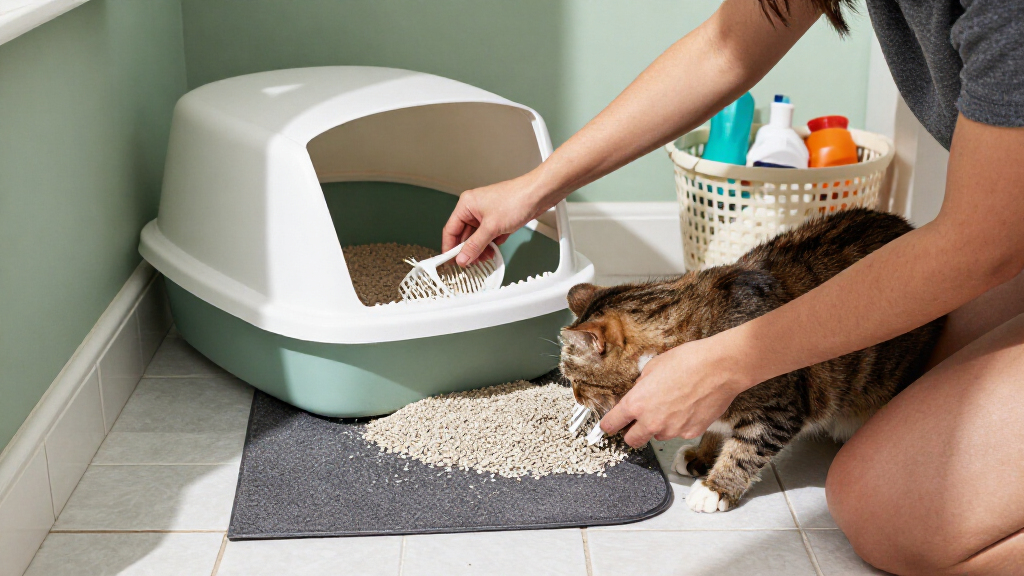
This checklist is for anyone setting up a cat litter area or refreshing the essentials. It covers the box and litter, plus the tools and storage that make daily cleanup easier to manage.

Get pet supplies delivered free with Prime
- Fast, free delivery on millions of items
- Prime Video, Amazon Music and more included
- Member-only deals all year
The sections follow the setup from choosing a box and litter to handling scatter and waste. Product picks appear where provided; the scoop and storage sections offer selection advice without naming a product.
Use each section to check fit, access, and the way each item works with the rest of your setup. Before buying, compare the listed dimensions and features with your cat and available space.
Covered Litter Box
A covered box can give the litter area a defined footprint, but the lid changes how your cat enters and uses it. The listed pick is a covered box described for kittens to medium cats, so consider whether its intended cat size and entry feel suitable for your pet. A cat should be able to turn around and position comfortably inside; a tight fit can make a box less practical even when it fits the room.
Check the assembled dimensions, opening, and how the lid comes off before choosing a location. A frequent mistake is judging only by the outside footprint and overlooking the usable interior or the clearance needed to lift the lid for cleaning. Also consider whether your cat is comfortable entering an enclosed space; observe their habits and allow an easy transition. Confirm that the box can sit on a stable, level surface and that you can reach all corners for routine scooping.
The pick is grey-white, which may coordinate with a neutral setup, but prioritize access and cleaning over appearance. Make sure the lid and base can be separated without awkward handling, and leave room around the box for entry and maintenance. Measure first, including the path to the chosen spot.
What to look for:
- Interior space for your cat to turn and position comfortably
- Opening size and entry style your cat can use
- Lid removal that allows routine cleaning
- Assembled footprint and clearance in the intended location
- Stable placement with room to access the box
Covered Cat Litter Box with Lid for Kittens to Medium Cats, Grey-White

A fully enclosed hooded litter box designed for cats up to 12 lbs, featuring upgraded workmanship to prevent litter leakage. It includes a pull-out drawer with scoop for easy cleaning, a deodorization bag to control odors, and a top-entry/front-entry control knob offering two entry/exit configurations.
Pros:
- Fully enclosed design prevents litter leakage and mess
- Easy-to-clean pull-out drawer with included scoop
- Includes deodorization bag to control odors
- Easy to install, disassemble, and transport for travel
Cons:
- Only suitable for cats up to 12 lbs, not larger breeds
- Enclosed design may be difficult for some cats to adapt to
Best for: Kittens and medium cats, as described in the product name
Not ideal for: Cats that avoid enclosed spaces or need more room
Bottom line: Check the interior fit and lid access before placing this covered box in your setup.
Clumping Cat Litter
Litter affects how the box feels underfoot and how daily scooping works, so match the choice to your cat’s preferences and your cleaning routine. The pick is ARM & HAMMER HardBall Clumping Cat Litter in Garden Bloom, listed as a 14.5 lb product. The product name identifies it as clumping litter; check the package for the specific use and handling directions before adding it to the box.
A common buying mistake is choosing by scent or package wording alone. Cats may have individual preferences, and a scented option may not suit every household or cat. If changing litter, watch how your cat responds and keep the box accessible during the transition. Also verify that the litter is appropriate for your cat’s age and needs by reading its label. Avoid assuming that every clumping formula behaves the same way: the label is the place to confirm directions, disposal guidance, and any cautions.
Think about the box as well as the litter. Use the fill guidance on the package, and make sure the box is large enough to leave usable space after filling. Keep the litter in a dry, reachable location and plan how you will replenish it. Fit and acceptance matter more than choosing based on the garden-bloom scent description alone.
What to look for:
- Label directions and any age or use guidance
- Your cat’s response to the Garden Bloom scent
- Package instructions for filling and disposal
- A box with enough usable space after filling
- Dry, convenient storage for replenishment
ARM & HAMMER HardBall Clumping Cat Litter, Garden Bloom, 14.5 lb

This lightweight, non-clay cat litter is made with American-grown sorghum and forms compact, scoopable clumps for easy cleanup. It is designed to control odors for up to 20 days, with a garden bloom scent, low tracking, and 99.9% dust-free performance.
Pros:
- Forms compact, scoopable clumps for easier cleanup
- Designed for odor control for up to 20 days
- Lightweight and made with American-grown sorghum
- Low dust and low tracking
Cons:
- Garden bloom scent may not suit cats or owners sensitive to fragrance
Best for: Households seeking the listed clumping litter option
Not ideal for: Cats or households that prefer unscented litter
Bottom line: Read the label and monitor your cat’s response when introducing this litter.
Litter Mat
A mat helps define the area immediately outside the box and gives you a place to catch litter carried out on paws. This pick is a gray silicone mat listed at 47 by 37 inches, so its large footprint is the key fit question. Measure the floor space and the path your cat uses to enter and exit; a mat that blocks a doorway or projects into a walkway can make the setup awkward.
Do not rely on the product name alone to determine how the mat feels or performs. Check the listing for its surface design, edges, and cleaning instructions, then consider your floor type and whether the mat can lie flat where you plan to use it. A common mistake is buying a large mat without accounting for nearby furniture, door swings, or the litter box’s own footprint. Leave enough room for the box to sit securely and for your cat to step onto the mat naturally.
Silicone is specified in the name, but confirm care guidance before choosing how to clean it. Think through where loose litter will go when you lift or move the mat, and whether you can reach under it for floor cleaning. The gray color may suit a range of spaces, but usable placement and straightforward cleanup should lead the decision.
What to look for:
- Floor clearance for the 47 by 37 inch footprint
- A surface and edge design suited to your cat’s approach
- Care instructions for the silicone material
- Room for the box and nearby doors or walkways
- A placement that allows lifting and cleaning underneath
47" x 37" Extra Large Silicone Cat Litter Mat – Gray

This extra-large, one-piece silicone mat measures 47" x 37", providing ample space for multiple cats and standard or large litter boxes. The textured surface and raised border help capture tracked litter, while the solid design allows for easy cleaning and litter return via pour spouts.
Pros:
- Extra-large size accommodates multiple cats and large litter boxes
- One-piece silicone construction is durable and easy to clean
- Textured grooves and raised borders effectively trap tracked litter
- Flexible material is gentle on cat paws and returns to shape easily
Cons:
- Not recommended for use with crystal or silica gel cat litter
- Solid surface requires manual litter return rather than automatic trapping
Best for: Setups with floor space for a 47 by 37 inch mat
Not ideal for: Small or narrow litter areas
Bottom line: Measure the full footprint and surrounding clearance before choosing this mat.
Litter Scoop
A scoop is part of the daily routine, so choose one that feels manageable and reaches the corners of the box. Since no product pick is listed for this slot, focus on the shape and size that suit your box and litter. A scoop that is too wide for the opening or too small for the box can make routine cleaning unnecessarily awkward.
Check the handle length, grip, and scoop head dimensions against the box’s interior. For a covered box, make sure the scoop can pass through the opening and reach the far end without requiring you to remove the lid each time. Common mistakes include overlooking the opening clearance, choosing a handle that is uncomfortable to hold, or selecting a scoop whose openings do not suit the litter’s texture. Review the product details and consider how you will store it hygienically between uses.
Compatibility matters: the listed litter is clumping, so look for a scoop suited to collecting clumps while allowing loose litter to fall through. The right opening pattern depends on the litter and your preference, so inspect the scoop design rather than assuming one style fits every formula. Easy daily handling is a useful guide: choose a tool you can use comfortably and clean according to its care instructions.
What to look for:
- Head width that fits the box opening and interior
- Handle length and grip comfortable for repeated use
- Openings suited to collecting clumps from the chosen litter
- Reach to the box corners, especially with a lid in place
- Storage and cleaning directions that fit your routine
Litter Disposal Bags
Waste handling is easier to plan when the disposal setup has a clear place beside the box. The listed pick is the Litter Genie Platinum Cat Litter Disposal Bin with Odor Control, Stain. Its product name identifies a disposal bin; check the listing and package to confirm what is included and which bags or refills it uses.
A frequent mistake is buying a bin without checking its footprint, opening, or ongoing bag compatibility. Measure the proposed spot, including room to open or service the unit, and verify that it can be reached without moving the litter box. Read the product details for setup and disposal instructions, including whether specific refills are needed. The name mentions odor control and stain, but consult the product information for the details of those features and care requirements.
Think about the routine: how often you expect to empty or service the bin, where waste will go afterward, and whether the unit can be cleaned as directed. Keep it accessible to the person who handles daily scooping while preventing it from interfering with the cat’s route. Refill fit and placement are practical checks to make before choosing this bin.
What to look for:
- Dimensions and service clearance for the intended spot
- Bag or refill compatibility confirmed from product details
- Opening and setup suited to your scooping routine
- Care instructions for the bin
- Placement that is accessible without blocking the cat’s route
Litter Genie Platinum Cat Litter Disposal Bin with Odor Control, Stainless Steel

The Litter Genie Platinum is a stainless steel cat litter disposal bin designed for hygienic and odor-free litter management. It features multi-layer film with odor-blocking technology, an easy-to-use sliding lever, and includes a refill for up to 3 months of use for one cat, along with a scoop and holder.
Pros:
- Effective odor control with multi-layer film technology
- Durable stainless steel design looks modern and stylish
- Includes a 3-month refill and a scoop for convenience
- Hygienic and easy to maintain
Cons:
- Capacity may be limited for multiple cats
- Refill cost could add up over time
- Design may be heavier than plastic alternatives
Best for: Households wanting a named disposal bin beside the box
Not ideal for: Setups without room for the bin and service clearance
Bottom line: Confirm footprint, refill compatibility, and care instructions before setting up this disposal bin.
Litter Storage Container
A storage container keeps litter replenishment organized and helps you plan where an open package will live. No product pick is listed here, so choose based on the package size, available space, and the way you handle refills. The container should be easy to access without crowding the litter area or making it difficult to lift and pour.
Check the dimensions and capacity against the litter package you use, and consider the weight when full. A common mistake is selecting a container that holds more than is comfortable to move, or one whose opening makes pouring messy. Look for a secure closure and review the care directions; keep the container dry and follow the litter’s own storage guidance. If you plan to transfer litter, make sure the label information remains available or can be referenced.
Think about the route from storage to box, including shelves, cabinet doors, and the space needed to pour. A low container may be easier to lift, while a larger one may reduce how often you replenish it; choose the balance that suits your routine. Practical capacity means enough room for the amount you can store and handle comfortably.
What to look for:
- Capacity suited to the litter package and available space
- Weight when full that you can lift and pour comfortably
- Secure closure and care directions
- Opening that makes replenishing the box manageable
- Dry storage location with an easy route to the litter area
Set up in a practical order: first choose a box that fits your cat and space, then select litter your cat accepts. Add a scoop for daily care, followed by a mat and disposal plan that fit the room. Choose storage once you know what needs to fit and where it will live.
You can build the setup one useful piece at a time and adjust as you learn your cat’s preferences. Measure the area, check labels and care instructions, and keep the routine comfortable and manageable for both of you.