I compared the two Zignature duck formulas here by format, life-stage range, and what each asks you to trade off. Zignature Duck Formula Dry Dog Food is my best overall pick for households seeking one limited-ingredient food for dogs of different ages, while Zignature Duck Formula Wet Dog Food stands out for adult dogs who benefit from moisture-rich meals or a softer texture. Neither is automatically right for every dog: the dry recipe contains peas and chickpeas, and the wet recipe is labeled for adults rather than all life stages.

Get pet supplies delivered free with Prime
- Fast, free delivery on millions of items
- Prime Video, Amazon Music and more included
- Member-only deals all year
Both use duck as the main ingredient, so the choice is less about which one is “more duck” and more about kibble convenience versus wet-food moisture, age suitability, and how your dog handles the rest of the recipe. I treat “limited ingredient” as a description of the formula, not proof that a food will address a particular allergy. For a diagnosed food sensitivity or a therapeutic diet, your veterinarian should guide the choice.
Complete the kit


Key Takeaways
- Best overall for age flexibility: The 25-pound dry formula is listed for all life stages and breed sizes; the wet formula is adult-focused.
- Best for moisture: The canned recipe provides at least 78% moisture, making it the clearer fit when adding moisture is a priority.
- Shared centerpiece: Duck is the main ingredient in both foods, but that alone does not establish that either is appropriate for a specific allergy.
- Dry-food tradeoff: Peas and chickpeas are included, so dogs that do not tolerate those ingredients may need another recipe.
- Pick by feeding style: Choose dry for a kibble-based routine, or wet for a softer, moisture-rich meal; check with a veterinarian about special diets.
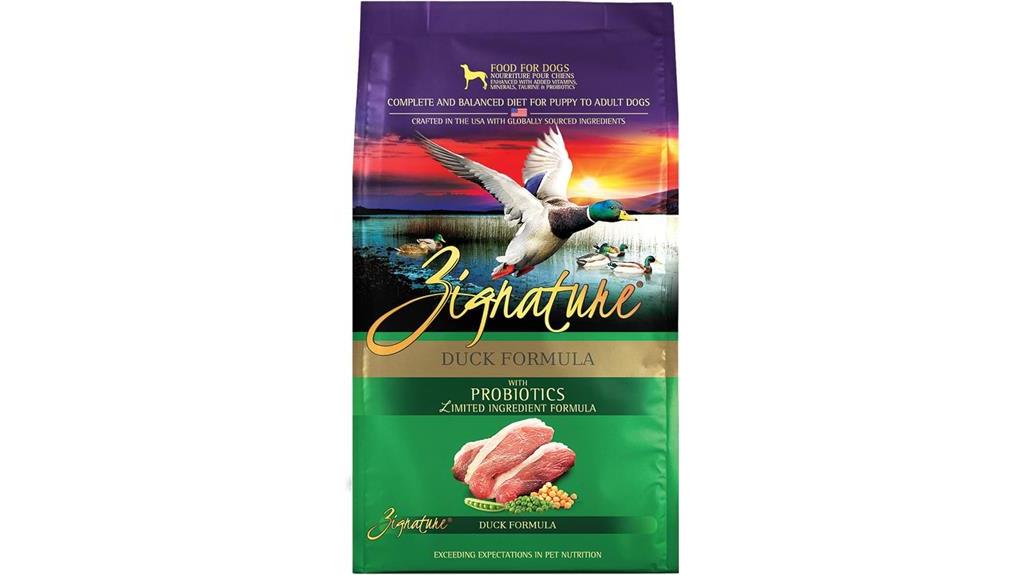
| Zignature Duck Formula Dry Dog Food, 25 lb |  | Best Overall — the more flexible kibble choice | Main ingredient: Duck | Formula: Limited ingredient | Food type: Dry | VIEW ON AMAZON | See Our Full Breakdown |
| Zignature Duck Formula Wet Dog Food, 13 oz, Case of 12 |  | Best for Added Moisture — a softer adult meal | Main ingredient: Duck | Formula: Limited ingredient | Food type: Wet | VIEW ON AMAZON | See Our Full Breakdown |
| zignature duck dog food review | Main ingredient | Formula | Food type | Life stage |
|---|---|---|---|---|
| Zignature Duck Formula Dry Dog | Duck | Limited ingredient | Dry | All life stages |
| Zignature Duck Formula Wet Dog | Duck | Limited ingredient | Wet | Adult |
More Details on Our Top Picks
Zignature Duck Formula Dry Dog Food, 25 lb
This is my lead pick because its stated suitability covers all life stages and breed sizes, a wider range than the adult-only wet formula in this lineup. That can make the dry recipe a more straightforward option for a home feeding dogs at different ages, provided its ingredients suit each dog and the food is appropriate for their individual needs. Duck leads the formula, and the product description lists it as limited ingredient, with vitamins, minerals, and probiotics included.
Compared with the canned option, this bag is better suited to a kibble-centered routine and does not bring the wet food’s stated 78% minimum moisture. Its main compromise is ingredient tolerance: the recipe contains peas and chickpeas, which may not work for every dog. I would check the full label rather than relying on the limited-ingredient description alone, particularly when managing a suspected food reaction. The supplied details also do not give a complete nutrient panel or feeding guide, so buyers should confirm the food matches their dog’s needs with their veterinarian.
The 25-pound format may fit households that already know their dog does well on the recipe, but it is a larger commitment than a small trial amount. I rank it above the wet food for breadth of stated life-stage use, not because dry food is universally better. Choose the canned recipe instead if moisture or a softer texture is the deciding factor; skip this kibble if peas or chickpeas are ingredients your dog needs to avoid.
Pros:- Duck is listed as the main ingredient.
- Limited-ingredient formula may fit some rotational feeding plans.
- Includes vitamins, minerals, and probiotics.
- Listed for all life stages and all breed sizes.
Cons:- Contains peas and chickpeas, which may not suit every dog.
- Does not provide the wet formula’s stated high moisture content.
- The supplied details do not include a full nutrient analysis or feeding directions.
Best for: Households looking for a duck-based kibble listed for all life stages and breed sizes, especially when age-range flexibility matters.
Not ideal for: Dogs that do not tolerate peas or chickpeas, dogs whose feeding plan prioritizes wet-food moisture, or buyers who need a veterinarian-prescribed therapeutic diet without confirming suitability.
- Main ingredient:Duck
- Formula:Limited ingredient
- Food type:Dry
- Package weight:25 lb
- Life stage:All life stages
- Breed size:All breed sizes
- Additional listed ingredients:Peas, chickpeas, vitamins, minerals, and probiotics
- Manufacturer:Pets Global Inc.
Our verdict“I rank this as the more flexible everyday pick for buyers who want duck-based kibble and whose dogs tolerate peas and chickpeas.”
Zignature Duck Formula Wet Dog Food, 13 oz, Case of 12
The wet formula is the clearer pick when moisture and texture matter more than an all-ages label. It lists at least 78% moisture and is described as a limited-ingredient duck recipe with vitamins and minerals. Compared with the dry bag, that makes it a more natural match for an adult dog whose feeding routine includes canned food, or for a buyer specifically seeking a softer meal. The product description also notes omega-3 fatty acids, though it does not provide an amount for judging their contribution to the overall diet.
Its narrower stated audience is the key tradeoff. This food is identified for adult dogs, whereas the dry formula is listed for all life stages. I would not treat the canned option as interchangeable across ages without checking its full nutritional adequacy statement and asking a veterinarian. The case contains twelve 13-ounce cans, so it also commits the buyer to a particular format and package quantity. That may be less convenient than kibble for someone seeking a dry-food routine.
The wet recipe’s duck-first, limited-ingredient positioning resembles the dry food, but it is not automatically a better choice for allergies. Sensitivities depend on the complete recipe and an individual dog’s history. The supplied listing calls its diet type a veterinary diet, yet it does not explain a specific therapeutic purpose; I would verify that label and suitability with a veterinarian rather than assume it replaces a prescribed food. Choose this over the dry option for adult-focused wet feeding and moisture, but favor the kibble if all-life-stage labeling is your priority.
Pros:- Duck is listed as the main ingredient.
- At least 78% moisture distinguishes it from the dry formula.
- Limited-ingredient recipe includes vitamins and minerals.
- Description identifies omega-3 fatty acids.
Cons:- Listed for adult dogs, unlike the dry food’s all-life-stage suitability.
- A case of twelve cans may not suit buyers seeking dry-food convenience.
- The supplied details do not clarify the specific purpose of its veterinary-diet label.
Best for: Adult dogs whose owners want a duck-based canned food with at least 78% moisture and a softer texture.
Not ideal for: Puppies or households needing an all-life-stage option, buyers committed to dry kibble, or dogs on a prescribed diet unless a veterinarian confirms this product is suitable.
- Main ingredient:Duck
- Formula:Limited ingredient
- Food type:Wet
- Can size:13 oz
- Package quantity:12 cans
- Life stage:Adult
- Moisture:At least 78%
- Diet type listed:Veterinary diet
Our verdict“I recommend this over the kibble when an adult dog’s routine calls for canned texture and added moisture, not when broad life-stage flexibility is the priority.”

How We Picked
I ranked these two products around the decisions a buyer can actually make from the supplied product details: food format, stated life-stage suitability, ingredient information, and practical feeding fit. Since both name duck as the main ingredient and both are described as limited-ingredient formulas, those shared points do not distinguish one from the other. The meaningful differences are that the dry food is listed for all life stages and all breed sizes, while the wet food is listed for adults and provides at least 78% moisture.
I gave the dry formula the lead because its stated age range makes it the more flexible single-food option for households with dogs at different life stages. That ranking is not a claim that kibble is nutritionally superior or that every dog will prefer it. The wet formula earns a separate role because its moisture content and soft format give buyers a clear reason to choose it instead. I also weigh the dry food’s peas and chickpeas as a real limitation, rather than treating “limited ingredient” as a promise that the recipe suits every sensitive dog.
I did not use customer ratings, price, or unprovided nutritional figures to rank the foods. The descriptions do not supply complete ingredient panels, calorie details, feeding amounts, or a full nutritional analysis, so I avoid claims that require those facts. Both products are presented as duck-based options, but a limited-ingredient label does not diagnose or treat an allergy. Dogs with medical needs, known sensitivities, or a prescribed diet call for veterinary advice before a food change.
| zignature duck dog food review | Food type | Life stage |
|---|---|---|
| Zignature Duck Formula Dry Dog | Dry | All life stages |
| Zignature Duck Formula Wet Dog | Wet | Adult |
Factors to Consider When Choosing Zignature Duck Dog Food Review
Both options center duck and use limited-ingredient positioning, so I would make the decision by matching format, life stage, and known ingredient needs to your dog—not by assuming the shared protein makes the recipes equivalent.
Choose the format your routine can support
The dry formula is the direct match for a kibble-based feeding routine. Its 25-pound bag is suited to buyers who have checked the recipe and expect to use it regularly; it is a less cautious starting point if the dog has never eaten the formula. The wet option arrives as twelve 13-ounce cans and supplies at least 78% moisture. That makes it the more relevant choice when canned texture or moisture is the aim, but it requires planning around cans rather than a bag of kibble. The supplied information does not give storage directions after opening, so follow the package label for handling.
Read life-stage details before buying
The dry recipe is listed for all life stages, while the wet recipe is listed for adults. This difference is more useful than a broad “all dogs” assumption: buyers feeding a puppy or a dog at another life stage should not assume an adult canned food meets that dog’s needs. Check the product label’s nutritional adequacy statement and ask your veterinarian when age, growth, pregnancy, or a medical condition affects feeding. The dry food’s broader listing gives it the advantage in this comparison, but it does not remove the need to confirm suitability for an individual dog.
Treat limited-ingredient claims as a starting point
A limited-ingredient formula may make a recipe easier to evaluate, but it does not mean the food contains no potential triggers. The dry product expressly includes peas and chickpeas; a dog that does not tolerate either may be a poor match. The available description for the wet food does not provide a complete ingredient list, so read its packaging before comparing it with a known sensitivity. If allergy is the reason for changing food, ask a veterinarian about a structured diet plan instead of relying on the word “duck” or a marketing description alone.
Verify the full label for special feeding needs
The wet listing describes the product as a veterinary diet but does not name a specific condition or explain whether veterinary authorization is needed. I would confirm the intended use directly from the package and with a veterinarian before treating it as a prescribed or therapeutic food. Neither product description here supplies a full nutrient analysis, calorie information, or feeding amounts. Those details affect portion decisions and whether a food fits an individual dog’s diet, so check the current label rather than estimating from the headline ingredients.
Make a gradual change and watch the dog
Even when a new recipe looks suitable on paper, changing food can affect a dog’s digestion and acceptance. Follow veterinary guidance and the package’s feeding directions when introducing either formula, and monitor appetite and stool during the change. Avoid switching between dry and wet foods as though their portions were interchangeable: moisture and energy density differ, and the supplied descriptions do not provide calorie figures for a direct serving conversion. If symptoms appear or a food reaction is suspected, pause the experiment and seek veterinary advice.
Frequently Asked Questions
Which Zignature duck food is the better choice overall?
I rank the dry formula first for its stated all-life-stage and all-breed-size suitability, which gives it broader use than the adult-focused wet recipe. The canned food is a better fit when added moisture and a softer texture matter more. This is a comparison of the listed product features, not a claim that one format is right for every dog.
Is the wet formula suitable for puppies?
The supplied details list the wet formula for adult dogs, so I would not assume it is suitable as a puppy’s complete diet. Check the current package for its nutritional adequacy statement and consult a veterinarian before feeding it to a puppy. The dry formula is the one of these two explicitly listed for all life stages.
Does duck mean either formula will relieve food allergies?
No. Duck is the main ingredient in both descriptions, but that does not show that a particular dog is allergic to another protein or will tolerate every ingredient in these recipes. The dry food includes peas and chickpeas, and the supplied wet-food details are not a complete ingredient panel. A veterinarian can help identify an appropriate elimination or diagnostic plan.
What does the wet food’s moisture level mean for my choice?
The wet formula is listed at at least 78% moisture, a clear difference from the dry format. That can make it the more relevant option for owners specifically seeking canned food with substantial moisture, but it does not establish that the product treats dehydration or replaces veterinary care. Ask your veterinarian about hydration concerns or a medical feeding plan.
Can I switch between the dry and wet recipes?
Both are duck-based limited-ingredient foods, but their formats, moisture levels, and stated life-stage suitability differ. Do not substitute servings one for one; the provided product details do not include calorie information for a conversion. Check each label, introduce a change with veterinary guidance when needed, and confirm that the food is appropriate for your dog’s age and health.
Conclusion
Choose the dry formula if you want kibble, need the broader all-life-stage listing, and know your dog tolerates peas and chickpeas. Choose the wet formula for an adult dog when canned texture and at least 78% moisture are the main priorities. If you are shopping because of a suspected allergy, a puppy’s needs, or a veterinary diet, do not decide on the duck ingredient alone: check the full label and ask your veterinarian which recipe fits. My ranking favors the dry food for flexibility, while the wet food wins for moisture-focused adult feeding.
Columbus Day / Indigenous Peoples' Day Picks
long weekend sales
As an affiliate, we earn on qualifying purchases.