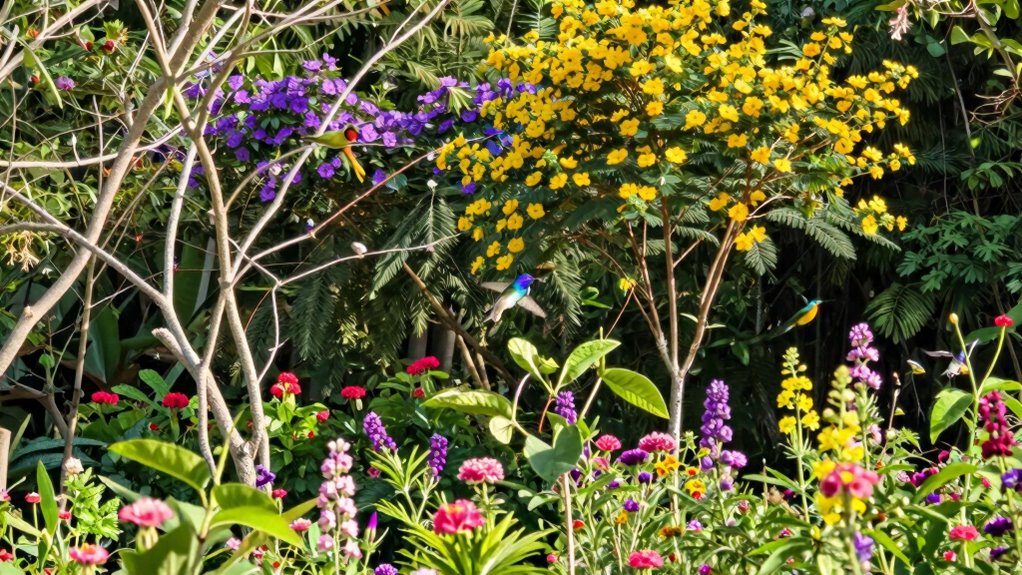

Agroforestry supports birds and pollinators by creating connected habitats that serve as wildlife corridors, helping animals move safely across fragmented land. By planting diverse trees and native species, you attract beneficial birds that control pests and pollinators like bees and butterflies that boost crop production. These environments promote biodiversity and ecological balance, making your farm more resilient. If you keep exploring, you’ll discover how these practices enhance overall ecosystem health and sustainability.

Get pet supplies delivered free — and shop member deals
- Fast, free delivery on millions of items
- Access to Prime Big Deal Days deals on October 6–7
- Prime Video, Amazon Music and more included
Key Takeaways
- Trees in agroforestry provide food, shelter, and breeding sites for birds and pollinators.
- Agroforestry creates wildlife corridors that facilitate safe movement and access to resources.
- Diverse plant species attract pollinators like bees and butterflies, enhancing pollination efficiency.
- Birds control pests naturally by feeding on insects such as caterpillars and aphids.
- Habitat connectivity supports biodiversity, promoting resilient ecosystems that sustain pollinators and birds.

Agroforestry, which combines trees with crop and livestock production, plays a critical role in supporting birds and pollinators. When you incorporate trees into your farming system, you’re creating more than just a diverse landscape—you’re establishing essential habitats that benefit wildlife. These trees serve as wildlife corridors, allowing animals to move safely across the farm and connecting fragmented habitats. As birds and pollinators navigate these corridors, they find food, shelter, and breeding sites, which helps sustain their populations. This connectivity is indispensable because it reduces habitat fragmentation, a common threat to many species. When wildlife can move freely across your land, they’re better protected from threats like predators and human disturbance, making sure of their survival and promoting ecological balance.
Moreover, agroforestry enhances pest control naturally. Birds and beneficial insects thrive in these integrated systems, preying on pests that threaten your crops. For example, certain bird species feed on insects like caterpillars, beetles, and aphids, reducing the need for chemical pesticides. Pollinators, such as bees and butterflies, are also supported by the diverse plant life in agroforestry systems, ensuring effective pollination for your crops. This natural pest control not only lowers your input costs but also promotes healthier, more resilient plants. When you maintain a habitat that supports a variety of species, you’re actively encouraging a self-regulating ecosystem that keeps pest populations in check without harmful chemicals.
You might notice that your trees attract a range of bird species that help control pests, and their presence encourages pollinators to visit your flowering plants. By fostering a diverse environment, you’re creating a sustainable cycle where pollination and pest control happen naturally. The wildlife corridors formed by your trees enable birds and pollinators to access different parts of your farm, increasing their effectiveness in maintaining ecological health. These corridors also provide shelter during adverse weather and breeding seasons, which strengthens their populations over time. As a result, your farm becomes more resilient, with a balanced ecosystem that supports biodiversity while enhancing crop productivity. Incorporating habitat connectivity is essential for maintaining thriving populations of beneficial wildlife and ensuring ecological sustainability on your farm. Additionally, understanding the importance of native plant species can further improve habitat quality for local wildlife.
In essence, agroforestry offers a practical way to support wildlife, especially birds and pollinators, by creating habitat connectivity and promoting natural pest control. The presence of wildlife corridors within your farm ensures animals can move safely and persistently, and the variety of plants nurtures beneficial insects and birds that help keep pests under control. This integrated approach not only benefits the environment but also boosts your farm’s sustainability, making it a win-win situation for you, the wildlife, and the land. Additionally, habitat diversity in agroforestry systems attracts a broader range of beneficial species, further enhancing ecological resilience. Incorporating tree planting into your farm design is a key strategy for establishing these vital habitats and corridors. A well-designed agroforestry system also considers soil health, which supports healthy plant growth and overall ecosystem stability.
As an affiliate, we earn on qualifying purchases.
Frequently Asked Questions
How Does Agroforestry Impact Soil Health?
Agroforestry positively impacts soil health by reducing soil erosion through tree roots that stabilize the soil. It also enhances nutrient cycling as trees and plants add organic matter and improve soil structure. You’ll notice better moisture retention, fewer degraded soils, and increased fertility. These practices create a sustainable environment, supporting healthy crop growth and maintaining soil productivity over time. Agroforestry truly boosts soil health and resilience.
What Are the Economic Benefits for Farmers?
Like a sturdy oak weathering storms, agroforestry offers you a canopy of economic benefits. It boosts market diversification, opening new avenues for selling diverse crops, and enhances income stability by buffering against market fluctuations. You’ll find yourself more resilient, with multiple streams of revenue growing beneath the shade of sustainable practices. This symbiotic system not only nurtures the land but also fortifies your financial future, turning farming into a flourishing mosaic of opportunity.
Can Agroforestry Help Combat Climate Change?
Yes, agroforestry helps combat climate change by enhancing climate adaptation and promoting carbon sequestration. When you adopt agroforestry practices, you create resilient landscapes that better withstand extreme weather, reducing vulnerability. Trees and diverse crops sequester carbon dioxide, lowering greenhouse gases in the atmosphere. This approach not only supports environmental health but also benefits your farm’s sustainability, making it an essential tool in the fight against climate change.
How Is Crop Diversity Affected by Agroforestry?
You’ll notice that agroforestry can increase crop variety, boosting biodiversity enhancement on farms. In fact, diversified agroforestry systems often feature up to 50% more crop variety than monocultures, which helps attract a broader range of beneficial insects and wildlife. This crop diversity not only improves resilience to pests and weather fluctuations but also supports a healthier ecosystem, fostering sustainable farming practices and enriching local biodiversity.
What Are Common Challenges in Implementing Agroforestry?
You might face challenges like pest management, as some trees can attract pests that threaten crops. Choosing the right tree species is vital to avoid competition for resources and guarantee compatibility with your crops. Additionally, balancing diverse plantings and maintaining soil health can be complex. Proper planning, selecting disease-resistant trees, and integrating pest control strategies help you overcome these challenges, making agroforestry a sustainable and productive practice.
Conclusion
By embracing agroforestry, you plant seeds of hope that bloom into vibrant habitats, offering safe havens for birds and pollinators alike. Think of your fields as woven tapestries—each tree and crop thread creating a sanctuary of life. Your efforts become a nurturing embrace, where nature’s melodies and colors flourish, symbolizing harmony and renewal. In nurturing these ecosystems, you become a guardian of biodiversity, ensuring the song of life continues to resonate for generations to come.
Fall Picks
fall essentials
As an affiliate, we earn on qualifying purchases.