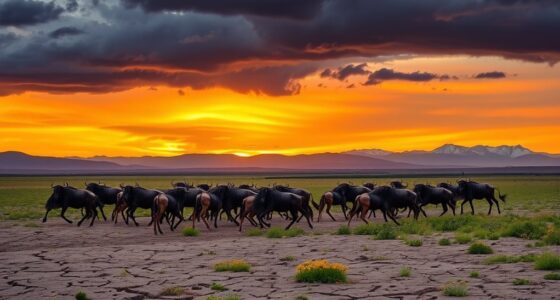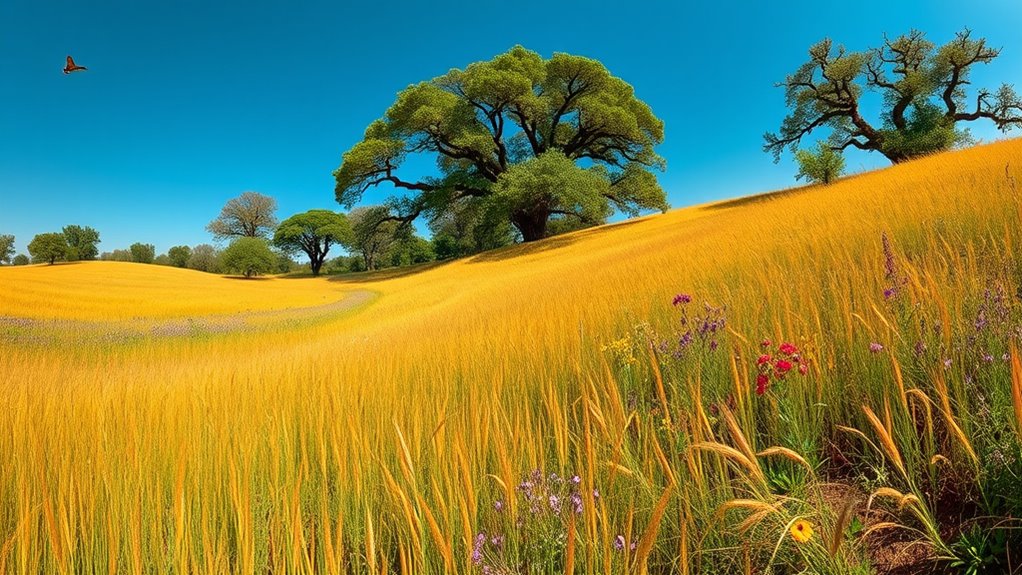

Grassland restoration in prairies and savannas is essential for revitalizing ecosystems that support diverse native species. By focusing on reintroducing native plants, you promote resilience and stability while reducing the need for chemical inputs. Healthy soil plays a critical role, so incorporating organic matter can enhance its structure and moisture retention. Management practices like controlled burns and grazing help maintain plant diversity and prevent invasive species. Discover how these strategies can transform grasslands further.
Key Takeaways
- Restoring prairies and savannas involves reintroducing native species that enhance ecosystem resilience and support local wildlife.
- Healthy soil is crucial for grassland restoration, providing nutrients and improving moisture retention for native plants.
- Incorporating organic matter, like compost, boosts soil health and fosters a self-sustaining ecosystem.
- Management practices such as controlled burns and grazing help maintain biodiversity and prevent invasive species encroachment.
- Native species reduce the need for external resources, promoting long-term ecological stability in restored grasslands.
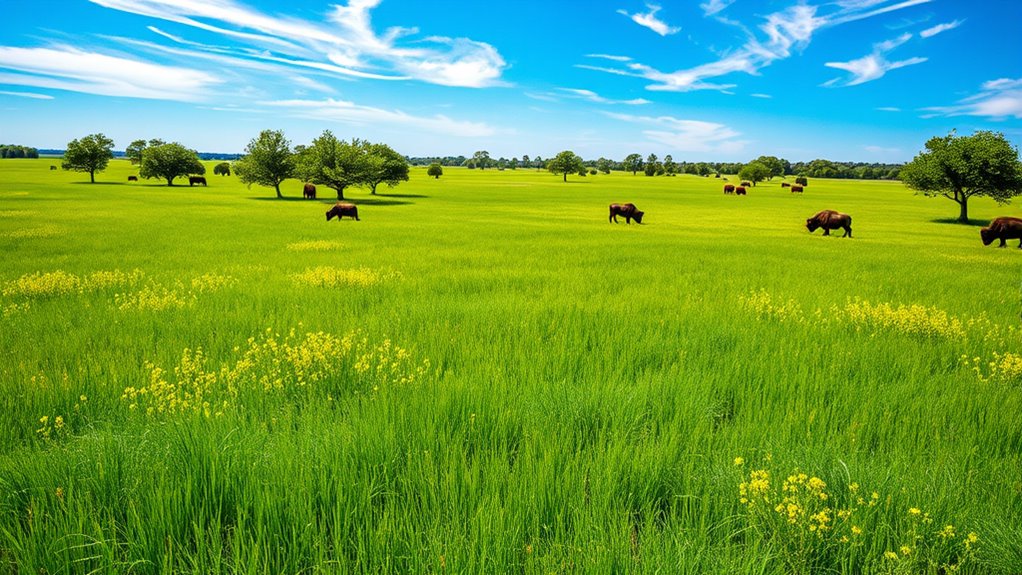
Have you ever wondered how grasslands, essential ecosystems teeming with life, can be restored after years of degradation? The process might seem formidable, but it’s achievable with the right approach. You can play a crucial role in revitalizing these ecosystems by focusing on reintroducing native species and improving soil health.
First, let’s talk about native species. Grasslands are meant to support a diverse array of plants and animals, many of which are adapted to local conditions. When you introduce native plants back into the environment, you’re helping to create a stable and resilient ecosystem. These species are better suited to thrive in local soil and climate, which means they’ll need less water and fewer chemical inputs. By selecting the right native species for your grassland restoration project, you pave the way for a thriving community of flora and fauna that can withstand environmental stresses.
Introducing native species is essential for creating resilient grassland ecosystems that thrive with minimal resource inputs.
Now, soil health is another critical aspect of grassland restoration. Healthy soil acts as a foundation for growth, providing essential nutrients for plants. You can improve soil health by incorporating organic matter—like compost or mulch—into the soil. This not only enriches the nutrient content but also enhances the soil’s ability to retain moisture. Healthy soils support robust root systems, enabling plants to better access water and nutrients. In turn, this creates a more resilient grassland ecosystem that can adapt to changing conditions.
Moreover, when you focus on restoring soil health, you also promote the activity of beneficial organisms like earthworms and microbes. These organisms play a significant role in breaking down organic matter and enhancing nutrient cycling. With a thriving community of soil life, your restored grassland can become a self-sustaining ecosystem, requiring less intervention over time.
You might also consider implementing techniques like controlled burns or grazing management to mimic natural processes. These methods help maintain the balance of plant species and prevent the encroachment of invasive species that could threaten your restoration efforts. They also promote the growth of native species, which can further improve soil health and overall ecosystem resilience.
Frequently Asked Questions
What Are the Best Native Plants for Grassland Restoration?
For effective grassland restoration, you’ll want to focus on native species like big bluestem, purple coneflower, and switchgrass. These plants thrive in local conditions and support local wildlife. When using planting techniques, consider direct seeding or transplanting seedlings, ensuring you mimic natural growth patterns. It’s essential to prepare the soil beforehand and maintain proper spacing to encourage healthy growth. By selecting the right natives, you’ll foster a resilient ecosystem.
How Long Does Grassland Restoration Typically Take?
Grassland restoration typically takes several years to decades, depending on factors like the site’s condition and chosen native plants. You’ll see initial signs of ecological recovery within the first few seasons, but achieving a fully functioning ecosystem can take much longer. Your restoration timeline might vary, but patience is key. Regular monitoring and management can help expedite the process, ensuring that the grassland thrives in its new, restored state.
Can Grazing Animals Help in Restoration Efforts?
Absolutely, grazing animals can work wonders in restoration efforts! When managed properly, their grazing management can mimic natural processes, promoting healthy plant growth and biodiversity. The impacts of animals can break up soil compaction, disperse seeds, and control invasive species. You’ll see landscapes transform, making it seem like nature’s magic at play. So, if you’re looking to restore an ecosystem, consider incorporating grazing animals into your strategy for impressive results!
What Are Common Challenges Faced in Grassland Restoration?
You’ll face several common challenges in grassland restoration. Invasive species often outcompete native plants, making it tough for the ecosystem to recover. Soil degradation can also hinder growth, as poor soil health limits nutrient availability. Additionally, climate factors like drought or flooding can complicate restoration efforts. By understanding these challenges, you can develop strategies to mitigate their impact and promote a successful restoration process.
How Can Individuals Participate in Local Restoration Projects?
You can be a crucial seed in your community’s restoration efforts! Join local volunteer planting events to help restore native habitats, making a tangible difference in your area. Attend community workshops to learn about local ecosystems and best practices for restoration. By getting involved, you not only gain valuable knowledge but also connect with like-minded individuals who share your passion for the environment. Together, you can cultivate a thriving space for future generations.
Conclusion
As you walk through the vibrant tapestry of restored grasslands, you can almost hear the whispers of nature rejoicing. Each blade of grass dances in the breeze, telling tales of resilience and rebirth. You’ve witnessed the transformation from barren land to a flourishing ecosystem, highlighting the delicate balance of life. By nurturing these prairies and savannas, you’re not just restoring beauty; you’re reviving a heartbeat that echoes through time, reminding us all of nature’s enduring spirit.