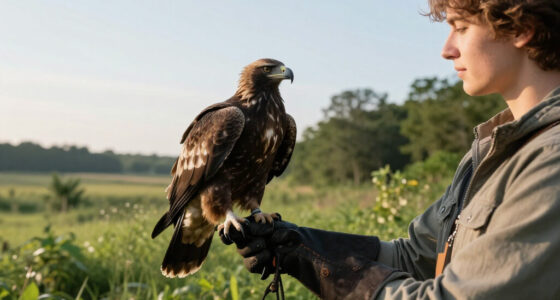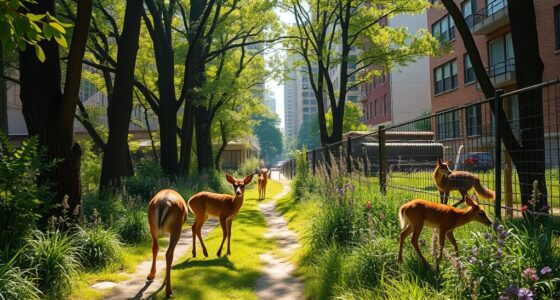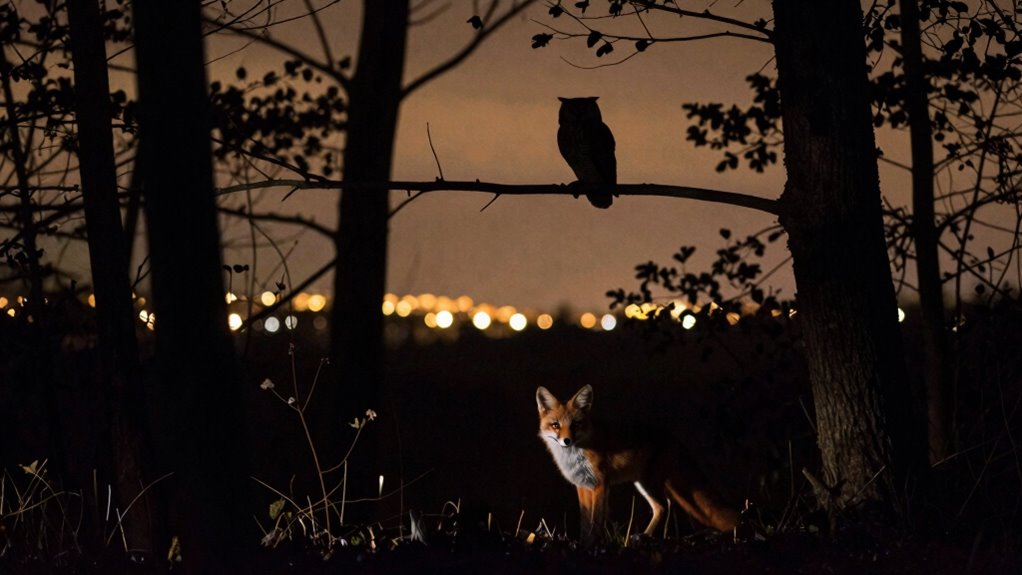

Light pollution silently disrupts wildlife by confusing animals that rely on darkness for feeding, mating, and navigation. It misleads sea turtle hatchlings from reaching the sea and confuses migratory birds, affecting their survival. Insects are attracted to artificial lights, causing mass deaths and disrupting food chains. These disturbances weaken ecosystems and threaten biodiversity. If you keep exploring, you’ll discover more about how artificial lighting impacts ecosystems and what you can do to help.

Get pet supplies delivered free with Prime
- Fast, free delivery on millions of items
- Prime Video, Amazon Music and more included
- Member-only deals all year
Key Takeaways
- Light pollution disrupts natural behaviors and navigation in nocturnal animals, threatening their survival and reproductive success.
- Artificial lighting causes mass insect mortality, leading to declines in species that depend on insects for food.
- Disrupted biological rhythms from light pollution destabilize ecosystems and reduce biodiversity.
- Predators like bats and birds lose prey due to insect population declines caused by artificial light.
- Mindful lighting practices can mitigate ecological impacts and support healthier wildlife populations.

Light pollution, caused by excessive or misdirected artificial lighting, increasingly disrupts wildlife habitats around the world. When cities glow with bright, poorly directed lights, it creates an urban glow that extends far beyond human boundaries. This artificial brightness doesn’t just obscure our night skies; it interferes with the natural behaviors of countless species. You might not realize it, but your city’s glow can have profound impacts on wildlife, especially those that rely on darkness to survive.
One of the most immediate effects of urban glow is nocturnal disruption. Many animals have evolved to thrive in darkness, using the night for activities like hunting, mating, and navigation. Bright lights can disorient these creatures, throwing off their natural routines. For example, sea turtles hatchlings, which instinctively move toward the brightest horizon—usually the open sea—may instead head toward artificial lights on the shore, leading them away from safety. Similarly, birds that migrate at night can become confused or exhausted by the artificial glow, causing disorientation and increasing mortality rates. These disruptions threaten their ability to find food, reproduce, and perform essential life functions.
Urban glow disorients nocturnal animals, disrupting migration, feeding, and survival routines.
You may also notice that light pollution affects insects, particularly nocturnal ones like moths. Bright lights attract these insects in droves, leading to mass deaths and a decline in their populations. Since many birds and bats depend on insects for food, this cascade effect can disturb entire ecosystems. When the natural balance is upset, it impacts not only the insects but also the predators that rely on them, creating a ripple of ecological consequences. Additionally, the proliferation of artificial lighting can alter the natural cycles of many species, further destabilizing ecosystems. Recognizing the importance of biological rhythms helps us understand why disrupting them has such profound effects. It’s crucial that we adopt dark-sky-friendly lighting practices to minimize these impacts and support healthy ecosystems.
Furthermore, artificial lighting can interfere with the biological clocks of animals. Nocturnal animals, such as foxes and bats, depend on darkness to hunt and avoid predators. When these animals are exposed to constant or excessive light, their hunting patterns become inefficient, and they may become more vulnerable to predation or starvation. Over time, this can lead to declines in their populations. It’s not just about individual species—these shifts can destabilize entire ecosystems, reducing biodiversity and resilience. The disruption of natural light cycles can have lasting impacts on ecological balance. By understanding these effects, we can better appreciate the importance of mindful outdoor illumination.
dark sky friendly outdoor lighting
As an affiliate, we earn on qualifying purchases.
As an affiliate, we earn on qualifying purchases.
Frequently Asked Questions
How Does Light Pollution Affect Nocturnal Plant Growth?
Artificial illumination from light pollution can disrupt nocturnal plant growth by interfering with photosynthesis. When you expose plants to artificial light at night, it can alter their natural rhythms, confusing their biological clocks. This disruption hampers photosynthesis, reducing their ability to produce energy and grow properly. As a result, plants may become weaker, less healthy, and less capable of supporting the ecosystems that depend on them.
Are Certain Species More Vulnerable to Light Pollution Than Others?
Certain species are more vulnerable to light pollution, like moths drawn irresistibly to artificial lights. You see, species-specific vulnerabilities stem from their evolutionary adaptations, which can be thrown off by unnatural light sources. Nocturnal animals with specialized behaviors or habitats are especially at risk, as their survival strategies depend on natural darkness. So, understanding these vulnerabilities helps you appreciate how light pollution disrupts delicate ecological balances.
Can Light Pollution Impact Insect Populations Significantly?
Yes, light pollution can considerably impact insect populations. Artificial lighting disrupts insect behavior, attracting many insects away from their natural habitats and causing disorientation. This interference leads to increased mortality rates, especially among nocturnal insects like moths. As a result, the disruption in insect populations can cascade through ecosystems, affecting pollination and food sources for other wildlife, highlighting the importance of managing artificial lighting to protect these essential creatures.
How Does Light Pollution Influence Migration Patterns of Animals?
Light pollution influences migration patterns by disrupting animals’ natural navigation systems. Artificial lighting impacts navigation by confusing or disorienting them, especially at night. Disrupted sensory cues make it harder for birds, sea turtles, and insects to follow their usual migratory routes, leading to increased mortality or disorientation. You might notice fewer animals reaching their destinations because artificial lighting interferes with their ability to rely on stars, the moon, or natural horizon cues.
What Are the Long-Term Ecological Consequences of Light Pollution?
You might not realize it, but artificial lighting from urban expansion can cause long-term ecological consequences. It disrupts natural behaviors of wildlife, leading to decreased populations and altered ecosystems. Bright lights interfere with plant growth and the reproductive cycles of many species. Over time, this imbalance affects biodiversity and ecosystem stability, making it harder for nature to recover and thrive as urban areas continue to expand and intensify artificial lighting.
Conclusion
You now see how light pollution quietly harms wildlife, disrupting their natural behaviors and habitats. Imagine a young sea turtle, confused by city lights instead of the moon, wandering away from the ocean and risking predators. This heartbreaking scene highlights the urgent need to reduce unnecessary lighting. By taking action, you can help protect these vulnerable creatures, ensuring they thrive in their natural environments for generations to come. Your choices truly matter in restoring nature’s balance.
Evergreen bestsellers Picks
bestsellers
As an affiliate, we earn on qualifying purchases.