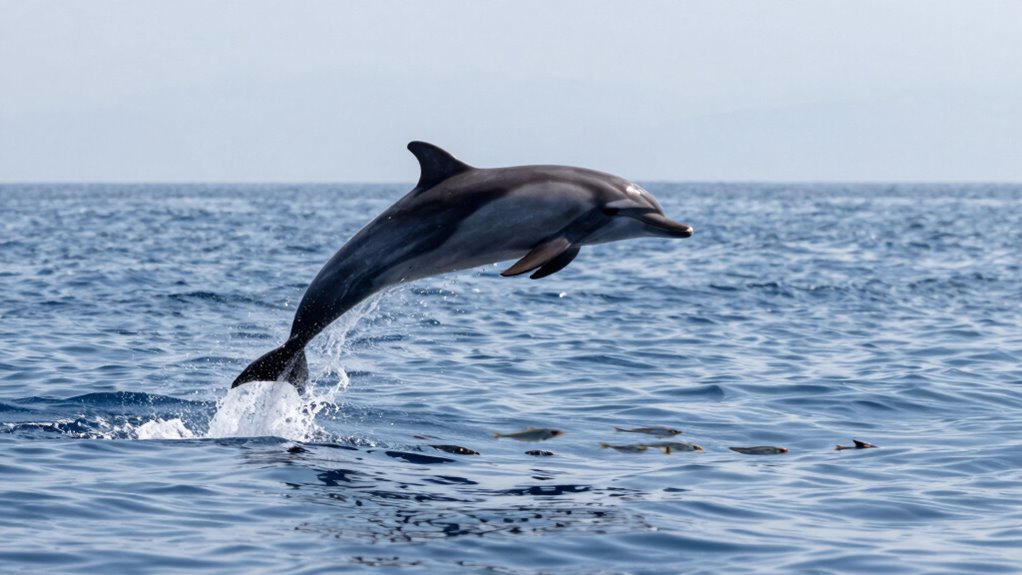

Marine noise pollution from ships and human activities disrupts marine animals’ communication and behavior. You might notice animals become more evasive, avoiding noisy areas or changing their vocalization patterns, which can be energetically costly. This interference affects essential activities like feeding and mating, and causes stress responses that threaten their health. Over time, these disruptions can lead to population declines and ecosystem imbalance. To understand how these changes happen and what can be done, keep exploring further.
Key Takeaways
- Underwater noise interferes with marine animals’ communication, making it harder to coordinate and find mates or prey.
- Marine animals may alter vocalization patterns, producing louder or different sounds to overcome noise interference.
- Noise pollution causes animals to evade noisy areas, disrupting migratory routes and habitat use.
- Elevated stress responses due to noise can lead to changes in behavior and reduced reproductive success.
- Prolonged exposure can result in behavioral adaptations that negatively affect survival and long-term populations.
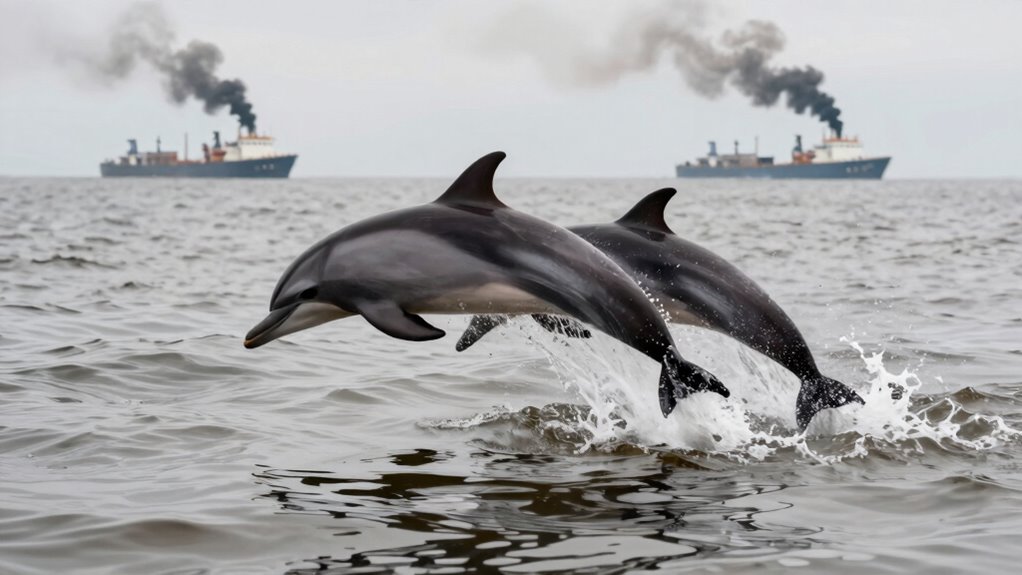
Marine traffic is a major contributor to underwater noise pollution. Large ships produce powerful sounds that can drown out the natural signals marine animals use to interact. For whales, dolphins, and other cetaceans, this noise interferes with their ability to communicate, often forcing them to spend more energy on locating each other or abandoning crucial activities like feeding and mating. Underwater acoustics, the science of how sound propagates in water, explains how these noises travel long distances, creating a constant background hum that marine creatures cannot escape. It’s as if the ocean is becoming a noisy, chaotic environment, where the sounds of human activity dominate. Understanding the principles of Underwater acoustics can help develop strategies to mitigate some of these impacts. Researchers are also exploring quiet technology to reduce the acoustic footprint of ships, aiming to lessen their impact on marine life. Additionally, implementing regulations on ship noise levels can play a crucial role in protecting vulnerable species from excessive noise exposure. The importance of sound propagation in underwater acoustics highlights how far these noises can travel and affect distant populations of marine animals.
This disruption leads to significant changes in animal behavior. Some species might become more evasive, avoiding areas with heavy shipping lanes, which can fragment their habitats and reduce access to vital resources. Others may alter their vocalization patterns, producing louder or different sounds to be heard over the noise, which can be energetically costly and less effective for communication. In some cases, marine animals experience stress responses, such as increased heart rates or changes in movement patterns, as they try to cope with the overwhelming acoustic environment. These behavioral shifts aren’t just minor inconveniences—they can impact survival, reproduction, and the long-term health of populations. Long-term exposure to marine noise pollution can lead to behavioral adaptations that may not be sustainable over time, further threatening marine ecosystems. You should also realize that the effects of underwater noise aren’t limited to immediate behavioral changes. They can cause long-term consequences, like disrupted migratory routes or reduced reproductive success. As marine traffic continues to grow, so does the intensity of underwater acoustics pollution. This escalating noise pollution threatens the delicate balance of marine ecosystems, pushing animals to adapt in ways that might not be sustainable. By understanding how human-made sounds influence animal behavior, you can better appreciate the importance of regulating marine traffic and developing quieter technologies to protect marine life from the adverse effects of noise pollution.
Frequently Asked Questions
How Do Different Species Respond Uniquely to Noise Pollution?
You’ll notice that species respond uniquely to noise pollution through species-specific responses and behavioral adaptations. Some marine animals, like whales, may alter their vocalizations or migrate away to quieter areas, while others, such as fish, might become less active or change their feeding habits. These responses depend on each species’ sensory capabilities and ecological needs, demonstrating that noise pollution impacts marine life in diverse and complex ways.
Can Marine Animals Adapt to Increasing Noise Levels Over Time?
You might be surprised that only about 30% of marine species show signs of behavioral adaptation to increasing noise levels. While some animals can develop coping mechanisms, noise pollution often causes sensory impairment, hindering communication, navigation, and feeding. Over time, this can lead to long-term behavioral changes, but true adaptation is limited. Many species struggle to keep pace, risking population declines if noise levels continue to rise unchecked.
What Are the Long-Term Ecological Impacts of Noise-Induced Behavioral Changes?
You might not realize it, but noise-induced behavioral changes can cause long-term ecological impacts like behavioral adaptation shifts, disrupting natural communication and migration patterns. These changes can lead to ecosystem disruption, affecting predator-prey relationships and reproductive success. Over time, this can reduce biodiversity and weaken the resilience of marine ecosystems, making them more vulnerable to environmental stresses. Your actions to reduce noise pollution help protect these delicate ecological balances.
How Does Noise Pollution Affect Marine Animal Communication Strategies?
Noise pollution disrupts marine animal communication by causing acoustic masking, where essential sounds like mating calls or danger signals get drowned out by loud noises. You’ll notice behavioral disruption, as animals struggle to communicate, navigate, or find food effectively. This interference forces them to adapt or abandon crucial behaviors, ultimately impacting their survival. Reduced communication success can lead to decreased reproductive opportunities and increased vulnerability to predators.
Are There Effective Mitigation Measures to Reduce Noise Impact on Marine Life?
Yes, you can effectively reduce noise impacts on marine life by implementing acoustic barriers and strict noise regulations. Acoustic barriers act as sound shields, protecting sensitive habitats from disruptive noises, while regulations limit the volume and timing of noisy activities like ship traffic and drilling. Together, these measures create a symphony of calmer waters, allowing marine animals to thrive without the cacophony of human activity, fostering healthier, more resilient ecosystems.
Conclusion
So, next time you crank up that boat engine or blast your favorite playlist at sea, remember you’re not just making waves—you’re turning marine life into the underwater version of rock concert fans on a bad trip. Marine noise pollution isn’t just an annoyance; it’s a behavioral remix that confuses, disorients, and even silences our ocean’s creatures. Maybe it’s time we hit pause, listen to the silent symphony beneath the waves, and treat marine life with the respect they deserve.