

Pangolin protection is essential to combat illegal trafficking and guarantee these critical creatures survive. You can support efforts by raising awareness about their ecological importance and advocating for stronger laws against poaching. Get involved with wildlife organizations dedicated to conserving pangolins and help dispel myths surrounding their medicinal value. By promoting sustainable practices like ecotourism, you can create economic incentives for local communities to protect these mammals. There’s much more you can do to make a difference.
Key Takeaways
- Raising awareness about pangolins’ ecological importance can reduce demand for trafficked species and promote their conservation.
- Supporting wildlife organizations enhances efforts to protect pangolins and combat illegal trafficking networks.
- Stricter legal protections and harsher penalties for poaching can deter illegal trade and safeguard pangolin populations.
- Promoting sustainable alternatives, like ecotourism, provides economic benefits to communities while reducing reliance on illegal wildlife trade.
- Dispersing myths about pangolins’ medicinal value is essential in diminishing cultural misconceptions that drive demand for their scales and meat.
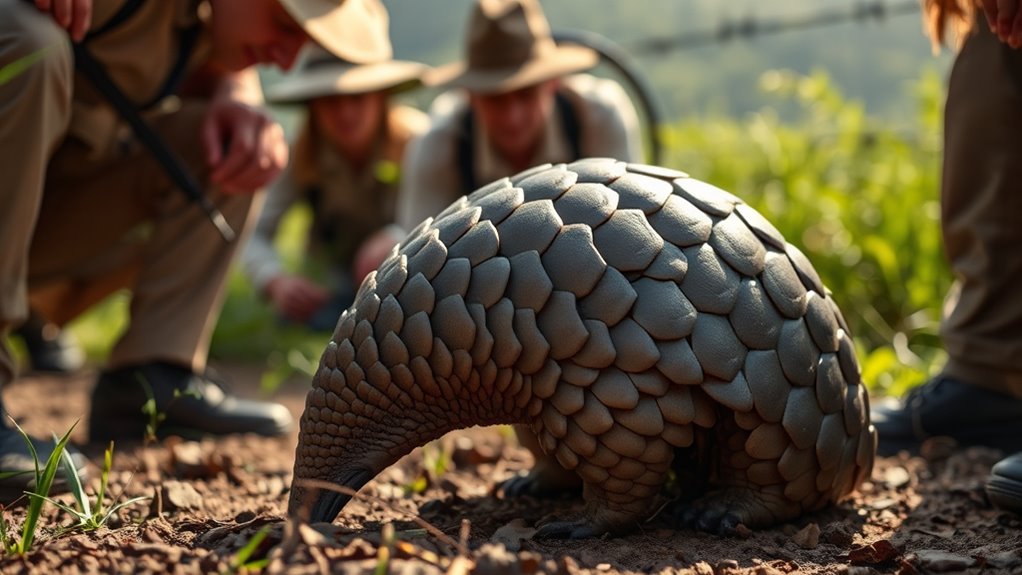
Why should we care about pangolins? These unique creatures, often referred to as “scaly anteaters,” are the most trafficked mammals in the world, primarily due to illegal trade. Their scales are highly prized in traditional medicine and as status symbols, leading to their alarming decline in population. When you think about conservation, it’s essential to recognize that pangolins play a critical role in their ecosystems. They help control insect populations, which can prevent crop damage and promote agricultural health. By losing pangolins, we’re not just losing a species; we’re disrupting the delicate balance of nature.
Pangolins are crucial for ecosystem balance, yet they face extinction due to illegal trade and cultural misconceptions.
The illegal trade in pangolins is a significant issue that demands our attention. Each year, millions of these animals are poached, often leading to devastating consequences for their populations. You might wonder how such a small, seemingly obscure animal could face such a threat. The truth is, the demand for pangolins is driven by cultural beliefs and misconceptions about their scales. Many still believe they possess magical properties, which fuels the market. It’s frustrating to think that misinformation can lead to such dire consequences for an entire species.
So, what can be done to combat this illegal trade? Conservation strategies are essential. Organizations around the globe are working tirelessly to create awareness about the plight of pangolins. By educating communities about the importance of these animals and dispelling myths surrounding their scales, we can reduce demand. You can contribute to this effort by supporting wildlife organizations that focus on pangolin conservation. Your involvement can help fund research, increase awareness, and promote legal protections for these endangered creatures.
Additionally, enforcing stricter laws against poaching and trafficking is critical. If you’re passionate about wildlife protection, consider advocating for policies that impose harsher penalties for those involved in the illegal trade. Your voice matters in pushing for change at local and international levels. Furthermore, you can support ecotourism initiatives that benefit local communities while promoting wildlife conservation. By providing economic incentives for protecting pangolins, you encourage sustainable practices that benefit both people and wildlife. Furthermore, understanding the role of ecosystems is vital in highlighting how pangolins contribute to environmental health.
Frequently Asked Questions
Are Pangolins Endangered Due to Habitat Loss?
Yes, pangolins are endangered due to habitat loss. When you support pangolin conservation efforts, you’re helping protect their natural environments. Habitat preservation is vital for their survival, as it guarantees they have places to forage and breed. You can get involved by advocating for sustainable land use and supporting organizations that focus on conserving the habitats these unique creatures rely on. Every action counts in helping protect pangolins from further decline.
How Do Pangolins Contribute to Their Ecosystems?
Pangolins play a vital role in their ecosystems by controlling insect populations. Their diet mainly consists of ants and termites, which they consume in large quantities, helping to maintain balance in the environment. You’ll notice their behavior, like using their sharp claws to dig into ant hills, guarantees that these pests don’t overpopulate. By foraging, pangolins also aerate the soil, promoting healthy plant growth, which supports diverse wildlife in their habitats.
What Are the Main Threats to Pangolins?
Pangolins face dire threats, with an estimated one million trafficked in the last decade alone. The illegal trade, driven by demand for their scales in traditional medicine, devastates their populations. Cultural beliefs often fuel this demand, as many falsely believe pangolin products can cure ailments. Additionally, habitat loss from deforestation puts these unique creatures at further risk. You can help raise awareness and fight against these threats to protect pangolins.
Can Pangolins Be Kept as Pets?
No, you shouldn’t keep pangolins as pets. The pangolin pet trade is both unethical and harmful, as these animals face severe threats from the illegal wildlife trade. They need specialized care and habitats that you can’t provide at home. Additionally, keeping a pangolin can contribute to their decline in the wild. Instead, support efforts to protect them in their natural environment and raise awareness about their conservation needs.
How Can Individuals Help Pangolin Conservation Efforts?
You can help pangolin conservation efforts considerably! Did you know that pangolins are the most trafficked mammals in the world? By raising community awareness, you can educate others about their plight. Consider volunteering or donating to NGOs that focus on pangolin protection. Sharing information on social media can also spread the word. Every small action counts, so rally friends and family to support these essential conservation efforts. Together, you can make a difference!
Conclusion
In the fight against pangolin trafficking, your efforts truly matter. Did you know that pangolins are the most trafficked mammals in the world, with an estimated 200,000 captured each year? By raising awareness and supporting conservation efforts, you can help safeguard these unique creatures from extinction. Every small action counts—whether it’s sharing information or advocating for stronger laws. Together, we can ensure a future where pangolins thrive in their natural habitats, free from the threat of illegal trade.