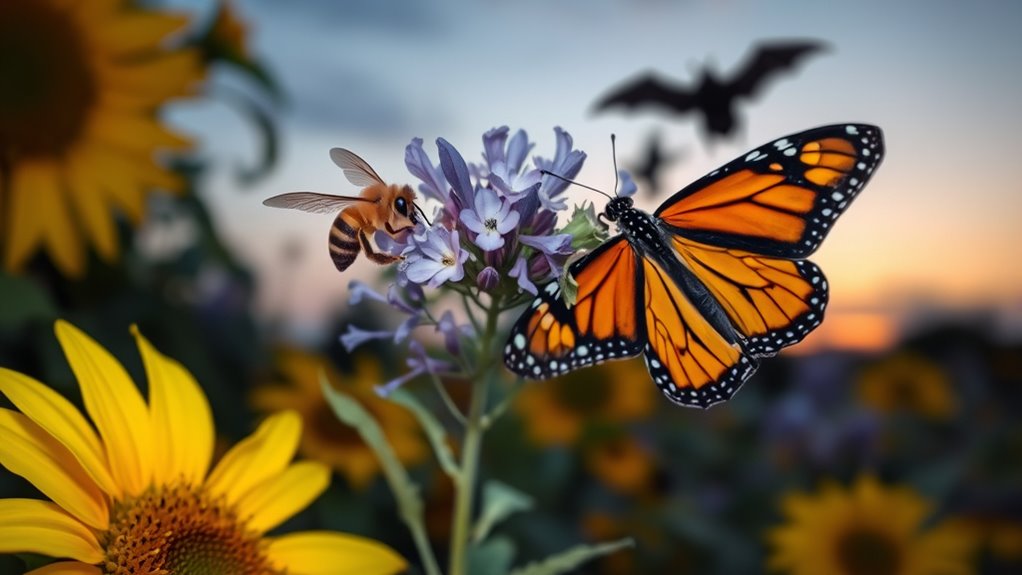

Pollinators like bees, butterflies, and bats are crucial for our ecosystems and food production, but they’re at risk. Habitat loss, climate change, and pesticide use are driving declines in their populations. These threats affect not just the pollinators but also the plants and crops that rely on them. By creating urban habitats and using safer gardening practices, you can help protect these species. Discover more about the essential roles these creatures play and how you can get involved.
Key Takeaways
- Pollinators like bees, butterflies, and bats are essential for biodiversity and food production, supporting healthy ecosystems.
- Habitat loss, climate change, and pesticide use are major threats contributing to the decline of pollinator populations.
- Urban areas can be transformed into pollinator-friendly habitats through native plantings and green space initiatives.
- Reducing pesticide use and adopting organic gardening practices can significantly protect pollinator health and promote their survival.
- Community engagement and advocacy are crucial for fostering awareness and implementing conservation strategies for at-risk pollinators.
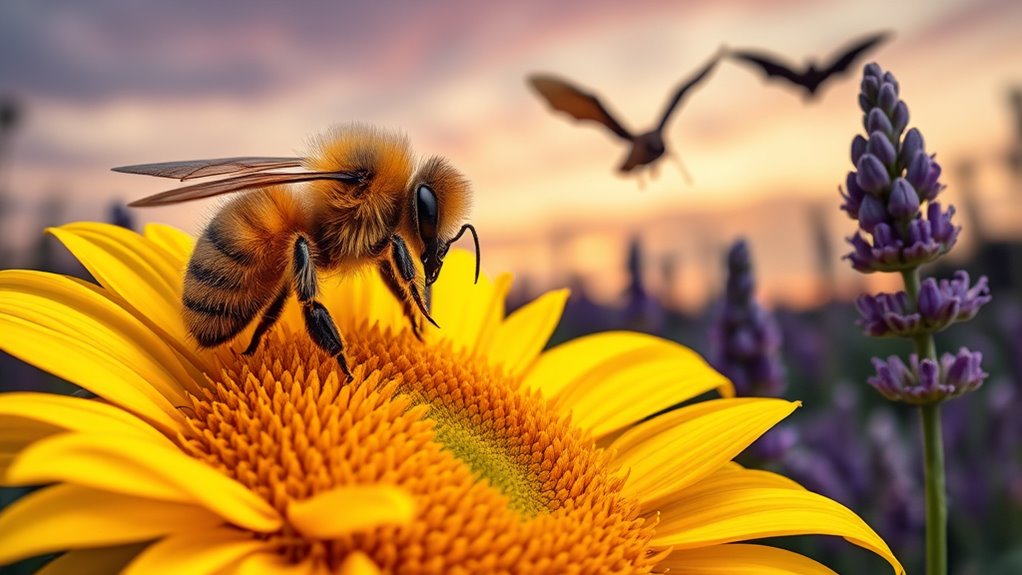
As you stroll through a blooming garden, you might not realize that the vibrant flowers around you depend heavily on pollinators, which are now facing alarming threats. Bees, butterflies, and bats play essential roles in maintaining biodiversity and supporting food production. However, their populations are declining due to various factors, including habitat loss, climate change, and pesticide impact. You might wonder what you can do to help these indispensable creatures thrive, especially in urban settings where conservation efforts are crucial.
Urban conservation can make a significant difference. You might think that cities are inhospitable to wildlife, but that’s far from the truth. Urban areas can be transformed into havens for pollinators through thoughtful design and community engagement. By planting native flowers, creating green roofs, and establishing community gardens, you can provide essential habitats for bees and butterflies. These spaces not only enhance the beauty of your neighborhood but also support the pollinators that are critical for food production.
It’s imperative to understand the pesticide impact on pollinators. Many people use pesticides to maintain pristine gardens, unaware of the harm they can cause. These chemicals can be toxic to bees and other pollinators, leading to reduced populations and even local extinctions. When you’re tempted to use chemical solutions for pests, consider natural alternatives instead. By employing organic gardening practices and promoting biodiversity in your garden, you can reduce the need for harmful pesticides and create a safer environment for pollinators.
You can also advocate for policies that support pollinator health. Reach out to local governments to emphasize the importance of urban conservation initiatives. Encourage your community to adopt pollinator-friendly practices. Events like planting days or educational workshops can raise awareness about the challenges these creatures face and inspire action. When you get involved, you not only help pollinators but also foster a sense of community and shared responsibility.
Lastly, don’t underestimate the power of individual actions. Simple changes, like reducing lawn areas in favor of flowering plants, can have a big impact. By being mindful of your gardening choices and spreading the word about the importance of pollinators, you become part of the solution. Together, through urban conservation efforts and reducing pesticide impact, you can help protect these essential species and ensure that the gardens we love continue to thrive for generations to come.
Frequently Asked Questions
How Can I Attract More Pollinators to My Garden?
To attract more pollinators to your garden, start by incorporating native plantings that provide food and shelter. Choose flowers that bloom at different times to guarantee year-round resources. You’ll also want to practice pesticide avoidance; harmful chemicals can deter these essential creatures. Create a water source and consider adding nesting sites to enhance their habitat. By making these changes, you’ll transform your garden into a welcoming haven for pollinators.
What Role Do Bats Play in Pollination?
Bats play a crucial role in pollination ecology, just like bees and butterflies. While many people admire the daytime buzz of bees, bats work their magic at night, pollinating plants that thrive under the moonlight. Their conservation is indispensable, as they help sustain various ecosystems and agricultural crops. By ensuring bat habitats are protected, you’re not just saving these fascinating creatures; you’re also supporting the vital pollination process that benefits us all.
Are There Any Native Pollinator Species in My Area?
Yes, there are native pollinator species in your area! Depending on your local habitat, you might find bees, butterflies, and even moths contributing to pollination. These species are essential for maintaining biodiversity and supporting local ecosystems. To discover specific native species, check with local wildlife agencies or conservation groups. You can also plant native flowers that attract these pollinators, enhancing your garden while supporting their populations.
How Does Climate Change Affect Pollinator Populations?
Climate change hits pollinator populations like a storm, disrupting their habitats and food sources. As temperatures rise, you’ll notice shifts in blooming patterns that confuse these essential workers. Habitat restoration can help, providing them with safe spaces to thrive. To build climate resilience, you can plant native flowers and create diverse environments, ensuring pollinators have what they need to adapt. Your efforts can make a significant difference in their survival.
What Can Individuals Do to Help Protect Pollinators?
You can help protect pollinators by reducing pesticide use and cultivating native plants. Start by choosing organic gardening methods that avoid harmful chemicals. Planting native flowers not only provides food for bees and butterflies but also creates a habitat for them. Consider creating a pollinator-friendly garden in your yard or balcony. Every small action counts, so educate others about the importance of these creatures and encourage them to join your efforts in conservation.
Conclusion
As the sun sets on our vibrant ecosystems, the whispers of bees, butterflies, and bats grow faint. Without your help, these essential pollinators may fade into the shadows, like stars dimming in a polluted sky. By planting native flowers and reducing pesticide use, you can be the gardener of hope, nurturing life’s delicate dance. Together, let’s sprinkle a little magic back into our world, ensuring these marvelous creatures continue to flutter and buzz for generations to come.