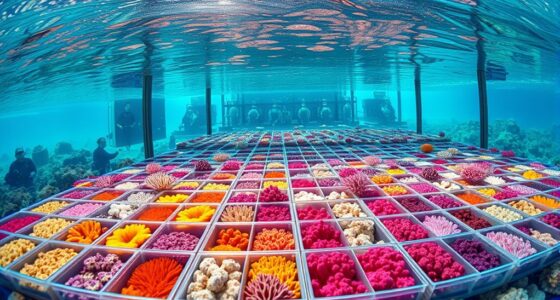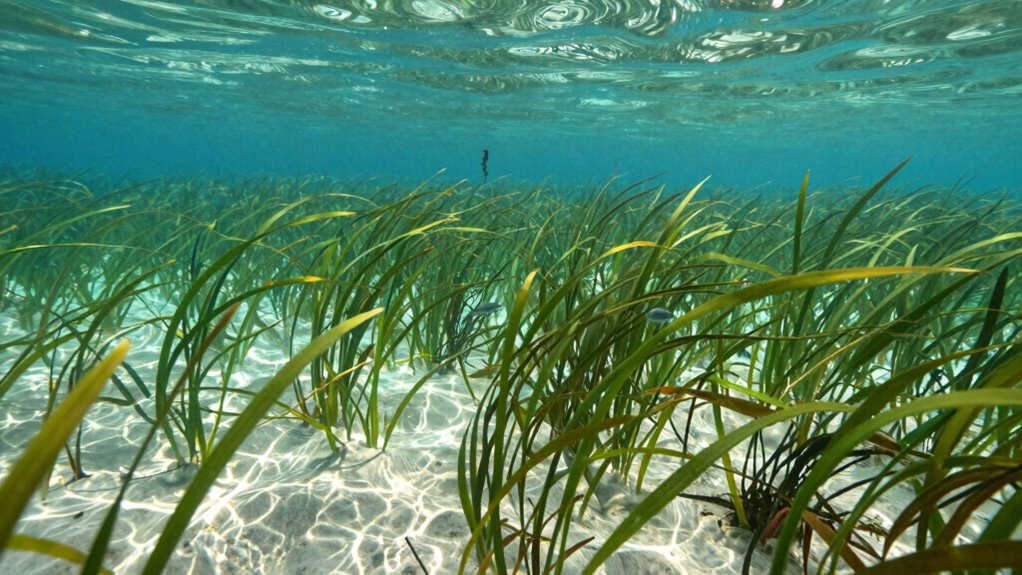

Seagrass meadows need more attention because they support a rich variety of marine life, helping maintain healthy oceans. They protect coastlines from erosion and flooding, acting as natural buffers. These ecosystems also fight climate change by sequestering carbon and boosting climate resilience. Yet, they face threats from pollution, development, and climate change, often going unnoticed. By understanding their crucial role, you’ll see why protecting them is essential for everyone’s future—there’s more to discover if you keep exploring.

Get pet supplies delivered free with Prime
- Fast, free delivery on millions of items
- Prime Video, Amazon Music and more included
- Member-only deals all year
Key Takeaways
- Seagrass meadows are critical habitats supporting diverse marine life and maintaining ocean biodiversity.
- They naturally protect coastlines from erosion, flooding, and storm damage.
- Seagrasses sequester carbon, playing a vital role in climate change mitigation.
- Human activities like pollution and development threaten their survival.
- Increased awareness and conservation are essential to preserve their ecological and protective functions.

Seagrass meadows are essential ecosystems that often go unnoticed despite their critical role in maintaining healthy oceans. These underwater fields may seem modest, but they’re powerhouses for marine biodiversity. When you think about vibrant ocean life, you might picture colorful coral reefs or schools of fish, but seagrass beds are just as vital. They provide a habitat for a wide variety of marine creatures—fish, mollusks, crustaceans, and even some endangered species—creating a rich tapestry of life beneath the surface. By protecting these areas, you support the complex web of marine biodiversity that sustains healthy ocean ecosystems. Without seagrass, many species lose their homes, and the balance of marine life suffers, which can have ripple effects up the food chain. That’s why their preservation is essential, not just for the species that directly depend on them but for the entire marine environment.
Beyond fostering marine biodiversity, seagrass meadows serve as natural barriers against coastal erosion and flooding. When you consider coastal protection, think of seagrass beds as the ocean’s frontline defense. Their dense root systems stabilize sediments in the water, reducing the energy of waves and currents that would otherwise wash away beaches and shorelines. This natural buffer lessens the impact of storms and rising sea levels, safeguarding coastal communities and ecosystems from the destructive force of nature. As climate change accelerates, the importance of these natural defenses grows even more urgent. If seagrass meadows decline, coastlines become more vulnerable, and the costs of erosion and flood damage escalate. Protecting and restoring these habitats isn’t just about ecological health; it’s a practical measure for safeguarding human settlements and economies along the coast. Recognizing their climate resilience benefits highlights how vital these ecosystems are for adapting to our changing environment. Additionally, their ability to sequester carbon makes them an important climate mitigation tool in combating global warming.
Yet, despite their importance, seagrass meadows face numerous threats—pollution, coastal development, boat traffic, and climate change. It’s easy to overlook their significance when they’re hidden beneath the waves, but your awareness and actions can make a difference. Supporting conservation efforts, reducing pollution, and advocating for policies that protect coastal waters can help guarantee these vital habitats endure. Understanding the threats to seagrass helps emphasize the urgency of conservation initiatives. Recognizing their role in bolstering marine biodiversity and providing coastal protection reminds you that seagrass meadows are not just underwater plants; they are key to the health and resilience of the entire ocean system. Without more attention and effort, these invaluable ecosystems risk disappearing, taking with them the many benefits they provide to marine life and human communities alike.
As an affiliate, we earn on qualifying purchases.
Frequently Asked Questions
How Do Seagrass Meadows Recover After Damage?
Seagrass meadows recover through natural resilience, but human intervention can speed this process. You can support recovery techniques like planting new seagrass seeds or seedlings, removing damaging debris, and controlling pollution. Protecting surrounding habitats also helps. Your efforts foster seagrass robustness, allowing meadows to bounce back from damage faster. Active restoration combined with community awareness ensures these essential ecosystems thrive again, providing benefits for marine life and coastal protection.
What Are the Economic Benefits of Protecting Seagrass?
Protecting seagrass offers significant economic benefits through incentives like tourism and fisheries, which rely on healthy ecosystems. You can also benefit from coastal protection, as seagrass beds reduce erosion and buffer storms, saving money on infrastructure repairs. By safeguarding these habitats, you’re supporting local economies, promoting sustainable livelihoods, and maintaining biodiversity, all of which contribute to long-term economic stability and resilience for coastal communities.
How Do Pollution Levels Specifically Impact Seagrass Health?
Imagine a coastal area where pollution effects like nutrient runoff cause algal blooms, blocking sunlight from reaching seagrass. This reduces seagrass resilience, making it more vulnerable to disease and physical damage. Excess nutrients encourage harmful algae growth, which competes with seagrass for light and oxygen. Consequently, pollution weakens seagrass health, threatening entire ecosystems that depend on it. You see how pollution directly undermines seagrass importance and ecosystem stability.
Can Seagrass Meadows Be Restored Naturally?
Seagrass meadows can be restored naturally through seagrass resilience, which allows some areas to recover when pollution decreases and water quality improves. Coastal conservation efforts play a vital role by reducing runoff, controlling pollution, and protecting habitats. By supporting these actions, you help create conditions where seagrass can regenerate without human intervention, ensuring healthier ecosystems and more resilient seagrass meadows for the future.
What Species Depend Most on Seagrass Ecosystems?
You should know that many species rely heavily on seagrass ecosystems, especially in biodiversity hotspots like tropical coastal areas. Fish, sea turtles, and manatees depend on seagrass for food and shelter, while crustaceans and mollusks thrive within it. These meadows also play an essential role in climate regulation by absorbing carbon dioxide. Protecting seagrass guarantees the survival of these species and maintains the health of our planet.
Conclusion
Imagine seagrass meadows as the lungs of our oceans, silently breathing life into the underwater world. Without your attention and care, these vibrant green carpets could fade into a ghostly memory, leaving the marine ecosystem gasping for survival. Your actions can be the gentle tide that restores their health, allowing these underwater gardens to flourish once more. Don’t let their beauty and essential role drown in neglect—stand up and help protect their future.
Halloween Picks
halloween
As an affiliate, we earn on qualifying purchases.