Roadside fencing helps reduce animal-vehicle collisions by guiding wildlife toward designated crossing points and preventing them from wandering onto roadways. It acts as a barrier that keeps animals away from traffic, lowering the chance of accidents. Properly installed fencing directs animals to safe crossings, while durable materials guarantee long-term effectiveness. By understanding these strategies, you’ll see how fencing improves safety for both drivers and wildlife—if you want to learn more, keep exploring the details behind effective fencing solutions.

Get pet supplies delivered free — and shop member deals
- Fast, free delivery on millions of items
- Access to Prime Big Deal Days deals on October 6–7
- Prime Video, Amazon Music and more included
Key Takeaways
- Acts as a physical barrier to prevent animals from entering roadways unexpectedly.
- Guides animals toward designated crossings, reducing random crossings and collision risks.
- Discourages animals from jumping over or pushing through fencing, minimizing escape attempts onto roads.
- Maintains ecological connectivity while directing wildlife away from traffic areas.
- Enhances driver safety by reducing sudden animal appearances and driver distraction.
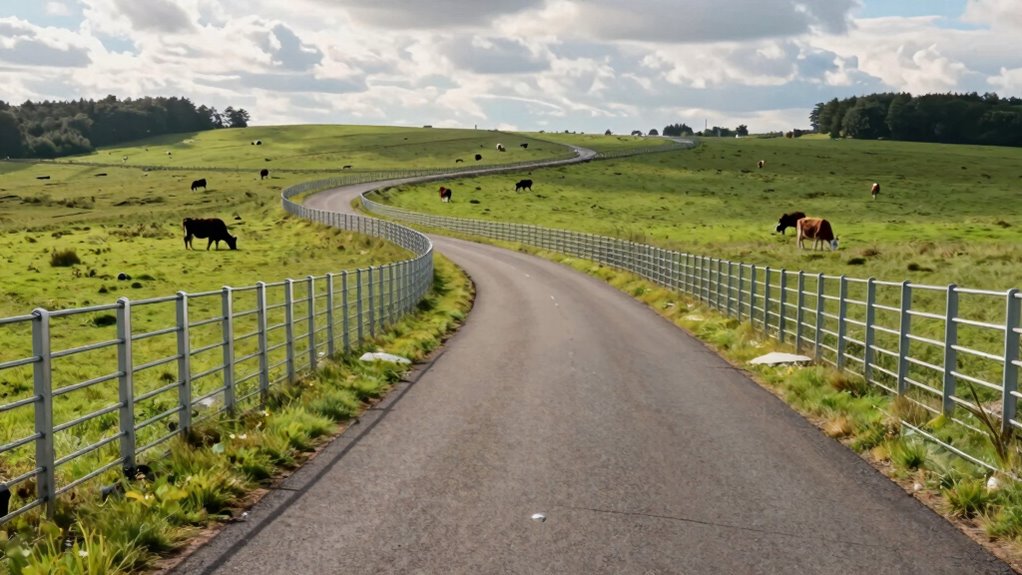
Have you ever wondered how roadside fencing can protect both animals and drivers? It’s a simple yet effective solution that keeps wildlife safe while reducing the risk of accidents on busy roads. When designed properly, fencing acts as a barrier that prevents animals from wandering into traffic, especially in areas where wildlife and vehicles frequently intersect. One key aspect of this system involves the use of wildlife corridors—designated passages that allow animals to cross roads safely without disrupting traffic flow. These corridors are often integrated into fencing setups to guide animals toward safe crossing points, minimizing the chance of sudden encounters with moving vehicles.
Fencing materials play an essential role in how well these barriers work. Durable, weather-resistant materials such as galvanized steel, high-tensile wire, or specialized wildlife fencing are chosen to withstand the elements and prevent breaches. The fencing must be tall enough to discourage animals from jumping over and constructed with a bottom barrier to prevent smaller creatures from slipping underneath. Some designs incorporate overhangs or angled sections to further deter climbing or pushing through. The goal is to create a seamless, robust barrier that directs animals toward wildlife corridors or crossings, making their journey safer and more predictable.
Durable, weather-resistant fencing with overhangs and bottom barriers ensures safety and longevity for wildlife crossings.
By using appropriate fencing materials, you also guarantee longevity and reduce maintenance costs. Poorly chosen or poorly maintained fencing can become a hazard itself, with broken or sagging sections posing risks to both animals and drivers. Regular inspections and repairs are essential to keep the fencing effective and to prevent animals from finding weak points. When installed correctly, fencing not only prevents animals from veering onto the road but also reduces driver distraction and sudden braking, which can cause accidents. Incorporating proper installation techniques ensures the fencing remains effective over time and minimizes potential hazards.
In addition, the placement of wildlife corridors within fencing systems is essential. Properly located corridors align with natural animal movement patterns, encouraging wildlife to use designated crossing points rather than crossing randomly along the road. This thoughtful planning helps maintain ecological connectivity while promoting safety. Incorporating wildlife-friendly design principles into fencing and corridor placement can further enhance their effectiveness. Ultimately, the integration of well-designed fencing and wildlife corridors creates a safer environment for everyone—drivers, passengers, and animals alike. By choosing the right fencing materials and strategically placing corridors, you make a proactive effort to prevent collisions and protect the diverse wildlife that shares the landscape with us.
As an affiliate, we earn on qualifying purchases.
Frequently Asked Questions
How Long Does It Take to Install Roadside Fencing?
The installation timeline for roadside fencing typically ranges from a few days to several weeks, depending on project planning and fencing length. You’ll need to coordinate site assessments, permits, and material procurement first. Once all planning is complete, installation usually moves quickly. A well-organized project planning process guarantees minimal delays, so expect faster installation if you prepare thoroughly and work with experienced contractors.
What Materials Are Most Effective for Fencing?
Did you know that wildlife corridors can increase animal crossing success by up to 80%? When choosing fencing materials, opt for galvanized steel or heavy-duty wire mesh, as they offer superior fencing durability. These materials effectively create wildlife corridors, guiding animals safely across roads. Durable fencing guarantees long-lasting protection, reducing maintenance costs and preventing animals from bypassing barriers, ultimately saving lives and minimizing vehicle accidents.
Does Fencing Impact Local Wildlife Movement?
Fencing can impact wildlife movement by acting as barriers that restrict animals from accessing certain areas. However, you can design fencing with wildlife corridors or gaps that allow safe passage, minimizing disruption. Using fencing barriers thoughtfully helps direct animals away from roads while still permitting movement, balancing safety and wildlife needs. Proper planning guarantees fencing protects both drivers and local wildlife, reducing accidents without hindering natural migration.
How Maintenance-Intensive Is Roadside Fencing?
Roadside fencing isn’t too maintenance-intensive if you choose durable materials like galvanized steel or vinyl. Regular inspections help identify damage early, reducing the need for frequent repairs. Typically, upkeep frequency depends on weather and animal activity, but with proper upkeep, fence durability remains high. You should plan for periodic checks to ensure the fencing stays effective and intact, minimizing wildlife escape or vehicle collision risks.
Are There Funding Options for Fencing Projects?
You can find funding options for fencing projects through various avenues like funding grants and financial incentives. Local and federal agencies often support wildlife mitigation efforts, making it easier for you to secure funds. Sometimes, community organizations or environmental groups also offer grants. Keep an eye on government websites and reach out to agencies involved in transportation and wildlife conservation to discover opportunities that help make your fencing project possible.
Conclusion
By installing roadside fencing, you play a crucial role in protecting animals and yourself. Did you know that fences can reduce animal-vehicle collisions by up to 80%? That’s a huge difference in saving lives and preventing accidents. So next time you see fencing along the road, remember it’s more than just barrier—it’s a safeguard for wildlife and drivers alike. Together, we can make our roads safer for everyone.
Fall Picks
fall essentials
As an affiliate, we earn on qualifying purchases.