
In the wild, many animal dads are true heroes, actively caring for their young far beyond just mating. You’ll find males building nests, guarding eggs, and even carrying babies in specialized pouches, like seahorses. Some, like emperor penguins and mammalian dads, incubate eggs or nurse their pups through feeding and nurturing. These extraordinary behaviors help make certain the survival of their offspring. If you continue, you’ll discover even more remarkable examples of male parental dedication in nature.
Key Takeaways
- Many male animals actively participate in raising and protecting their offspring, sometimes beyond just mating behaviors.
- Species like seahorses and emperor penguins showcase male parental roles such as carrying eggs or incubating in harsh environments.
- Male mammals, including California mice, engage in nurturing activities like feeding, grooming, and defending their young.
- Diverse nesting behaviors and parental strategies are crucial for offspring survival across various species.
- Male parental investment enhances reproductive success and social bonds in the animal kingdom.
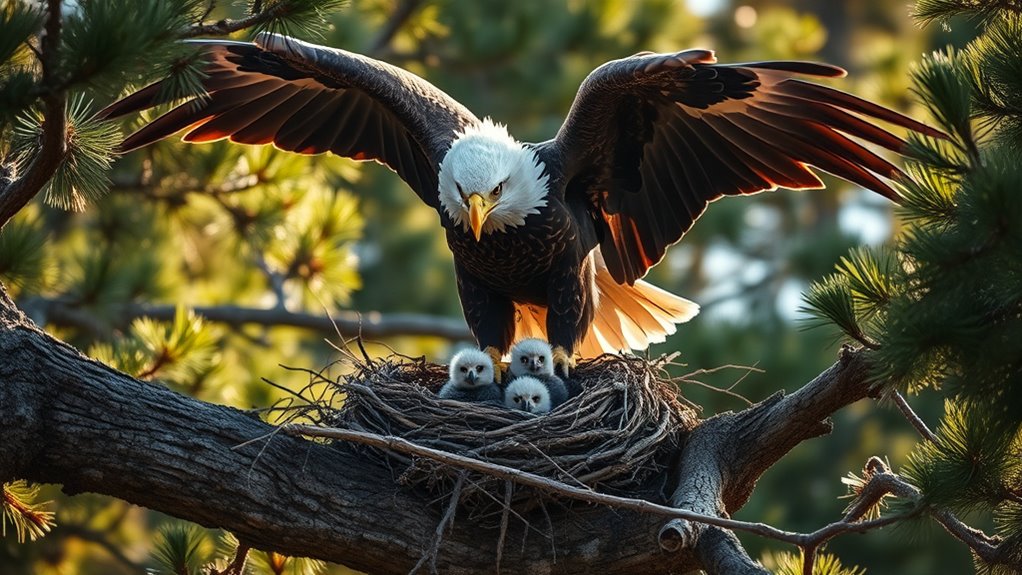
Have you ever wondered what it takes for animal dads to step up and care for their young? In the wild, many male animals play essential roles in raising their offspring, showcasing behaviors that often surprise us. Their nesting behaviors are a prime example of how they contribute through parental investment, going beyond just mating to guarantee the survival of their young. Unlike humans, where parenting is usually a shared effort, in the animal kingdom, some dads are the primary caregivers, investing significant time and effort into raising their offspring. This investment can range from building nests or dens to actively guarding and nurturing their young, demonstrating a level of dedication that’s truly remarkable.
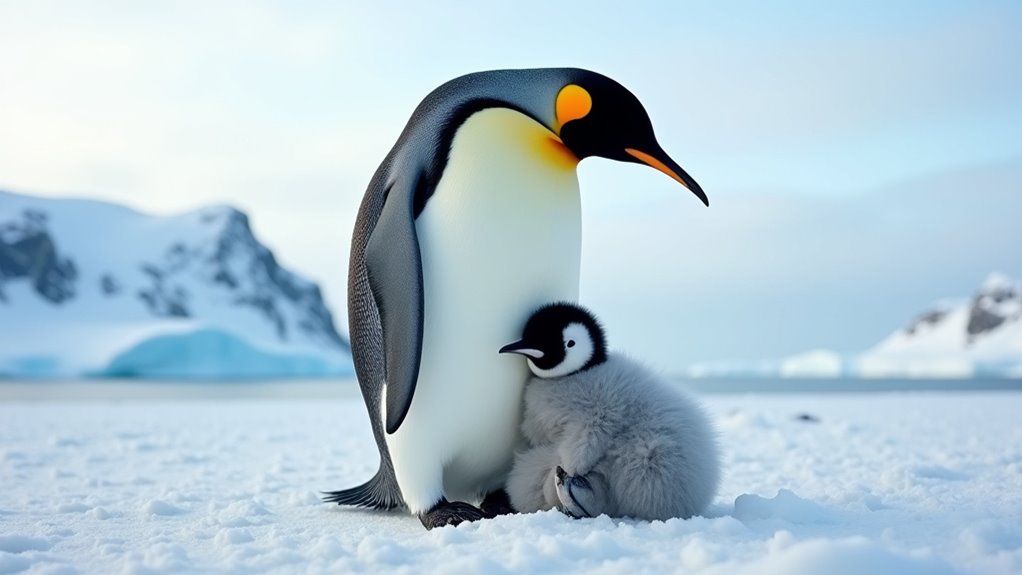
In species like seahorses, the males take on a unique role by carrying fertilized eggs in a specialized pouch until they hatch. This form of nesting behavior exemplifies a high degree of parental investment, where the male’s care directly influences the survival chances of the offspring. Similarly, in certain bird species such as emperor penguins, males incubate the eggs during the harsh winter months. They huddle together for warmth and fiercely protect their nests from predators, demonstrating how nesting behaviors are intertwined with parental investment strategies that maximize reproductive success. These behaviors aren’t just about keeping the eggs safe—they’re about actively ensuring that the next generation gets a fighting chance. Interestingly, in some species, males also invest heavily in offspring through behaviors like teaching and defending. Additionally, some species display territorial behaviors, which are vital for protecting resources necessary for raising the young and ensuring their survival.
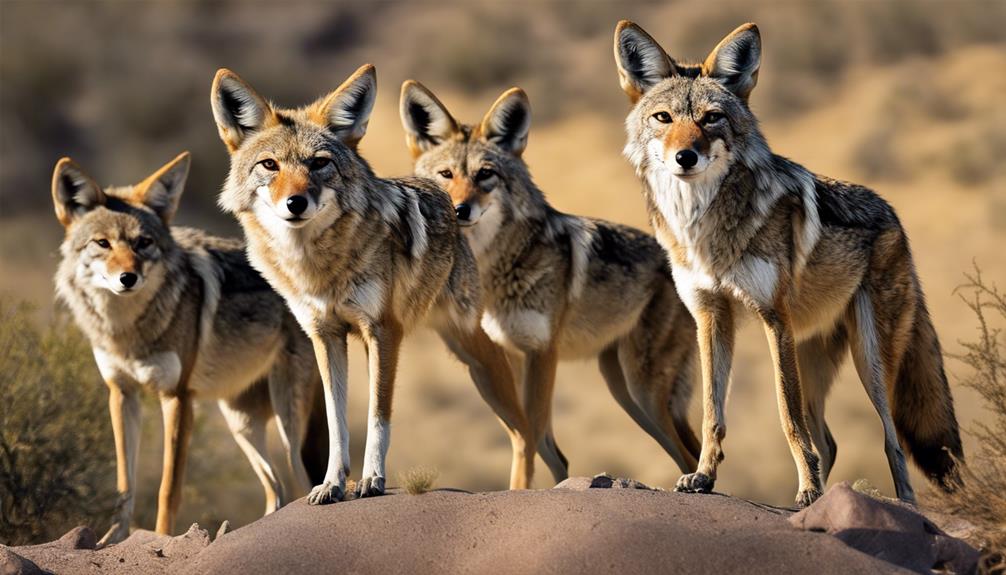
In some mammals, like the California mouse, males are highly involved in raising their young. They help with feeding, grooming, and protecting the young from threats. This level of parental investment boosts the survival rate of the pups and reinforces social bonds within the family group. For many animal dads, nurturing their offspring also means participating in complex behaviors like teaching, defending territory, and even sharing food. These actions highlight the importance of male parental care in different ecological contexts and how it can be fundamental for the success of their genes. Additionally, certain species display nesting behaviors, which are vital for offspring survival, illustrating the diversity of parental strategies across the animal kingdom. Moreover, parental investment in some species can lead to increased reproductive success and stability within social groups.
As an affiliate, we earn on qualifying purchases.
Frequently Asked Questions
How Do Animal Dads Defend Their Young From Predators?
When it comes to defending their young from predators, animal dads often take active roles. You’ll see them engaging in nest protection, carefully guarding their nests from intruders. They also use territorial defense, patrolling and warning rivals to keep predators away. These proactive behaviors help guarantee the safety of their offspring, demonstrating their dedication and strength in protecting their young from threats and increasing their chances of survival.
What Unique Parenting Behaviors Do Animal Dads Exhibit?
Imagine standing at the heart of a bustling nursery—animal dads showcase remarkable parenting behaviors. They often form monogamous bonds, sharing duties like guarding and nurturing their young. During nesting behaviors, they tirelessly gather materials and protect eggs or offspring, sometimes even taking turns to ensure safety. These extraordinary fathers prove that dedication and teamwork are essential, turning the wild into a cradle of love and protection for their precious young.
How Do Animal Dads Communicate With Their Offspring?
You see, animal dads communicate with their offspring through a variety of behaviors. They often use vocalizations, body language, and scent marking to send messages. During mating rituals and territorial displays, they establish dominance and attract mates, which also helps in safeguarding their young. These communication methods guarantee offspring recognize their fathers and stay safe within their territory, demonstrating the remarkable ways animal dads stay connected with their young.
Are There Species Where Only Males Provide Parental Care?
In some species, only males provide parental care, showcasing remarkable paternal investment. You’ll find examples like seahorses and certain fish, where males undertake all nurturing duties, from guarding eggs to feeding hatchlings. This male-only care highlights how evolutionary pressures shape diverse parenting strategies. You probably wouldn’t expect it, but in these species, males invest heavily in offspring, often increasing their chances of reproductive success through dedicated paternal care.
How Does Paternal Investment Impact Animal Survival Rates?
You might wonder how paternal investment impacts animal survival rates. When males actively care for offspring, it often boosts their survival chances by providing protection and resources. This additional paternal role can enhance reproductive success for both parents, especially when maternal roles alone aren’t enough. By investing in their young, animals increase the likelihood that their genes will pass on, ensuring healthier, more resilient future generations.
Conclusion
You might think that only humans are devoted dads, but nature proves otherwise. Some animal fathers go above and beyond, caring for their young with incredible dedication. Science suggests that this extraordinary behavior boosts offspring survival, supporting the idea that nurturing instincts aren’t exclusive to us. So next time you see a caring animal dad, remember—nature’s wildest fathers might just hold the key to understanding true parental devotion. Isn’t it amazing what animals can teach us about love and responsibility?