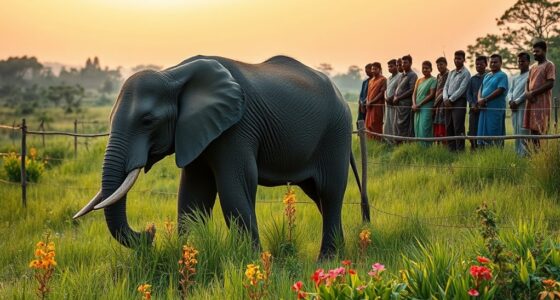
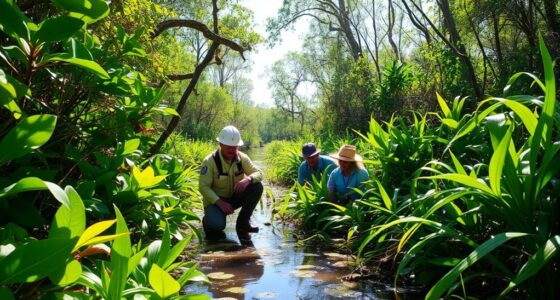
A wildlife corridor connecting two national parks is successfully enabling animals like lions to cross safely between habitats. It reduces conflicts with humans by providing a natural pathway that supports ecosystem connectivity and regional biodiversity. Evidence shows lions have already started using the corridor, which boosts ecological health and helps other species follow. If you’re curious about how this innovative design benefits both wildlife and communities, there’s much more to explore.
Key Takeaways
- The corridor links two national parks, enabling safe wildlife movement and ecosystem connectivity.
- Lions have been observed crossing the corridor, demonstrating its effectiveness for large predators.
- Designed with natural features and overpasses to minimize human-wildlife conflicts.
- The corridor supports biodiversity by facilitating access to new territories for hunting and migration.
- Ongoing monitoring ensures the corridor continues to benefit both wildlife and local communities.

A new wildlife corridor now links two neighboring national parks, creating an essential pathway for animals to move safely between their habitats. This corridor is a fundamental step toward reconnecting fragmented ecosystems and supporting the region’s biodiversity. As animals like lions begin to cross this corridor, you realize how pivotal thoughtful corridor design is to its success. Proper planning ensures the pathway accommodates different species’ needs while minimizing potential conflicts with nearby human settlements. The goal is to create a seamless passage that encourages wildlife movement without escalating human-wildlife conflict.
Designing this corridor wasn’t just about laying down a strip of land; it involved careful consideration of terrain, vegetation, and accessibility. Experts worked with local communities, conservationists, and planners to develop a corridor that blends naturally into the landscape. This approach helps reduce human-wildlife conflict by discouraging animals from wandering into populated areas and, in turn, prevents negative encounters that could threaten both people and animals. Good corridor design also incorporates features such as wildlife overpasses or underpasses, which allow animals to cross busy roads safely, further reducing the chances of accidents and conflicts.
Effective corridor design integrates terrain, vegetation, and safety features to support wildlife movement and reduce conflicts.
You might wonder how this new link influences local communities. The corridor aims to foster coexistence by creating buffer zones and promoting awareness about wildlife. When local residents understand that the corridor helps sustain healthy animal populations, they’re more likely to support conservation efforts rather than oppose them. The success of this project depends on ongoing management that balances ecological needs with human safety and interests. Ecological connectivity is essential for maintaining healthy populations and adapting to environmental changes, making this corridor a vital component of regional conservation strategies.
Already, lions have been spotted crossing the corridor, demonstrating its effectiveness. Their movement indicates that the corridor is functioning as intended, providing a secure route for large predators to access new territories and hunt more freely. This movement also signals a positive shift in the region’s ecological health, suggesting that other species will follow suit. As you see these animals adapt and thrive, you understand how critical corridor design is to ensuring long-term conservation success. It’s a testament to collaborative efforts that prioritize both wildlife needs and community well-being.
This initiative highlights how integrating ecological considerations with human development can lead to mutually beneficial outcomes. By reducing human-wildlife conflict and promoting safe animal passage, the corridor becomes a living bridge connecting ecosystems and communities. Moving forward, continuous monitoring and adaptive management will be key to maintaining its effectiveness, ensuring that both animals and people benefit from this indispensable link for generations to come.
As an affiliate, we earn on qualifying purchases.
Frequently Asked Questions
How Long Did the Corridor Construction Take?
The construction timeline for the wildlife corridor took about two years, allowing for careful planning and implementation. You should know that the project was funded through a mix of government grants and private donations, which helped guarantee smooth progress. During this period, crews worked to establish safe passage for animals, including lions, to cross between the two parks. This effort highlights how effective funding sources can considerably impact conservation projects like this.
What Species Benefit Most From the Corridor?
You’ll see that habitat connectivity greatly benefits several species, especially large mammals like lions, elephants, and cheetahs. These animals rely on unobstructed paths for migration, access to resources, and genetic diversity. The corridor allows species migration to happen more safely and efficiently, reducing human-wildlife conflicts. By creating these essential links, you’re helping to support healthy ecosystems and ensuring that wildlife can move freely between protected areas.
Are There Plans to Expand the Corridor Further?
It’s a coincidence you ask about expanding the corridor, as plans are underway. You’ll be glad to know that efforts focus on reducing habitat fragmentation and supporting wildlife migration. While no immediate expansion is confirmed, conservationists are considering future developments to link more habitats. This proactive approach aims to guarantee animals, like lions, can freely move, promoting healthier ecosystems and long-term survival for various species.
How Was the Local Community Involved in the Project?
You’re curious about how the local community was involved. Community engagement played a key role in the project, with residents participating in planning sessions and decision-making. This involvement helped guarantee the corridor met local needs and fostered support. Additionally, the project created local employment opportunities, boosting the economy. By including the community, the project gained trust and cooperation, making it more sustainable and effective for wildlife and people alike.
What Measures Are in Place to Prevent Poaching?
You should know that strict fencing protocols are in place to prevent poaching, ensuring the wildlife corridor remains protected. Surveillance technology, like camera traps and drones, continuously monitors the area for illegal activity. These measures work together to deter poachers and safeguard the animals. By combining physical barriers with advanced technology, authorities actively protect this essential habitat, allowing animals like lions to cross safely and thrive in their natural environment.
Conclusion
So, after all this effort to create a safe passage, it seems the lions couldn’t wait to cross. You’d think they’d stay put in their protected parks, but no—nature’s got a mind of its own. Maybe the real irony is that in trying to safeguard their future, we’ve already made it too tempting for them to resist. Guess the wild always finds a way, even if it means breaking our best-laid plans.