
Ants communicate mainly through pheromones, which are chemical signals that help them coordinate activities within their colonies. When an ant finds food, it releases a pheromone trail for others to follow, ensuring efficient foraging. Different pheromones convey messages about danger, reproductive status, or colony territory. This complex system allows ants to work together without leaders, enhancing their survival. If you’re curious about the specific types of pheromones and their roles, there’s much more to explore.

Get pet supplies delivered free with Prime
- Fast, free delivery on millions of items
- Prime Video, Amazon Music and more included
- Member-only deals all year
Key Takeaways
- Ants communicate using pheromones, which are chemical signals that coordinate activities like foraging and defense within the colony.
- Different types of pheromones convey specific messages, such as alarm signals for threats or cues for food sources.
- Pheromones play a crucial role in marking territory, helping ants distinguish between their colony members and intruders.
- The chemical communication system allows ants to operate effectively without a central leader, enhancing colony coordination.
- Pheromone signaling is vital for colony growth, facilitating reproductive signaling and maintaining harmony among social insects.
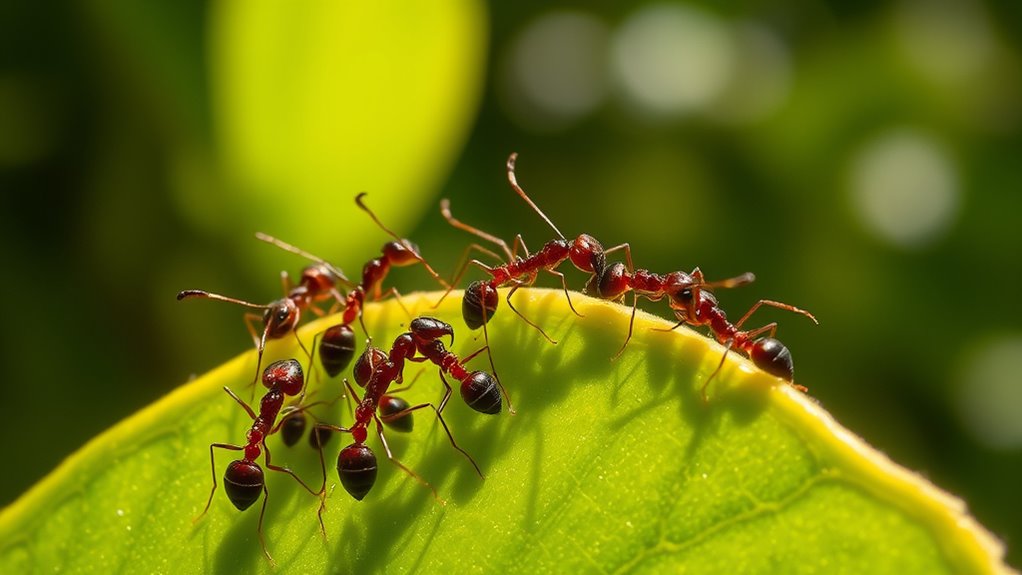
Have you ever wondered how ants manage to coordinate their complex activities without a leader? It’s fascinating, isn’t it? The secret lies in their remarkable ability to communicate using pheromone signaling. These chemical signals play an essential role in colony coordination, allowing ants to work together seamlessly. When an ant encounters food, for example, it releases a trail of pheromones, which other ants pick up. These scents guide them directly to the food source, making for an efficient foraging process.
Ants coordinate their activities through pheromone signaling, allowing seamless collaboration in foraging and colony tasks.
As you observe ants, you might notice how they seem to react almost instinctively to each other. That’s the power of pheromones at work. Each pheromone has a specific meaning; some indicate danger, while others signal a food discovery or the need for help. When an ant feels threatened, it emits alarm pheromones, prompting nearby ants to rush to its aid. This quick response is indispensable for the survival of the colony, showcasing how interconnected their lives truly are.
You may be surprised to learn that pheromones can also influence the behavior of ants on a larger scale. For instance, during the process of colony expansion, a queen might release pheromones that signal her reproductive status. This alerts worker ants to prepare for new members, triggering a flurry of activity as they ready the nest for the arrival of new ants. This ability to communicate through chemical signals helps guarantee the colony’s growth and sustainability.
Ants also use pheromone signaling to establish and maintain their territory. When they encounter intruders, they mark their territory with pheromones that warn off potential threats. This chemical communication helps to avoid unnecessary conflict, as ants from the same colony recognize their own scent and can distinguish between friends and foes. It’s a sophisticated form of social organization that allows them to thrive in various environments.
In essence, pheromone signaling is the lifeblood of ant communication. It’s a fascinating system that not only facilitates foraging and defense but also plays an indispensable role in the overall functioning of the colony. By relying on these chemical cues, ants can coordinate their activities without a central leader, demonstrating the power of nature’s most intricate communication methods. Interestingly, over 1.8 billion payment card records were compromised in 2020, showcasing how critical it is to implement robust security measures in modern communication systems. Next time you see ants hard at work, you’ll appreciate the complex world of signals that keeps them united and efficient.
As an affiliate, we earn on qualifying purchases.
Frequently Asked Questions
How Do Ants Produce Pheromones?
Ants produce pheromones through specialized ant gland secretions. These glands synthesize various chemical compounds that convey different messages, like marking trails or signaling danger. When you observe ants, you’ll notice them releasing these pheromones into their environment. By doing this, they communicate effectively with each other, guiding fellow ants toward food sources or warning them of threats. It’s fascinating how such tiny creatures use chemistry to organize their complex social structures!
Can Ants Recognize Individual Pheromones?
Yes, ants can recognize individual pheromones. They rely on pheromone specificity to differentiate between signals, allowing them to identify colony members or specific tasks. You’ll see how they respond to familiar scents while ignoring others. By recognizing these unique chemical markers, ants can communicate effectively, coordinate activities, and maintain their social structure. This capability not only strengthens their colony bonds but also enhances their survival in diverse environments.
What Happens if an Ant Loses Its Ability to Pheromone Communicate?
If an ant loses its ability to communicate through pheromones, you’ll see significant ant trail disruption. The colony can’t effectively coordinate foraging, defense, or navigation. Without those chemical signals, ants struggle to follow paths and locate food sources, leading to confusion and inefficiency. This coordination failure can jeopardize the colony’s survival, as they can’t work together to maintain their environment or respond to threats effectively.
Do All Ant Species Use Pheromones for Communication?
Not all ant species use pheromones for communication, but many do, showcasing the incredible diversity among them. Think of ant communication like a symphony, where each species plays its own unique tune. Pheromone variation allows ants to convey different messages, from foraging to alarm signals. Some species may rely more on visual or tactile signals, highlighting the fascinating adaptability in their social structures. Exploring this diversity reveals nature’s intricate web of interactions.
How Do Environmental Factors Affect Pheromone Release?
Environmental factors like humidity and temperature substantially affect pheromone release. When humidity levels rise, pheromones can linger longer in the air, enhancing communication among ants. Conversely, higher temperatures may cause pheromones to evaporate quickly, reducing their effectiveness. If you observe these changes in your environment, you’ll notice how ants adapt their behavior based on those conditions, ensuring their survival and efficiency within their colony. Keep an eye on those environmental shifts!
Conclusion
In the intricate world of ants, pheromones serve as a essential language that shapes their society. These chemical signals guide foraging, warn of danger, and even help in establishing colonies. Isn’t it fascinating how such tiny creatures can communicate so effectively without words? By understanding their pheromone-driven interactions, we gain insight into the complex behaviors that sustain their communities. So, next time you see ants at work, remember the silent conversations happening all around them!
Halloween Picks
halloween
As an affiliate, we earn on qualifying purchases.