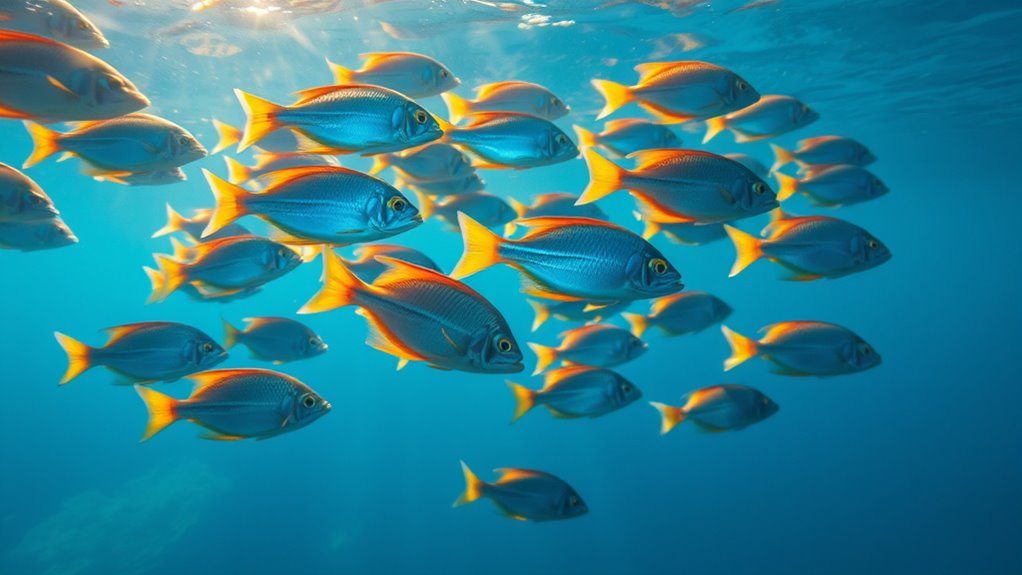

Researchers have filmed fish sleep-while-swimming for the first time, revealing that fish stay active even during rest. Instead of floating or hiding, they continue moving slowly, which helps them stay alert to predators and conserve energy. This discovery challenges previous beliefs and shows that fish rest in a restful, alert state. If you want to understand how these behaviors evolved and what they mean for aquatic life, keep exploring the details behind this fascinating find.

Get pet supplies delivered free with Prime
- Fast, free delivery on millions of items
- Prime Video, Amazon Music and more included
- Member-only deals all year
Key Takeaways
- Researchers captured the first footage of fish sleeping while actively swimming.
- Fish maintain movement during rest, challenging previous beliefs they sleep stationary.
- Sleep-swimming likely evolved for nocturnal predator avoidance and energy conservation.
- This behavior shows fish rest in a restful, alert state without stopping movement.
- The discovery enhances understanding of animal adaptive strategies in aquatic environments.

Researchers have captured a remarkable phenomenon: fish sleep while still swimming. This discovery challenges long-held beliefs that fish simply float or rest on the bottom to sleep. Instead, it reveals an active process where fish maintain movement even during rest periods. As you observe this behavior, you might notice that many of these fish exhibit nocturnal behavior, becoming less active during daylight hours and more engaged in sleep-swimming at night. This pattern likely evolved as a strategy to avoid predators, allowing fish to stay alert while conserving energy. Staying in constant motion means they can quickly respond to threats, making it harder for predators to target them.
Fish sleep while swimming, staying alert and conserving energy to avoid predators.
When you watch these fish, you’ll see that their sleep isn’t like ours. They don’t enter deep unconscious states; instead, they enter a calming, restful phase while continuing their swimming motion. This active form of sleep is *essential* because it lets them maintain vital functions such as breathing and circulation, which would be disrupted if they stopped moving. It also offers a significant advantage in predator avoidance. Fish that remain active during sleep are less vulnerable because they can keep an eye out for danger and react swiftly if needed. Staying alert while resting is a clever adaptation, especially for species that live in predator-rich environments where hiding might not always be possible.
Understanding this sleep-swimming behavior helps you appreciate how evolution shapes survival strategies. Fish that sleep while swimming can hide from predators in plain sight, blending rest with vigilance. Their nocturnal habits play a *vital* role here, as they tend to rest during the night when fewer predators are active, and their movement continues to serve as a form of camouflage and protection. This behavior also means that they don’t need to find a safe hiding spot, which might be scarce or risky in their habitat. Instead, they rely on their ability to stay partially alert even during rest. Additionally, recent research in AI and automation suggests that such adaptive behaviors can inspire robotic systems to function efficiently in complex environments.
As you consider these insights, it’s clear that fish have developed a sophisticated way to balance rest and survival. The discovery of sleep-swimming demonstrates how animals adapt their behaviors in response to environmental pressures. It underscores that even in rest, they remain vigilant, turning their sleep into a dynamic process that maximizes safety and energy efficiency. This phenomenon not only captivates scientists but also deepens your understanding of how life persists in the complex aquatic world, where every movement can be a matter of life or death.
Frequently Asked Questions
How Long Do Fish Typically Sleep During Sleep-Swimming?
You might wonder how long fish sleep during sleep-swimming. Typically, fish rest for short periods, usually a few minutes to a few hours, depending on the species. During these times, they often remain active enough for aquatic respiration, which is essential for their survival. Fish use sleep-swimming to conserve energy and stay alert for fish migration cues, keeping their brains and bodies ready for movement and navigation.
Do All Fish Species Exhibit Sleep-Swimming Behavior?
You might wonder if all fish species exhibit sleep-swimming behavior. Not all fish show aquatic dormancy in the same way; some rest passively, while others remain active. Many fish do engage in sleep-like states, often involving reduced activity and responsiveness, but the behaviors vary widely across species. Understanding fish behavior helps clarify how diverse aquatic life adapts to rest, even if sleep-swimming isn’t universal among all fish.
What Triggers Fish to Start Sleep-Swimming?
You might wonder what triggers fish to start sleep-swimming. It’s primarily driven by changes in fish brain activity, which follow environmental cues like light or darkness. When the environment signals it’s time to rest, your fish’s brain shifts into a sleep-like state, prompting sleep-swimming. These cues help regulate their rest patterns, ensuring they get the rest they need while remaining alert to potential threats in their environment.
Can Sleep-Swimming Be Harmful to Fish Health?
Sleep-swimming generally isn’t harmful to fish health, as it appears to be a natural part of their rest cycle. However, if their environment is stressful or lacks proper conditions, it could negatively impact their sleep quality and overall health. You should guarantee their habitat is clean, quiet, and safe. Maintaining ideal water quality and minimizing disturbances helps fish rest well, supporting their health and well-being.
How Does Sleep-Swimming Compare to Resting in Other Aquatic Animals?
You might wonder how sleep-swimming compares to resting in other aquatic animals. In marine biodiversity, many species have evolved unique adaptations for rest, like whales shutting down half their brain or sea turtles floating passively. Sleep-swimming showcases fish’s evolutionary adaptations to conserve energy and remain vigilant. Unlike stationary resting, this active process balances sleep needs with environmental awareness, highlighting how diverse life forms have developed methods to rest within their aquatic habitats.
Conclusion
Now that you’ve seen this incredible footage, it’s hard to believe such a tiny fish can perform what looks like a sleep-swimming dance. This discovery totally rewrites what you thought you knew about fish resting. It’s like uncovering a secret world beneath the waves, more mysterious than a treasure chest. So next time you spot a fish lazily drifting, remember—it’s not just swimming; it’s dreaming in underwater sleep mode, proving nature’s wonders are endless and mind-blowingly awesome.
Fall Picks
fall essentials
As an affiliate, we earn on qualifying purchases.