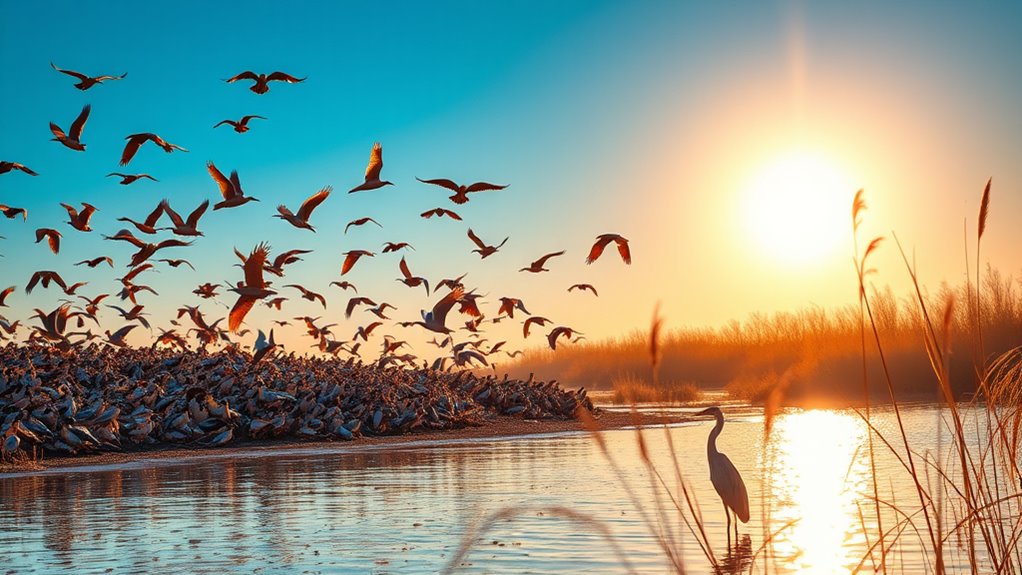

Migration stopovers are essential for animals like birds, allowing them to rest and refuel during their long journeys. At these sites, they search for food sources such as insects, fruits, and seeds to replenish their energy. Healthy ecosystems provide the necessary shelter and resources they need. Factors like habitat availability and landscape features influence their routes. Preserving these habitats is vital for their survival. Discover how these practices enhance migratory success and support ecosystems along the way.

Get pet supplies delivered free with Prime
- Fast, free delivery on millions of items
- Prime Video, Amazon Music and more included
- Member-only deals all year
Key Takeaways
- Migratory birds stop at critical habitats to rest and replenish energy reserves necessary for continued travel.
- During stopovers, birds actively search for food sources like insects, fruits, and seeds to refuel.
- Healthy ecosystems, such as wetlands and forests, provide essential food and shelter for migrating species.
- Migratory pathways are influenced by resource availability and landscape features, affecting stopover choices.
- Human activities like urban development and pollution threaten these vital stopover habitats, impacting migration success.

As birds commence on their epic journeys south, they often make critical stopovers along the way. These stopovers are essential, providing the energy and resources necessary to continue their long flights. You might not realize it, but the ecology of these stopover sites plays a pivotal role in the success of migratory pathways. When you see a flock of birds resting in a field or a wetland, you’re witnessing a vital moment in their migration journey.
During these stopovers, birds engage in a behavior known as refueling. They search for food sources, such as insects, fruits, and seeds, to replenish their energy reserves. The availability of these resources is largely influenced by the surrounding stopover ecology. Healthy ecosystems—like wetlands, forests, and grasslands—provide the necessary food and shelter that migratory birds depend on. If these environments are degraded or destroyed, the birds may struggle to find what they need to survive. As you observe these habitats, think about the impact they have on these travelers.
Birds rely on healthy ecosystems during stopovers to refuel and survive their migratory journeys.
Migratory pathways aren’t just routes on a map; they’re a complex web of ecological connections. Each stopover along the way is crucial, as it allows birds to rest, feed, and prepare for the next leg of their journey. As you learn more about these pathways, consider how landscapes influence migratory behavior. Some birds might prefer coastal areas, while others may choose inland forests. This selection is often based on the availability of food and safety from predators.
Moreover, the timing of migration is closely tied to the seasonal availability of resources at these stopover locations. For instance, a bird might migrate earlier or later depending on when fruits ripen or when insects emerge. You’ll notice that the changing seasons dictate the rhythm of nature, and migratory birds are right in the middle of it all.
As you reflect on the importance of these stopover sites, think about how human activity impacts them. Urban development, pollution, and climate change threaten these essential habitats. By advocating for the preservation of these ecological stopovers, you’re playing a part in the larger story of migration. Every small effort counts towards ensuring that birds can continue their journeys, unimpeded by barriers that might otherwise disrupt their critical migratory pathways. So, the next time you see birds resting, appreciate the delicate balance of life unfolding in front of you. Additionally, consider how minimalism in design can inspire conservation efforts to maintain these vital ecosystems.
bird migration stopover habitat preservation
As an affiliate, we earn on qualifying purchases.
As an affiliate, we earn on qualifying purchases.
Frequently Asked Questions
How Do Animals Choose Their Stopover Locations?
Animals choose their stopover locations based on several factors. You’ll notice they look for stopover habitats that provide ample food and shelter. They also prioritize areas that help with predator avoidance, ensuring they can rest without fear. The availability of resources, safety from threats, and proximity to their migration route play vital roles in their decisions. By carefully selecting these spots, they maximize their chances of successfully continuing their journey.
What Environmental Factors Influence Stopover Duration?
Environmental factors like climate impact and food availability can turn a quick pit stop into a week-long buffet! You’d be amazed how a sudden storm can extend an animal’s stay, while a food-rich oasis makes them linger longer. When temperatures rise or fall dramatically, animals adjust their stopover duration to cope. So, if they find plenty of snacks and perfect weather, you can bet they’ll stick around for a while!
Do Animals Communicate During Migration Stopovers?
Yes, animals do communicate during migration stopovers. As you observe, bird vocalizations play a vital role in this process. These calls can convey important information about food availability, danger, or even potential mates. You might notice that different species use specific communication signals to interact with each other, promoting social cohesion and cooperation. This communication helps them rest and refuel effectively, ensuring a successful continuation of their migratory journey.
How Do Stopovers Affect Animal Breeding Patterns?
Imagine a bustling rest area where animals gather to refuel before continuing their journey. Stopover strategies can considerably influence breeding impact. When animals pause to rest, they often take the opportunity to mate or establish territories, ensuring healthier offspring. These strategic breaks can synchronize breeding cycles, allowing young to hatch in ideal conditions. By timing their stopovers effectively, animals enhance their reproductive success, ultimately shaping the dynamics of their populations.
Are There Specific Dangers at Migration Stopover Sites?
Yes, there are specific dangers at migration stopover sites. You’ll find that stopover predators, like hawks and raccoons, pose a significant threat to resting animals. Additionally, habitat fragmentation can make it harder for them to find safe places to rest and refuel. As they navigate these threats, animals must remain vigilant, balancing the need for rest with the risks that come from being in unfamiliar or compromised environments.
Conclusion
In summary, migration stopovers are essential for animals to rest and refuel during their long journeys. Take the example of the Arctic Tern, which migrates from the Arctic to Antarctica and back, covering over 71,000 kilometers. During its journey, it relies on strategic stopovers to regain strength and find food. By understanding these critical pauses, we can better appreciate the incredible resilience and adaptability of migratory species, ensuring their survival in an ever-changing world.
Fall Picks
fall essentials
As an affiliate, we earn on qualifying purchases.