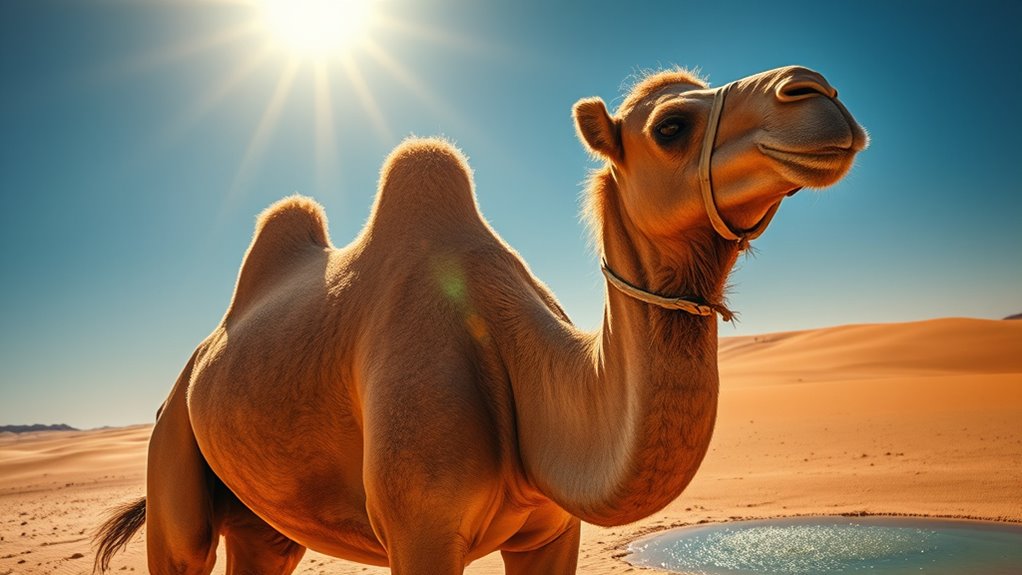

Camels don’t actually store water like you might think. Instead, they’re built to survive in harsh, dry environments. They can drink a lot of water at once and absorb it quickly. Their unique kidneys and blood cells help them conserve every drop. Plus, their fat-filled humps provide energy during long treks without food or water. If you’re curious about more fascinating adaptations that keep camels going in the desert, there’s much more to explore!
Prime for Young Adults — start your free trial
Fast free delivery, streaming and member deals for eligible 18–24 year olds.
As an affiliate, we earn on qualifying purchases.
Key Takeaways
- Camels do not store water in their humps; they store fat, which provides energy during food and water scarcity.
- They can drink up to 40 gallons of water quickly, allowing for rapid replenishment of their reserves.
- Camels efficiently absorb water, minimizing loss and surviving extended periods without it.
- Their kidneys filter waste while conserving water, producing highly concentrated urine to retain moisture.
- Adaptations in blood cell shape help maintain fluid balance during dehydration, enhancing survival in desert conditions.
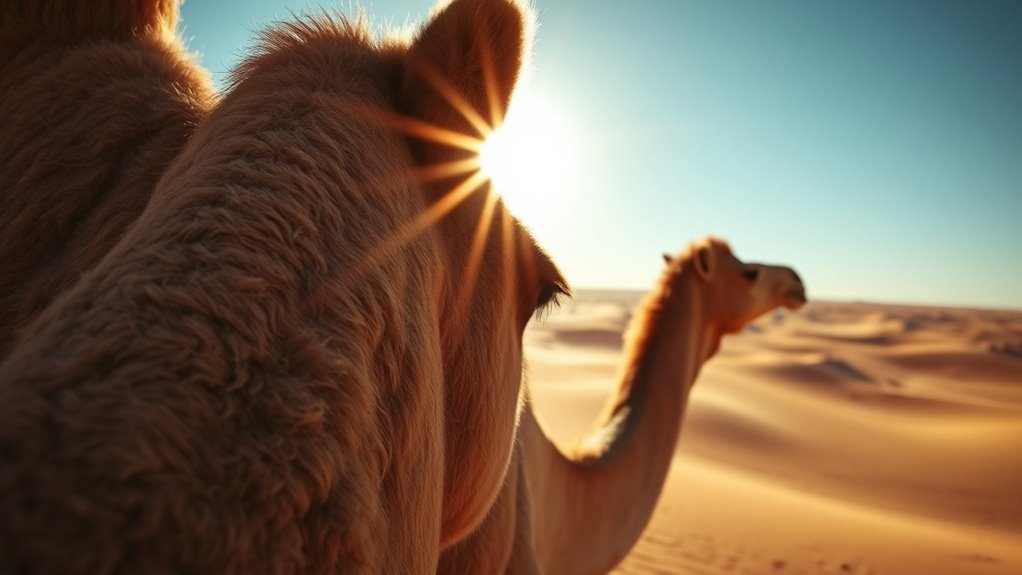
Have you ever wondered how camels thrive in arid environments? These remarkable creatures, often called the “ships of the desert,” have evolved extraordinary adaptations that allow them to survive where few others can. One of their most fascinating features is their ability to store water, which is vital for desert hydration. Unlike many animals that rely on direct water sources, camels have developed unique methods to endure long periods without drinking.
Discover how camels, the “ships of the desert,” utilize unique adaptations to thrive in arid environments without frequent water sources.
A common misconception is that camel humps store water. In reality, those distinctive humps are primarily made up of fat—specifically camel hump fat. When food and water are scarce, camels can metabolize this fat for energy, which helps them maintain their strength during extended droughts. This efficient energy utilization means camels can travel great distances across the desert without needing to refuel.
When it comes to hydration, camels have an incredible ability to conserve water. Their bodies can withstand the loss of up to 25% of their body weight due to dehydration, a feat that would be fatal for most animals. As they drink, they can consume up to 40 gallons of water in one go, quickly replenishing their reserves. This ability to absorb large amounts of water in a short time is essential for their survival in harsh conditions.
Moreover, camels possess several physiological adaptations that help with desert hydration. For instance, their kidneys are incredibly efficient, filtering waste while minimizing water loss. Their urine is extremely concentrated, and they can even tolerate fluctuations in their body temperature, which helps reduce water loss through perspiration. Instead of sweating, camels can allow their body temperature to rise during the day and cool off at night, minimizing the need for water.
Another fascinating aspect is their unique blood cells. Camels have oval-shaped red blood cells, which can expand and contract as needed, allowing them to maintain fluid balance even when dehydrated. This special adaptation ensures that they can still function effectively, regardless of the harsh conditions they face. Additionally, camels can survive for long periods without water due to their efficient kidney function, which plays a crucial role in their remarkable adaptations to desert life.
As an affiliate, we earn on qualifying purchases.
Frequently Asked Questions
Do Camels Sweat to Conserve Water?
No, camels don’t sweat much to conserve water. Instead, they use unique camel hydration mechanisms that allow them to tolerate high temperatures without losing essential fluids. Their bodies can withstand significant temperature fluctuations, minimizing the need for sweating. You’ll find that their water conservation strategies include efficient kidney function and the ability to metabolize fat for hydration. This adaptation helps them thrive in arid environments, making them remarkable survivors of the desert.
How Long Can Camels Survive Without Water?
You might picture a ship sailing through a vast, parched sea. Camels can survive without water for about two weeks, thanks to their impressive camel fat reserves. These reserves act like a lifeline, releasing water when metabolized. They’ve mastered desert survival strategies, adapting to extreme heat and conserving moisture through their unique physiology. So, when you think of endurance, imagine a camel thriving where few can, proving nature’s resilience in the harshest conditions.
What Do Camels Eat to Retain Moisture?
Camels eat a variety of foods that help with moisture retention. Their diets include tough grasses, leaves, and even cacti, which contain water-rich components. By consuming these moisture-rich plants, you’ll find that camels can survive long periods in arid environments. Their specialized digestive systems efficiently extract moisture from their food, ensuring they stay hydrated even when water is scarce. So, it’s their unique diet that plays a huge role in their survival.
Can Camels Drink Saltwater?
No, camels can’t drink saltwater. Their bodies aren’t designed to process it, and it can lead to dehydration. Instead, they rely on fresh water sources and camel milk, which helps with desert hydration. This milk provides essential nutrients and hydration, allowing them to thrive in arid conditions. So, when you think about camels, remember they’re adapted to conserve water, not to consume salty solutions.
How Do Other Animals Store Water?
Other animals store water in fascinating ways. Think of a cactus, its thick skin holding moisture like a treasure chest in the desert. Some reptiles, like the kangaroo rat, use metabolic water, drawing hydration from food. Birds, too, have clever desert survival strategies, excreting concentrated waste to retain water. Meanwhile, camels rely on fat reserves in their humps, tapping into energy when times get tough, showcasing nature’s ingenuity in the quest for survival.
Conclusion
So, next time you think about camels, remember their incredible ability to store water. They’ve got specialized adaptations that let them survive in the harshest environments. Coincidentally, these adaptations also remind us of the resilience we all have, even when facing challenges. Just as camels thrive in the desert, we can find ways to endure our own struggles. Embrace the lessons from these remarkable creatures, and you’ll discover the strength within yourself to overcome any obstacle.
Fall Picks
fall essentials
As an affiliate, we earn on qualifying purchases.