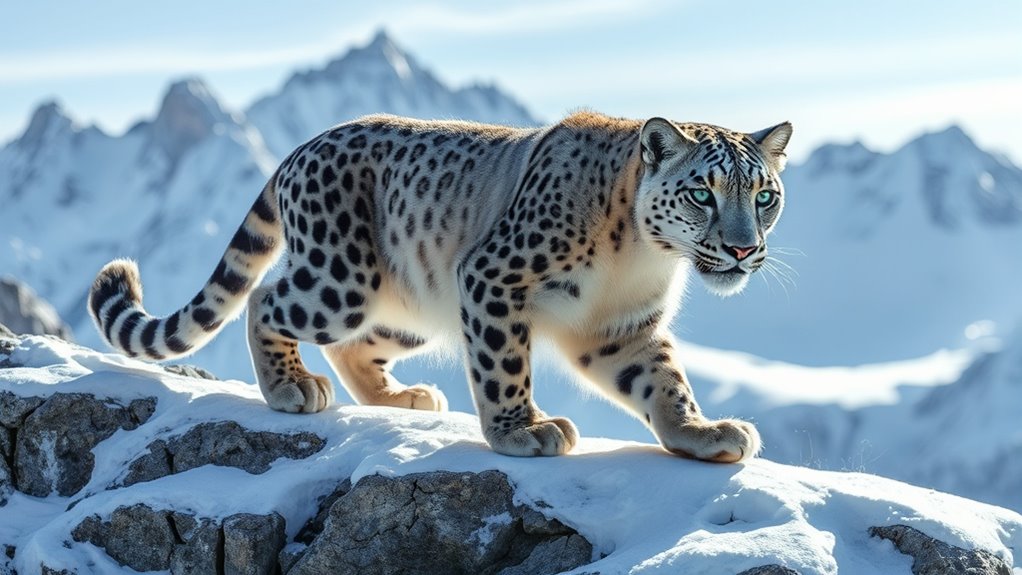

The snow leopard, known as the “ghost of the mountains,” is a breathtaking symbol of resilience in high-altitude ecosystems. With its stunning coat and powerful limbs, it elegantly navigates rugged terrains, using its unique adaptations to thrive in harsh environments. These elusive big cats face significant threats like climate change and poaching, making conservation efforts essential. You’ll discover the intricate balance of their habitat and the efforts to protect them and their extraordinary presence in the wild.

Get pet supplies delivered free with Prime
- Fast, free delivery on millions of items
- Prime Video, Amazon Music and more included
- Member-only deals all year
Key Takeaways
- Snow leopards, known as the “ghosts of the mountains,” possess stunning coats for camouflage in their rugged habitats.
- They thrive in high-altitude environments, expertly navigating steep cliffs and rocky terrains.
- Their powerful limbs and wide, furry paws allow them to leap great distances and move silently while hunting.
- Conservation efforts are crucial due to threats like climate change and poaching, with local communities playing a vital role.
- Protecting snow leopards ensures the health of mountain ecosystems, benefiting diverse wildlife and future generations.

What makes the snow leopard one of nature’s most elusive and mesmerizing big cats? You might be captivated by its stunning coat, dotted with black rosettes against a backdrop of pale gray, helping it blend seamlessly into the rugged mountain landscapes of Central and South Asia. But it’s not just the looks; it’s their extraordinary climbing techniques that set them apart. With powerful limbs and a long tail for balance, snow leopards navigate steep cliffs and rocky terrains with ease, allowing them to stalk prey and evade threats.
These big cats have adapted to life in some of the harshest environments on Earth. Living at high altitudes, they possess unique adaptations that enable them to thrive where few other animals can. Their wide, furry paws act like natural snowshoes, distributing their weight over soft snow, allowing them to travel silently while hunting. You can’t help but admire their agility as they leap across rocky outcrops, often covering distances of up to six times their body length in a single bound. This remarkable ability to climb and maneuver in challenging terrain not only aids in hunting but also plays a crucial role in their survival.
However, despite their incredible adaptations, snow leopards face numerous challenges that threaten their existence. Conservation efforts are vital to ensure these magnificent creatures continue to roam the mountains. As you explore the efforts made to protect them, you’ll discover that local communities play a significant role. Initiatives that promote coexistence between humans and snow leopards focus on reducing livestock loss, which is a major source of conflict. By implementing protective measures and offering compensation for lost livestock, these programs encourage communities to safeguard the snow leopards rather than view them as a threat.
Moreover, conservationists are working tirelessly to monitor snow leopard populations, studying their behavior and habitat needs. By gathering data, they can develop targeted strategies to mitigate the effects of climate change and poaching, two major threats to their survival. Healthy ecosystems are crucial for supporting the diverse wildlife, including these elusive big cats. You can feel a sense of hope in the collaborative efforts between governments, NGOs, and local people. Each step taken in the name of conservation is a step closer to ensuring that the ghost of the mountains continues to inspire awe and wonder for generations to come. The snow leopard deserves our attention and commitment, and together, we can make a difference.
As an affiliate, we earn on qualifying purchases.
Frequently Asked Questions
What Is the Average Lifespan of a Snow Leopard in the Wild?
In the wild, a snow leopard typically lives around 10 to 15 years. You’ll find them in rugged mountains, where their habitat preferences include steep slopes and rocky outcrops. Their diet mainly consists of ungulates, like ibex and blue sheep, which they hunt using stealth and agility. By understanding their behaviors and habitat needs, you can appreciate the challenges they face in the wild, impacting their lifespan and overall survival.
How Do Snow Leopards Communicate With Each Other?
Imagine you’re at a concert, feeling the rhythm of the crowd—snow leopards communicate in a similar way. They use vocalizations like growls, chuffs, and meows to express emotions or attract mates. Visual signaling also plays a role; through body language and tail movements, they convey messages to each other. Just like you’d catch a friend’s eye across a bustling venue, these big cats find ways to connect in their rugged mountainous homes.
What Are the Main Threats to Snow Leopard Populations?
The main threats to snow leopard populations are poaching risks and habitat loss. You’ll find that poaching, driven by illegal trade, substantially impacts their numbers. Additionally, as human activities expand, their natural habitats shrink, making it harder for them to thrive. Climate change exacerbates these issues, altering their environments and food sources. To help protect these majestic cats, it’s essential to raise awareness and support conservation efforts.
Do Snow Leopards Have Any Natural Predators?
You might think snow leopards reign supreme in their harsh habitats, but they face competition for prey, which can threaten their survival. While they don’t have natural predators, their biggest threats come from human conflict and habitat encroachment. As you explore further, you realize that the balance of nature isn’t just about the strongest; it’s about the delicate dance between species, where every move can mean life or death for these elusive cats.
Can Snow Leopards Be Kept in Captivity?
Yes, snow leopards can be kept in captivity, but it comes with enclosure challenges. You’ll need to guarantee their habitat mimics their natural environment to support their well-being. Many conservation efforts focus on breeding programs that help maintain genetic diversity while educating the public. However, it’s vital to prioritize their needs and adapt enclosures accordingly, as these majestic animals thrive in large, complex spaces that allow them to exhibit natural behaviors.
Conclusion
As you reflect on the snow leopard, think of it as a guardian of the mountains, much like the mythical phoenix rising from the ashes. Its elusive presence reminds you of the delicate balance of nature and the fragility of life. Just as the phoenix symbolizes rebirth, the snow leopard embodies resilience. By protecting this magnificent creature, you’re not just saving a species; you’re ensuring that the mountains’ spirit endures, echoing the whispers of ancient tales for generations to come.
Halloween Picks
halloween
As an affiliate, we earn on qualifying purchases.


![Pentulive (Puppy Live) [Video]](https://aplaceforanimals.com/wp-content/uploads/2026/10/pentulive-puppy-live-video-featured-260x140.jpg)