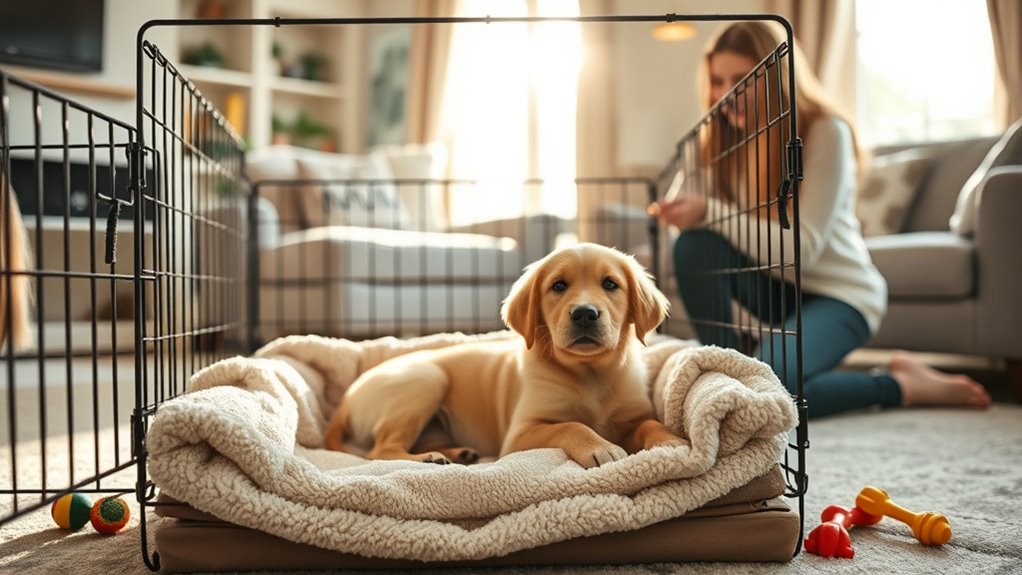

Crate training can be a gentle and effective method for housebreaking your dog. Start by introducing the crate as a safe, inviting space with treats and toys. Keep the crate size just right for comfort, allowing your dog to stand, turn around, and lie down. Establish a routine for outside trips and use positive reinforcement to reward good behavior. Avoid using the crate as punishment, and soon you’ll find your dog feels secure and relaxed. There’s much more to discover on this topic!
Key Takeaways
- Introduce the crate gradually, leaving the door open for exploration and using treats to create positive associations.
- Choose the right crate size to ensure comfort and prevent accidents associated with too much space.
- Establish a routine for bathroom breaks to reinforce appropriate elimination and reduce accidents inside the crate.
- Use positive reinforcement, such as praise or treats, when your dog enters the crate willingly.
- Avoid using the crate as punishment to maintain a positive atmosphere and strengthen your dog’s trust.

Have you ever wondered how crate training can benefit both you and your dog? Crate training isn’t just a way to contain your pup; it’s a powerful tool for housebreaking and creating a safe space for your furry friend. By understanding the basics, you can foster a positive experience that strengthens your bond and makes life easier for both of you.
To start, it’s essential to choose the right crate size. If it’s too big, your dog might think of it as a playpen, which can make housebreaking a challenge. On the other hand, if it’s too small, your dog won’t feel comfortable and might resist going inside. Ideally, the crate should allow your dog to stand, turn around, and lie down comfortably. When you’re considering crate size, remember that puppies grow quickly, so it might be wise to invest in a crate with dividers that can adjust as your pup grows.
Choosing the right crate size is crucial for comfort and effective housebreaking. A well-fitted crate fosters a positive experience for your dog.
Once you’ve got the right crate, you can implement some effective housebreaking tips. Start by introducing your dog to the crate gradually. Leave the door open and place some treats or toys inside to encourage exploration. It’s all about making the crate a positive place. When your dog feels safe and relaxed inside, they’ll be more willing to spend time there.
Establish a routine. Take your dog out first thing in the morning, after meals, and before bedtime. This consistency helps your pup learn when and where it’s appropriate to relieve themselves. If you catch them in the act of having an accident inside, it’s important to stay calm. Gently redirect them outside. Praise them when they finish outside; positive reinforcement goes a long way.
While crate training, avoid using the crate as a form of punishment. This can create a negative association, leading to anxiety and stress during crate time. Instead, think of the crate as a cozy den where your dog can relax and feel secure. It’s about creating a safe haven, not a jail.
As your dog becomes more accustomed to the crate, you can gradually increase the time they spend inside. Start with short intervals and gradually extend them as your pup shows they’re comfortable. This approach helps build their confidence and makes the crate a regular part of their routine. With patience and consistency, crate training can pave the way for a well-adjusted, happy pup and a harmonious home. Additionally, positive reinforcement is crucial for building a trusting relationship during the training process.

MidWest Homes for Pets 36-Inch iCrate for Medium-Large Breeds, 41-70 lbs, Single Door Folding Dog Crate with Divider Panel, Leak-Proof Tray & Secure Latches, Portable, Durable & Easy to Assemble
IDEAL FOR 41-70 LB DOGS: Measures 36.5 x 23.25 x 24.75 inches – perfect for Bulldogs, Beagles, Whippets…
As an affiliate, we earn on qualifying purchases.
As an affiliate, we earn on qualifying purchases.
Frequently Asked Questions
Can I Use a Crate for a Puppy and an Adult Dog?
Yes, you can use a crate for both a puppy and an adult dog! Just make sure you choose the right crate size for each. Your puppy’s crate should allow room to grow, while your adult dog needs a space that fits comfortably. Crate placement is also important; keep it in a quiet, familiar area where they feel safe. This way, both your puppy and adult dog will feel secure and comfortable in their crates.
How Long Can a Dog Stay in a Crate Daily?
Dogs shouldn’t stay in a crate for more than 4 to 6 hours at a time, especially during the day. Crate training can be a great tool for dog containment, but it’s crucial to guarantee your pup has plenty of time to stretch, play, and socialize. Keeping your dog crated for too long can lead to anxiety and frustration. Remember, a happy dog makes for a happy home!
Should I Cover the Crate With a Blanket?
Yes, you should cover the crate with a blanket. A crate cover offers several benefits, like creating a cozy, den-like atmosphere for your dog. It helps reduce distractions and minimizes stress by blocking out noise and visual stimuli. Just make sure to keep the crate well-ventilated. Your pup will likely feel more secure and comfortable, making crate time a more positive experience overall. Trust me, they’ll appreciate the extra warmth and privacy!
What if My Dog Refuses to Enter the Crate?
If your dog acts like the crate’s a portal to another dimension, don’t panic! That crate resistance can be tackled with a gradual introduction. Start by making the crate a fun place—throw in some treats or toys. Encourage your pup to explore it at their own pace. Patience is key; coax them in and reward their bravery. Before long, you’ll see your dog happily entering the crate like it’s a cozy den!
How Do I Clean a Crate Properly?
To clean a crate properly, start by removing any bedding or toys. Use mild soap and warm water with a soft brush or cloth to scrub all surfaces. Rinse thoroughly to avoid residue. For tough stains or odors, consider using a pet-safe cleaner. After cleaning, dry the crate completely before adding fresh bedding. Regular crate maintenance helps keep your dog healthy and comfortable, so make it a routine part of your cleaning schedule.
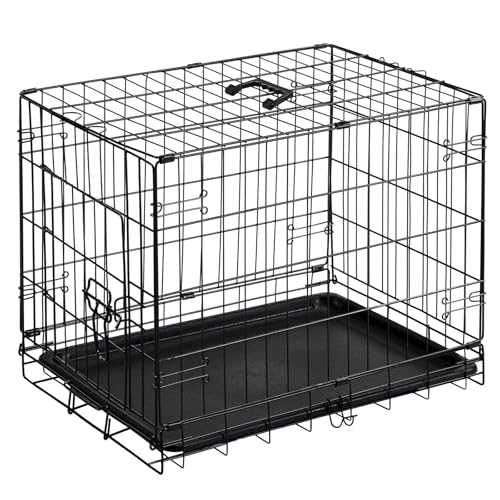
DUMOS Dog Crate, 24 Inch Small Single Door Dog Cage with Plastic Leak-Proof Pan Tray, Folding Metal Wire Pet Kennel for Indoor, Outdoor, Travel, Black
SAFE AND DURABLE: The kennel is designed with rounded corners to eliminate sharp edges, prevent injuries caused by…
As an affiliate, we earn on qualifying purchases.
As an affiliate, we earn on qualifying purchases.
Conclusion
In summary, crate training can be a gentle and effective method for helping your dog feel safe and secure. Did you know that around 80% of dog owners who use crate training report their pets are more relaxed and well-adjusted? By using positive reinforcement and patience, you can turn the crate into a cozy retreat for your furry friend. So, embrace these gentle methods, and watch your pup thrive in their new space!

Buddy Biscuits Trainers Training Bites Soft & Chewy Dog Treats, Bacon, 10 oz. Pouch
Highly Palatable with natural pork liver base
As an affiliate, we earn on qualifying purchases.
As an affiliate, we earn on qualifying purchases.

ChengFu Interactive Dog Toys, Crate Training Aids for Puppies, Reduce Stress Anxiety Peanut Butter Dog Food Treat Dispenser Toys
Food Dispenser Toy:Spread peanut butter on the ball, stuff the dog food inside the ball, then tie the…
As an affiliate, we earn on qualifying purchases.
As an affiliate, we earn on qualifying purchases.