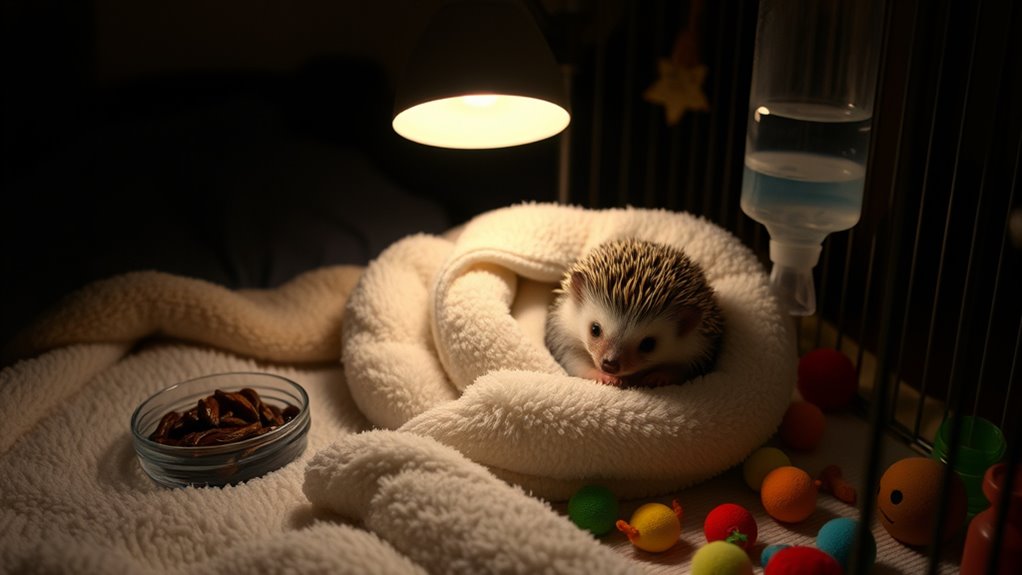

Caring for hedgehogs means embracing their nocturnal lifestyle. They’re active at night, exploring and foraging, so your interaction should happen during their prime hours. Provide a high-protein diet with quality hedgehog or cat food and monitor their eating habits. Even though they’re solitary, they enjoy gentle companionship in the evenings. Creating a secure and engaging environment is vital for their happiness. Stick around to discover more about their unique needs and behaviors!

Get pet supplies delivered free with Prime
- Fast, free delivery on millions of items
- Prime Video, Amazon Music and more included
- Member-only deals all year
Key Takeaways
- Hedgehogs are nocturnal, active at night, making them ideal pets for night owls and evening activity enthusiasts.
- They require a high-protein diet, primarily consisting of hedgehog or cat food, supplemented with occasional treats.
- Food should be available during their active hours to support health and monitor eating habits effectively.
- Gentle handling and environmental exploration during the night help build trust and enhance the pet-owner relationship.
- Understanding their solitary nature and nocturnal behavior promotes a comfortable and secure living environment for hedgehogs.

Caring for a hedgehog can be a rewarding experience, especially when you understand their unique needs. These little creatures are charming companions, but they require specific care to thrive. A key aspect of hedgehog care involves understanding their nocturnal behavior. Unlike most pets, hedgehogs are primarily active at night. This means that your hedgehog will likely sleep during the day, waking up in the evening to explore, eat, and play. If you’re a night owl or someone who enjoys evening activities, a hedgehog can be the perfect pet for you. However, if you prefer a pet that interacts during the day, you might want to consider another animal.
Caring for a hedgehog is rewarding, especially if you appreciate their charming nocturnal nature.
To guarantee your hedgehog stays healthy and happy, you need to pay attention to its nutritional requirements. Hedgehog nutrition is essential, as it directly impacts their overall well-being. In the wild, hedgehogs primarily feast on insects, so a diet that mimics this is ideal. High-quality hedgehog food or cat food with a high protein content can be suitable options. You should also include occasional treats such as mealworms, crickets, or fruits and vegetables, but these should be given in moderation. Always avoid feeding your hedgehog dairy products, chocolate, or anything high in sugar, as these can cause health issues.
Creating a suitable diet isn’t just about the type of food; it’s also about how you feed your hedgehog. Since they’re nocturnal, you’ll want to make sure their food is available at night. This way, they can eat when they’re most active. Monitoring their eating habits is essential. If you notice your hedgehog isn’t eating well, consult a vet who specializes in exotic pets.
In addition to nutrition, keep in mind that hedgehogs are solitary animals. They don’t require constant social interaction like some other pets, but they do enjoy human companionship during their active hours. Taking the time to handle your hedgehog gently and allowing it to explore its environment will help build trust. Establishing a bond can also be akin to the emotional bonds that transcend time and distance in other relationships.
As you care for your hedgehog, remember that patience is indispensable. It might take some time for your pet to adjust to its new home and routine. Learning about your hedgehog’s unique behaviors, especially its nocturnal tendencies, will enhance both your relationship and your pet’s happiness. In the end, understanding these aspects of hedgehog care will lead to a fulfilling experience with your spiky friend.
As an affiliate, we earn on qualifying purchases.
Frequently Asked Questions
Do Hedgehogs Require a Specific Type of Bedding?
Yes, hedgehogs do require specific bedding materials. You should opt for soft, absorbent options like paper-based or aspen shavings. Avoid cedar and pine, as they can harm your pet. For bedding maintenance, change it weekly to keep their environment clean and odor-free. Spot clean daily to remove waste and ensure your hedgehog stays healthy and happy. By choosing the right bedding and maintaining it properly, you’ll create a comfortable habitat for your little friend.
How Often Should I Handle My Hedgehog?
How often should you handle your hedgehog? Think of it as nurturing a budding friendship; regular interaction fosters trust. Aim for at least a few times a week, gradually increasing the handling frequency as your pet becomes more comfortable. This social interaction is essential for bonding and helping your hedgehog adjust to its new environment. Just remember, patience is key—every hedgehog has its unique personality and comfort level.
Can Hedgehogs Be Litter Trained?
Yes, hedgehogs can be litter trained! Start by providing a specific area in their habitat for a litter box. Make sure it’s filled with safe litter, avoiding clumping types. When you notice your hedgehog using this spot, reward them with a treat from their diet. Consistency is key, so keep the area clean and encourage good habits. Over time, they’ll learn to go in the designated spot, making clean-up easier for you!
What Toys Are Safe for Hedgehogs?
For safe play items, focus on hedgehog enrichment. You can provide small tunnels, soft balls, and wooden chew toys, avoiding anything with small parts that could be swallowed. Cardboard boxes make great hideouts, and fleece blankets can offer comfort and texture. Always guarantee the toys are free from harmful chemicals or sharp edges. Regularly rotate their toys to keep things exciting and stimulate their natural curiosity. Your hedgehog will thrive with safe, engaging options!
How Do I Know if My Hedgehog Is Sick?
To know if your hedgehog is sick, watch for specific hedgehog symptoms like lethargy, lack of appetite, or unusual weight loss. You should also check for any abnormal behaviors, such as excessive scratching or hiding. If you notice any concerning vet signs, like discharge from the eyes or nose, it’s time to consult a vet. Early detection is essential, so pay close attention to your pet’s habits and health.
Conclusion
In the quiet hours of the night, your hedgehog becomes a little explorer, much like a tiny Odysseus steering the wonders of his world. By providing a safe, comfortable environment and understanding his needs, you’ll help him thrive in his nocturnal adventures. Remember, patience is key as you bond with your spiky friend. With love and care, you’ll transform your home into a cozy sanctuary, ensuring your hedgehog’s journey through the night is as enchanting as a starlit dream.
Fall Picks
fall essentials
As an affiliate, we earn on qualifying purchases.