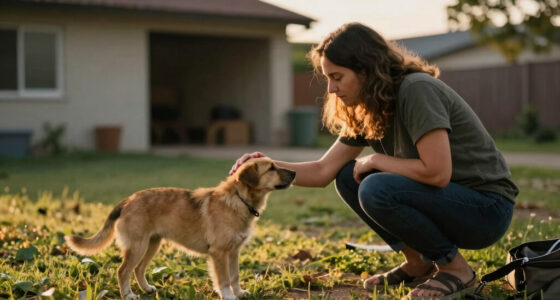

To keep your older pet comfortable at home, provide soft, supportive bedding, and use ramps or stairs for easy access to furniture and beds. Maintain regular grooming with gentle techniques, and keep routines consistent to reduce stress. Make certain their environment is clean, safe, and enriched with toys for mental stimulation. Watch for signs of discomfort, and make adjustments as needed. If you want to discover more ways to enhance your pet’s well-being, continue exploring these helpful tips.

Get pet supplies delivered free with Prime
- Fast, free delivery on millions of items
- Prime Video, Amazon Music and more included
- Member-only deals all year
Key Takeaways
- Provide soft, supportive bedding and accessible spaces to reduce joint strain and promote comfort.
- Use ramps, stairs, and furniture modifications to aid mobility and prevent falls.
- Offer tailored, gentle exercise and play to maintain muscle tone without causing discomfort.
- Maintain a consistent daily routine to reduce stress and increase a sense of security.
- Regularly monitor for signs of pain or discomfort and consult a veterinarian for appropriate adjustments.
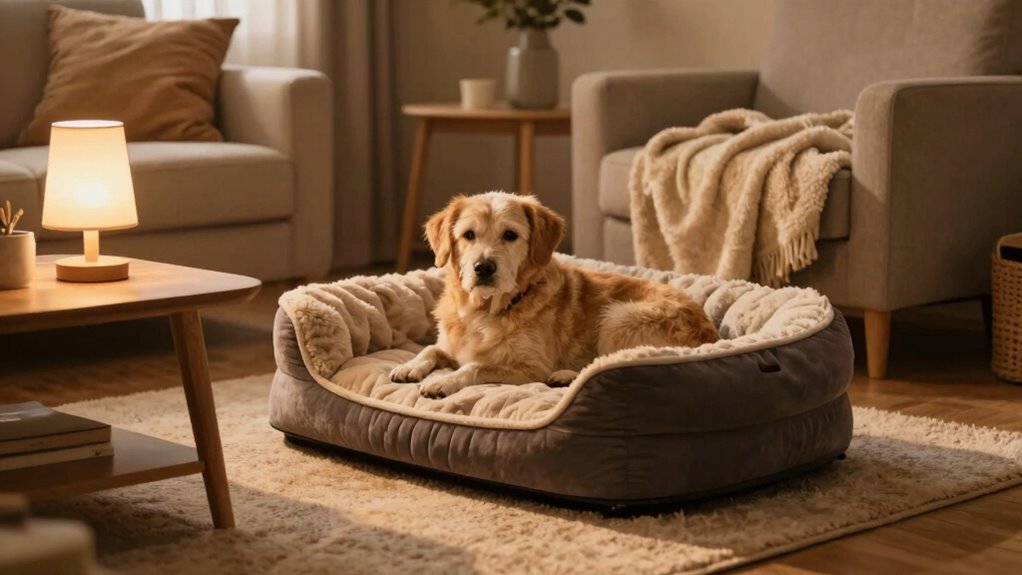
As pets age, they often face new challenges that can make them less comfortable at home. You’ll notice things like stiffness, difficulty seeing or hearing, or even changes in their energy levels. To help your older pet stay comfortable, you need to pay close attention to their changing needs, especially when it comes to pet nutrition and grooming routines. Proper nutrition becomes even more important as your pet ages because their dietary needs shift. You should consider switching to a formula designed for seniors, which typically contains fewer calories but more nutrients like omega-3 fatty acids, antioxidants, and joint-supporting supplements. These help keep their coat shiny, support their immune system, and reduce inflammation. Always consult your veterinarian before making changes to their diet to guarantee it addresses their specific health issues.
Grooming routines also play a critical role in keeping your aging pet comfortable. As they get older, their coat might become thinner, or they might develop skin conditions that require gentle, frequent grooming. Regular brushing helps remove loose hair, prevents matting, and stimulates blood flow, which can improve overall skin health. Be gentle around sensitive areas, and use grooming tools suited for their coat type. Keep an eye out for skin irritations, lumps, or signs of parasites, and seek veterinary advice if you notice anything unusual. Bathing should be kept to a minimum unless necessary, as older pets can be more prone to skin dryness or infections. Use mild, moisturizing shampoos recommended for mature animals and make certain they’re thoroughly dried afterward, especially if they have trouble regulating their body temperature. Additionally, understanding biodiversity and the importance of healthy ecosystems can inspire you to create a more sustainable and comfortable environment for your pet at home. Incorporating environmental enrichment can also improve their mental well-being and reduce feelings of boredom or anxiety. Creating a cozy and safe environment is equally important to prevent accidental injuries or escapes.
Beyond grooming, adjusting your home environment is essential. Make sure their bedding is soft, supportive, and easily accessible to reduce joint strain. Provide ramps or stairs near furniture or beds if your pet has mobility issues. Regularly cleaning their living space and ensuring they’re comfortable can prevent infections and skin problems. Exercise is equally important but should be gentle and tailored to their capabilities. Short, frequent walks and gentle play help maintain muscle tone and mental stimulation without overexerting them. Keep their routine consistent to reduce stress, and always be attentive to signs of discomfort or pain — these cues can guide you in making necessary adjustments. Creating a comfortable living space is key to their overall well-being, especially as they age.
supportive orthopedic pet bed for seniors
As an affiliate, we earn on qualifying purchases.
As an affiliate, we earn on qualifying purchases.
Frequently Asked Questions
How Can I Tell if My Older Pet Is in Pain?
You can tell if your older pet is in pain by observing behavioral changes and doing a pain assessment. Look for signs like limping, difficulty getting up, or decreased activity. Notice if they’re more irritable, hiding more, or showing less interest in play. Changes in eating or grooming habits also indicate discomfort. If you suspect pain, consult your vet promptly to make sure your pet gets the care they need.
Are There Specific Diets for Aging Pets?
You should consider special diets for aging pets, like incorporating nutritional supplements tailored for senior health. For example, an older dog might benefit from a diet rich in omega-3 fatty acids to support joint health. Implementing specific feeding routines, such as smaller, more frequent meals, can also help your pet digest better. These adjustments guarantee your pet gets essential nutrients, maintains a healthy weight, and stays comfortable as they age.
How Often Should I Take My Senior Pet to the Vet?
You should take your senior pet to the vet at least twice a year for thorough check-ups. Regular visits help monitor dental health, address any dental issues early, and keep bathing routines appropriate for their age. During these visits, the vet can also assess overall health, update vaccinations, and recommend adjustments to diet or routines, ensuring your older pet stays comfortable, happy, and healthy as they age.
What Are Signs of Cognitive Decline in Older Pets?
You’ll notice signs of cognitive decline in your senior pet through changes in behavior, like confusion, disorientation, or forgetting familiar routines. They may become less responsive or show increased anxiety. To support their cognitive health, use strategies like consistent routines, mental stimulation, and gentle reassurance. Keep watch for signs like wandering, changes in sleep patterns, or house soiling, and consult your vet to develop an effective cognitive health plan.
How Can I Help My Pet With Mobility Issues?
Imagine you’re a medieval knight, and your steed struggles with mobility. You can help your pet by providing assistive devices like ramps and harnesses, making navigation easier. Incorporate gentle mobility exercises, such as slow walks or stretching, to strengthen muscles and improve flexibility. Regular veterinary check-ups guarantee any issues are addressed promptly. Your patience and care will help your pet stay comfortable and active, even with mobility challenges.
Conclusion
By prioritizing your older pet’s comfort with cozy bedding, easy access to essentials, and gentle care, you create a safe, loving environment that supports their well-being. Some believe that maintaining routine and familiar surroundings can even boost their mental health, helping them age gracefully. Trust your instincts and adapt as needed—your pet’s happiness depends on it. With a little effort, you can guarantee your senior companion feels loved and comfortable every day.
Halloween Picks
halloween
As an affiliate, we earn on qualifying purchases.