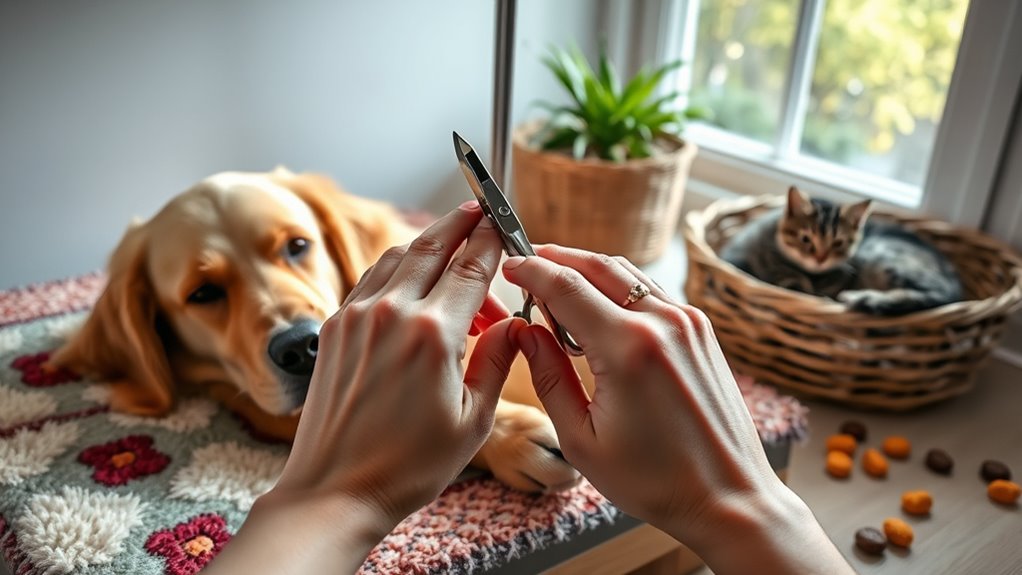

To make nail trimming stress-free for your dogs and cats, keep the sessions calm and relaxing. Use pet-specific clippers and consider a grinder for a smoother finish. Break the process into smaller parts, and don’t forget treats as positive reinforcement. Focus on the transparent tip to avoid cutting the sensitive quick, especially with dark nails. With patience and consistency, you’ll create a positive experience for your pet, leading to easier trims in the future. Exciting tips await!
Key Takeaways
- Create a calm environment with gentle petting or playtime to help your pet relax before trimming.
- Use positive reinforcement, like treats, to encourage good behavior during the nail trimming process.
- Trim small amounts of the nail at a time, especially for anxious pets, to avoid cutting into the quick.
- Keep your grooming tools in good condition and easily accessible for a smooth trimming session.
- Break the trimming process into smaller sessions if needed, rewarding your pet after each successful trim.
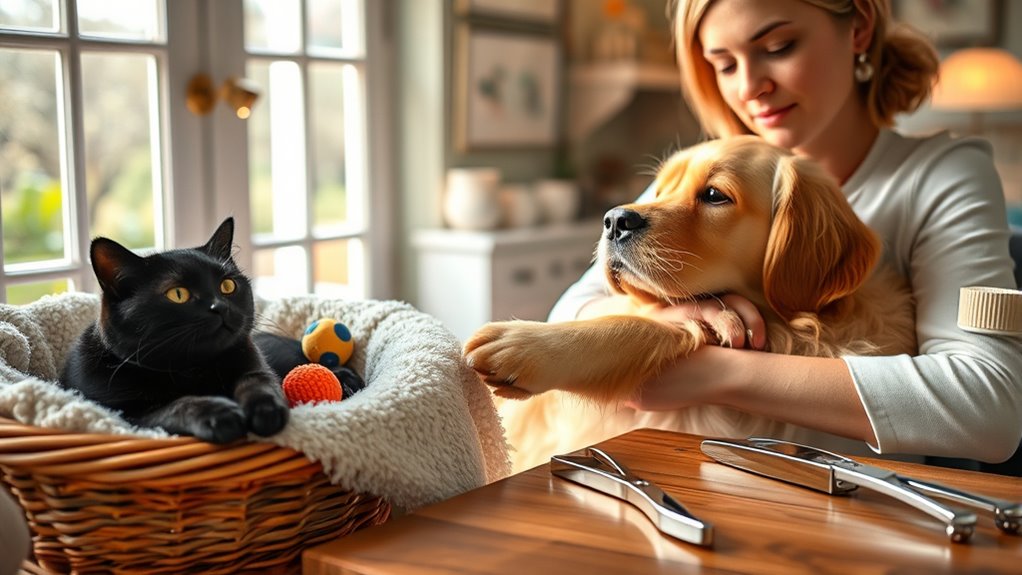
Nail trimming for dogs and cats is an essential part of pet care that can sometimes feel intimidating. You might worry about hurting your furry friend or struggle to get them to sit still. However, with the right grooming tools and a little preparation, you can make this process smoother and stress-free for both you and your pet.
First, let’s talk about the grooming tools you’ll need. A good pair of nail clippers specifically designed for pets is vital. You’ll find various types, like scissor-style or guillotine-style clippers, so choose one that feels comfortable in your hand. If your pet has particularly thick nails, you might want to invest in a nail grinder, which can provide a more gradual and smooth finish. Don’t forget about styptic powder or a similar product, as it can be a lifesaver if you accidentally cut too close to the quick.
Essential grooming tools, like pet-specific nail clippers and styptic powder, ensure a safe and effective nail trimming experience.
Before you start trimming, it’s important to guarantee nail trimming safety. Make sure your pet is calm and comfortable. You can do this by giving them a few minutes of gentle petting or playtime. If your pet is anxious, consider having a helper hold them or use treats to create positive reinforcement. A relaxed pet will be more cooperative, making the task easier for both of you.
When you’re ready to begin, hold your pet’s paw gently but firmly. For dogs, you may need to position them in a way that their paw is easily accessible. For cats, it often helps to hold them on your lap or a comfortable surface. Take note of the quick—the pinkish area inside the nail. You should only trim the transparent tip of the nail, avoiding the quick to prevent bleeding. If your pet has dark nails, be extra cautious, as the quick may be harder to see.
Trim just a little bit at a time, especially if your pet isn’t used to nail trimming. If they’re particularly anxious, consider breaking the process into smaller sessions. You could trim one or two nails at a time, rewarding your pet with treats after each successful cut. This will help them associate nail trimming with positive experiences. Additionally, ensuring proper nail trimming techniques can further prevent injury and make the process more efficient.
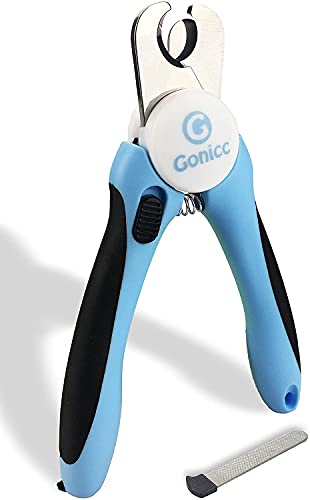
gonicc Professional Dog & Cat Pets Nail Clippers & Trimmers
- Professional Grooming Design: Vet and groomer recommended for pets
- Ultra-Sharp Stainless Steel Blades: 3.5mm heavy-duty blades for clean cuts
- Safety Guard for Over-Cutting: Built-in stop to protect quick and paw health
As an affiliate, we earn on qualifying purchases.
As an affiliate, we earn on qualifying purchases.
Frequently Asked Questions
How Often Should I Trim My Pet’s Nails?
You should trim your pet’s nails every 3 to 4 weeks, depending on their nail growth. Some pets grow nails faster, so keep an eye on their length. Establish a trimming frequency schedule that works for you and your pet. Regular trims help prevent discomfort and keep their paws healthy. If you’re unsure about the right timing, consult your vet for personalized advice tailored to your pet’s specific needs.
What Tools Are Best for Nail Trimming?
When you’re trimming your pet’s nails, a quality clipper, like a guillotine-style tool, works wonders. Imagine you’re calmly trimming your dog’s nails while they enjoy a treat. Always prioritize safety precautions; use clippers designed for their size. If your pet’s anxious, consider alternative tools like a nail grinder, which can be less intimidating. Whatever you choose, guarantee it’s comfortable for both you and your furry friend to make the experience smoother.
How Can I Tell if My Pet’s Nails Are Too Long?
You can tell your pet’s nails are too long by observing a few signs of overgrowth. If you notice your pet’s nails touching the ground when they stand, or if they’re curling or splitting, it’s time for a trim. Additionally, if you hear clicking sounds when your pet walks, it’s a clear indicator that their nail health needs attention. Regular checks can help maintain your pet’s comfort and overall well-being.
Are There Any Signs of Nail Pain in Pets?
You know what they say, “No pain, no gain,” but that doesn’t apply to your pet! If you notice your furry friend limping, licking their paws excessively, or avoiding walks, it might be a sign of nail pain. Look for signs of paw pad sensitivity or any visible nail bed injuries. These can indicate discomfort, so keep an eye on their behavior and consult your vet if you suspect something’s wrong.
Can I Use Human Nail Clippers on My Pet?
You shouldn’t use human nail clippers on your pet. They’re not designed for animal nails, which can lead to injury or improper cuts. Instead, invest in pet-specific clippers for safety and comfort. When using the right tools, make certain you’re employing proper technique—hold your pet steady and clip only the outer part of the nail, avoiding the quick. This way, you’ll keep both you and your furry friend safe during nail trimming.
Conclusion
With these stress-free tips, nail trimming can become as easy as a walk in the park on a sunny day! Imagine your furry friend lounging in bliss as you effortlessly glide through their nails like a hot knife through butter. You’ll be the superhero of pet grooming, conquering fears and turning nail time into a pampering spa session! So, grab those clippers and transform what once felt like a wrestling match into a calm, joyful experience for both you and your beloved pet!