
Plastic pollution severely threatens marine animals through ingestion and entanglement. Many marine species mistake microplastics for food, leading to health issues like digestive blockages, internal injuries, and even death. Sea turtles commonly confuse plastic bags for jellyfish, their primary diet, resulting in fatal blockages. Larger debris, like fishing nets, ensnares seals and dolphins, causing starvation or drowning. The impact on marine ecosystems is alarming. There’s more to discover about the urgency of addressing this pressing issue.
Key Takeaways
- Microplastics are ingested by marine animals, leading to serious health issues like internal injuries and reproductive problems.
- Sea turtles mistake plastic bags for jellyfish, resulting in fatal digestive blockages.
- Larger animals, such as whales, are also affected by plastic pollution, threatening their survival and health.
- Entanglement in discarded fishing gear and plastic waste causes injuries, starvation, or drowning for marine mammals like seals and dolphins.
- Reducing plastic use and participating in clean-up efforts are essential to mitigate the impact of plastic pollution on marine ecosystems.
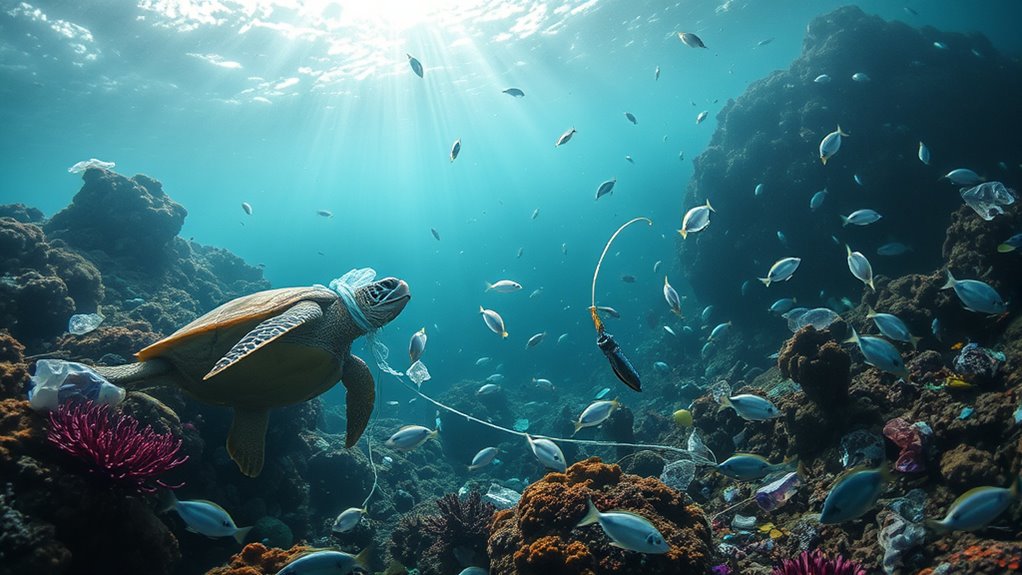
As you walk along the beach or stroll through a park, it’s hard to ignore the growing presence of plastic pollution. This issue isn’t just an eyesore; it’s a significant threat to marine animals. From the tiniest plankton to the largest whales, the impacts of plastic waste on marine life are alarming and deserve your attention.
One of the biggest dangers is microplastic ingestion. These tiny plastic particles, often less than five millimeters in size, break down from larger plastic items and can be found almost everywhere—floating on the surface of the ocean, buried along the shoreline, or even in the sediment. Marine animals, mistaking these microplastics for food, inadvertently consume them. When you think about it, it’s frightening to realize that fish and other sea creatures are swallowing plastic instead of their natural diets. This ingestion can lead to severe health issues, including internal injuries, reproductive problems, and even death.
Microplastics, mistaken for food, pose a grave threat to marine life, causing severe health issues and even death.
As you observe the ocean’s beauty, consider the plight of creatures like sea turtles. They’re particularly vulnerable to plastic pollution. Sea turtles often mistake plastic bags for jellyfish, a primary food source. When they eat these bags, it creates serious digestive blockages that can be fatal. You might not see it, but every piece of plastic that ends up in the ocean can become a death sentence for these majestic animals.
Additionally, entanglement hazards pose another significant threat. Larger plastic debris, like fishing nets and six-pack rings, can ensnare marine animals. Imagine a seal or dolphin getting caught in discarded fishing gear—it can’t swim freely, and its chances of survival plummet. You may not realize it, but these entanglements can lead to injury, starvation, or drowning. Every time you see plastic waste carelessly discarded, remember that it’s a potential trap for marine wildlife.
You can make a difference by reducing your plastic use and participating in clean-up efforts. Every small action counts, and your commitment to addressing plastic pollution can help protect marine ecosystems. By spreading awareness, you can inspire others to join the fight against plastic waste. When you see a beach littered with plastic, don’t just walk by—take a moment to reflect on the impact it has on marine animals and consider what you can do to change the tide. Together, we can create a cleaner, safer environment for all creatures of the sea. Heat pump systems offer a sustainable alternative that can significantly reduce environmental impact.

Wildlife Rescue and Rehabilitation Tote Bag
- Wildlife Rescue Saying: For animal lovers who rescue wildlife
- Rehabilitation Theme: Wildlife rescue and rehabilitation
- Bag Dimensions: 16” x 16” tote bag
As an affiliate, we earn on qualifying purchases.
As an affiliate, we earn on qualifying purchases.
Frequently Asked Questions
How Does Plastic Pollution Affect Human Health Indirectly?
Plastic pollution affects your health indirectly through plastic ingestion and chemical leaching. When you consume seafood, microplastics can enter your body, carrying harmful chemicals. These toxins can disrupt your hormonal system and lead to various health issues. Additionally, as plastics break down in the environment, they release chemicals that contaminate water sources, ultimately affecting the food chain. By reducing plastic waste, you help protect not only marine life but your own well-being too.
What Are the Long-Term Effects of Microplastics on Marine Ecosystems?
Microplastics can profoundly disrupt marine ecosystems over time. You’ll notice bioaccumulation effects, where toxins from microplastics build up in marine species, impacting their health and the food chain. As these particles infiltrate habitats, they lead to habitat degradation, harming coral reefs and seafloor environments. This degradation reduces biodiversity and alters species interactions, ultimately affecting the overall health of the marine ecosystem. The long-term consequences can be devastating and far-reaching.
Can Plastic Pollution Impact Commercial Fishing Industries?
Imagine a fisherman’s net, once brimming with fish, now tangled in plastic debris. You see, plastic pollution can seriously impact the fishing industry, driving down fish populations and consequently profits. The economic impact ripples through communities dependent on these catches, threatening livelihoods and traditions. As plastics invade our oceans, they not only harm marine life but also jeopardize your connection to the sea, transforming bountiful waters into a barren landscape of lost opportunity.
Are There Any Successful Initiatives to Combat Plastic Pollution in Oceans?
Yes, there are successful initiatives to combat plastic pollution in oceans. You can participate in local community cleanup events, which not only remove debris but also raise awareness. Many organizations promote the use of biodegradable alternatives to single-use plastics, encouraging businesses and consumers to make sustainable choices. By getting involved, you help reduce plastic waste and protect marine ecosystems while inspiring others to join the fight against ocean pollution.
How Do Different Types of Plastics Affect Marine Life Differently?
Did you know that around 8 million tons of plastic enter the oceans each year? Different types of plastics affect marine life in various ways. For instance, while degradable plastics break down more quickly, they can still release harmful chemical leachates during decomposition, impacting marine organisms. In contrast, traditional plastics persist for decades, leading to ingestion and entanglement, which can severely harm or even kill marine animals. Understanding these differences is essential for effective conservation efforts.
Conclusion
So, next time you toss that plastic bottle into the ocean, just picture a fish wearing it as a fashionable hat, strutting down the coral runway. Isn’t that adorable? But really, let’s not kid ourselves—marine animals aren’t ready for this bizarre fashion show. Instead of dressing up sea creatures in our discarded junk, let’s clean up our act and keep our oceans plastic-free. After all, nobody wants to see a turtle with a plastic bag as a trendy accessory!