
Human-wildlife conflict is a major challenge in elephant conservation, but there are effective solutions. You can help mitigate conflicts by promoting coexistence strategies like fencing and noise deterrents. Education and community engagement are key to addressing fears around elephants. Offering alternative livelihoods reduces reliance on land, fostering a sense of ownership for wildlife preservation. By working with local communities and implementing non-lethal measures, we can protect elephants while enhancing the well-being of those living near their habitats. Learn about more successful strategies and approaches.

Get pet supplies delivered free — and shop member deals
- Fast, free delivery on millions of items
- Access to Prime Big Deal Days deals on October 6–7
- Prime Video, Amazon Music and more included
Key Takeaways
- Promote coexistence by implementing non-lethal deterrents, such as fencing and noise devices, to reduce human-elephant conflicts.
- Educate communities about elephants’ behavior and the importance of conservation to alleviate fears and foster understanding.
- Share successful conflict resolution strategies from other regions to inspire local adaptation and improve community relations.
- Engage local communities in conservation projects, providing alternative livelihoods to decrease reliance on land near elephant habitats.
- Support policies prioritizing wildlife corridors to ensure safe movement for elephants and reduce encounters with human populations.
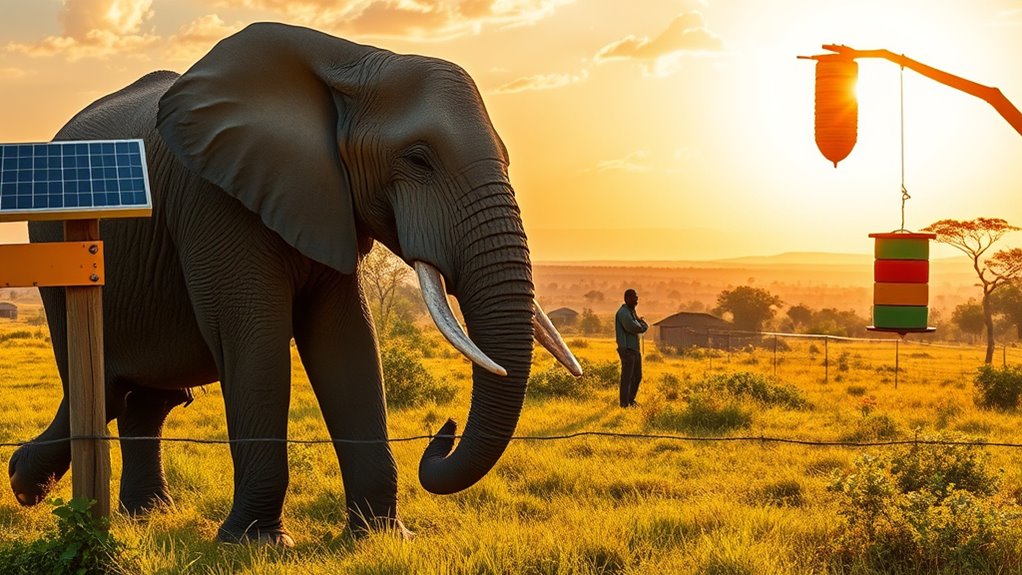
Why should we care about elephant conservation? Elephants, often called the “gentle giants,” play a pivotal role in maintaining the health of their ecosystems. These magnificent creatures help shape their habitats by dispersing seeds and creating water holes that benefit other wildlife. If elephants continue to decline, the balance of these ecosystems will suffer, impacting countless other species, including humans. That’s why it’s essential for us to focus on effective solutions for their conservation.
Elephants are vital for healthy ecosystems, and their decline threatens countless species, including humans.
One of the most pressing issues elephants face is habitat loss. As humans expand agricultural and urban areas, elephants find themselves squeezed into smaller spaces, leading to increased human-wildlife conflict. To tackle this challenge, habitat preservation is fundamental. By protecting existing elephant habitats and restoring degraded areas, we can provide these animals with the space they need to thrive. You can get involved by supporting organizations that work on habitat conservation projects or advocating for policies that prioritize wildlife corridors, ensuring elephants can roam freely without encroaching on human settlements.
Community engagement is another key aspect of elephant conservation. When local communities are involved in conservation efforts, the chances of success increase markedly. You might wonder how you can play a role in this. Start by educating yourself and others about the importance of elephants and their habitats. Support initiatives that empower local communities to participate in conservation, such as eco-tourism and sustainable agriculture. By providing alternative livelihoods that reduce reliance on land that elephants inhabit, you can help foster a sense of ownership and responsibility towards wildlife conservation.
Engaging communities also means addressing the fears and concerns of those living near elephant habitats. You can help promote understanding and coexistence by sharing solutions that minimize human-wildlife conflict. For instance, initiatives like using fencing, noise deterrents, or even training local farmers in non-lethal methods can go a long way in reducing conflicts. By championing these approaches, you not only help protect elephants but also enhance the quality of life for communities. Additionally, community engagement in conservation has been shown to significantly increase the effectiveness of wildlife preservation efforts.
elephant deterrent noise devices
As an affiliate, we earn on qualifying purchases.
As an affiliate, we earn on qualifying purchases.
Frequently Asked Questions
How Can Individuals Help With Elephant Conservation Efforts?
You can help with elephant conservation efforts by getting involved in your community. Support local organizations that focus on sustainable practices, like wildlife protection and habitat restoration. Participate in awareness campaigns and educational workshops to spread knowledge about elephants. Encourage sustainable tourism that benefits both local communities and wildlife. By making conscious choices in your daily life, you’ll contribute to a healthier environment for elephants and help guarantee their survival for future generations.
Are There Any Eco-Tourism Opportunities Supporting Elephant Conservation?
Yes, there are plenty of eco-tourism opportunities supporting elephant conservation! You can visit wildlife sanctuaries that focus on rehabilitation and education, allowing you to learn while contributing to their efforts. Consider staying at eco lodges that promote sustainable practices and directly support local conservation initiatives. By choosing these options, you help fund projects that protect elephants and their habitats while enjoying an unforgettable experience in nature.
What Are the Main Threats to Elephant Populations Today?
You might wonder what’s threatening elephants today—it’s a heartbreaking tale. Habitat destruction and poaching are the main culprits. As forests vanish and land is cleared for agriculture, elephants lose their homes. Poaching for ivory fuels this crisis, leading to drastic population declines. These majestic creatures need your help; supporting conservation efforts can turn the tide. Every action counts, so get involved and be a voice for the voiceless giants of the wild.
How Do Elephants Impact Their Ecosystems Positively?
Elephants play a vital role in their ecosystems by promoting habitat restoration and enhancing genetic diversity. When they forage, they uproot plants, creating openings for new vegetation, which encourages growth and regeneration. Their movement across landscapes helps disperse seeds, fostering biodiversity. Additionally, by trampling certain plants, they maintain the balance of the ecosystem. You’ll see how their activities support healthier habitats, benefiting numerous species and ensuring a vibrant environment for future generations.
What Role Do Local Communities Play in Conservation Initiatives?
Local communities play a vital role in conservation initiatives by actively participating in decision-making and land use planning. When you engage with your community, you help guarantee that conservation efforts align with local needs and values. This participation fosters stewardship, as people become invested in protecting their environment. By collaborating with conservationists, you can create sustainable practices that benefit both wildlife and your community, leading to a more harmonious coexistence.
Conclusion
In the battle for coexistence, you have the power to shape a future where elephants roam freely, unburdened by conflict. By embracing innovative solutions and fostering understanding, you can help bridge the gap between humans and wildlife. Remember, this isn’t just about conservation; it’s about creating harmony in a world that sometimes feels like it’s stuck in a medieval mindset. Together, let’s charge forward, ensuring that both elephants and humans thrive side by side.
Evergreen bestsellers Picks
bestsellers
As an affiliate, we earn on qualifying purchases.