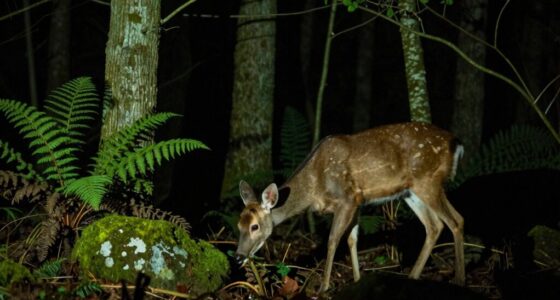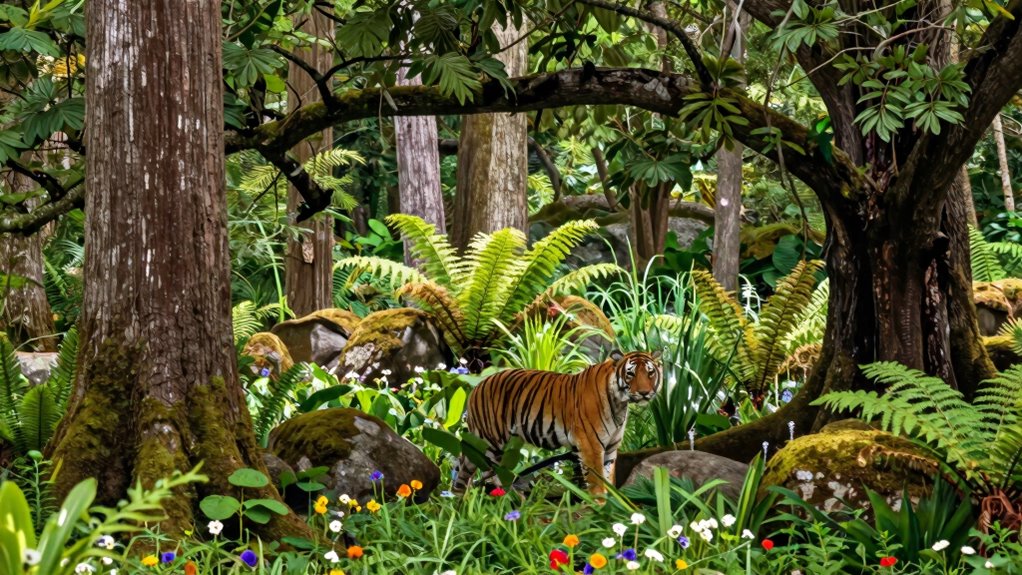

To be an umbrella species, you’ll find one that has a large habitat or specific needs that, when protected, benefit many other species sharing the same space. By focusing conservation efforts on this key species, you support not just it but also the entire ecosystem. It plays a vital ecological role and requires healthy habitat connectivity. Keep exploring to discover how choosing the right umbrella species can lead to broader conservation success and safeguard biodiversity effectively.

Get pet supplies delivered free with Prime
- Fast, free delivery on millions of items
- Prime Video, Amazon Music and more included
- Member-only deals all year
Key Takeaways
- Has a large habitat range or specific habitat needs that, when protected, benefit many other species.
- Plays a significant ecological role within its environment, supporting ecosystem health.
- Requires habitat quality and connectivity for survival and movement.
- Its conservation benefits extend indirectly to numerous cohabiting species.
- Serves as an effective flagship for broader habitat and biodiversity preservation efforts.

When conservation efforts focus on a single species, they often benefit a wide range of other organisms sharing its habitat. This concept lies at the heart of what makes a species an umbrella species. Essentially, an umbrella species is one whose protection indirectly safeguards many other species and the broader ecosystem. When you choose to prioritize the habitat protection of an umbrella species, you’re engaging in a strategic conservation approach that maximizes the impact of your efforts. By focusing on the needs of one well-chosen species, you create a ripple effect that helps preserve entire communities and ecological processes.
To determine if a species qualifies as an umbrella species, you need to consider its ecological requirements and the extent of its habitat. An effective umbrella species typically has a large habitat range or specific habitat needs, meaning conserving its environment benefits numerous other plants and animals that share those same spaces. For example, protecting the forest habitat of a large carnivore like a tiger or a jaguar often preserves vast tracts of forest, which in turn supports countless other species, from insects to smaller mammals and bird populations. This makes such species excellent candidates for a conservation strategy that leverages habitat protection to achieve broad ecological goals.
Choosing an umbrella species isn’t just about picking a charismatic or well-known animal; it involves understanding its ecological role and how its survival intersects with the health of the ecosystem. Conservation strategies should focus on maintaining the habitat quality and connectivity needed by the umbrella species. When you implement these strategies, you’re effectively creating a conservation blueprint that benefits many lesser-known or less conspicuous species, which might otherwise be overlooked. Additionally, habitat connectivity plays a crucial role in ensuring the survival of umbrella species and their associated communities, emphasizing the importance of landscape-level conservation. Incorporating landscape-level conservation ensures that protected areas are connected enough to support migration and genetic diversity among populations. Recognizing the importance of ecological processes further enhances the effectiveness of this approach, as it sustains the natural functions that support a diverse range of species. Moreover, understanding the ecological requirements of key species allows conservationists to develop more targeted and effective strategies. A comprehensive understanding of species interactions can also help identify critical dependencies that strengthen the umbrella effect.
This approach becomes a practical way to maximize limited resources, ensuring that efforts aren’t just piecemeal but are directed toward preserving the integrity of entire habitats.
In short, a good umbrella species acts as a flagship for habitat protection, guiding conservation priorities that protect whole ecosystems. It’s a strategic choice that simplifies complex conservation challenges because safeguarding one species can lead to the preservation of a multitude of others. If you’re involved in conservation planning, recognizing the qualities that make a species an umbrella species can help you design effective, impactful strategies. By doing so, you’re ensuring that your efforts create lasting change, supporting biodiversity and ecological resilience across whole landscapes.
wildlife habitat conservation books
As an affiliate, we earn on qualifying purchases.
As an affiliate, we earn on qualifying purchases.
Frequently Asked Questions
How Is an Umbrella Species Selected for Conservation Efforts?
You select an umbrella species for conservation by evaluating its ability to represent the genetic diversity and overall health of its ecosystem. You consider how protecting this species benefits other species and ecosystem services, ensuring broader biodiversity. An ideal umbrella species requires habitat needs that overlap with many others, so conservation efforts enhance ecosystem resilience, maintain genetic diversity, and preserve vital ecosystem services that support both wildlife and human communities.
Do Umbrella Species Always Have Large Habitats?
No, umbrella species don’t always require large habitats. While many have extensive ecosystem ranges, some effectively protect smaller or specialized habitats. The key is that their conservation benefits the entire ecosystem, regardless of habitat size. You’ll find that their habitat size varies, but they’re chosen mainly for their ability to represent and safeguard the broader ecosystem, ensuring that conservation efforts cover all necessary habitat types within their range.
Are Umbrella Species Only Found in Certain Ecosystems?
You’ll find umbrella species across a variety of ecosystems, each a vibrant tapestry of life. Their presence highlights the beauty of ecosystem diversity and intricate species interactions. These species aren’t confined to specific habitats; instead, they serve as guardians, helping preserve entire ecosystems. By protecting them, you’re supporting countless other organisms, ensuring the continued harmony and resilience of diverse environments—like a gentle ripple spreading through a tranquil pond.
Can Protecting an Umbrella Species Benefit All Other Species?
Yes, protecting an umbrella species can benefit all other species. When you focus on habitat preservation for an umbrella species, you help maintain the broader ecosystem impact, supporting diverse plants and animals. By safeguarding their habitat, you create a healthier, more resilient environment that benefits numerous species, often including those not directly targeted. This approach maximizes conservation efforts, ensuring a balanced ecosystem that sustains biodiversity overall.
What Challenges Are Faced in Conserving Umbrella Species?
You face the challenge of safeguarding umbrella species like guardians of a treasure map, where threats to one threaten the whole. Protecting genetic diversity and ecosystem resilience becomes complex, as habitat loss and human activity fragment habitats, making conservation efforts harder. Balancing the needs of these species with broader environmental goals requires coordination, resources, and time. Without careful planning, these essential species risk losing their role as ecological sentinels.
Conclusion
By understanding what makes a species an umbrella, you realize how protecting one can unexpectedly safeguard many others. It’s a coincidence of nature’s interconnectedness—you might set out to save a single species and end up preserving an entire ecosystem. So, next time you hear about an umbrella species, remember, your efforts could be the unexpected key to conserving countless lives beneath that umbrella, all through a simple act of awareness and action.
Halloween Picks
halloween
As an affiliate, we earn on qualifying purchases.