To prevent coop disasters with chicken heat lamps, prioritize safety by choosing lamps with built-in thermostats, certification, and safety features. Mount them securely away from flammable materials and ensure proper placement above your chickens’ reach. Regularly inspect wiring, bulbs, and mounting hardware for damage, and keep the area clean and well-ventilated. Using fire extinguishers and smoke detectors adds extra layers of protection. Continue exploring these essential safety measures to keep your flock safe and your coop secure.
Key Takeaways
- Always select heat lamps with safety features like thermostats and certifications to prevent fire hazards.
- Mount heat lamps securely, away from flammable materials and out of chicken reach to avoid accidents.
- Regularly inspect wiring, bulbs, and mounting hardware for damage or wear to ensure safe operation.
- Maintain proper ventilation and monitor temperatures to prevent overheating and coop fires.
- Keep fire extinguishers and smoke detectors nearby, and have emergency procedures in place for fire incidents.

WILLHI WH2408 Temperature Controller 10A 1200W, Digital Thermostat Controlled Outlet Plug Switch for Reptile Terrarium Greenhouse Homebrew Aquarium Seedling Mat, Heating or Cooling Mode (Pack of 1)
- Easy Setup with Intuitive Controls: Two knobs for precise temperature adjustments
- Wide Temperature Range: -58°F to 230°F (-50°C to 110°C)
- Memory During Power Outages: Remembers settings to minimize disruptions
As an affiliate, we earn on qualifying purchases.
As an affiliate, we earn on qualifying purchases.
Why Safety Is Critical When Using Chicken Heat Lamps

Using chicken heat lamps can help keep your flock warm and healthy, but safety should always be your top priority. Poorly installed or unmanaged heat lamps can pose fire hazards, risking your entire coop and your chickens’ health. Proper safety measures guarantee your chickens stay protected from burns and overheating, which can compromise their health. Additionally, good coop ventilation is essential to prevent excess heat buildup and humidity, reducing the risk of respiratory issues and mold. Always check that cords are secure and away from water or sharp objects. Regular inspections help identify potential hazards before they cause problems. Incorporating smart safety features such as automatic shut-off timers and temperature sensors can further prevent overheating and fire risks. Using proper installation techniques ensures the heat lamps are securely mounted and functioning correctly. Prioritizing safety not only safeguards your flock but also maintains a healthy environment where your chickens can thrive without unnecessary risks. Additionally, understanding electrical safety guidelines can prevent many common hazards associated with heat lamp use. Implementing proper maintenance routines further reduces the likelihood of malfunctions that could lead to accidents.
How to Choose the Right Heat Lamp for Your Coop
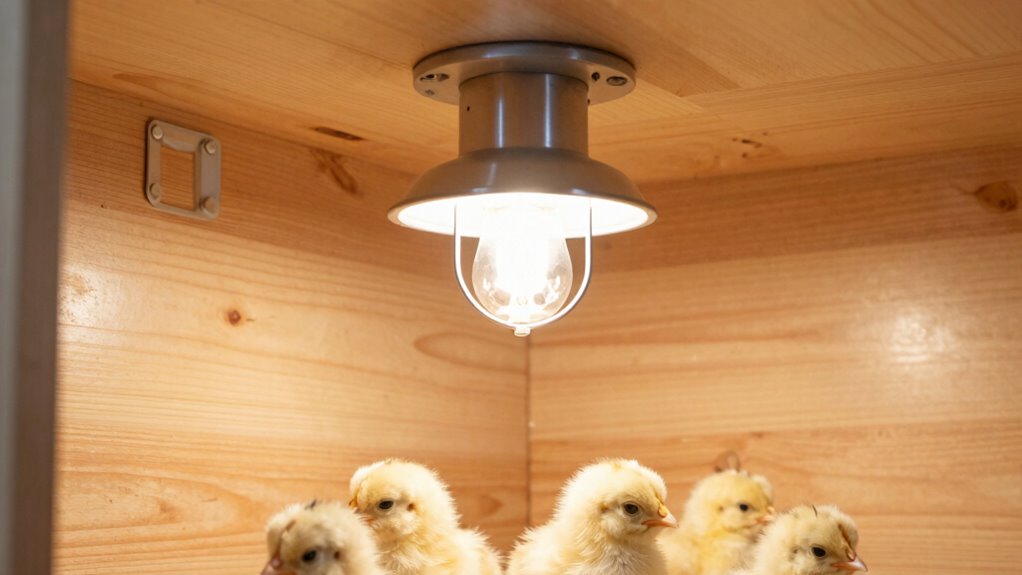
When choosing a heat lamp for your coop, consider the appropriate wattage and size to match your space and heating needs. Safety features like built-in thermostats and secure mounting are essential to guarantee accidents. Making the right selection ensures your chickens stay warm without compromising safety. Additionally, understanding local regulations can help ensure your setup complies with safety standards and environmental considerations. Selecting a heat lamp with reliable safety features can further reduce the risk of fires or malfunctions. It’s also beneficial to choose a lamp made from high-quality materials to ensure durability and safety during use.
Wattage and Size
Choosing the right heat lamp for your coop depends largely on selecting the appropriate wattage and size. The bulb wattage determines how much heat the lamp produces, so opt for a wattage suitable for your coop’s size and climate. A too-high wattage can overheat the space, while too low might not keep your chickens warm enough. The lamp size should match the area you need to cover, ensuring even heat distribution without creating hot spots. Additionally, considering natural ventilation can help prevent overheating and maintain a safe environment in your coop. Proper airflow management can further reduce the risk of heat-related issues and promote a healthier coop environment. Incorporating temperature regulation features can also help maintain consistent heat levels and improve overall safety. Keeping in mind the importance of climate control is essential for safeguarding your flock’s health.
Safety Features
Safety features are vital to prevent accidents and protect your flock while using heat lamps. Look for models with built-in safety features like automatic shut-off switches, thermostats, and protective cages. These features help maintain proper temperature and reduce fire risks, guaranteeing your coop stays safe. Additionally, choose heat lamps with sturdy, heat-resistant housing to prevent damage and overheating. Having an emergency preparedness plan is imperative; ensure you have accessible fire extinguishers and clear escape routes. Opt for lamps with reliable safety certifications, which indicate compliance with safety standards. Properly installing and regularly inspecting your heat lamp enhances safety and minimizes hazards. Incorporating waterproof and weather-resistant designs can also prevent malfunctions during adverse weather conditions, further enhancing safety. Selecting models with energy-efficient features can reduce operational costs and prevent overheating issues. Ensuring your heat lamp has proper ventilation can improve airflow and prevent overheating inside the coop. Proper installation practices and routine inspections are crucial for ongoing safety. Maintaining clear fire safety protocols is essential to quickly address any emergencies that may arise.
Best Practices for Proper Placement and Mounting of Heat Lamps
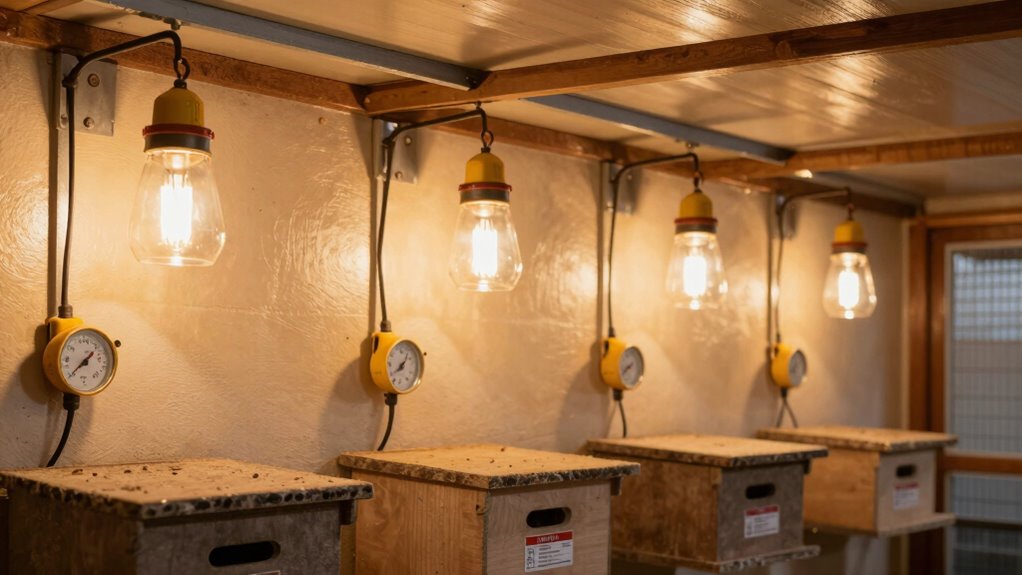
Proper placement and mounting of heat lamps are essential to guarantee effective warmth while maintaining safety. Correct heat lamp placement ensures chickens stay warm without the risk of fire hazards. Use mounting techniques that keep the lamp secure and stable, preventing falls or accidental contact. Position the heat lamp above the chickens but out of reach of pecking or scratching. Keep the lamp at a safe distance from flammable materials like bedding or wooden walls. Verify it’s mounted at an angle that directs heat downward evenly across the coop. Regularly check the mounting for stability and wear. Properly installed heat lamps help prevent accidents and maintain a safe environment for your flock. Ensuring your heat lamps are set up with proper safety measures can significantly reduce hazards, especially when considering at-home safety guidelines for electrical devices. Additionally, using secure mounting techniques can further enhance safety and stability, reducing the risk of fire hazards caused by improper installation or wear. Incorporating regular inspections into your maintenance routine can help identify potential issues before they lead to safety concerns.
Setting Safe Temperature Levels for Chicken Heat Lamps
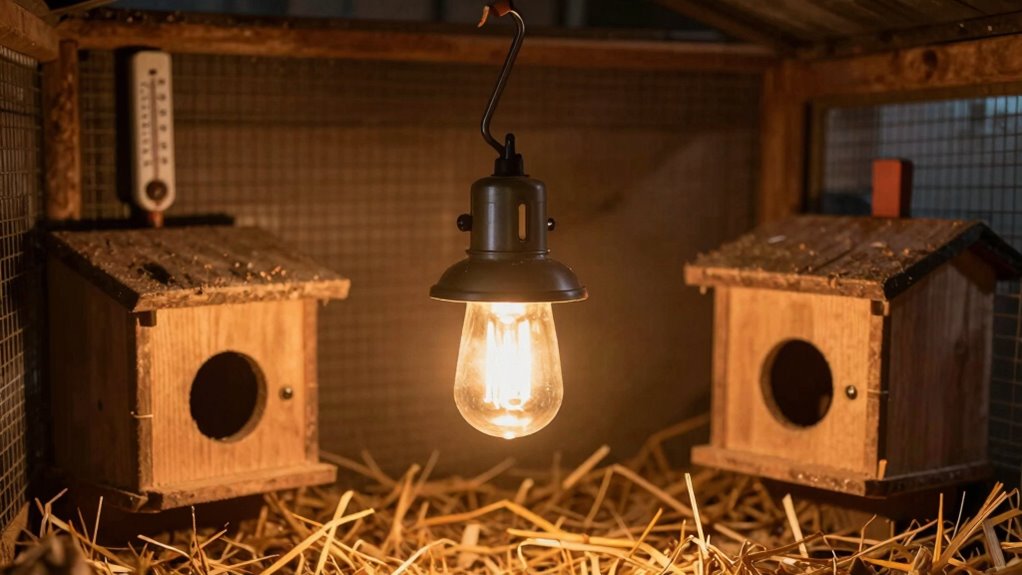
You need to keep your heat lamps at the right temperature to keep your chickens comfortable and safe. Monitoring heat levels regularly helps you stay within the ideal range, even as weather conditions change. Adjusting the heat accordingly guarantees your flock stays warm without overheating. Being aware of digital safety measures ensures that your heating setup remains secure and reduces the risk of accidents. Incorporating automatic thermostats can further enhance temperature regulation and safety. Regularly checking for device malfunctions helps prevent potential hazards before they occur. Additionally, understanding safety guidelines for heat lamp installation and operation can further mitigate risks.
Ideal Temperature Ranges
Maintaining the correct temperature range is essential to keep chickens warm without risking overcooking or spoilage. Proper temperature regulation ensures comfort and safety, reducing the chance of coop disasters. For young chicks, aim for a temperature of about 90-95°F during the first week, gradually decreasing as they grow. Adult chickens thrive in temperatures between 70-75°F. Always monitor the heat lamp to prevent overheating, which compromises heat lamp safety.
Key points to consider:
- Keep the brooding area at 90-95°F for chicks, lowering gradually.
- Maintain 70-75°F for adult chickens.
- Adjust heat lamps to avoid temperature fluctuations that could cause stress or health issues.
Monitoring Heat Levels
To keep chickens comfortable and healthy, regularly monitoring the heat levels from your heat lamp is essential. Use a reliable heat sensor placed at chick level to get accurate readings of the coop’s temperature. This helps you maintain ideal conditions and prevents overheating or chilling. Incorporate a good temperature control system that automatically adjusts the heat lamp based on sensor data. Check the temperature frequently, especially during weather changes or if you notice signs of distress in your flock. Consistent monitoring ensures your heat lamp provides a steady, safe warmth, reducing risk of coop disasters. Remember, staying vigilant with your heat sensor and temperature control helps create a safe environment where your chickens can thrive.
Adjusting for Weather
Weather fluctuations can considerably impact the ideal temperature settings for your chicken heat lamp. To guarantee your flock stays comfortable and safe, you need to make weather adjustments based on outdoor conditions. Colder weather requires increasing the heat, but avoid overheating by monitoring coop insulation. Well-insulated coops retain heat better, reducing the need for frequent adjustments. As temperatures rise, you can gradually lower the heat lamp to prevent overheating. Remember, consistent monitoring is key during weather changes. Adjustments should be made carefully to maintain a stable environment for your chickens. Proper weather adjustments help prevent stress and health issues, ensuring your flock remains healthy and safe year-round. Keep a close eye on outdoor temperatures and your coop’s insulation quality for ideal heat lamp use.
Regular Inspection and Maintenance to Prevent Fires
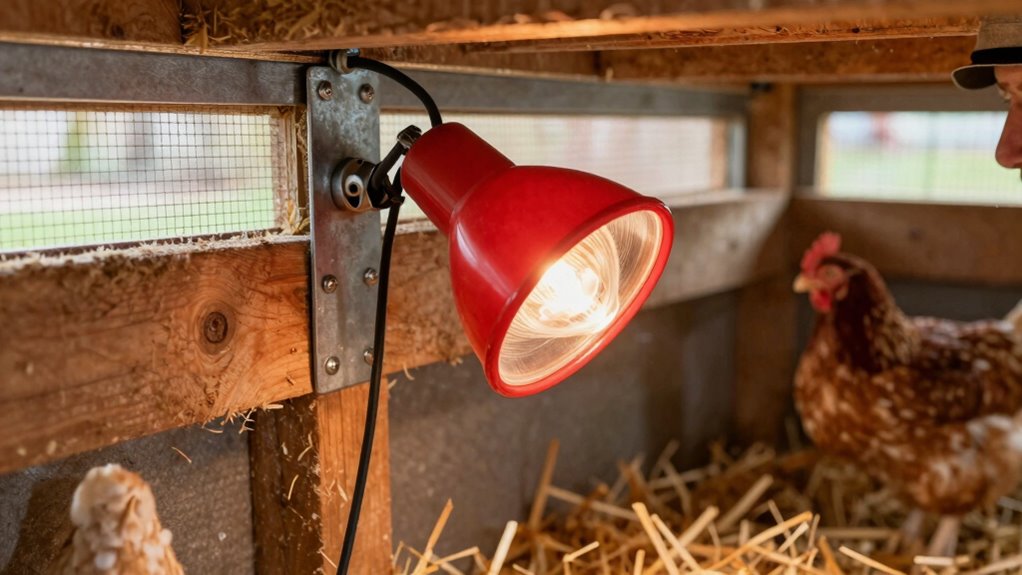
Regularly inspecting your chicken heat lamps is essential to prevent fires. Check for frayed cords, damaged bulbs, and loose connections that could cause sparks. Clean dust and debris from the lamp housing to reduce fire risk. Ensure the lamp is securely mounted and away from flammable materials. Incorporate solar lighting options where possible to minimize electrical hazards and improve predator protection. Conduct routine maintenance to identify potential issues early and keep your coop safe. Use the following table to guide your inspections:
| Inspection Item | Action Required |
|---|---|
| Wiring and Cords | Look for wear, replace if damaged |
| Bulbs and Fixtures | Ensure secure, functioning properly |
| Mounting Security | Confirm stable, no looseness |
| Flammable Material Distance | Keep away from bedding and hay |
| Predator Protection Measures | Check barriers and enclosures |
Fire Prevention Tips and Essential Safety Equipment for Your Coop
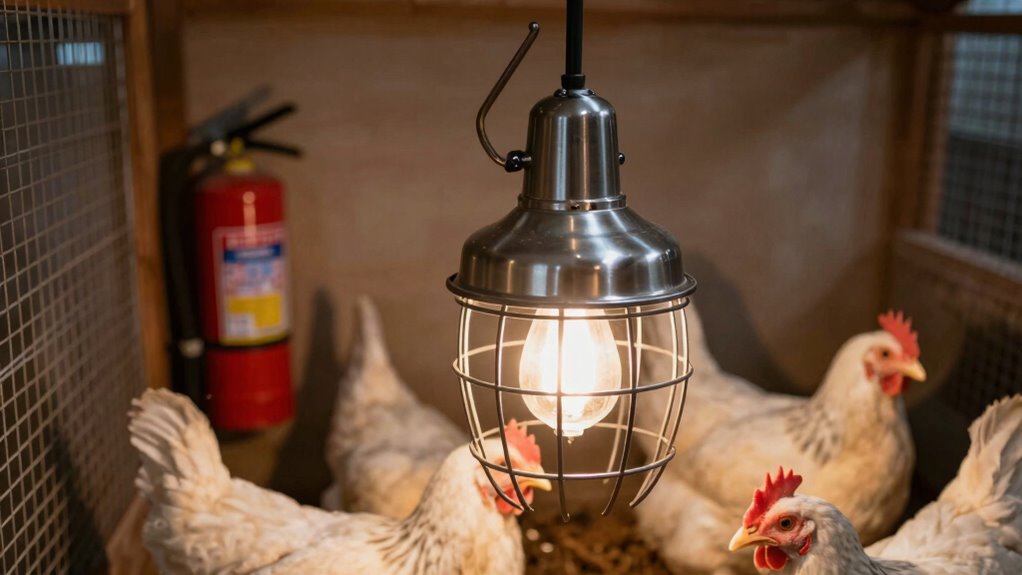
Ensuring fire safety in your chicken coop requires implementing effective prevention strategies and equipping it with essential safety devices. Proper coop ventilation is vital to reduce heat buildup and avoid fire hazards. Maintaining good ventilation also supports chicken nutrition by preventing moisture and mold, which can increase fire risk. You should install smoke detectors and fire extinguishers nearby, and keep heat lamps secure and away from flammable materials. Regularly check wiring and electrical connections for damage, and avoid overloading outlets. Keep the coop clean, removing dust and hay that could ignite easily. Additionally, guarantee adequate spacing around heat sources to prevent accidental contact. These measures considerably lower the chance of fires and keep your chickens safe.
- Install smoke detectors and fire extinguishers
- Guarantee proper coop ventilation
- Keep heat lamps securely installed
Common Installation and Operation Mistakes That Could Cause Fires
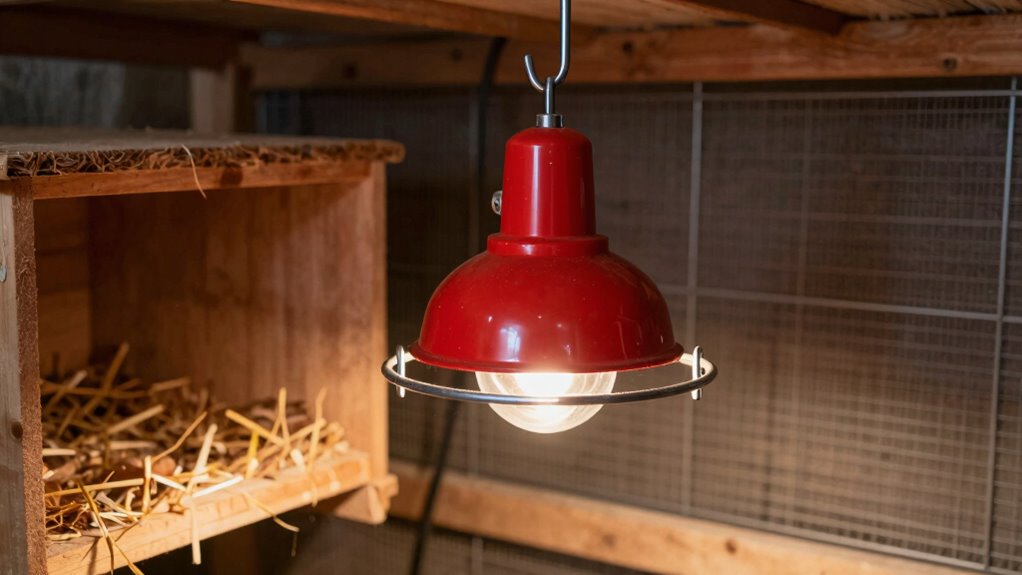
Many fire hazards in chicken coops stem from installation and operation mistakes that owners often overlook. One common mistake is using damaged or improperly installed electrical wiring, which can lead to short circuits. Also, heat lamp cords that dangle loosely or rest on flammable materials increase fire risk. To visualize this, consider the following:
| Faulty Setup | Potential Danger | Safe Practice |
|---|---|---|
| Loose heat lamp cords | Sparks or overheating | Secure cords out of reach |
| Damaged electrical wiring | Short circuits | Regularly inspect wiring |
| Flammable materials near lamp | Ignition risk | Keep materials away |
Always verify wiring is intact, cords are properly secured, and no combustible items are nearby to prevent avoidable fires.
What to Do If There’s a Heat Lamp Emergency or Fire
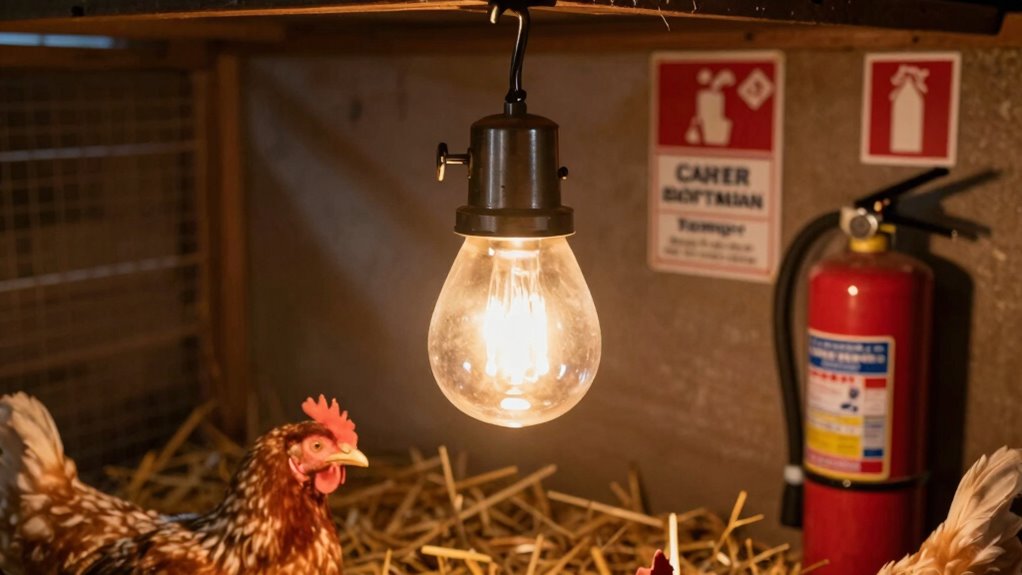
What should you do immediately if you notice a heat lamp fire or emergency? Your first step is to stay calm and act quickly. Prioritize safety by following your emergency preparedness plan. Turn off the heat lamp if it’s safe to do so, and unplug it to cut power. Use a fire extinguisher rated for electrical fires if needed, avoiding water on electrical or oil fires. Call 911 or your local fire department right away. Ensure all chickens are moved to a safe area if possible. Remember, adhering to fire safety protocols minimizes damage and keeps everyone safe.
Stay calm, turn off and unplug the heat lamp, and call emergency services immediately.
- Turn off and unplug the heat lamp
- Use a fire extinguisher if safe
- Call emergency services immediately
Frequently Asked Questions
Are There Specific Safety Certifications to Look for in Heat Lamps?
When choosing heat lamps, look for UL certification and CSA approval to guarantee safety. These certifications mean the lamp has been tested for fire hazards and electrical safety standards. You should always verify these labels before purchasing, as they help prevent coop disasters. By selecting heat lamps with proper safety certifications, you reduce the risk of overheating, electrical malfunctions, or fires, keeping your chickens and coop safe.
How Long Is a Typical Heat Lamp’s Safe Operating Lifespan?
They say “an ounce of prevention is worth a pound of cure,” and that applies to your heat lamp’s lifespan. Typically, a heat lamp’s durability spans about 1 to 3 years with proper safety maintenance. Regularly check for signs of wear, frayed cords, or weakened bulbs to guarantee safety. Replacing your heat lamp when it shows signs of aging helps prevent accidents and keeps your coop warm and safe.
Can Solar-Powered Heat Lamps Be a Safer Alternative?
Yes, solar-powered heat lamps can be a safer alternative because they improve solar efficiency and reduce electrical hazards. By harnessing sunlight, you lower the risk of electrical fires and overheating. Plus, they have a smaller environmental impact, helping you make eco-friendly choices for your coop. Installing solar-powered heat lamps guarantees your chickens stay warm safely, while you enjoy peace of mind knowing you’re reducing energy consumption and enhancing safety.
What Are the Signs of a Heat Lamp Malfunction or Failure?
A stitch in time saves nine, so watch for signs of heat lamp failure. Malfunction indicators include flickering bulbs, unexplained outages, or unusual buzzing sounds. Failure symptoms might be inconsistent heat output, overheating, or a burnt smell. If you notice these signs, turn off the lamp immediately and inspect it. Regularly check connections and bulbs to guarantee safe operation and prevent potential fires or harm to your chickens.
How Does Humidity Affect the Safety of Using Heat Lamps?
Humidity impact considerably affects the safety of using heat lamps, as increased moisture raises moisture risks inside your coop. High humidity can cause electrical components to short circuit or corrode, increasing fire hazards. To keep your chickens safe, monitor humidity levels regularly and ensure proper ventilation. Reducing excess moisture prevents potential malfunctions and minimizes the risk of accidents, helping you maintain a safe environment for your flock.
Conclusion
By following these safety rules, you can considerably reduce the risk of coop fires caused by heat lamps. Remember, according to the National Fire Protection Association, residential fires involving heating equipment account for nearly 15% of all home fires annually. Stay vigilant with proper installation, regular checks, and safety measures, ensuring your chickens stay warm without risking your home or their lives. Safety isn’t just a precaution—it’s your best defense against preventable disasters.