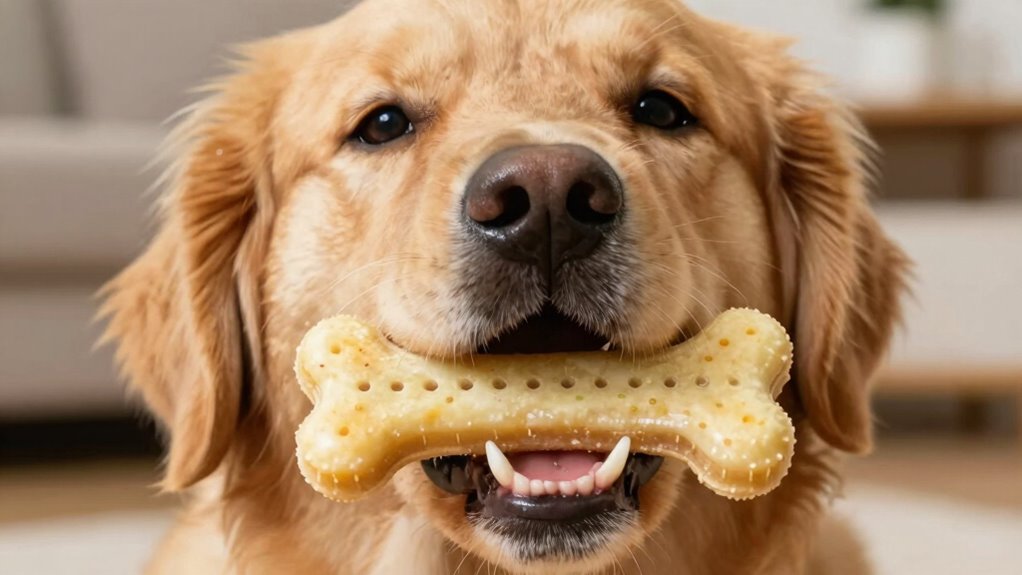

Dog dental care treats labeled “dental” are designed to support your dog’s oral health by helping reduce plaque, freshen breath, and support gum health through chewing. However, they don’t eliminate tartar or replace regular brushing and vet visits. These treats should be part of an overall dental routine. To learn how to select safe and effective options and properly care for your dog’s teeth, keep exploring for helpful tips.
Key Takeaways
- “Dental” treats support oral health by reducing plaque, freshening breath, and promoting gum health through chewing action.
- They help mechanically clean teeth but cannot eliminate tartar or replace professional dental cleanings.
- Use treats as a supplement to regular brushing and vet visits, not a substitute for comprehensive dental care.
- Choose treats with quality ingredients like enzymes or fibers, avoiding artificial preservatives and fillers.
- Routine dental check-ups are essential for detecting issues early and maintaining long-term oral health.

Qiaoxuan Dog Proof Cat Feeding Station, Cat Feeding Station Furniture with Storage and Cats Scratching Board, 2 Raised Pet Food and Water Bowl for Indoor Cats, Large Pet Cabinet
Dog Proof Cat Feeding Station: Got both cats and dogs at home, and your dog keeps sneaking cat...
As an affiliate, we earn on qualifying purchases.
What Does ‘Dental’ Really Mean in Dog Treats?
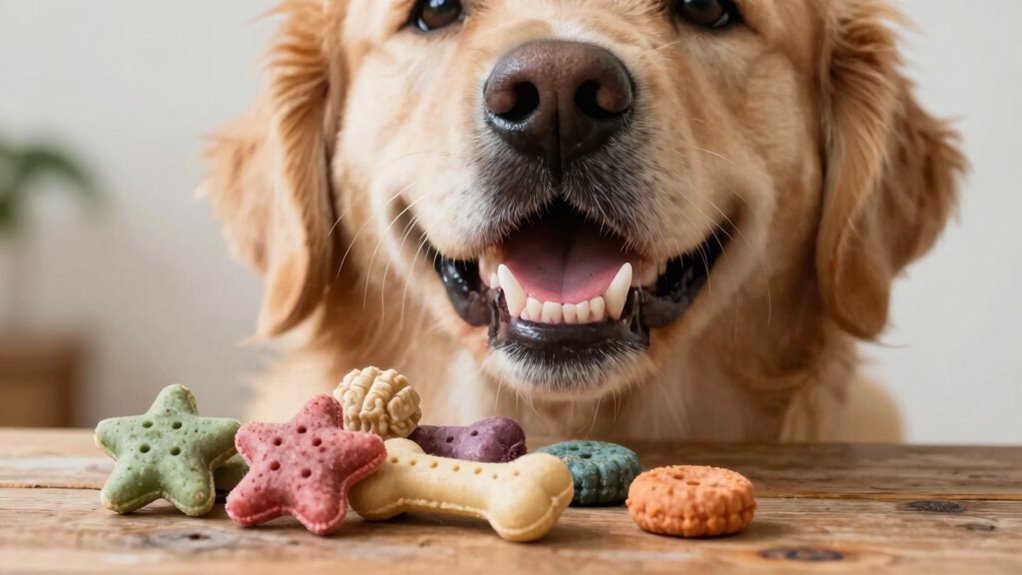
What does “dental” really mean when it comes to dog treats? Essentially, it refers to treats designed to support your dog’s oral health. For puppy dental treats, ingredients matter because they’re formulated to be gentle yet effective. Look for treats with natural ingredients like enzymes or fibers that help reduce plaque and freshen breath. The key is understanding that not all treats labeled “dental” provide the same benefits. Some may contain ingredients that promote dental health, while others are simply marketed as such without proven effects. When choosing a dental treat, check the ingredient list for items like cellulose, enzymes, or other dental-specific components. These ingredients work together to support your puppy’s oral hygiene in a safe and effective manner. Additionally, understanding natural ingredients used in dental treats can help you make more informed choices for your pet’s health. Proper dental care is also essential and can be complemented by treats that are specifically formulated for oral hygiene. Recognizing the importance of effective ingredients can help ensure you’re selecting treats that truly benefit your dog’s dental well-being. Being aware of product labeling can help you distinguish genuinely beneficial treats from those with misleading claims.

Dog Proof Cat Feeding Station, Cat Feeding Station with Scratching Board, Raised Bowls for Indoor Cats, Elevated Food Bowls with Stand, Vintage Black Furniture
Sturdy & Stable: The Pet Food Container Assembled With High-Quality Panel And Hardware Accessories, It'S stable And Not...
As an affiliate, we earn on qualifying purchases.
How Do Dental Treats Help Prevent Dental Problems?
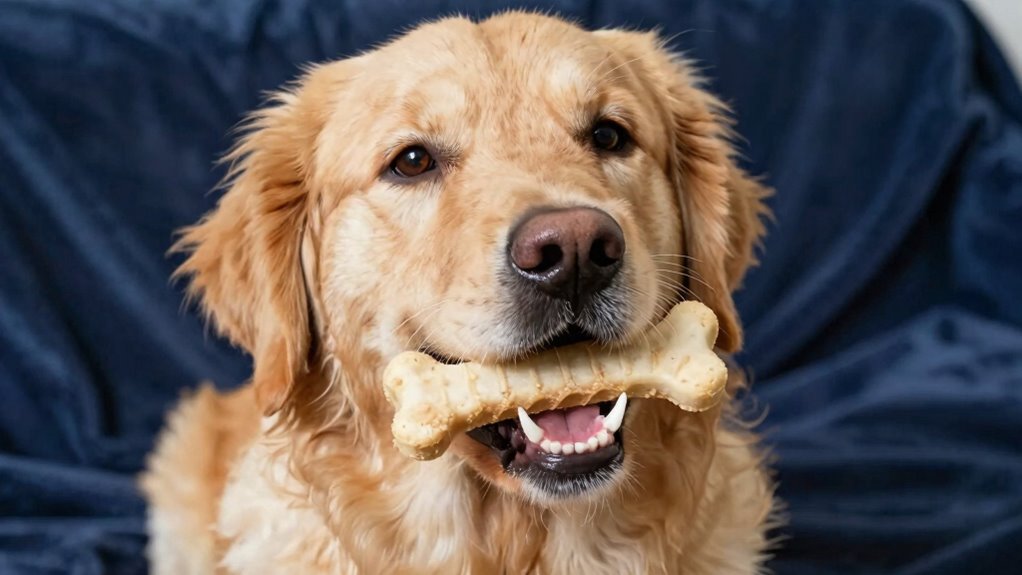
Dental treats help prevent dental problems by actively reducing plaque and tartar buildup on your dog’s teeth. This can improve overall dental health and freshness. However, be aware of dental health myths that suggest treats alone keep teeth spotless—they don’t. To maximize benefits, consider these factors:
Dental treats reduce plaque and tartar, supporting your dog’s dental health when used alongside regular care.
- Choose treats with proven ingredient safety and quality.
- Look for ones designed to mechanically clean teeth.
- Avoid treats with excessive sugars or artificial additives.
- Use treats as part of a thorough dental care routine, including brushing.
- Understanding treat ingredient safety helps ensure you’re providing safe options that support your dog’s dental health without unintended risks. Additionally, incorporating dental health knowledge can help you make more informed choices about your pet’s oral care. Regular dental checkups with your veterinarian are also essential for maintaining optimal oral health. Consistent use of appropriate treats alongside proper care can significantly contribute to your dog’s dental health maintenance.
Research indicates that behavioral factors can also influence your dog’s dental health, so consistent care is key.
While dental treats contribute to oral health, they should complement regular vet checkups.

GDLF Cat Feeding Station, Cat Cabinet for Microchip Feeder with Dog-Proof Design, Specially Fits Surefeed & Automatic Pet Feeder for Multi-Pets Home
Designed for Microchip Feeders: This furniture-style cat feeder station is specially built to fit SureFeed and PETLIBRO microchip...
As an affiliate, we earn on qualifying purchases.
What Can and Can’t Dental Treats Do for Your Dog’s Oral Health
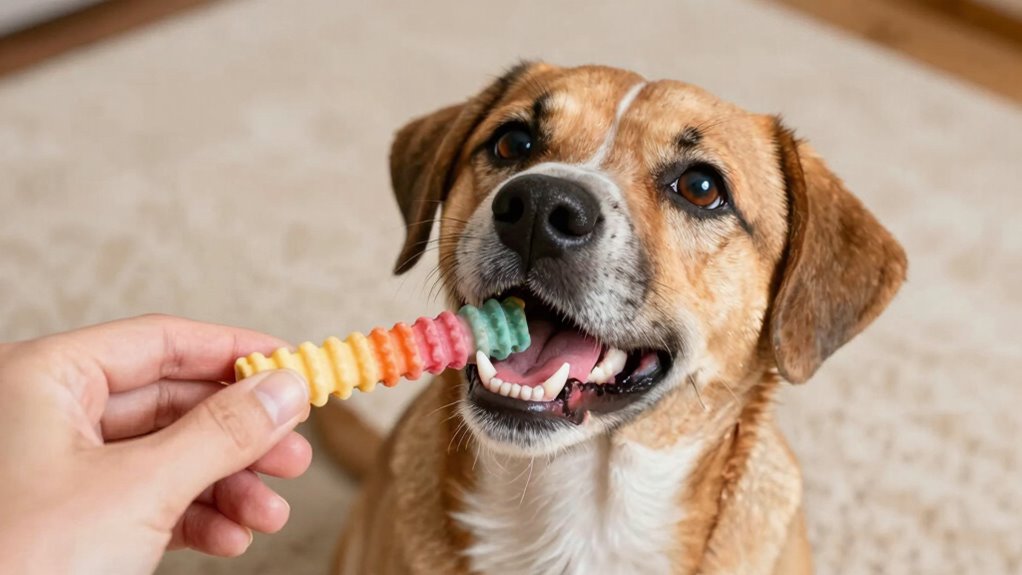
Dental treats can help reduce plaque and freshen your dog’s breath, but they aren’t a substitute for regular brushing. While they offer some preventive benefits, they can’t thoroughly clean teeth or prevent all dental issues. Understanding their limits makes certain you give your dog the best overall oral care. Additionally, choosing appropriate camping gear can ensure a safe and enjoyable outdoor experience. It’s also important to recognize that dog dental care products vary in effectiveness depending on their ingredients and design. The effectiveness of dental treats also depends on their material composition, which influences how well they can remove plaque or reach difficult areas. Proper water circulation in your dog’s environment can also contribute to overall oral health by reducing bacteria buildup. Knowing which dental ingredients are safe and effective helps in selecting the right treats for your pet.
Cleaning vs. Plaque Control
While dental treats can play a helpful role in maintaining your dog’s oral health, they aren’t a substitute for regular brushing or professional cleanings. Treats mainly support plaque control, but cleaning requires more active removal of tartar buildup. Here’s what they can and can’t do:
- Encourage saliva production, which helps naturally break down plaque.
- Reduce the accumulation of soft plaque before it hardens.
- Limit tartar formation when used consistently alongside brushing.
- Cannot replace thorough cleaning methods needed to remove hardened tartar or deep periodontal issues.
- Proper thermal management of treats and chews is important to prevent burns or discomfort during use.
- Additionally, understanding the role of plaque in oral health can help you better assess the effectiveness of dental treats. Effective dental care involves multiple strategies, including mechanical removal and professional intervention, for comprehensive oral health management. Regular monitoring of oral health can help catch issues early before they require extensive treatment. Incorporating veterinary guidance can ensure that your approach aligns with your dog’s specific needs.
Ultimately, dental treats aid in maintaining oral health, but they don’t replace the need for mechanical cleaning or veterinary interventions for all-encompassing plaque removal.
Freshening Breath Effectiveness
Although dental treats can help freshen your dog’s breath temporarily, they aren’t a cure-all for bad odors. Breath freshening is a common benefit, but it’s mainly a short-term fix rather than a solution for persistent bad smell. These treats can provide some odor control by reducing surface bacteria that cause odors, but they don’t address underlying dental issues like plaque or gum disease. Relying solely on treats for fresh breath might give a fleeting feeling of freshness, but it won’t improve your dog’s overall oral health long-term. To truly manage bad odors, it’s best to combine treats with regular brushing and veterinary checkups. Dental treats can be part of your odor control strategy but shouldn’t be your only approach to freshening your dog’s breath. Additionally, understanding navigation and mapping can help you select the most effective dental products and routines for your dog’s unique needs. Incorporating proper oral hygiene practices will further enhance your efforts in maintaining your dog’s oral health beyond just treats. Regular oral care routines are essential for long-term dental health and fresh breath. In addition, utilizing professional dental cleanings when recommended by your veterinarian can significantly improve your dog’s oral health outcomes. Developing a comprehensive dental health plan tailored to your dog can ensure better results over time.
Preventive Benefits Limitations
Dental treats can play a helpful role in supporting your dog’s oral health by reducing plaque buildup and freshening breath temporarily. However, they have limitations. Many dental health myths suggest treats alone can prevent serious issues, but they’re not a substitute for brushing or professional cleanings. When choosing treats, consider treat ingredient safety, as some products contain additives or ingredients that may not be safe for all dogs. To understand their scope, keep these points in mind:
- They can help reduce plaque but won’t eliminate tartar buildup completely.
- They may improve breath temporarily but don’t address underlying causes.
- They’re not a replacement for regular vet checkups and professional cleanings.
- They should complement, not replace, a thorough dental care routine.

CYzpf Wood Dog Proof Cat Feeding Station with Storage Box and Removable Bowl, Outdoor Cat Feeding Table with Scratching Board, Vintage Pet Furniture for Indoor
[SPACIOUS & MULTI-FUNCTIONAL CAT FEEDING STATION] – Designed as a pet storage cabinet with cat feeding station, Dog...
As an affiliate, we earn on qualifying purchases.
The Role of Brushing and Vet Checks in Dental Care

Regular brushing and routine vet checks are essential components of maintaining your dog’s dental health. Brushing helps prevent gingivitis and reduces tartar buildup, which are key for fresh breath and healthy gums. Using a dog-specific toothbrush and toothpaste, you can easily remove plaque before it hardens. Regular vet visits allow professionals to monitor your dog’s oral health, catch early signs of dental issues, and perform professional cleanings if needed. Vet checks also ensure that problems like gingivitis don’t progress into more serious infections. Incorporating these practices into your routine keeps your dog comfortable and prevents painful dental conditions. Consistent care not only promotes better oral hygiene but also contributes to your dog’s overall well-being and quality of life.
Different Types of Dog Dental Treats and How They Work

Different types of dog dental treats use various methods to clean teeth and freshen breath. Some rely on the chewing action to remove plaque, while others have enzymatic formulas that break down buildup. The texture and durability of treats also play a key role in how effectively they clean your dog’s teeth.
Chewing Action Benefits
Chewing action plays a essential role in maintaining your dog’s oral health, especially when it comes to dental treats. It helps reduce plaque, massage gums, and strengthen jaw muscles. Proper chewing encourages thorough cleaning, counteracting dental health myths that suggest treats alone suffice. When choosing treats, consider these factors:
- Texture and hardness – designed to promote effective chewing without damaging teeth.
- Ingredient safety – made from safe, non-toxic ingredients to avoid health risks.
- Digestibility – easy for your dog to chew and digest, preventing choking.
- Size and shape – appropriately sized to encourage proper chewing and prevent choking hazards.
Enzymatic Cleaning Power
Enzymatic dental treats harness natural enzymes to break down plaque and tartar effectively. These treats contain oral enzymes that boost enzyme activity in your dog’s mouth, helping to target harmful bacteria and reduce buildup. When your dog chews, the enzymes work to break down proteins in plaque, preventing it from hardening into tartar. This enzymatic cleaning power supports oral health by actively fighting bacteria that cause bad breath and gum disease. Unlike treats that rely solely on mechanical action, enzymatic treats promote chemical breakdown of deposits, making them especially useful for maintaining oral hygiene between brushings. Regular use can improve your dog’s dental health by reducing plaque formation and promoting fresher breath, all through the natural power of enzymes working tirelessly in their mouth.
Texture and Durability
Choosing the right type of dental treat depends largely on its texture and durability, which directly influence how effectively it cleans your dog’s teeth. Texture importance varies, as firmer treats can scrub plaque better, while softer ones are easier for smaller or older dogs. Durability testing ensures treats withstand chewing without disintegrating too quickly or breaking apart prematurely. Consider these factors:
- Hardness Level: Too hard can risk tooth fractures; too soft reduces cleaning effectiveness.
- Chew Resistance: Durable treats last longer, providing more thorough cleaning.
- Material Composition: Natural and synthetic materials influence texture and durability.
- Breakage Risk: Proper testing prevents treats from splintering or breaking into small, swallowable pieces.
Matching treat texture and durability to your dog’s chewing habits optimizes dental health and safety.
How to Choose Safe and Effective Dental Treats for Your Dog

To guarantee your dog’s dental health, selecting the right treats is essential, but not all options are safe or effective. Understanding dental chemistry helps you identify treats that promote plaque reduction and freshen breath without harmful ingredients. Look for treats manufactured with quality standards in mind; transparent treat manufacturing processes ensure safety and consistency. Avoid treats with excessive fillers, artificial preservatives, or high sugar content that can undermine dental health. Check ingredient lists for natural, digestible components like enzymes or fibers that help break down plaque. Remember, a well-crafted treat supports your dog’s oral hygiene without risking choking or digestive issues. By focusing on dental chemistry and responsible treat manufacturing, you can choose products that genuinely benefit your dog’s teeth and overall health.
Signs Your Dog Might Have Dental Problems

If you notice changes in your dog’s eating habits or behavior, it could be a sign of dental problems. Watch for these common indicators:
- Persistent bad breath that doesn’t improve with regular brushing
- Visible gingivitis symptoms, such as swollen or reddened gums
- Difficulty chewing or reluctance to eat certain foods
- Excessive drooling or pawing at the mouth
These signs suggest your dog may have underlying dental issues needing veterinary attention. Early detection can prevent more serious problems, like tooth loss or infections. Keep an eye on their oral health and address any concerns promptly to ensure your dog’s comfort and well-being. Regular dental check-ups and proper care are essential for maintaining healthy teeth and gums.
Debunking Myths About Dog Dental Treats

Many dog owners believe that dental treats alone can fully prevent dental problems, but this is a common misconception. Myth busting reveals that treats aren’t a complete solution; they should complement regular brushing and veterinary checkups. Misconception clarification shows that while dental treats can reduce plaque and freshen breath, they don’t eliminate the need for thorough oral hygiene. Relying solely on treats can lead to overlooked issues like tartar buildup or gum disease. It’s important to understand that dental treats are tools, not miracle cures. Combining them with other dental care practices ensures your dog’s oral health stays in top shape. Educate yourself about what dental treats can and can’t do, so you can make informed choices for your furry friend’s well-being.
Incorporating Dental Treats Into Your Dog’s Oral Hygiene Routine

Incorporating dental treats into your dog’s oral hygiene routine can be an effective way to support their dental health when used correctly. To maximize benefits, focus on treat ingredients that promote oral health and avoid harmful additives. Here’s how to do it:
- Select treats with natural, wholesome ingredients that support dental hygiene.
- Use treats as a supplement, not a replacement, for regular brushing.
- Follow feeding guidelines to prevent overuse or weight gain.
- Combine treats with routine dental check-ups for all-encompassing care.
Frequently Asked Questions
Are Dental Treats Suitable for All Dog Breeds and Ages?
Dental treats aren’t suitable for all dog breeds and ages. You should consider breed considerations, as smaller breeds may have trouble chewing larger treats, and some breeds are prone to dental issues that need specific care. Age appropriateness is also key; puppies and senior dogs might need gentler options or different dental routines. Always check with your vet to verify the treats match your dog’s breed, size, and age needs.
How Often Should My Dog Receive Dental Treats?
Think of your dog’s dental routine as a garden that needs regular watering. You should give dental treats about 3 to 4 times a week to keep plaque at bay. Consistency is key, so treat frequency becomes part of your dog’s daily care. Incorporate treats into their dental routine, but don’t rely solely on them—regular brushing and vet visits are just as important for healthy teeth.
Can Dental Treats Replace Professional Dental Cleanings?
No, dental treats can’t replace professional dental cleanings. While they help with gingivitis prevention and plaque reduction, they don’t thoroughly clean your dog’s teeth like a vet does. Regular professional cleanings are essential for removing tartar buildup and addressing issues beneath the gumline. Use dental treats as a supplement to, not a substitute for, routine vet visits and cleanings to keep your dog’s teeth healthy.
Are There Ingredients I Should Avoid in Dental Treats?
You should avoid dental treats with harmful preservatives and artificial colors, as they can harm your dog’s health over time. These ingredients might seem harmless but can cause allergies or other issues. Always read labels carefully—opt for treats with natural ingredients and no added chemicals. Your goal is to keep your pup’s teeth clean without exposing them to hidden dangers that could undo all your efforts.
How Long Does It Take to See Improvements in My Dog’s Oral Health?
You might start seeing signs of improvement in your dog’s oral health within 2 to 4 weeks of consistent use of dental treats. The treatment timeline varies depending on your dog’s initial condition and daily routine. Look for fresher breath, cleaner teeth, and reduced plaque as signs of improvement. Keep up regular dental care, and if you don’t notice progress after a month, consult your veterinarian for advice.
Conclusion
Remember, while dental treats can be a helpful part of your dog’s oral health, they’re not magic bullets. Think of them as a piece of the puzzle—along with brushing and vet visits, they keep your furry friend happy and healthy. Don’t let dental problems sneak up on your pup like shadows in the night. With the right care, you can protect their smile and keep those wagging tails shining bright for years to come.