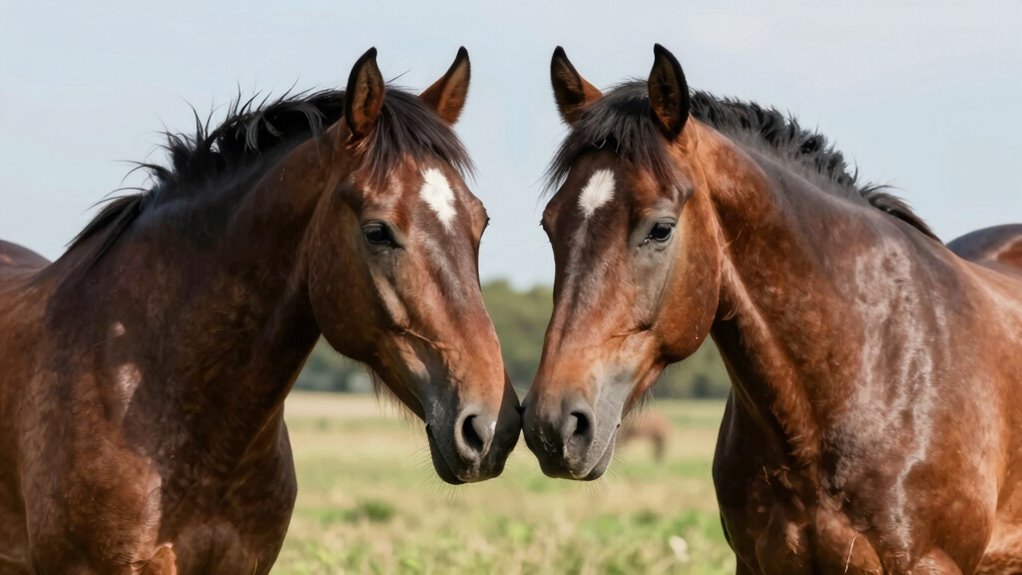

Horses communicate with each other through body language by using posture, facial expressions, ear and tail positions, and movements to show dominance, submission, or emotional states. For example, a dominant horse stands tall with ears forward, while a submissive one lowers its head and avoids eye contact. Paying attention to these signals helps you understand their social interactions and intentions. If you want to discover more about how horses share these cues, keep exploring this fascinating behavior.

Get pet supplies delivered free with Prime
- Fast, free delivery on millions of items
- Prime Video, Amazon Music and more included
- Member-only deals all year
Key Takeaways
- Horses signal dominance or submission through posture, ear position, and head movements to maintain herd hierarchy.
- Facial expressions like relaxed eyes or pinned ears indicate emotional states and intentions.
- Body language, including tail position and stance, communicates mood and social signals.
- Subtle gestures such as lip licking or yawning help prevent conflicts and promote herd harmony.
- Recognizing these signals enhances understanding and safety during horse interactions.
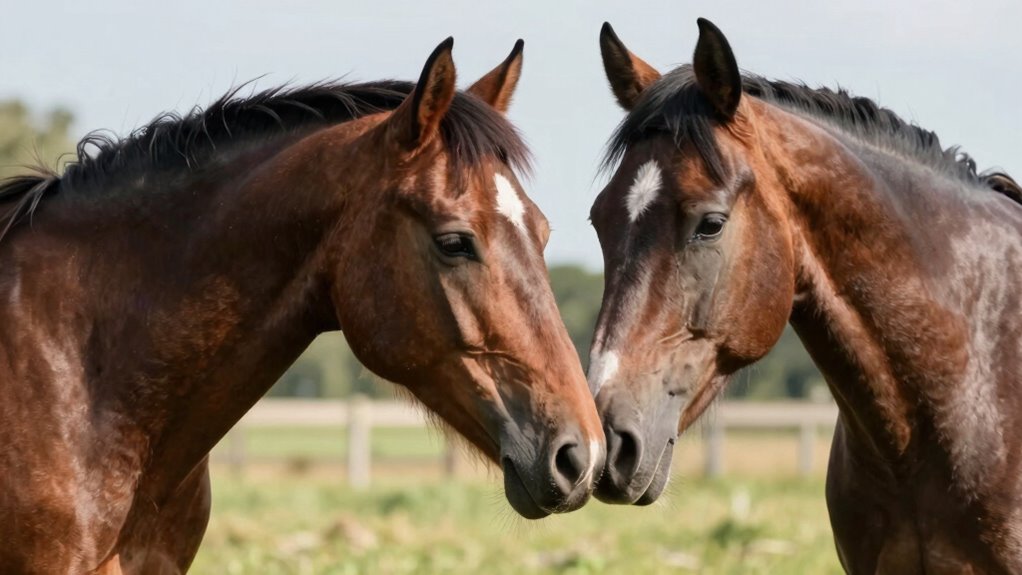
Horses also communicate dominance or submission through their posture and movements. A dominant horse might stand tall, with ears pricked forward, and may use a commanding gaze or even a slight head raise to assert authority. On the other hand, a submissive horse often lowers its head, avoids direct eye contact, or tucks its ears back. You’ll see a submissive horse might also yawn or lick its lips—small signals that they’re non-confrontational or trying to appease others. Recognizing these signals can help you interpret the herd’s social dynamics and avoid unnecessary conflicts. These subtle gestures help maintain harmony and prevent conflicts, and as someone who cares for horses, recognizing these cues is fundamental. Recognizing and interpreting these signals can also help prevent misunderstandings and potential conflicts within the herd.
Facial expressions are another essential aspect of horse body language. A relaxed horse has soft eyes, a slightly open mouth, and ears that are loosely pointed or slightly to the side. If a horse is alert or agitated, it will have wide, bright eyes, flared nostrils, and ears pinned back sharply. When horses communicate with each other, they often use their ears, tail, and overall stance to signal their mood and intentions. For example, a horse pinning its ears back might be warning others to stay away, while a relaxed stance with a gently swaying tail indicates calmness and contentment. Understanding body language is crucial in interpreting their signals accurately. Paying attention to their non-verbal cues can reveal much about their emotional state and help deepen your connection with them. Being aware of horse communication** is also vital for ensuring safe and respectful interactions. Recognizing the significance of horse social behavior** can further enhance your understanding of herd dynamics and improve your handling skills.
You can observe these signals during horse grooming sessions or when they’re simply standing together. By paying close attention to their body language, you’ll better understand their social cues and build a stronger, more respectful bond. Recognizing how horses use body language with each other allows you to appreciate the complexity of their communication and helps guarantee your interactions are safe and positive.
As an affiliate, we earn on qualifying purchases.
Frequently Asked Questions
Do Horses Recognize Individual Herd Members Through Body Language?
Yes, horses recognize individual herd members through body language. They rely on subtle cues like posture, facial expressions, and movements for herd recognition and individual identification. You’ll notice they remember familiar signals, which helps maintain social bonds and reduces conflict. By observing these cues, you can better understand their relationships and guarantee a harmonious herd environment. Recognizing these signals strengthens your connection and helps you interpret their social dynamics more accurately.
How Quickly Can Horses Interpret Each Other’s Body Signals?
You’ll find that horses interpret each other’s body signals incredibly quickly, often within seconds. They read horse facial expressions and tail position cues almost instantly to assess mood and intentions. For example, a relaxed face and a gentle tail flick signal friendliness, while pinned ears and a swishing tail indicate agitation. Your horse picks up on these subtle cues swiftly, helping them respond promptly to social interactions and maintain harmony within the herd.
Can Horses Misread Body Language and Cause Conflicts?
Yes, horses can misread body language cues, which may cause conflicts. Their horse communication relies heavily on interpreting subtle signals, but sometimes misinterpretations happen, especially if signals are unclear or inconsistent. When you observe body language cues, make certain they’re intentional and clear to prevent misunderstandings. Misreading these cues can lead to tension or aggression, so paying close attention helps maintain harmony and safe interactions among horses.
Do Horses Use Body Language to Communicate With Humans?
Yes, horses do use body language to communicate with humans. You’ll notice their facial expressions, like ear position and eye contact, which reveal their mood. Equine vocalizations, such as neighs or whinnies, also help convey feelings or needs. By paying attention to these signals, you can better understand your horse’s emotions, build trust, and respond appropriately, creating a stronger bond and safer interaction.
How Does Body Language Vary Among Different Horse Breeds?
Imagine you’re a knight in shining armor, observing different breeds. Body language varies among them, with breed-specific gestures reflecting their history and temperament. For example, Arabians often display high tail carriage, while draft horses show more grounded postures. Color influences perception too; a palomino’s bright coat might make its gestures seem more energetic. Recognizing these differences helps you understand each breed’s unique way of communicating nonverbally.
Conclusion
Understanding how horses communicate through body language reveals a secret world of connection and trust. When you observe their subtle cues—ears flicking, tails swishing—you’re witnessing a language more intricate than any spoken word. Mastering this silent dialogue isn’t just helpful; it’s like holding the key to their very hearts. With each gesture, you build bonds that are as deep as the ocean, making your relationship with these majestic creatures truly extraordinary.
Halloween Picks
halloween
As an affiliate, we earn on qualifying purchases.