Vacuuming pet dander the wrong way can actually worsen allergy symptoms by releasing allergens back into the air instead of removing them. Using a vacuum without a proper HEPA filter or rushing through the process can spread fine pet hair and dander around your home. To keep allergens at bay, it’s essential to use the right equipment and techniques. Keep going, and you’ll discover how to vacuum effectively and reduce pet dander buildup.
Key Takeaways
- Using vacuums without HEPA filters can spread pet dander into the air instead of trapping it effectively.
- Rushing through vacuuming or missing spots can re-distribute settled pet hair and dander.
- Inadequate cleaning techniques, like quick passes, release allergens rather than remove them.
- Not replacing filters or bags regularly reduces vacuum efficiency, causing allergen dispersal.
- Improper use of attachments or neglecting upholstery and soft furnishings can reintroduce pet dander into the air.
Why Pet Dander Stays in Your Home Even After Vacuuming
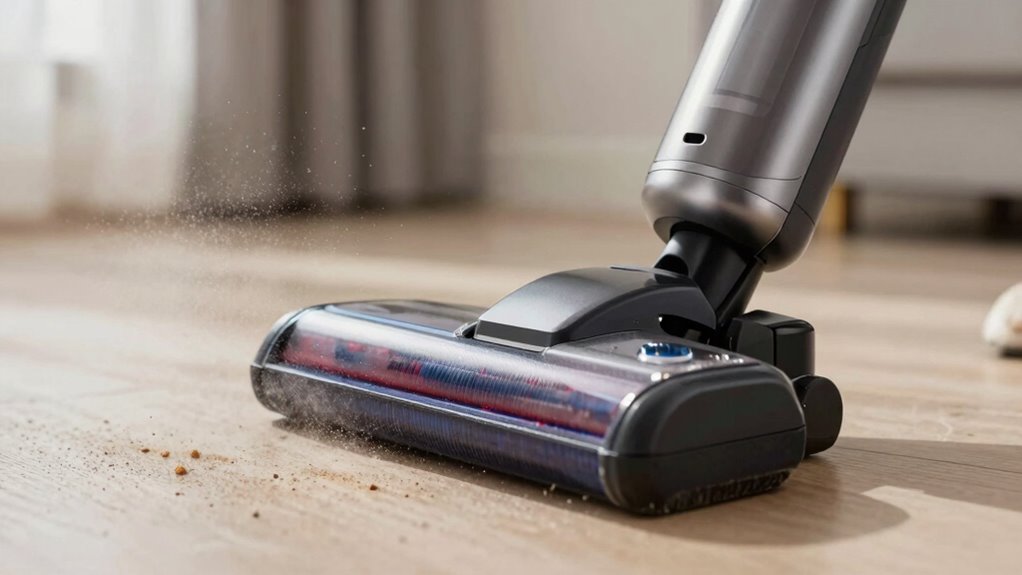
Even after vacuuming, pet dander can remain in your home because it easily becomes airborne and quickly settles into hidden places. When you vacuum, you might think you’re removing all pet dander, but some particles are small enough to stay suspended in the air or settle deep in upholstery and carpets. An air purifier with a HEPA filter can help capture airborne pet dander, reducing your exposure. Additionally, allergy medication can alleviate symptoms caused by lingering dander, making your home more comfortable. Remember, vacuuming alone isn’t enough to completely eliminate pet dander; combining it with an air purifier and allergy medication can considerably improve indoor air quality and reduce allergy symptoms. Proper air filtration systems are essential for effectively managing pet dander in your home. This multi-pronged approach is key to managing pet dander effectively.
Common Mistakes That Make Pet Dander Worse When Vacuuming

Using the wrong vacuum can spread pet dander instead of removing it. If you ignore proper technique, you might miss spots or worsen the problem. Paying attention to these mistakes helps keep your home cleaner and dander-free. Additionally, choosing a vacuum with effective filtration systems can significantly reduce airborne allergens. Incorporating Free Floating technology into your cleaning routine ensures that pet dander remains contained and doesn’t circulate back into the air. Being aware of airborne allergen control strategies can further enhance your efforts to create a healthier indoor environment. Understanding the importance of proper tool maintenance also ensures your vacuum performs optimally and minimizes allergen dispersal. Properly maintaining your equipment can help prevent contamination and improve overall cleaning effectiveness.
Using The Wrong Vacuum
Choosing the wrong vacuum can actually make pet dander worse instead of reducing it. If your vacuum isn’t designed for pet hair and dander, it may lack proper filtration, releasing allergens back into the air. Regular vacuum maintenance is essential; neglecting filters or bags can diminish suction and spread allergens. Additionally, using a vacuum without strong suction or a HEPA filter won’t trap tiny pet dander particles effectively. Proper pet grooming before vacuuming can reduce the amount of loose hair and dander in your home, but if you skip this step, your vacuum has to work harder and may become less effective. Investing in a vacuum specifically designed for pet owners and maintaining it correctly ensures you’re capturing dander rather than spreading it around. Proper filtration systems are crucial for effective allergen control and can significantly improve indoor air quality. Regularly inspecting vacuum components and replacing worn parts helps maintain optimal performance. Incorporating vacuum maintenance routines, such as regularly replacing filters and checking for clogs, can also enhance your vacuum’s ability to trap pet dander effectively. Additionally, choosing models with sealed systems can prevent allergens from escaping back into your living space during cleaning.
Ignoring Proper Technique
Ignoring proper vacuuming techniques can quickly worsen your pet dander problem. If you rush through vacuuming without using an air purifier nearby, you risk spreading dander back into the air instead of trapping it. Make sure you move the vacuum slowly across surfaces to lift dander effectively, rather than quick passes that just stir particles up. Skipping regular pet grooming also contributes; less dander is released when your pet’s fur stays clean. Additionally, neglecting to empty or change vacuum filters reduces suction power, dispersing more allergens. Using a vacuum equipped with a high-efficiency particulate air (HEPA) filter helps trap dander better. Combining proper vacuuming with pet grooming and an air purifier creates a more effective allergy barrier, preventing dander from lingering and becoming airborne again.
How to Choose a Vacuum That’s Great for Pet Allergies
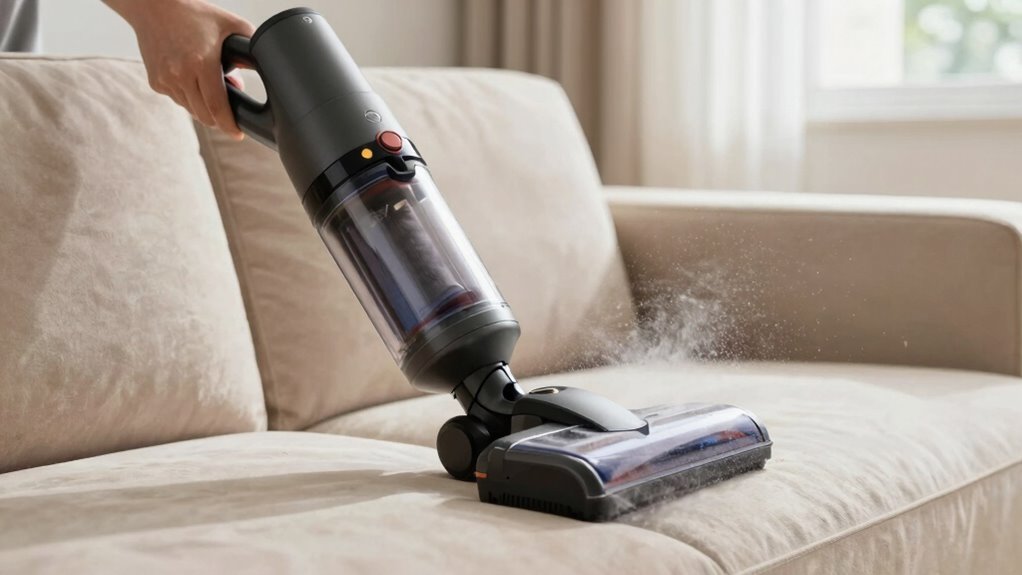
When selecting a vacuum for pet allergies, it’s essential to prioritize models designed to trap and contain dander effectively. Look for vacuums with high-efficiency particulate air (HEPA) filters, which help reduce pet odor and allergens. Consider features like strong suction power to pick up pet hair and dander from carpets and upholstery. An allergen awareness design ensures fewer allergens escape back into the air. Additionally, choose vacuums with sealed systems to prevent dust and dander from leaking out. The right vacuum should also be lightweight for easy maneuvering and include specialized attachments for furniture and tight spaces. Incorporating European cloud innovation can also enhance your vacuum’s smart features for better allergy management. Ensuring your vacuum has a sealed system minimizes the risk of allergens being released during cleaning. Looking for models with advanced filtration can further improve allergen containment and air quality. With these features, you’ll improve air quality and create a healthier environment for allergy sufferers.
Best Techniques for Removing Pet Dander Effectively

To effectively remove pet dander from your home, it’s vital to adopt a thorough cleaning routine that targets allergens at their source. Start by vacuuming frequently with a vacuum designed for pet hair, focusing on carpets, upholstery, and pet areas. Use a combination of tools to reach tight spots and remove pet hair effectively. Regularly wash bedding, curtains, and soft furnishings to reduce dander buildup and control odors. Consider using natural odor eliminators alongside vacuuming to improve air quality. Incorporating air purification strategies and essential oils for respiratory health into your cleaning routine can further support a healthier environment for both pets and humans. Additionally, choosing reputable vacuum brands with specialized filtration systems from trusted providers can enhance allergen removal efficiency. Implementing regular grooming routines for your pets can also significantly decrease the amount of dander released into the environment.
How HEPA Filters and Attachments Improve Pet Dander Capture
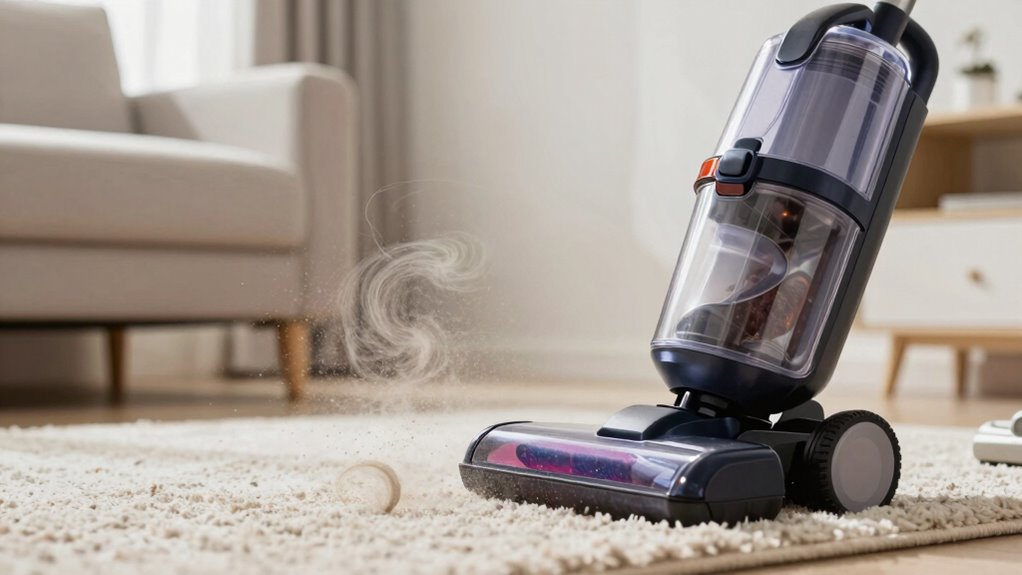
HEPA filters are highly efficient at trapping small pet dander particles, preventing them from recirculating into the air. Using the right attachments helps target difficult spots and guarantees you capture more dander during each pass. When you combine high-quality filters with effective attachments, your vacuuming becomes much more successful at improving indoor air quality.
HEPA Filter Efficiency
HEPA filters are highly effective at capturing tiny pet dander particles that can trigger allergies and asthma. Their HEPA efficiency ensures that even the smallest particles are trapped during vacuuming, improving air filtration in your home. To maximize this, look for vacuums with high-quality HEPA filters that meet strict standards. Proper maintenance, like changing filters regularly, keeps air quality at its best. Using attachments designed for tight spaces can also enhance dander removal without releasing particles back into the air. Keep in mind:
- HEPA filters remove 99.97% of particles as small as 0.3 microns
- Good air filtration reduces allergy symptoms
- Regular filter replacement maintains HEPA efficiency
- Combining filters with proper technique boosts pet dander capture
Effective Attachment Use
Using the right attachments can substantially enhance your vacuum’s ability to capture pet dander, especially when combined with high-quality filters. Attachments like upholstery tools and crevice nozzles target pet hair and dander hiding in furniture and tight spaces, preventing allergens from becoming airborne again. Make certain your vacuum’s vacuum bag is properly sealed to avoid dust escape, and use cord management features to keep the cord out of your way, making your cleaning more efficient. Proper attachment use minimizes the need for multiple passes and reduces disturbance of settled pet dander. When you select the appropriate tools for each task, your vacuum works more effectively, capturing more allergens and improving your indoor air quality. Utilizing HEPA filters and attachments can significantly improve allergen capture, ensuring a healthier environment.
How Often Should You Vacuum to Keep Pet Dander Under Control?
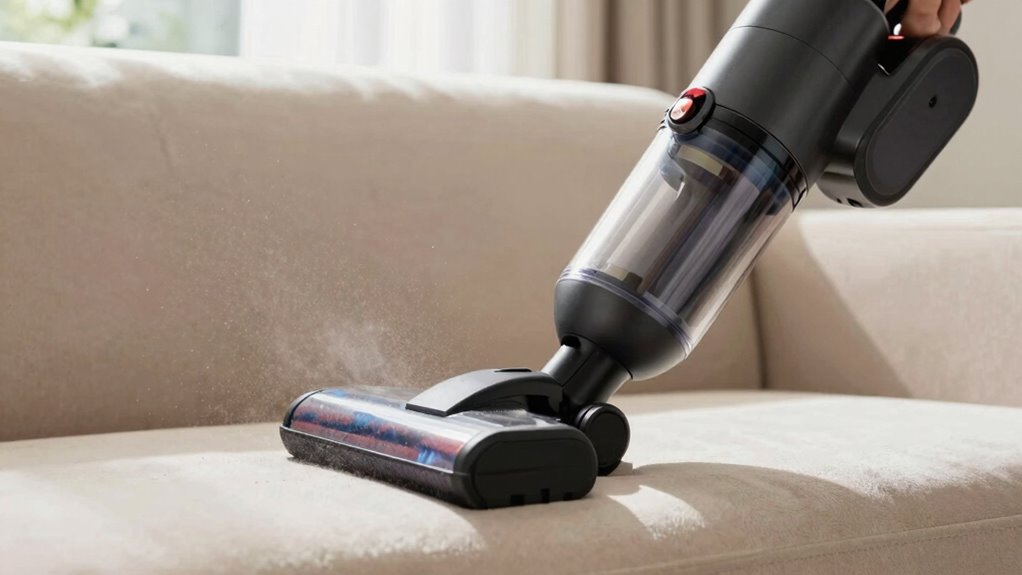
To keep pet dander under control, vacuuming frequency is key. You should vacuum at least twice a week to effectively remove pet hair and dander from carpets and upholstery. If you have multiple pets or allergy sensitivities, consider increasing that to three or more times weekly. Regular vacuuming prevents dander buildup and complements the use of air purifiers, which help filter airborne allergens. Remember, consistent pet hair removal from furniture and bedding also plays a crucial role. Here are some tips to maximize your efforts:
Vacuum at least twice weekly with a HEPA filter to reduce pet dander effectively.
- Use a vacuum with a HEPA filter
- Focus on high-traffic areas
- Vacuum in multiple directions
- Replace filters regularly
Maintaining proper sleep environment hygiene and ensuring thorough cleaning routines create a cleaner environment, reducing pet dander and improving air quality. Additionally, understanding allergen control strategies can further enhance your efforts to maintain a healthier home environment. Incorporating professional cleaning services periodically can also help manage allergens more effectively. Regularly checking and maintaining your vacuum cleaner’s filter system ensures optimal performance in capturing tiny particles like pet dander.
Simple Tips to Minimize Pet Dander in Your Home
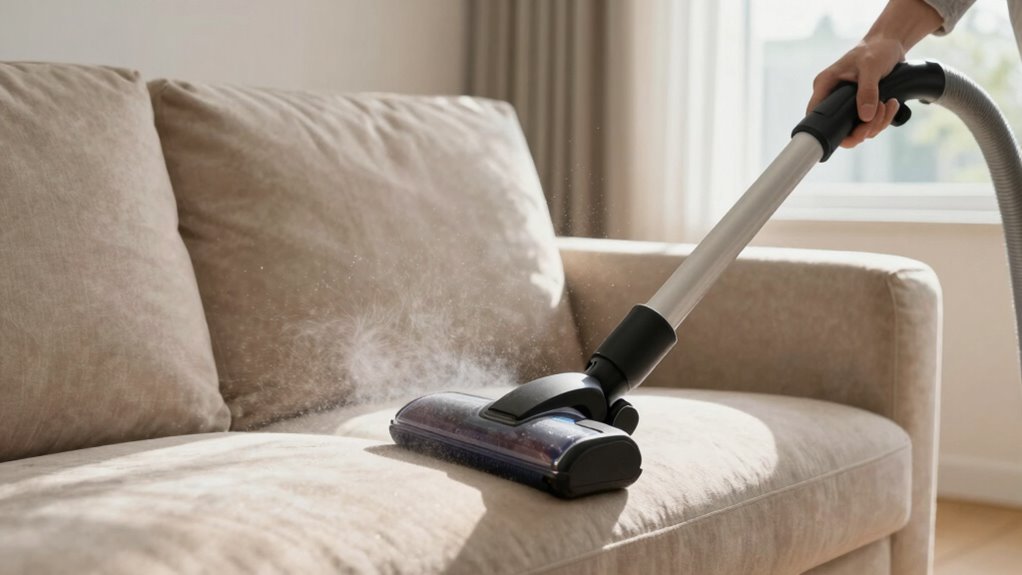
Minimizing pet dander in your home starts with simple daily habits that reduce allergen buildup. Regular pet grooming is essential; brushing your pet outdoors and bathing them weekly helps keep dander from accumulating. Invest in air purifiers with HEPA filters to capture airborne pet allergens, improving indoor air quality. Keep your home well-ventilated by opening windows or using exhaust fans to disperse dander particles. Wash bedding, curtains, and soft furnishings frequently to remove trapped dander. Vacuum with a high-efficiency filter often, but remember to do so carefully to avoid launching dander back into the air. Incorporating AI cybersecurity jobs into your home tech setup can help monitor and alert you to potential allergen triggers. These small, consistent steps can markedly lower pet dander levels, making your home more comfortable and allergen-friendly.
When to Consider Professional Cleaning for Pet Allergens
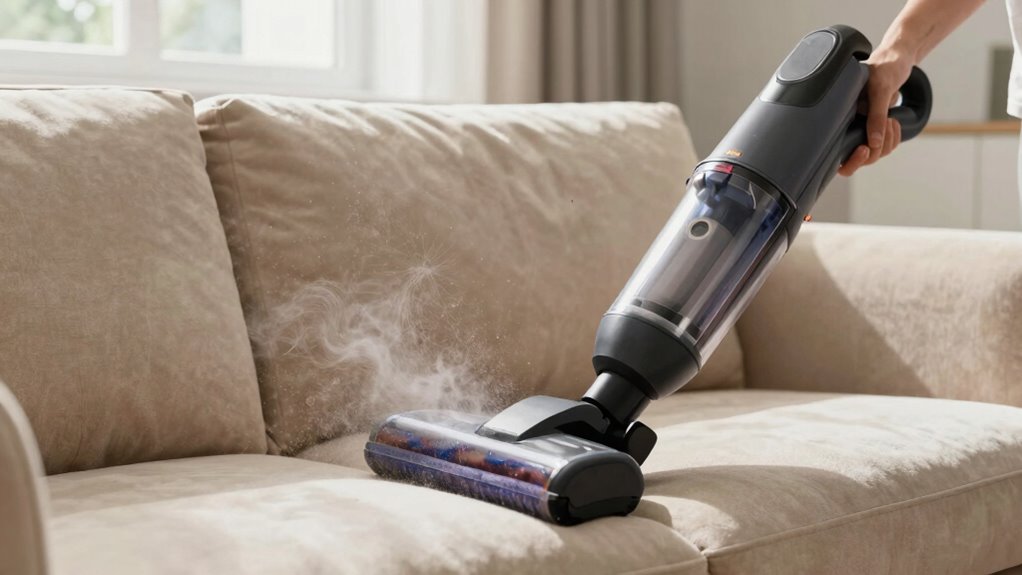
While regular cleaning and daily habits can markedly reduce pet dander, there are times when professional help becomes necessary. If pet hair removal efforts no longer control allergy symptoms or if you notice persistent issues, consider calling in experts. Professional cleaning can effectively target hidden dander and deep-seated allergens, especially when combined with the use of allergy friendly products. You should consider professional help if:
- You’re struggling with severe allergy symptoms despite routine cleaning
- Your home has high pet hair accumulation in upholstery and carpets
- Standard vacuuming releases more dander into the air instead of removing it
- You want a thorough deep clean to reduce airborne pet allergens
Professional services can improve air quality and help create a safer, allergy-sensitive environment.
Tips for Maintaining a Pet Dander-Free Home for Sensitive Allergies
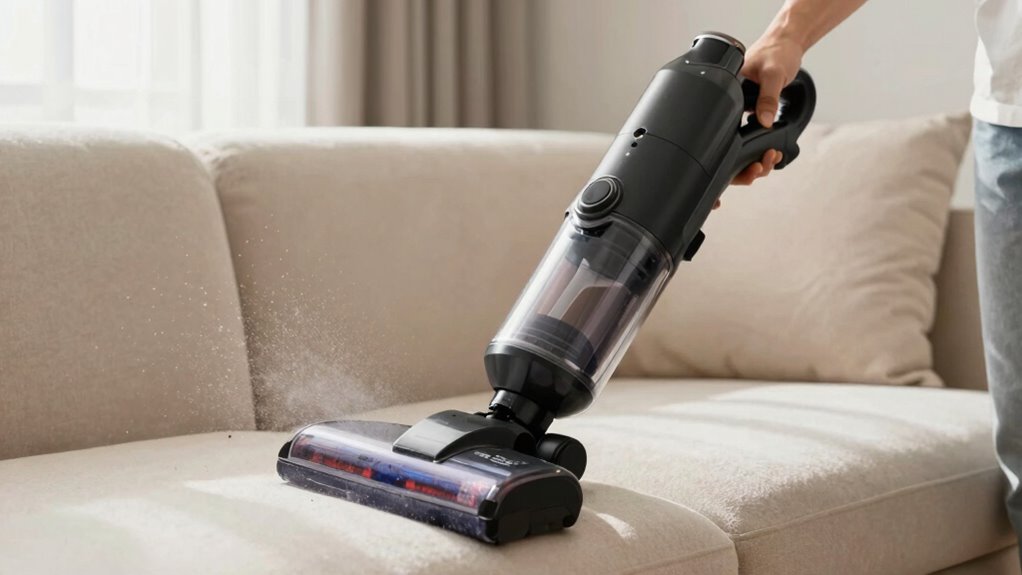
Keeping your home pet dander-free is essential for managing sensitive allergies, and consistent maintenance plays a key role. Use an air purifier with a HEPA filter to trap airborne dander effectively. Regularly wash pet bedding, curtains, and soft furnishings to reduce trapped allergens. Vacuum with a high-efficiency vacuum cleaner, ideally equipped with a HEPA filter, but avoid over-vacuuming to prevent launching dander into the air. Keep allergy medication on hand and consult your doctor for a tailored plan. Create a cleaning schedule to maintain a clean environment and minimize allergen buildup. Use the following table for quick tips:
| Tip | Benefit |
|---|---|
| Use an air purifier | Removes airborne dander |
| Wash bedding frequently | Reduces trapped allergens |
| Regular vacuuming | Keeps surfaces allergen-free |
| Keep allergy meds accessible | Manage symptoms effectively |
Frequently Asked Questions
Can Vacuuming Actually Worsen Allergy Symptoms Temporarily?
Yes, vacuuming can temporarily worsen allergy symptoms by stirring up airborne allergens like pet dander. If your vacuum isn’t efficient at trapping small particles, it might release more allergens into the air instead of removing them. To reduce this, use a vacuum with a HEPA filter and vacuum slowly and carefully, ensuring dirt and allergens are effectively captured rather than redistributed. This helps improve overall vacuum efficiency and minimizes airborne allergens.
Are There Specific Vacuum Brands Recommended for Pet Dander?
You should consider vacuum brands like Dyson or Shark, which feature advanced filtration systems to trap pet dander effectively. These vacuums use HEPA filters that prevent allergens from being released back into the air during cleaning. Investing in a vacuum with a high-quality filtration system helps reduce pet dander, making your home more allergy-friendly. Always check for models specifically designed to handle pet hair and allergens for the best results.
Does the Type of Flooring Affect Pet Dander Removal Effectiveness?
Your flooring type definitely impacts pet dander removal. Hardwood and tile floors are easier to clean thoroughly, reducing dander buildup. Carpet and laminate trap more pet hair and dander, making it harder to remove completely. For better results, use a vacuum with a HEPA filter on carpets and laminate floors, and regularly sweep and mop hardwood or tile surfaces. This way, you minimize airborne dander and improve indoor air quality.
How Do I Know if My Vacuum’s Filtration System Is Adequate?
You can tell your vacuum’s filtration system is adequate if it has a HEPA filter or a sealed system, which captures tiny pet dander particles effectively. Regular vacuum maintenance, like replacing filters and checking for clogs, guarantees peak filtration efficiency. If your vacuum struggles to pick up pet hair or releases dust back into the air, it’s time to upgrade or service it for better pet dander removal.
Can DIY Cleaning Methods Replace Professional Pet Allergen Removal?
Imagine trying to sweep away a fog of pet allergens with a broom; DIY cleaning can help, but it often falls short of professional removal. While regular vacuuming and cleaning reduce surface dust, expert treatments target hidden dander and deep fibers. For truly allergen-free spaces, invest in professional removal—it’s like clearing away the fog completely, giving you cleaner air and relief you can breathe easier.
Conclusion
So, next time you think your vacuum is a magic wand, remember it might just be tossing pet dander into the air like confetti. Instead of pretending you’ve got this under control, invest in the right tools and techniques. Because, honestly, if your vacuum’s just launching dander back at you, you’re better off hiring a professional or, better yet, reconsidering that furry roommate. Clean smarter, not harder—your allergies will thank you.