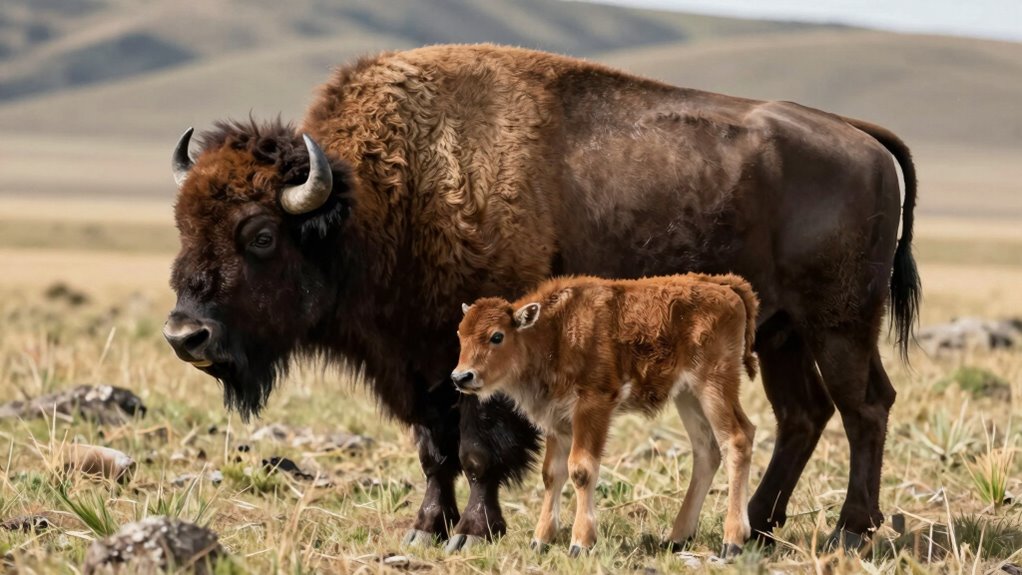

When danger approaches, you’ll see bison quickly organize into tight formations, with adults, especially mothers and dominant bulls, positioning themselves around calves for protection. They use loud sounds and swift movements like charging to scare off predators. The herd’s coordination, vigilance, and use of terrain features help confuse and deter threats. Their strong size and horns add extra defense, while social bonds ensure everyone responds promptly. Want to discover more about how these remarkable strategies come together?

Get pet supplies delivered free — and shop member deals
- Fast, free delivery on millions of items
- Access to Prime Big Deal Days deals on October 6–7
- Prime Video, Amazon Music and more included
Key Takeaways
- Bison form tight circles with calves protected inside to deter predators and minimize attack points.
- Adult bison position themselves around calves, creating a protective barrier.
- They use loud vocalizations and intimidating displays to alert and deter threats.
- Herds quickly adapt formations and retreat to dense cover when calves are vulnerable.
- Vigilant adults scan for danger, employing strategic movements like charging to defend calves.
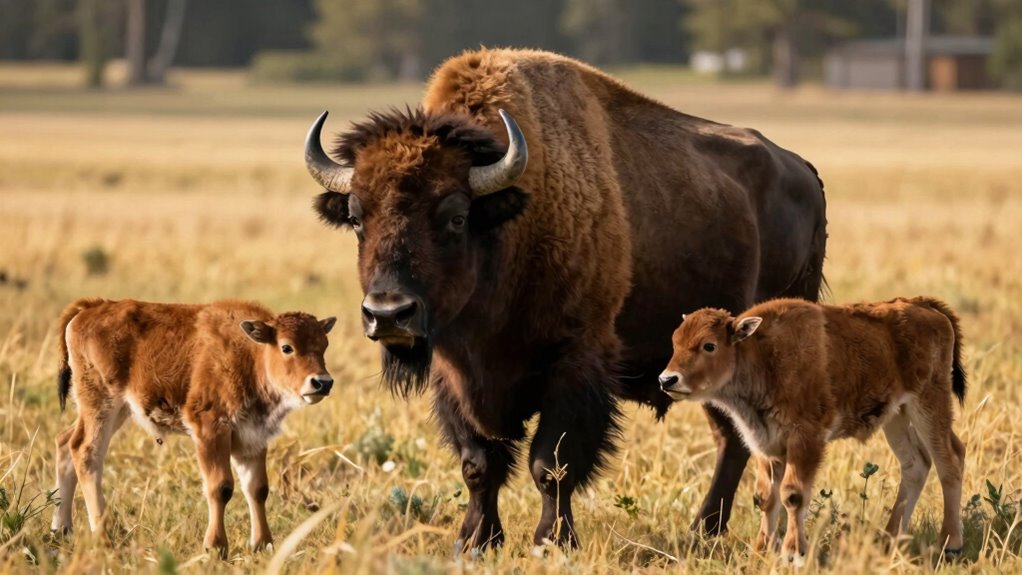
Bison are fierce protectors of their calves, instinctively stepping in to defend them from predators and threats. When danger approaches, you’ll notice their herd behavior quickly shifts from grazing to a coordinated response aimed at safeguarding the young. The herd acts as a unified force, with adult bison positioning themselves strategically around the calves, creating a protective barrier. This collective behavior isn’t random; it’s a carefully orchestrated effort that minimizes the risk of predator attacks.
Bison protect their calves through coordinated, strategic herd behaviors that minimize predator risks and ensure young survival.
As a member of the herd, you’d see that bison use predator avoidance strategies that rely heavily on their size, strength, and vigilance. Adult bison, especially females and dominant bulls, keep a close eye on their surroundings, scanning for signs of danger. When a predator, such as a wolf or a coyote, is spotted, the herd immediately reacts. You might observe adults making loud, intimidating sounds to alert others, or they may form a tight circle with calves protected in the center. This formation makes it difficult for predators to target the vulnerable young, reducing their chances of a successful attack.
In addition to forming protective circles, bison employ other predator avoidance strategies. They often resort to quick, decisive movements, such as charging at the threat or stampeding away in unison to create confusion and overwhelm the predator. Their massive size and powerful horns serve as effective deterrents, discouraging predators from getting too close. When calves are particularly vulnerable, the herd might also choose to retreat to dense cover or rugged terrain, where predators find it harder to pursue and attack. Bison herd behavior demonstrates their remarkable ability to adapt rapidly to threats, ensuring the safety of their young. Moreover, their keen senses and rapid response times are crucial components of their protective instincts.
Additionally, their collective actions highlight the importance of social bonds and communication within the herd during threats. These coordinated responses are often reinforced by vocalizations, which play a vital role in maintaining unity and alertness among herd members.
You’ll also notice that herd behavior during danger is dynamic and adaptable. Bison respond rapidly to changing threats, often increasing their vigilance and adjusting their formations as needed. This flexibility is essential for their survival, especially in open plains where predators can easily spot isolated calves. The herd’s ability to work together, communicate through vocalizations and body language, and utilize their environment enables them to protect their young efficiently. Fundamentally, their collective actions and predator avoidance strategies create a formidable defense system, ensuring that calves have the best chance of survival during moments of peril.
wildlife binoculars for bird watching
As an affiliate, we earn on qualifying purchases.
As an affiliate, we earn on qualifying purchases.
Frequently Asked Questions
How Do Bison Recognize Threats to Their Calves?
You notice that bison recognize threats to their calves through calf communication signals and herd dynamics. When danger approaches, the mother and herd members become alert, displaying heightened awareness and vocalizations. Calves also send signals through body language, like trembling or loud calls. This collective response helps the herd quickly identify threats, allowing them to protect the calves effectively by circling around them or moving away from the danger.
What Specific Sounds Do Bison Make When Protecting Calves?
You hear a deep, resonant bellow paired with sharp snorts—sounds that embody both warning and reassurance. These bison communication signals serve as calf safety strategies, alerting calves and herd members to danger. The loud, guttural calls contrast with the softer, more urgent grunts during close protection. Together, these sounds create a symphony of defense, ensuring calves stay close and alert amid threats.
Do Bison Use Their Horns to Defend Calves?
Yes, bison use their horns to defend calves, an essential part of their herd dynamics and calf survival strategies. When danger approaches, adult bison form a protective circle around the young, positioning their horns outward. They may charge or intimidate predators, using their horns as a formidable weapon. This active defense not only shields the calves but also reinforces the herd’s unity and resilience in threatening situations.
How Long Do Bison Stay Close to Their Calves?
In the gentle dance of bison herd dynamics, you notice that mothers stay close to their calves for several months, nurturing their bonds through daily interactions. During this time, calf bonding behaviors flourish, as young bison learn essential survival skills. This close proximity offers comfort and safety, ensuring the calves grow strong and confident. You see a mother and calf together, a touching reminder of nature’s tender, unwavering care.
Are Bison More Protective of Calves During Certain Seasons?
You’ll find bison are more protective of calves during the spring and early summer, aligning with their calving season. During this time, herd dynamics shift, with mothers and protective adults forming tighter groups to enhance calf survival strategies. As predators become a bigger threat, bison increase their vigilance, staying close and defending their young more aggressively, ensuring the calves have the best chance to grow and thrive.
Conclusion
You’ve seen how bison fiercely defend their calves, forming a protective circle to ward off predators. It’s incredible to note that during such moments, the herd can form a wall up to 8 feet high, shielding their young. This instinctual behavior highlights the deep bond and unwavering dedication bison have for their family. Remember, their fierce protection guarantees the survival of future generations, reminding us of the strength found in unity and love.
Halloween Picks
halloween
As an affiliate, we earn on qualifying purchases.