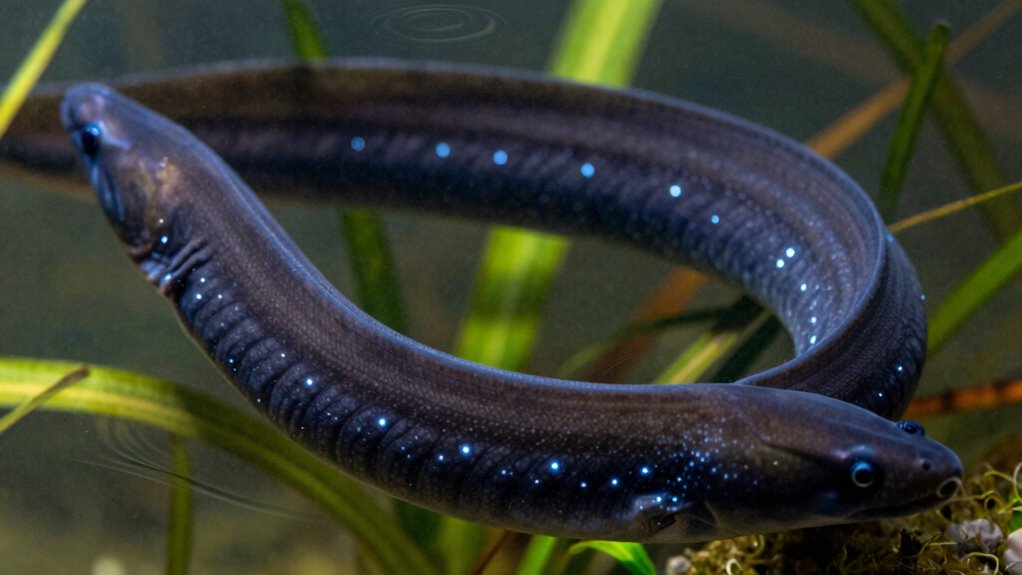

Eels generate electricity with specialized organs full of tiny, disc-shaped cells called electrocytes. These cells act like miniature batteries, firing in sync to produce powerful shocks up to 600 volts for hunting and defense. When the eel’s nervous system signals, it controls the flow of ions like sodium and potassium across these cells, creating electrical discharges. Understanding how they harness such natural power can reveal fascinating biological engineering—keep exploring to learn more.

Get pet supplies delivered free — and shop member deals
- Fast, free delivery on millions of items
- Access to Prime Big Deal Days deals on October 6–7
- Prime Video, Amazon Music and more included
Key Takeaways
- Electric eels have specialized electric organs composed of thousands of electrocytes that generate electrical charges.
- Electrocytes act like tiny batteries that fire in rapid, synchronized bursts to produce high voltage shocks.
- Nervous system signals activate electrocytes, controlling ion flow to generate electricity.
- Electrocytes are arranged in stacks to amplify voltage, reaching up to 600 volts.
- The eel modulates shock strength for navigation, communication, or hunting, using precise neural regulation.

Many eels have the remarkable ability to generate electricity, which they use for hunting and self-defense. When you look at an electric eel, you might think it’s just a regular fish, but inside, its anatomy is specialized for producing powerful shocks. The electric eel anatomy is quite unique; it contains specialized electric organs that run along most of its body. These organs are made up of thousands of electrocytes—tiny, disc-shaped cells that generate electricity. Each electrocyte acts like a miniature battery, and when they all fire together, they produce a significant voltage. This setup allows the eel to deliver shocks of up to 600 volts, enough to stun prey or deter predators. The ability to generate such high voltage is made possible by the specialized electric organs, which are a key feature of their anatomy. Additionally, the efficiency of this system depends on how well the electrocytes are organized and synchronized. The precise control of ion flow during firing is regulated by the eel’s nervous system, which ensures a quick response.
Electric eels generate powerful shocks with specialized organs made of electrocytes, delivering up to 600 volts for hunting and defense.
To understand how powerful these shocks are, you need to look at voltage measurement techniques. When scientists measure the voltage generated by an electric eel, they typically use electrodes placed at different points along the fish’s body. These electrodes are connected to sensitive voltmeters or oscilloscopes that can detect and record the electrical output. By measuring the voltage at various points, researchers can determine how the electrocytes work collectively. They find that during a shock, the voltage peaks suddenly, confirming that the electrocytes fire in rapid succession. This synchronized firing amplifies the electrical output, creating a burst of energy that’s much greater than what any single electrocyte could produce alone. The understanding of voltage measurement techniques allows scientists to study and analyze the efficiency of the eel’s electric discharge. In fact, advancements in voltage measurement technology have significantly improved our understanding of biological electrical systems.
The anatomy of the electric eel’s electric organs is designed for maximum efficiency. When the eel prepares to shock, its brain sends a signal to activate the electrocytes. This causes a sudden ion flow—mainly sodium and potassium ions—across the cell membranes, generating an electrical current. The electrocytes are arranged in stacks, with each layer adding to the total voltage. The arrangement and rapid firing of these cells produce the impressive electrical discharges you observe. The eel can control the intensity of its shocks, using weaker pulses for navigation or communication, and full-power shocks for hunting or defense. The electrical signals are also used for communication, helping the eel interact with its environment and other eels. This ability to modulate shock strength demonstrates the eel’s sophisticated control over its electric output.
In essence, the combination of specialized anatomy and precise voltage measurement techniques reveals how eels can produce such powerful electrical shocks. Their electric organs are marvels of biological engineering, perfectly tuned for their survival needs. Understanding these mechanisms highlights the incredible ways in which evolution has equipped eels with the ability to generate electricity, making them one of nature’s most fascinating electric creatures.
As an affiliate, we earn on qualifying purchases.
Frequently Asked Questions
How Long Can an Electric Eel Produce Shocks?
You can experience an electric eel’s shock for up to two milliseconds, but the electric shock duration varies depending on its shock capacity. Eels can deliver multiple shocks, with each one capable of reaching up to 600 volts. While each shock is brief, the eel’s shock capacity allows it to stun prey or defend itself effectively. Proper caution is essential, as the intense electric discharge can be quite powerful despite its short duration.
Do All Eel Species Generate Electricity?
You might think all eel species generate electricity, but only electric eels do. Their unique electric eel anatomy includes specialized electric organs that produce shocks, which they use for hunting and self-defense. Electric eel behavior shows they often lie in wait, shocking prey or predators. Other eel species, like freshwater or marine eels, rely on their agility and camouflage, not electricity, making electric eel electricity generation a fascinating, exclusive trait.
Can Electric Eels Harm Humans Intentionally?
Electric eels can harm humans intentionally through their powerful electric shocks. They use these shocks for hunting and defense, posing significant human interaction risks. To prevent injury, it is crucial to practice electric shock mitigation, such as avoiding direct contact and keeping a safe distance. While rare, deliberate provocation or mishandling increases the chance of getting shocked, so respecting their space helps minimize potential harm.
How Do Electric Eels Survive in Their Environment?
Imagine stepping into their murky, riverine habitat—this is where electric eels thrive. You’d find them hiding among submerged roots and muddy bottoms. Their sensory systems, including specialized electrosensitive organs, help them navigate and hunt in dark, murky waters. These adaptations allow them to survive predators and find prey efficiently. Electric eels rely on their environment and sensory systems, making survival in their habitat both fascinating and resilient.
Are Electric Eels Related to Other Electric Fish?
Yes, electric eels are related to other electric fish through their evolution, sharing a common ancestor that developed electric organs. In their electric eel habitat, these fish thrive in freshwater environments like the Amazon River. Over time, electric eels evolved specialized electric organs to hunt and defend, setting them apart from other electric fish. Their unique electric abilities highlight their fascinating evolutionary journey within aquatic ecosystems.
Conclusion
You’ve discovered how eels expertly generate electricity through their specialized electrocytes, turning biological brilliance into a shocking shock. Their unique organs harness hidden hyper-polarizations, highlighting nature’s remarkable mastery. With every flicker and flash, eels demonstrate a dazzling display of biological brilliance, blending biology and electricity effortlessly. So, next time you notice a nimbly steering eel, remember the electric energy it exhibits, exemplifying nature’s extraordinary engineering and enigmatic elegance—an electrifying example of evolution’s ingenuity.
Fall Picks
fall essentials
As an affiliate, we earn on qualifying purchases.