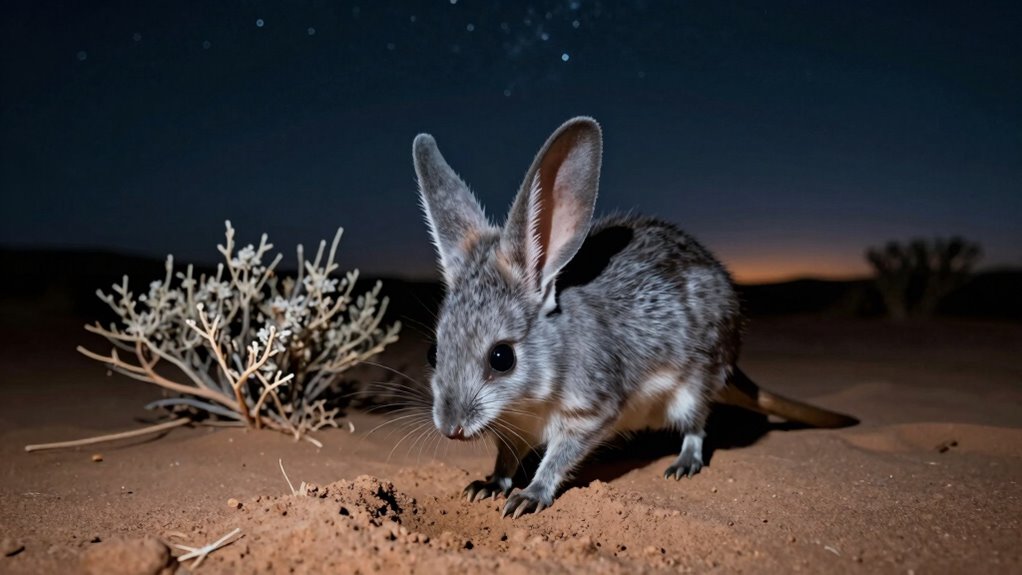

The Greater Bilby’s large ears are essential for detecting prey and dissipating heat in the hot desert environment. You’ll find it active at night when it forages, which helps avoid predators and reduces water loss. Its ability to keep cool and find food using keen senses makes it a survivor in harsh conditions. If you keep exploring, you’ll discover more about how this remarkable animal adapts and survives in the desert landscape.

Get pet supplies delivered free — and shop member deals
- Fast, free delivery on millions of items
- Access to Prime Big Deal Days deals on October 6–7
- Prime Video, Amazon Music and more included
Key Takeaways
- The Greater Bilby has large ears that aid in hearing and heat dissipation during nighttime foraging.
- It is primarily nocturnal, reducing predator risk and water loss in arid desert environments.
- Bilbys use their keen senses of hearing and smell to locate food at night.
- Their burrows create small desert ecosystems and provide shelter during daytime heat.
- Adaptations like large ears and nocturnal activity enable survival in harsh desert conditions.
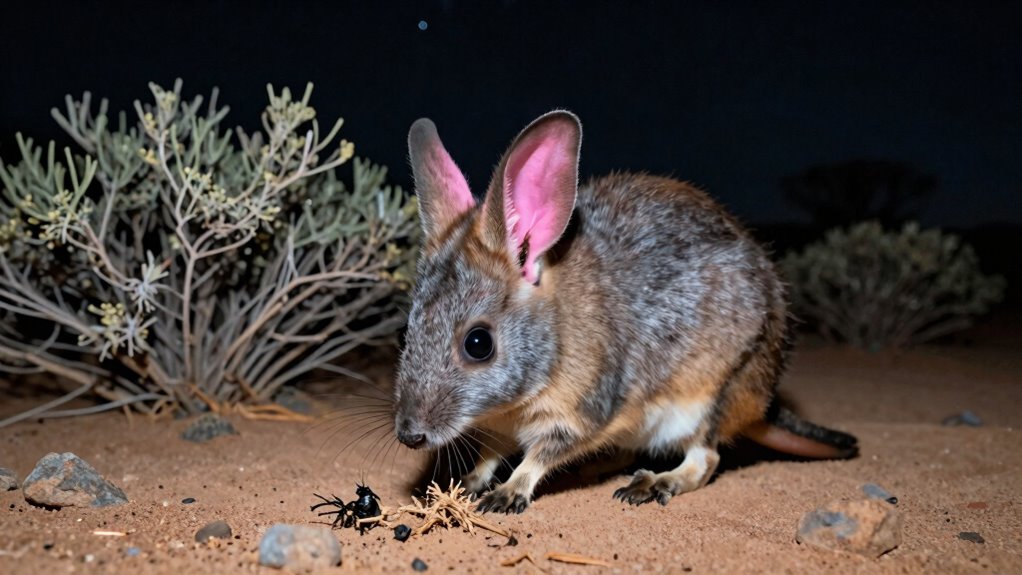
You should know that the bilby’s nocturnal tendencies have shaped its entire existence. Its large ears aren’t just for hearing; they also serve as radiators to dissipate heat, keeping the animal cool during the scorching Australian days. When night falls, the bilby emerges from its burrow, using its keen sense of hearing and smell to locate food. Its ability to thrive in the desert’s harsh conditions is impressive, yet it’s also fragile. Habitat destruction, introduced predators like foxes and cats, and competition for resources have pushed this species toward the brink of extinction. That’s where conservation efforts come into play. Various programs focus on habitat restoration, predator control, and captive breeding to help bolster bilby populations. By supporting these initiatives, you’re contributing to the survival of this unique marsupial, guaranteeing future generations will also get to observe its nocturnal foraging habits. Understanding the bilby’s nocturnal behavior can deepen your appreciation for its resilience. Its activity pattern reduces encounters with predators and minimizes water loss, crucial in its arid environment. You might even notice that the bilby’s burrows provide shelter not only for itself but also for other desert creatures, creating a small but essential ecosystem. Conservationists emphasize the importance of maintaining the bilby’s natural habitat and controlling invasive predators to sustain their populations. Active during the night, the bilby’s behaviors are a proof of its adaptability and tenacity, which are key factors that have allowed the bilby to survive in such a challenging environment, highlighting its importance in the desert ecosystem. Its nocturnal behavior reduces encounters with predators and minimizes water loss, which is vital for survival in its arid habitat. By supporting efforts that protect its environment, you help ensure that this extraordinary creature continues to roam the Australian desert, ears perked and senses sharp, during the hours when it’s most at home—under the cover of darkness.
As an affiliate, we earn on qualifying purchases.
Frequently Asked Questions
How Does the Greater Bilby Communicate With Others?
You discover that the greater bilby communicates through various methods, including vocalization patterns like soft squeaks and high-pitched calls, especially at night. You notice they also use body language, such as tail and ear movements, to send signals. These communication methods help them stay connected with others, warn of danger, or establish territory. Their vocalizations and body language work together to keep their social interactions clear and effective.
What Are the Main Predators of the Greater Bilby?
You should know that the main predators of the greater bilby are foxes, cats, and dingoes. Being nocturnal helps it avoid many threats, but it also relies on burrow defenses, like quick escapes and hidden entrances, to stay safe. Its nighttime behavior minimizes encounters with predators, while its burrows provide secure hiding spots. Despite these strategies, introduced predators still pose a significant risk to its survival.
How Long Does a Greater Bilby Typically Live in the Wild?
You’ll find that a greater bilby typically lives around six years in the wild. Its lifespan depends on factors like predators and habitat conditions. When you observe a bilby, notice how it uses its bilby burrow for shelter, especially during the heat of the day. Its desert diet mainly includes insects, seeds, and roots, which sustain it during its nocturnal foraging activities.
Are Greater Bilbies Solitary or Social Animals?
You might think bilbies are social, but they’re actually solitary animals. During their nocturnal behavior, they retreat into their bilby burrow, preferring independence over companionship. While they come together briefly for mating, they spend most of their lives alone, foraging at night. This solitary lifestyle helps them avoid predators and conserve energy, making their nocturnal habits essential for survival in the harsh desert environment.
What Specific Adaptations Help the Bilby Survive in Deserts?
You’ll find that the bilby’s desert survival relies on its nocturnal behavior, which helps it avoid daytime heat and conserve water. Its large, sensitive ears detect predators and locate food underground, while its fur-lined ears also keep it cool. Additionally, its ability to dig burrows provides shelter from extreme temperatures and predators. These adaptations make the bilby well-suited to thrive in harsh desert environments.
Conclusion
You might think this shy desert dweller is just another small marsupial, but the Greater Bilby’s unique adaptations make it a crucial part of the ecosystem. Its nocturnal foraging and desert ears help it survive harsh conditions, and protecting it guarantees the health of its habitat. Don’t overlook these incredible creatures—by learning about them, you can help guarantee future generations get to marvel at their desert ears and nighttime adventures.
Fall Picks
fall essentials
As an affiliate, we earn on qualifying purchases.