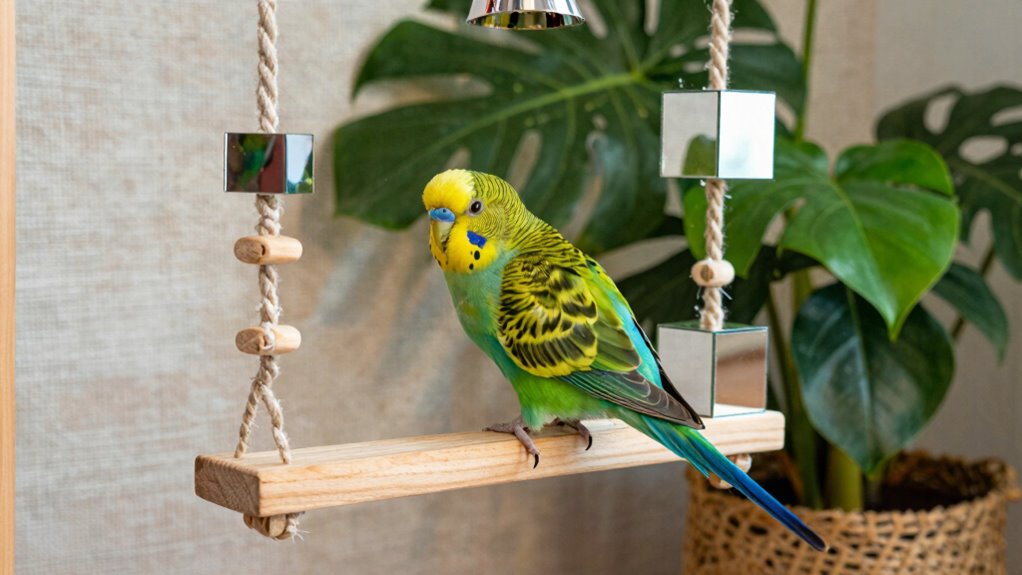

To keep your indoor birds mentally stimulated, rotate a variety of toys, including puzzle feeders and mirrors, to encourage curiosity and problem-solving. Incorporate natural elements like branches, leaves, and safe plants to mimic their natural habitat. Create opportunities for foraging and natural behaviors, and spend time engaging with your birds daily. Promoting social interactions and involving them in social activities also boosts mental activity. Keep exploring these tips to guarantee your feathered friends stay happy and engaged.

Get pet supplies delivered free with Prime
- Fast, free delivery on millions of items
- Prime Video, Amazon Music and more included
- Member-only deals all year
Key Takeaways
- Provide a variety of rotating toys, including puzzle feeders and mirrors, to encourage exploration and problem-solving.
- Incorporate natural materials like branches, leaves, and safe plants to mimic their natural habitat.
- Create opportunities for natural behaviors such as foraging and climbing through enrichment activities.
- Dedicate time for regular social interaction to stimulate vocalization and bonding.
- Use natural elements and environmental complexity to engage their senses and promote mental agility.
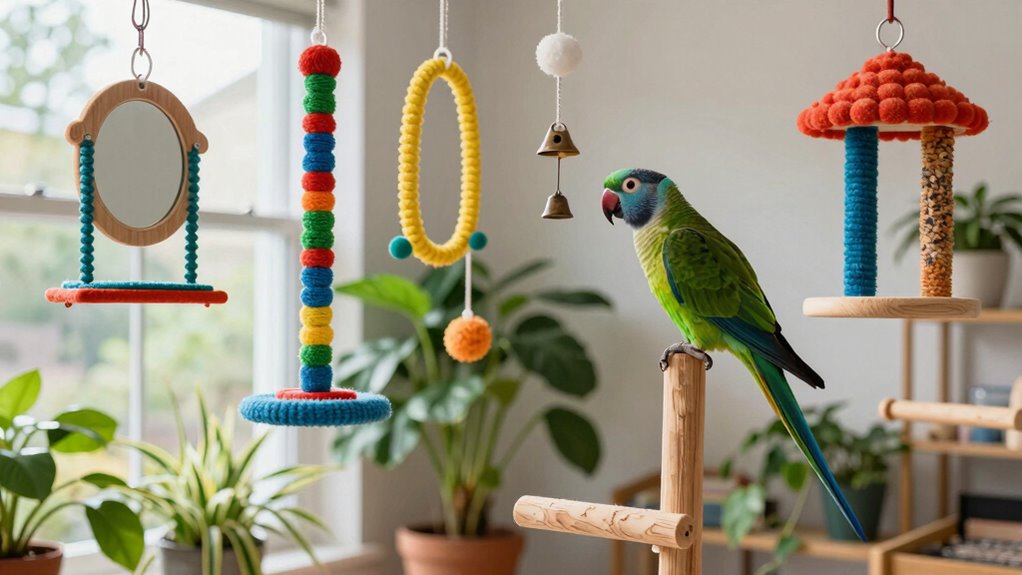
Keeping indoor birds mentally stimulated is vital for their overall health and happiness. When you provide opportunities for bird enrichment, you’re helping prevent boredom, reduce stress, and promote natural behaviors. Birds are intelligent creatures that thrive on mental challenges, so it’s your responsibility to create an environment that keeps their mind active. One effective way to do this is through a variety of toys and activities that encourage exploration and problem-solving. Rotate toys regularly to keep things fresh and engaging, and include items like puzzle feeders, mirrors, and swings. These stimulate your bird’s curiosity and give them a sense of accomplishment when they figure out how to access treats or manipulate objects. Incorporating biodiversity principles into your bird’s environment by introducing natural elements can also enhance their mental engagement. Providing natural materials such as branches, leaves, and safe plants can further stimulate their senses and mimic their natural habitat. Using enrichment strategies that mimic natural environments can significantly boost their mental stimulation and overall well-being. Additionally, understanding how natural behaviors influence mental health can help you tailor enrichment activities more effectively. Creating opportunities for birds to engage in foraging behaviors can also promote natural instincts and mental activity. Social interaction plays an essential role in mental stimulation as well. Birds are inherently social animals that need companionship and meaningful engagement to stay mentally healthy. If you have a single bird, dedicate time each day to interact with it directly—talk to it, play, or teach it simple tricks. If you have multiple birds, guarantee they have opportunities to socialize with each other, which can alleviate loneliness and encourage natural behaviors like grooming and vocalizing. The more you involve your bird in social activities, the more it feels secure and mentally stimulated. Remember, birds often mimic sounds and actions, so engaging with them regularly can also enhance their vocal skills and overall mental agility.
As an affiliate, we earn on qualifying purchases.
Frequently Asked Questions
How Often Should I Change My Bird’s Toys?
You should change your bird’s toys every one to two weeks to keep their environment engaging. Incorporating regular bird enrichment through toy rotation prevents boredom and encourages natural behaviors. Observe how your bird interacts with their toys; if they lose interest quickly or toys become damaged, it’s time for a fresh set. Rotating toys keeps stimulation high and helps maintain your bird’s mental and physical health.
Can Music Benefit Indoor Birds’ Mental Health?
Yes, music can benefit your indoor bird’s mental health through music therapy and auditory enrichment. Playing gentle, melodic tunes can soothe your bird and reduce stress, while varied sounds stimulate their curiosity. Regularly introducing different types of music keeps their environment engaging, encouraging natural behaviors. Just make certain the volume isn’t too loud, and observe your bird’s reactions to ensure the music remains a positive experience.
What Are Signs of Boredom in Indoor Birds?
You’ll notice boredom in your indoor bird through behavioral signs like feather plucking, excessive screaming, or repetitive pacing. They may also show disinterest in their surroundings or refuse to play with toys. To prevent this, incorporate bird enrichment activities like puzzle toys or foraging opportunities. Recognizing these signs helps you keep your bird engaged, happy, and mentally stimulated, ensuring they stay active and healthy in their environment.
Are There Specific Toys for Different Bird Species?
Yes, there are specific toys for different bird species because toy compatibility varies. You should choose toys suited to your bird’s species, size, and activity level, like puzzle toys for parrots or foraging toys for finches. By selecting the right toys, you keep your bird engaged and mentally stimulated, preventing boredom. Always observe how your bird interacts with new toys and switch them out regularly for variety.
How Do I Introduce New Stimuli Safely?
To introduce new stimuli safely, start with a gentle, gradual approach. Begin by placing the new toy or item nearby, allowing your bird to observe it without pressure. Over a few days, slowly move it closer, ensuring your bird remains comfortable. Watch for signs of stress, and if your bird seems relaxed, you can encourage interaction. This safe introduction promotes gradual stimulation without overwhelming your bird.
Conclusion
Keeping your indoor birds mentally stimulated is like tending a vibrant garden—you must nurture their curiosity and provide new experiences to keep them thriving. When you introduce toys, games, and social interactions, you’re watering their minds with enrichment. Remember, a stimulated bird is a happy bird, fluttering with energy and joy. By investing time and creativity, you create a lively symphony of mental activity that keeps your feathered friends content and engaged for years to come.
Halloween Picks
halloween
As an affiliate, we earn on qualifying purchases.