
TL;DR

Get pet supplies delivered free with Prime
- Fast, free delivery on millions of items
- Prime Video, Amazon Music and more included
- Member-only deals all year
Recent research confirms that dogs are naturally inclined to steal food due to evolutionary and behavioral factors. This article explains why dogs exhibit this behavior and its implications for pet care.
Recent scientific research confirms that dogs are naturally inclined to steal food, a behavior rooted in their evolutionary history and behavioral instincts. This development offers new insights for pet owners and animal behaviorists into why dogs often seek out and consume food that isn’t theirs, and how to better manage this common issue. This development offers new insights for pet owners and animal behaviorists into why dogs often seek out and consume food that isn’t theirs, and how to better manage this common issue.
Multiple studies published in late 2023 have demonstrated that dogs possess an innate drive to seek out food, often leading to theft behaviors. Researchers attribute this tendency to their domestication history, which traces back thousands of years to wolves that scavenged and hunted for food. This instinct persists in modern dogs, making them highly motivated to find and consume accessible food sources. If you’re concerned about your dog’s diet, check out our article on sensitive skin allergy pet foods.
Experts say that dogs’ olfactory senses are highly developed, allowing them to detect food from considerable distances. Additionally, behavioral studies indicate that dogs may associate stealing food with positive reinforcement, such as the immediate gratification of a tasty treat, reinforcing the behavior over time.
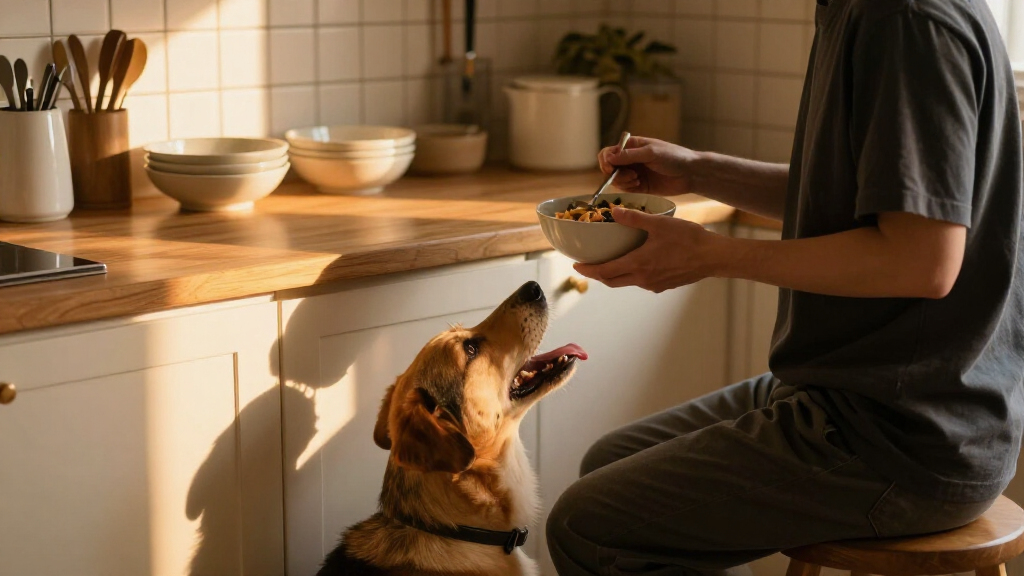
Pet owners frequently report that dogs will often target food left unattended, whether on counters, tables, or plates. Veterinarians and animal behaviorists recommend training and environmental management to reduce this behavior, emphasizing the importance of secure storage of food and consistent training routines. For more tips, see our guide on nourishing dog foods for older dogs.
Implications for Pet Owners and Animal Behavior Understanding
This research underscores the importance of understanding dogs’ natural instincts to better manage their behavior. Recognizing that food stealing is a genetically influenced trait can help owners develop effective training strategies, reducing the risk of dogs ingesting harmful foods or developing behavioral issues. It also highlights the need for responsible food management in households with dogs.
As an affiliate, we earn on qualifying purchases.
Evolutionary Roots of Food-Seeking Behavior in Dogs
Dogs’ tendency to seek out food traces back to their ancestors, wolves, who scavenged and hunted for sustenance. Over thousands of years of domestication, this trait has persisted, even as dogs have become companions to humans. Previous studies have noted that dogs’ olfactory capabilities are among the most advanced in the animal kingdom, making them particularly adept at detecting food sources.
In recent years, behavioral research has increasingly focused on understanding how these innate traits manifest in domestic settings. The current studies, published in late 2023, provide concrete evidence linking these evolutionary traits to the common behavior of food theft among pet dogs.
“Dogs’ natural instincts to scavenge and seek out food are deeply ingrained, and understanding this can help owners better manage their pets’ behavior.”
— Dr. Emily Carter, Animal Behaviorist
Unanswered Questions About Managing Food Theft in Dogs
While research confirms the genetic and evolutionary basis for food-stealing behavior, it remains unclear how effectively different training methods can completely eliminate this tendency. The long-term impact of environmental modifications versus behavioral training is still being studied, and individual differences among dogs may influence outcomes.
Future Research on Behavioral Interventions and Prevention Strategies
Researchers plan to investigate specific training techniques and environmental strategies to better control food theft in dogs. Veterinary behaviorists are also exploring how diet, environment, and training can be combined to minimize this behavior and prevent potential health risks from ingesting harmful foods.
Key Questions
Why do dogs often steal food from tables or counters?
Dogs have a natural instinct to seek out food, a trait rooted in their evolutionary history as scavengers and hunters. Their highly developed sense of smell makes food detection easy, and positive reinforcement of stealing behaviors can reinforce this tendency.
Can training eliminate food-stealing behavior in dogs?
Training can reduce the frequency of food theft, especially when combined with environmental management, but complete elimination may be difficult because the behavior is genetically ingrained. Consistent routines and secure food storage are recommended.
Are some dog breeds more prone to stealing food than others?
While all dogs have the instinct to seek out food, some breeds with heightened olfactory senses or higher food motivation may be more prone to stealing. Individual temperament and training also play significant roles.
What are the risks of dogs stealing food?
Stealing food can lead to health issues such as gastrointestinal upset or ingestion of toxic foods. It can also cause behavioral problems and safety concerns if dogs swallow dangerous items or large quantities of food quickly.
What practical steps can owners take to prevent food theft?
Owners should store food securely out of reach, avoid leaving food unattended, and use training techniques to discourage stealing. Environmental modifications, such as using barriers or designated feeding areas, can also help.
Source: rss
Fall Picks
fall essentials
As an affiliate, we earn on qualifying purchases.