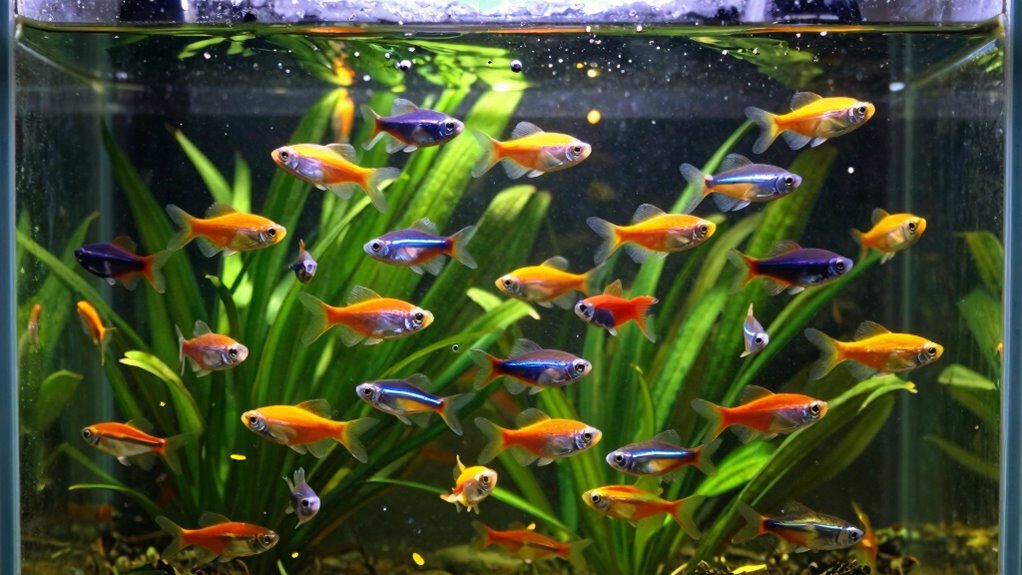
You can tell if your aquarium is overstocked by looking for signs like cloudy water, foul odors, or algae blooms. Fish may act stressed, show aggression, or hide more often. Regular water tests help spot spikes in toxins and waste buildup, indicating overloading. Overcrowding also overwhelms your biological filtration, leading to poor water quality. If you want to keep your fish healthy, knowing these signs is key—there’s more to understand below.
Key Takeaways
- Observe increased fish aggression, chasing, or fin nipping behaviors.
- Monitor water quality for frequent parameter spikes and cloudiness.
- Notice fish hiding excessively or appearing lethargic and stressed.
- Check if the filtration system is overwhelmed or less effective.
- Recognize signs of waste buildup and algae blooms indicating overstocking.
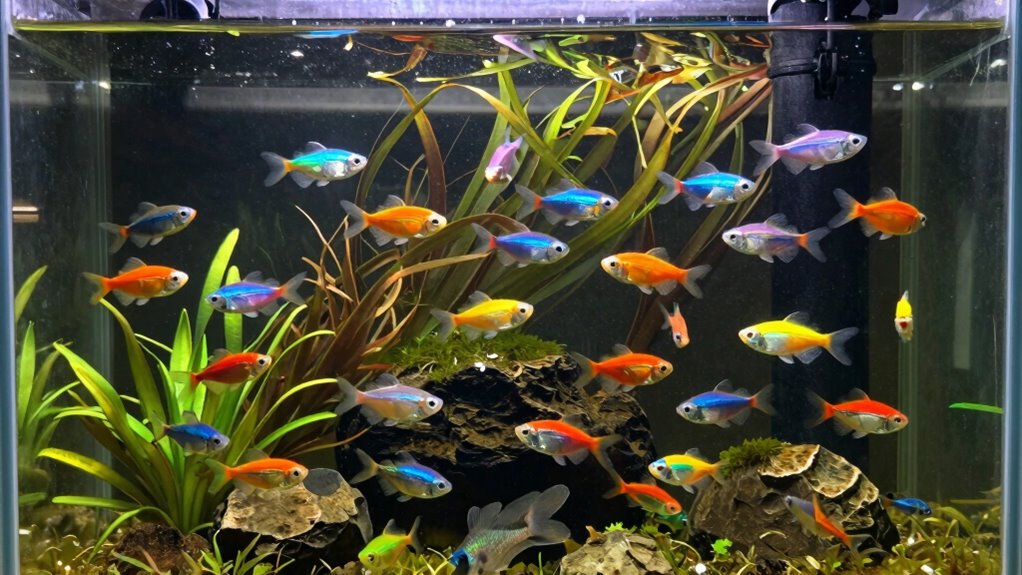
If your aquarium seems crowded or your fish are constantly stressed, it might be overstocked. Overstocking can lead to serious issues with water quality, which in turn affects fish behavior. When too many fish occupy a small space, waste builds up quickly, releasing excess ammonia, nitrites, and nitrates. These toxins can cause health problems, weaken immune systems, and even lead to fish death if not managed properly. You might notice cloudy water, foul odors, or algae blooms as signs that your tank isn’t filtering waste effectively. Regular testing of water parameters becomes essential in these situations to identify spikes in harmful substances. If your water quality deteriorates despite regular maintenance, overstocking is likely the culprit. Additionally, overstocking can cause the biological filtration process to become overwhelmed, further exacerbating water quality issues. Ensuring adequate filtration and proper stocking levels can help maintain a healthy environment. Beyond water quality, fish behavior often reveals whether your tank is overcrowded. When fish are stressed, they tend to display aggressive or shy behaviors. You might observe fin nipping, chasing, or territorial disputes that escalate when space is limited. Fish may hide more often, become lethargic, or refuse to eat. Overcrowding can also cause increased competition for resources like food and hiding spots, leading to heightened aggression. Additionally, stressed fish are more susceptible to disease, further compromising their health and the overall stability of your aquarium. Monitoring water parameters regularly can help catch early signs of overstocking before the situation worsens. Recognizing biological filtration overloads is crucial, as it directly impacts your tank’s ability to process waste efficiently and maintain a stable environment. Proper aquarium stocking levels play a vital role in preventing overstocking and ensuring a balanced ecosystem. By understanding and managing these factors, you can create a healthier, more stable environment for your aquatic life.
As an affiliate, we earn on qualifying purchases.
Frequently Asked Questions
Can Overstocking Cause Fish Aggression?
Yes, overstocking can cause fish aggression because it increases fish territoriality and stress. When there’s limited space, fish feel more territorial, leading to aggression triggers like chasing, nipping, or fighting. Overcrowded tanks make it hard for fish to establish their own space, heightening tensions. To prevent aggressive behavior, guarantee your aquarium isn’t overstocked, giving each fish enough room to thrive peacefully.
How Often Should I Test Water Parameters for Overstocked Tanks?
You should test water parameters daily in an overstocked tank to catch issues early. Water testing guarantees parameter stability, which is vital for your fish’s health. If you notice fluctuations, act quickly. Over time, monitoring becomes less frequent but remains indispensable—at least weekly once stability is achieved. Remember, consistent testing isn’t just routine; it’s your safeguard against overstocking problems that could threaten your aquatic friends.
Does Overstocking Affect Fish Breeding?
Overstocking can negatively impact fish breeding by causing breeding disruptions and hormonal imbalances. When your tank is overcrowded, fish stress more, making them less likely to spawn successfully. The increased competition and poor water quality also interfere with hormonal signals needed for breeding. To promote healthy breeding, maintain appropriate stocking levels, guarantee excellent water quality, and minimize stress, giving your fish the best environment for reproduction.
Can Overstocking Lead to Algae Blooms?
Overstocking your aquarium can definitely lead to algae blooms. Imagine your tank as a busy city: too many residents, and waste piles up faster than it can be cleaned. Excess fish produce more nutrients, causing an imbalance that fuels algae growth. This nutrient imbalance creates the perfect environment for algae to thrive, turning your tank green and cloudy. Keeping your fish population in check helps prevent this overwhelming algae problem.
What Are the Long-Term Effects of Overstocking on Fish Health?
Overstocking your aquarium causes long-term fish stress, weakening their immune systems and making them prone to diseases. It also deteriorates water quality, leading to excess waste, ammonia buildup, and poor oxygen levels. These conditions harm fish health over time, increasing mortality rates and reducing lifespan. To keep your fish healthy, guarantee your tank isn’t overstocked, and maintain proper water quality through regular testing and maintenance.
Conclusion
If your aquarium feels crowded, it’s probably overstocked, and your fish might struggle to thrive. Keep an eye on water quality, fish behavior, and the overall environment—these are your clues. Think of your tank like a busy city; too many residents can lead to chaos and stress. Regular maintenance and mindful stocking guarantee your aquatic world remains a peaceful, balanced haven where every fish can flourish without feeling cramped.