TL;DR

Get pet supplies delivered free with Prime
- Fast, free delivery on millions of items
- Prime Video, Amazon Music and more included
- Member-only deals all year
A Pet Business report says independent pet retailers can distinguish themselves during the holidays through in-store discovery, thoughtful merchandising and personal service rather than price cuts. It offers practical ideas, but provides no sales data showing how much these tactics increase revenue.
A report by Pet Business advises independent pet retailers to compete during the holiday season through in-store discovery, merchandising and personal service, rather than trying to match online retailers’ convenience or cut prices. The guidance matters to shop owners planning seasonal displays and promotions, though the report does not provide measured results showing how much the tactics increase sales.
The report cites a figure that 41% of pet product dollars are spent online, but the supplied article does not identify the data source, period or definition behind that statistic. It uses the figure to frame a challenge for local shops: customers need a reason to visit beyond finding a product at a low price or ordering it for delivery.
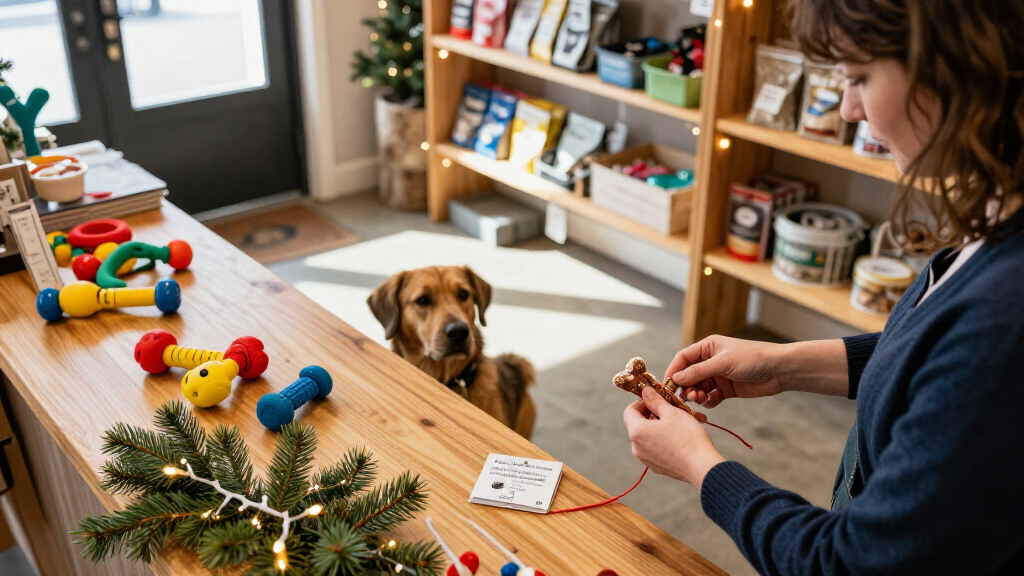
Its suggested response is to make the store a place for discovery. Examples include a decorated holiday display, themed areas such as “Stocking Stuffers” or “Santa’s Favorites,” and products arranged where customers can notice and handle them. The report also recommends placing selected items in prominent locations and observing how shoppers move through the store to identify effective displays and endcaps.
Other ideas focus on increasing opportunities for add-on purchases: make an appealing item visible early in the visit, create a checkout “Last Chance Zone,” and use bundles, sales conversations and marketing to keep the shop in customers’ minds. The article suggests $10–$20 retail items for checkout displays, while saying those products do not need to be discounted. That price range is advice from the report, not a finding based on disclosed sales data.
The Case for Experience Over Price
The advice offers independent stores a way to frame holiday competition around what customers experience in person, rather than around price alone. A visit can combine product browsing with seasonal displays, a pet-friendly welcome and staff help choosing a gift. Those features may give shoppers a reason to come in even when the same category of product is available online.
For retailers, the practical question is whether displays and add-ons support both customer appeal and store economics. The report emphasizes product selection, visibility and margins, but it does not establish that any particular display will raise basket size or profit. Stores would need to track their own sales, product margins and customer response to judge whether a tactic is working.
As an affiliate, we earn on qualifying purchases.
Holiday Shopping Beyond the Shelf
The source frames the holiday season as an opportunity to connect pet purchases with gift-giving and affection for animals. It argues that shoppers may be buying treats, toys or presents for a pet as a family member, rather than simply replenishing supplies. That emotional framing is the basis for its suggestions to create seasonal displays and personal interactions.
The report contrasts local shops with online sellers and large retailers, which it says can compete on convenience or stocked shelves. It points instead to services and moments that happen in the store: greeting a dog by name, offering a seasonal experience or helping a customer choose a gift. These are examples and recommendations in the article, not independently verified comparisons of retailers.
Sales Effects Still Unmeasured
The supplied report does not state when it was published or identify the source, measurement period or methodology for its 41% online-spending figure. It also provides no retailer case studies, sales comparisons or evidence that the recommended displays reliably increase basket size, visit frequency or profit.
It is also unclear which ideas suit different store sizes, customer bases or product mixes. The recommendations should be read as merchandising guidance, not as guaranteed results; individual retailers would need to compare performance against their own sales and margin records.
Track Displays Through the Season
The report calls on retailers to review their product mix, store layout and customer paths as they prepare for holiday shopping. A practical next step is to set up seasonal discovery areas and checkout add-ons, then monitor sales and margins alongside customer response. The source does not announce a follow-up study or provide a reporting timetable, so whether these strategies produce measurable gains remains for retailers to assess.
Key Questions
What is the report recommending to independent pet retailers?
It recommends using seasonal displays, themed discovery areas, prominent product placement and personal service to give customers reasons to shop in store without relying on discounts.
Does the report prove these tactics increase sales?
No. It offers merchandising advice but provides no sales data or case studies establishing the effect of the tactics.
What does the 41% online figure refer to?
The report says 41% of pet product dollars are spent online. The supplied material does not name the source, time period or measurement method, so those details cannot be verified from the report excerpt.
Does the report recommend discounting checkout products?
No. It suggests a checkout display of small, high-margin add-ons and gives $10–$20 retail as a target price range. It says the items do not need to be cheap; this is guidance, not a proven pricing rule.
Source: rss
Halloween Picks
halloween
As an affiliate, we earn on qualifying purchases.