
TL;DR

Get pet supplies delivered free with Prime
- Fast, free delivery on millions of items
- Prime Video, Amazon Music and more included
- Member-only deals all year
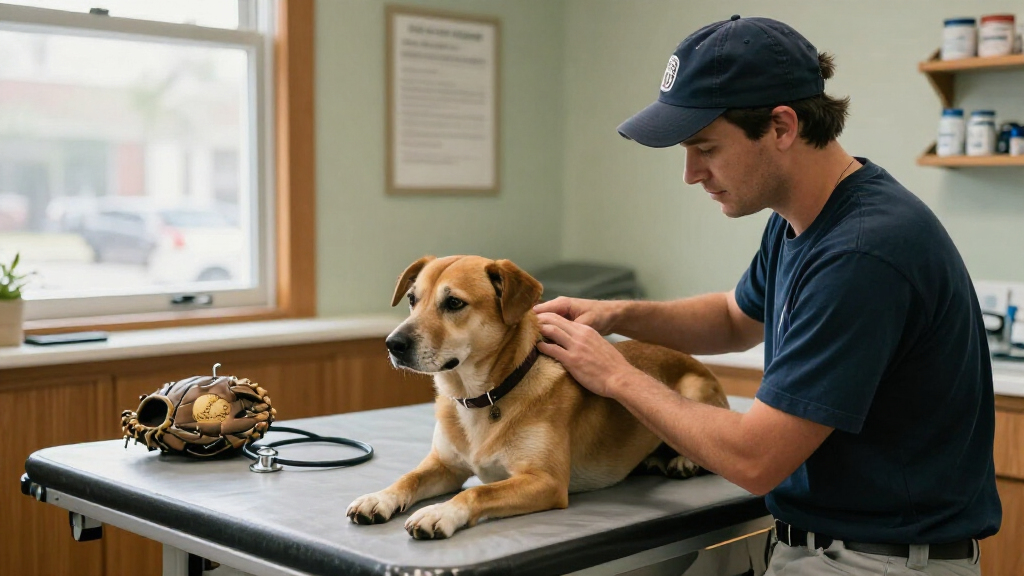
A veterinarian writing for Veterinary Practice News describes how his experience umpiring baseball informed his work in veterinary medicine. He draws parallels between making contested calls, allowing enough time for patient care and maintaining clinical responsibility when clients arrive with their own expectations.
A veterinarian has described how umpiring baseball from his mid-teens shaped his approach to decisions, time management and client relationships in veterinary practice. In a first-person article for Veterinary Practice News, he argues that the work shares a basic challenge with officiating: making decisions under pressure while responding to people who may disagree with them.
The author says umpiring was one of several jobs he held while attending college and veterinary school. In his account, that experience informed his views on professional relationships and his management style as a practice owner. He presents the parallels as lessons from his own career, not as findings from a study or formal guidance for the profession.
One lesson concerns decisions made in front of an audience. A baseball umpire has to judge a pitch or a play quickly, knowing that spectators may see the action differently and respond emotionally. The veterinarian says he encounters a similar dynamic when clients question a diagnosis or treatment plan, particularly when recommendations involve issues such as a pet’s weight or dental health.
The article also challenges the assumption that appointments will always fit their scheduled slots. The author compares veterinary visits with games that may end early or continue into extra innings, and says clinicians should be prepared for a case to take longer than expected. He suggests arranging additional time, diagnostics or a follow-up plan rather than rushing through care; he also acknowledges that clinics face practical scheduling constraints.
Decision-Making Under Client Pressure
The account speaks to a routine tension in veterinary practice: clinical judgment and client expectations do not always align. Clients may arrive with a theory about what is wrong or a preferred treatment, while the veterinarian must assess the patient and decide what care is appropriate. The author’s comparison to umpiring emphasizes that disagreement can follow a decision even when it is made with training and experience.
His comments on appointment length also address the consequences of time pressure. The author warns that trying to force a complex case into a fixed slot may contribute to missed details or poor decisions. His proposed response is to recognize early when more time or testing is needed and discuss workable arrangements with the client. The article does not establish how often scheduling pressure causes errors, but it makes clear why the author sees time as part of thorough care.
For readers, the piece offers a view into the judgment calls veterinarians make beyond diagnosis alone: explaining recommendations, setting boundaries and balancing a patient’s needs with clinic logistics. Its central point is personal advice from a practitioner, rather than a new policy, clinical standard or profession-wide finding.
Products Worth Considering

PetSafe Electronic Pet Door – Collar Key Sensor – Large (up to 100 lb)

Dyson Ball Animal 3 Extra Upright Vacuum

iRobot Roomba Plus 415X Robot Vacuum and Mop Combo
As an affiliate, we earn on qualifying purchases.
From the Diamond to the Exam Room
The author says sports were a large part of his life and that he began umpiring while still playing baseball in his mid-teens. He continued the work through college and veterinary school. That experience is the basis for the article’s comparisons between the emotional atmosphere of a game and the pressures of veterinary care.
His discussion moves from contested calls to the less predictable length of patient visits, then to the veterinarian’s responsibility when a client wants to direct care. In the final example provided in the source, a client seeks medication for a new litter based on a claimed diagnosis and smell, despite not having visited the clinic for years. The author says the proper response is to examine the animal rather than simply supply the requested treatment.
The article’s examples include veterinary situations such as interpreting radiographs and blood work, responding quickly to a suspected poisoning, and explaining vaccination timing. They illustrate the author’s view that professional decisions depend on training, observation and the circumstances of each patient.
Limits of the Personal Account
The source presents one veterinarian’s reflections and does not identify the author in the supplied material. It provides no research, clinic data or outside expert comment to measure how widely other veterinarians share these views or how scheduling affects patient outcomes.
The article also does not give details about the author’s practice, appointment policies or the specific clinical cases mentioned. Its discussion of client disputes and time pressure should be read as professional experience and opinion, not as evidence that every practice faces the same circumstances or should use one scheduling model.
No Further Development Reported
The supplied source reports no follow-up announcement, policy change or new clinical guidance tied to the article. The author’s recommendations are to stay prepared to make difficult decisions, reassess the time a case needs and examine a patient before agreeing to a client’s requested treatment.
Any broader effect on clinic scheduling or veterinary practice is not reported. The next practical step described in the account is case-by-case: when a visit appears likely to run beyond its allotted time, the veterinarian should discuss options such as additional diagnostics, a drop-off or a staged plan with the client.
Key Questions
What is the article about?
It is a veterinarian’s first-person account of how baseball umpiring shaped his thinking about clinical decisions, appointment timing and client relationships.
What does the author say umpiring taught him?
He says umpiring helped him understand that decisions can be challenged by people with different viewpoints, and that professionals need to make decisions using experience, perspective and preparation.
What does he recommend when an appointment takes longer than planned?
He advises recognizing early when a case needs more time and discussing options with the client. Examples in the article include extending the visit, arranging further diagnostics or making a staged plan.
Does the article provide evidence that these lessons improve patient outcomes?
No. The piece offers personal experience and professional opinion; the supplied source does not cite research or outcome data.
Source: veterinarypracticenews.com