
TL;DR
A Veterinary Practice News report by Colin Dunlop and Norm Jorgensen describes pre-warming animals before anesthesia as a way to limit the early temperature drop associated with anesthetic drugs. The authors say this may make temperature control and recovery easier, but the supplied report does not establish that pre-warming reduces deaths or provides trial results for a specific protocol.
Veterinary anesthesiologists Colin Dunlop and Norm Jorgensen say clinics may reduce the early temperature drop associated with anesthesia by warming animal patients before induction, rather than waiting until they become cold during a procedure. Their report in Veterinary Practice News describes pre-warming as a preventive approach that could help teams maintain body temperature and support recovery, while the material provided does not establish a measured improvement in survival or other clinical outcomes.

Get pet supplies delivered free with Prime
- Fast, free delivery on millions of items
- Prime Video, Amazon Music and more included
- Member-only deals all year
Anesthetic and sedative drugs can interfere with an animal’s ability to regulate body temperature and shiver, the authors explain. They can also widen blood vessels, moving heat from the body’s core toward cooler limbs. The report says dogs and cats may lose several degrees of body temperature within 15 to 30 minutes after anesthesia induction, and that a drop may begin after premedication.
Other sources of heat loss include clipping or wetting the coat, cold operating rooms, open body cavities and cold anesthetic gases. Smaller animals can be more vulnerable because they lose heat more quickly relative to their body size. The report cites studies suggesting that up to 80 percent of anesthetized dogs and cats experience some degree of hypothermia; this is a figure reported in the article, not a new estimate from the authors’ own study.
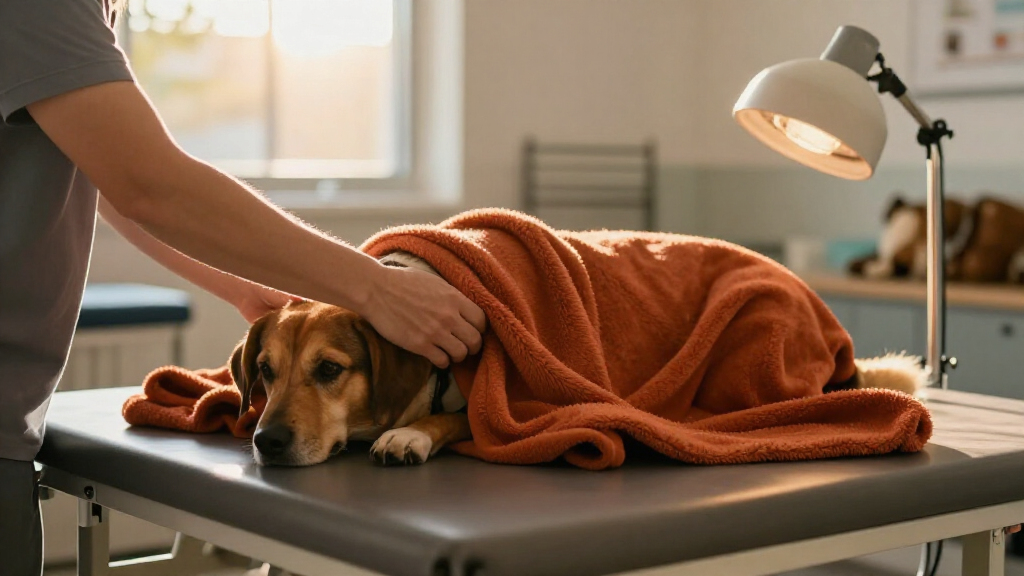
The authors describe pre-warming for 30 to 40 minutes before anesthesia as one possible protocol. They say warming skin and peripheral tissues can reduce the temperature drop caused by heat redistribution after induction. Warming during surgery and recovery remains part of temperature management; pre-warming is presented as an addition, not a replacement.
Temperature Control Before Anesthesia
Maintaining temperature matters because hypothermia can affect more than comfort. The report says lower body temperature can slow heart and breathing rates, reduce drug metabolism and prolong recovery. A cold patient may take longer to regain consciousness and experience disorientation, shivering or discomfort. Shivering can also put stress on surgical sites and contribute to post-operative pain.
The authors cite an estimate that about one in 500 animals die during anesthesia or sedation, with around half of those deaths occurring during recovery. Those figures describe anesthesia and sedation deaths broadly; the supplied material does not show that temperature problems caused those deaths or that pre-warming would prevent them. The figures nonetheless underline why veterinary teams monitor patients closely as they wake.
For clinics, the practical case is to address heat loss before it builds. If pre-warming helps maintain temperature through induction, staff may spend less time trying to warm a markedly cold patient later. The report also says teams have found it can fit into scheduling, though it supplies no comparative workflow data to quantify the time saved.
Products Worth Considering

Dyson Ball Animal 3 Upright Corded Vacuum

iRobot Roomba Plus 415X Robot Vacuum and Mop Combo with AutoWash Dock

PetSafe Guardian GPS 2.0 Dog Fence and Tracking Collar
As an affiliate, we earn on qualifying purchases.
From Recovery Warming to Prevention
Many veterinary warming strategies focus on the period during surgery, using devices such as heated blankets. Dunlop and Jorgensen argue that this can be too late to prevent the initial decline, because temperature shifts may start after premedication and accelerate after induction. Their proposed change is one of timing: begin warming before anesthesia, then continue to manage temperature during the procedure and recovery.
The report also discusses equipment, particularly forced-air warming blankets. It says reusable blankets may lose efficiency as they are washed and worn, while disposable products are designed to preserve airflow. The authors note that some clinics use disposable blankets for multiple patients over several days. These are claims in a report that discusses warming products; the supplied material does not include independent testing comparing blanket types or lifecycle environmental assessments.
Cost is another consideration raised by the authors. They give average prices of about $150 for reusable blankets and $12 for disposable options, while saying laundering, repairs and replacement can add to reusable-product costs. The report does not specify a market, date, product range or full cost calculation, so the amounts should not be treated as universal prices.
Evidence and Protocol Details
The supplied report does not identify the studies behind each statistic in enough detail to evaluate their methods, populations or dates. It also does not provide results from a controlled comparison showing how much pre-warming changes recovery time, complications or mortality. The reported temperature effects and workflow benefits should therefore be read as claims attributed to the authors, not as quantified outcomes from a new trial described here.
There is no single detailed protocol in the source for all patients. It does not specify target temperatures, how often temperature should be checked, or how teams should adapt warming for different procedures and patient conditions. Blanket performance and cost comparisons also lack independent testing details in the supplied material. Veterinary teams should choose and monitor warming methods under appropriate clinical guidance.
How Clinics May Apply the Approach
The authors’ proposal is for clinics to consider adding pre-warming to existing peri-anesthetic temperature management, while continuing to use appropriate warming during surgery and recovery. The report does not announce a formal guideline, regulatory change or upcoming study. It is not clear whether Dunlop and Jorgensen plan to publish further comparative results.
For stronger conclusions about effectiveness, future evidence would need to report patient groups, warming methods, temperature-monitoring schedules and outcomes such as hypothermia rates and recovery times. Until such details are available, the report supports pre-warming as a preventive practice to consider, not as a proven guarantee of faster or safer recovery.
Key Questions
What does pre-warming mean for an animal having surgery?
Pre-warming means warming a patient before anesthesia begins, with the aim of raising skin and peripheral tissue temperatures before anesthetic-related heat loss occurs.
How long does the report suggest pre-warming?
The authors discuss a 30- to 40-minute period. The report does not present this as a universal protocol for every animal or procedure.
Does pre-warming prevent complications or deaths?
The report explains why pre-warming may help manage temperature, but the supplied material does not show that it prevents deaths or provide trial results proving a reduction in complications.
Does pre-warming replace warming during surgery?
No. The authors present it as a preventive step that can complement temperature management during surgery and recovery, not replace those measures.
Source: veterinarypracticenews.com