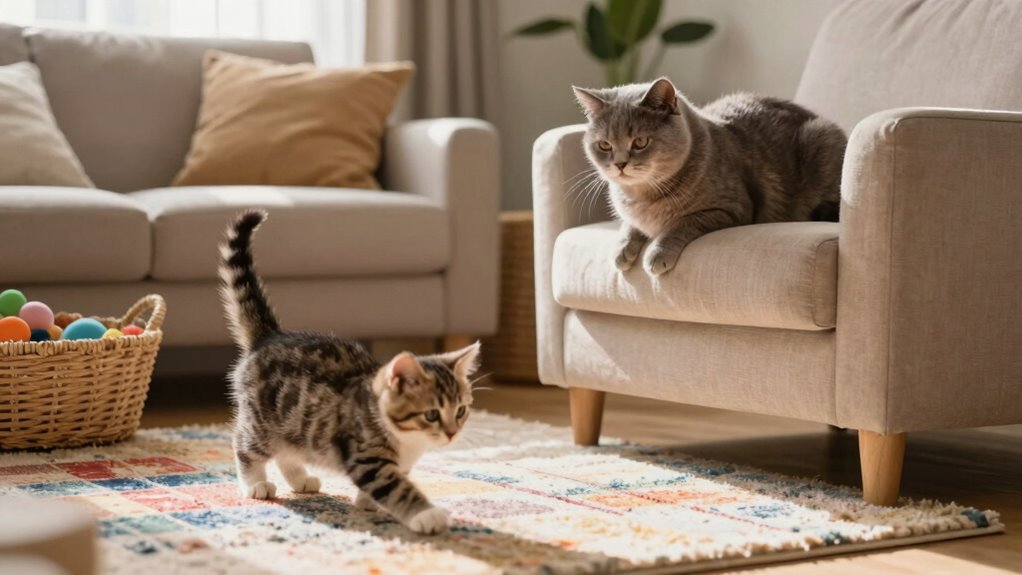

Before adopting a second cat, consider your current cat’s personality—some cats thrive with a new friend, while others prefer solitude. Make sure you have enough space, supplies, and separate zones to reduce territorial disputes. Proper introductions and gradual interactions are key to a smooth shift. Pay attention to body language and behaviors to prevent conflicts. If you’re curious about creating a harmonious environment for your cats, there’s plenty more to explore on fostering as a duo.

Get pet supplies delivered free with Prime
- Fast, free delivery on millions of items
- Prime Video, Amazon Music and more included
- Member-only deals all year
Key Takeaways
- Assess your current cat’s personality to ensure compatibility with a potential new feline companion.
- Provide ample space, hiding spots, and separate resources to prevent territorial conflicts.
- Prepare necessary supplies, including multiple litter boxes, food bowls, and toys for each cat.
- Introduce the new cat gradually, observing body language and adjusting interactions to promote harmony.
- Be patient and attentive, understanding that successful integration requires time and careful management.
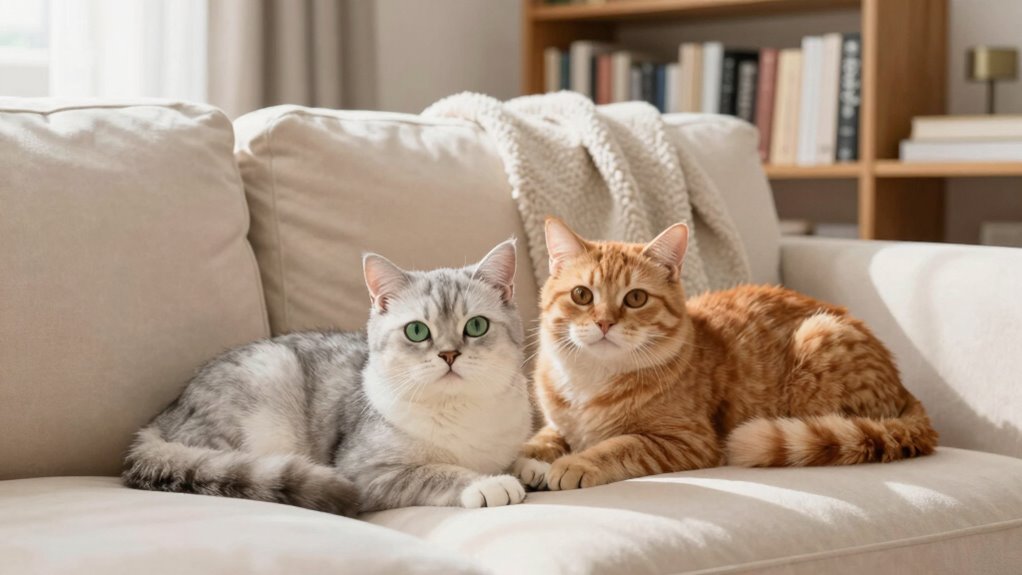
Adopting a second cat can bring joy and companionship to your home, but it’s important to be prepared for the changes it introduces. One of the first things to consider is behavioral compatibility. Not all cats will naturally get along, so understanding your current cat’s personality helps determine if a new feline friend will fit in. Some cats are more social and tolerant, while others prefer solitude. If your existing cat is playful and outgoing, they might welcome a lively new companion. Conversely, if your cat tends to be shy or territorial, introducing a second cat could lead to conflicts or stress. To improve your chances of harmony, choose a new cat whose temperament complements your existing pet’s behavior. Proper introductions and gradual acclimation are key to fostering a peaceful relationship.
Choosing a compatible temperament is key to a peaceful, happy multi-cat household.
Another critical factor is space requirements. Cats need enough room to feel comfortable and to establish their own territory. Overcrowding can increase tension and make it harder for cats to coexist peacefully. Before bringing in a second cat, evaluate your living space. Make sure there are multiple hiding spots, perches, and separate feeding areas. This helps prevent competition and gives each cat a sense of security. If your current setup is small, adding a second cat might not be ideal without adjustments. Larger spaces with designated zones for each cat encourage independence and reduce territorial disputes. Remember, a comfortable environment is essential for both cats’ well-being and for maintaining harmony in your home. Providing enough space is crucial for a successful multi-cat household. Additionally, understanding cat behavior can help you better interpret their interactions and reduce potential conflicts. Recognizing body language cues is also important for preventing misunderstandings and ensuring peaceful coexistence. Developing an awareness of territorial instincts can aid in creating a harmonious environment for your feline friends. Being attentive to your cats’ reactions and adjusting your approach accordingly can foster a more positive relationship.
You also need to prepare for the practicalities of caring for two cats. This includes having enough supplies—litter boxes, food bowls, toys, and bedding—to avoid competition. It’s recommended to have at least one litter box per cat, plus an extra, to keep things clean and stress-free. Feeding times should be scheduled to prevent resource guarding, especially if your cats show signs of territorial behavior. Additionally, consider their individual needs, such as grooming and health care, and be ready to invest time in socializing and monitoring their interactions. It’s helpful to research common multi-cat household challenges to better anticipate and address potential issues proactively.
Adopting a second cat isn’t just about adding another pet; it’s about creating a balanced environment where both cats can thrive. With careful planning around behavioral compatibility and space requirements, you set the stage for a successful integration. Patience, gradual introductions, and attentiveness to each cat’s personality will help your feline family grow closer while maintaining peace and comfort at home.
multi-cat litter box with divider
As an affiliate, we earn on qualifying purchases.
As an affiliate, we earn on qualifying purchases.
Frequently Asked Questions
How Do I Introduce a New Cat to My Existing Cat?
Start by scent swapping—exchange their bedding or toys so they become familiar with each other’s smell. Then, introduce them gradually in a neutral space, allowing supervised playtime bonding sessions. Keep initial interactions short and positive, gradually increasing their time together. Watch their body language closely, and reward calm behavior. Patience is key; with consistent, gentle introductions, your cats will learn to coexist peacefully and even become friends.
What Are the Signs of Feline Aggression I Should Watch For?
Feline aggression can sneak up like a storm cloud on a sunny day. Watch for signs in cat body language, such as flattened ears, arched back, or puffed-up fur, which signal discomfort or hostility. Feline territorial behavior may include hissing, swatting, or blocking access to resources. If you notice these signs, give your cats space and time to calm down, helping prevent escalation into more serious conflicts.
How Can I Prevent Territorial Disputes Between Cats?
To prevent territorial disputes between cats, you should establish clear territorial boundaries, such as separate feeding and resting areas. Encourage scent swapping by exchanging bedding or toys between them, which helps build familiarity and reduces jealousy. Gradually introduce them with supervised interactions and maintain routines to minimize stress. Providing multiple resources like litter boxes, water bowls, and hiding spots guarantees they don’t compete, fostering peaceful coexistence.
What Is the Ideal Age Gap Between Two Cats?
The ideal age gap between two cats is around 1 to 2 years, which helps them develop compatible playful behavior and grooming routines. Younger cats tend to adapt better to older cats, reducing territorial disputes. An age gap of this size allows the older cat to establish a routine while still being playful and social, making it easier for them to bond and coexist peacefully, avoiding jealousy or dominance issues.
How Much Additional Cost Is Involved in Caring for Two Cats?
Caring for two cats costs more, with a noticeable increase in expenses. The cost comparison shows you’ll spend extra on food, litter, and vet visits. Feeding adjustments are necessary, as you’ll need to provide enough for both, possibly buying larger or additional supplies. Expect higher grooming and routine care costs, but sharing resources can sometimes reduce overall expenses. Planning your budget now helps guarantee both cats stay happy and healthy.
Conclusion
Before bringing a second cat into your home, remember it’s about more than just adding another pet. It’s about balancing patience with understanding, adjusting routines with consistency, and fostering independence with companionship. It’s about preparing your current cat for change while welcoming the new one with open arms. By embracing patience, practicing consistency, and nurturing understanding, you create a harmonious environment where both cats can thrive, grow, and enjoy a happy, balanced life together.
Fall Picks
fall essentials
As an affiliate, we earn on qualifying purchases.